
Diaspora
What’s in Trump’s ‘Big, Beautiful’ Bill That Just Passed the House


The United States House of Representatives narrowly passed a sweeping Republican tax and spending package on Thursday, marking a significant legislative victory for President Donald Trump.
Dubbed his “one big, beautiful bill,” the legislation now heads to the Senate, where it is expected to undergo notable revisions.
The bill is both ambitious and controversial, containing measures that target several key sectors, including healthcare, taxation, immigration, education, and social welfare.
A centerpiece of the bill is the permanent extension of the individual income tax cuts originally introduced in the GOP’s 2017 Tax Cuts and Jobs Act.
However, these cuts come at a steep price.
According to the Congressional Budget Office (CBO), the proposed tax changes would add approximately $3.8 trillion to the national debt over the next decade. Meanwhile, the legislation proposes deep spending cuts to vital safety net programs.
Medicaid funding would be slashed by nearly $700 billion, a number expected to rise once recent updates to the bill are assessed. Similarly, the Supplemental Nutrition Assistance Program (commonly known as food stamps) would lose $267 billion in federal support.
The bill includes measures that align with longstanding Republican policy goals and campaign promises made by President Trump.
These include significant investments in border security, enhanced systems to curb immigration, and the development of a massive new missile defense shield.
It also proposes a comprehensive overhaul of the air traffic control system, new fees targeting electric vehicle users, and a shift away from federal student loans.
To offset the cost of the tax breaks and increased defense and immigration-related spending, the House GOP aimed for at least $1.5 trillion in spending reductions.
However, Senate Republicans are likely to revise the bill, potentially softening some of the more aggressive cuts.
Because the legislation is advancing through budget reconciliation, it requires only a simple majority in the Senate, bypassing the need for Democratic support.
Among the most contentious provisions is the introduction of work requirements for Medicaid beneficiaries.
For the first time in the program’s six-decade history, non-exempt adults between the ages of 19 and 64 would need to work at least 80 hours per month or engage in approved activities like schooling or community service to retain coverage.
The implementation date has been moved up to the end of 2026, raising concerns that more people could lose coverage sooner.
Exceptions would apply to groups such as parents, pregnant women, medically frail individuals, and those with substance abuse disorders.
The legislation also mandates more frequent eligibility checks for Medicaid expansion recipients and requires certain low-income adults to contribute financially to their care.
It includes penalties for states that use their own funds to cover undocumented immigrants, reducing their federal Medicaid matching funds by 10%.
States would face new limitations on the taxes they can levy on healthcare providers, a revenue stream used to enhance provider reimbursements and health services.
A notable incentive was added for the ten states that have not expanded Medicaid. These states would be allowed to send larger supplemental payments to healthcare providers, potentially deterring them from expanding coverage.
Additionally, the bill delays a Biden administration rule intended to streamline Medicaid enrollment until 2035, which could make it harder for individuals to obtain or renew coverage.
Another controversial aspect of the bill involves changes to the Affordable Care Act (ACA).
It proposes codifying a Trump-era initiative that would shorten the ACA’s open enrollment period and eliminate year-round sign-up options for low-income individuals.
In a last-minute amendment, GOP lawmakers reinstated funding for cost-sharing reduction subsidies, which Trump had previously eliminated.
While this might lower out-of-pocket costs, it could reduce the generosity of premium subsidies, prompting some to drop their coverage.
According to early CBO estimates, these healthcare-related changes could lead to 8.6 million more people being uninsured by 2034—a figure expected to increase as the final provisions are analyzed.
The legislation also enhances the child tax credit, increasing it from $2,000 to $2,500 per child from 2025 through 2028.
However, eligibility is restricted to parents with Social Security numbers, eliminating access for those who file taxes using individual taxpayer identification numbers—typically undocumented immigrants—thereby affecting around two million children.
In a symbolic nod to Trump’s branding, the bill creates “Trump accounts,” officially named “money accounts for growth and advancement” (MAGA accounts).
These accounts would be established for U.S. citizen children born between 2025 and 2028, with an initial federal contribution of $1,000. Families could contribute up to $5,000 annually.
The funds, inaccessible until the child turns 18, could be used for higher education or first-time home purchases and would be taxed at capital gains rates. The account would expire when the beneficiary turns 31.
Fulfilling a major campaign pledge, the bill exempts income from tips and overtime from federal taxation for qualifying workers.
This applies specifically to traditionally tipped occupations and to hourly workers, excluding those earning more than $160,000 annually.
These tax breaks would be in effect from 2025 through 2028 and would also be available to non-itemizing taxpayers.
Senior citizens are not left out, as the bill increases their standard deduction by $4,000 from 2025 through 2028. However, this benefit phases out for individuals with incomes above $75,000 and couples earning more than $150,000.
This measure is positioned as an indirect fulfillment of Trump’s promise to eliminate taxes on Social Security benefits, which cannot be addressed under budget reconciliation rules.
The package introduces a temporary car loan interest deduction, allowing taxpayers to deduct up to $10,000 annually for interest on vehicles purchased after 2025, provided the cars are assembled in the U.S.
This benefit phases out for individuals earning more than $100,000 and couples earning above $200,000.
Other tax reliefs include a temporary boost to the standard deduction and permanent changes that favor wealthier Americans.
The estate tax exemption would be permanently set at $15 million per individual, adjusted for inflation.
The bill also enhances a deduction for owners of pass-through entities, such as partnerships and sole proprietorships, increasing it from 20% to 23%.
The legislation raises the cap on state and local tax (SALT) deductions to $40,000 for those earning up to $500,000, addressing long-standing concerns from lawmakers in high-tax states.
For single filers earning up to $250,000, the cap would be raised to $15,000. These adjustments would gradually phase back down and remain in effect until 2034.
Businesses also benefit from the bill, with the return of full, first-year deductions for equipment purchases and research and development costs, which had been curtailed in previous years. These provisions would expire after 2029.
Moreover, companies could temporarily write off expenses related to constructing or upgrading certain facilities, although deductions for purchases of professional sports teams would be limited.
Finally, the bill significantly increases taxes on universities and private foundations. The endowment tax rate for some universities would rise from 1.4% to as high as 21%, and private foundation taxes would jump to as much as 10%.
These measures aim to generate revenue but have sparked criticism from institutions that rely on endowment income for operational and scholarship support.
In summary, the House-passed bill is a comprehensive and controversial overhaul of the nation’s tax and spending priorities.
While it offers substantial tax relief and fulfills several of President Trump’s campaign promises, it does so at the expense of key social safety net programs and could result in millions of Americans losing healthcare coverage.
The Senate’s response to this bill will determine its final shape and its impact on the American people.

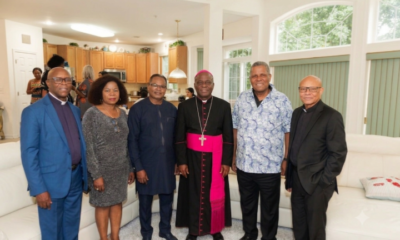















BCD Fashion-House

Hawah Kromah, Founder of BCD Fashion House



The management of Diaspora Watch Newspaper proudly announces the release of the 92nd edition of the newspaper, a compelling and globally engaging publication that captures the defining political, diplomatic, economic, cultural, and entertainment developments shaping conversations across continents.
This latest edition presents readers with an extraordinary blend of international diplomacy, economic transformation, royal engagements, security concerns, African excellence, and high society glamour, reaffirming Diaspora Watch Newspaper’s commitment to credible journalism, balanced reporting, and insightful global storytelling.
Diaspora Watch FREE Digital View: https://diasporawatch.com/3d-flip-book/diaspora-watch-vol-92/
On Demand Print: https://www.magcloud.com/browse/issue/3327462?__r=1069759
SUBSCRIBE TO DIASPORA WATCH NOW ON THE LINK BELOW!!!
https://diasporawatch.com/subscribe-to-diaspora-watch-newspaper/
Leading the headlines is the intensifying conflict between the United States and Iran as both nations exchange threats despite ongoing ceasefire negotiations, alongside US President Donald Trump rejecting Iran’s peace response and describing the proposal as “totally unacceptable.” The edition also offers deeper insight into the geopolitical implications of the crisis and its potential impact on global stability.
In a celebration of African prestige and international elegance, this edition extensively covers the grand wedding ceremony of Munachi “Muna” Ezeibe and Cherina Zerbo Lassina in Marrakech, Morocco, an event that attracted top African dignitaries, diplomats, business leaders, and influential personalities from across the continent.
Readers will also find exclusive reports on Aliko Dangote’s ambitious 20,000MW power project initiative, a development expected to significantly reshape Africa’s energy landscape and industrial future. Equally noteworthy is the report on Angola’s Cabinda Refinery commencing fuel exports, marking a major milestone in Africa’s refining capacity and economic independence.
The edition further highlights significant global diplomatic and societal developments, including King Charles III hosting the first Buckingham Palace Garden Party of 2026, the accreditation of a new United Kingdom ambassador by CARICOM, and concerns raised by China’s spy agency over the growing “lying flat” culture among young people.
On the back page, readers are treated to dazzling coverage of the 2026 edition of the Africa Magic Viewers’ Choice Awards 2026, where celebrities transformed Lagos into a spectacular runway of glamour, fashion, and unforgettable red-carpet moments.
As always, Diaspora Watch Newspaper remains steadfast in its mission to inform, educate, connect, and amplify global African perspectives through responsible journalism and compelling narratives.
The 92nd edition is now available for readers, stakeholders, institutions, and members of the global diaspora community.

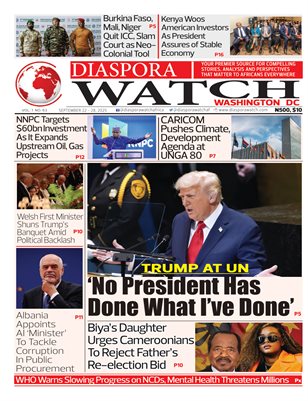
Diaspora Watch Newspaper Releases it’s 91st Edition.
Diaspora Watch Newspaper is proud to announce the release of its 91st edition, delivering a compelling blend of international headlines, geopolitical analysis, and cultural commentary that reflect the dynamic realities shaping the global community.
Diaspora Watch FREE Digital View: https://diasporawatch.com/3d-flip-book/diaspora-watch-vol-91/
On Demand Print: https://www.magcloud.com/browse/issue/3321550?__r=1069759
SUBSCRIBE TO DIASPORA WATCH NOW ON THE LINK BELOW!!!
https://diasporawatch.com/subscribe-to-diaspora-watch-newspaper/
Leading this edition is a major diplomatic spotlight: “Trump Hosts King Charles, Queen Camilla at White House, Hails ‘Unbreakable’ US-UK Ties.” The story examines renewed transatlantic relations and the strategic implications of high-level engagements between the United States and the United Kingdom.
Also featured prominently is Nigeria’s strong diplomatic response to rising tensions in Southern Africa, as the Government summons South Africa’s envoy over reported attacks on its citizens. This development underscores ongoing concerns about the safety and welfare of Nigerians in the diaspora.
In security and defense, the edition reports on the disappearance of two United States troops during military drills in Morocco, raising questions about operational risks and international military cooperation.
On the economic and developmental front, Caribbean leaders take decisive steps toward reducing import dependence through a new food security framework under CARICOM, while the Santa Marta Summit provides fresh momentum for a global transition away from fossil fuels.
Energy discourse is further amplified as the African Petroleum Producers’ Organization advocates for the establishment of regional energy hubs to drive investment in Africa’s oil and gas sector, signaling a strategic shift toward intra-continental collaboration.
In another major geopolitical development, the United States imposes sanctions on former DR Congo President Joseph Kabila over alleged links to the M23 rebel group, reflecting growing international scrutiny over instability in Central Africa.
Meanwhile, tensions in the Middle East deepen as the United Arab Emirates issues a stern warning on Iran’s reliability in managing the Strait of Hormuz, highlighting concerns over global energy security amid escalating US–Tehran relations.
Rounding off the edition on the back page is a cultural reflection from global music icon Jay-Z, who emphasizes authenticity in hip-hop culture with the thought-provoking stance: “Hip-Hop Must Stay Real, Not Trendy.”
Stay informed and ahead of the curve with the 91st edition of Diaspora Watch where we the complex dynamics shaping our world and provide insights into the stories that matter.


Rubio Reveals Late-Night Calls, Says No ‘Typical Day’ as US Security Chief

Chiemela Nathan: The ‘Girl With an Agenda’ Who Turned Excellence Into Leadership

CARICOM Urges Youths to Build Skills, Embrace Entrepreneurship

Pastor Jerry Eze Defends Miracles At UK Conference Amidst Criticism And Controversy

Diaspora Watch 20th Edition (October 14-20, 2024): Your Trusted Source for Global News and Insights

Tanzanian Man Reportedly Dies And Returns To Life Six Times


-

 News3 days ago
Five Years on the Throne: Reflecting on the Reign of the Olu of Warri, by Boniface Ihiasota
-

 Analysis3 days ago
Adeleke’s Osun Victory: What It Means for Nigeria’s 2027 Elections
-
 Milestone3 days ago
Chiemela Nathan: The ‘Girl With an Agenda’ Who Turned Excellence Into Leadership
-

 Analysis3 days ago
Before Wike Turns Abuja City to Jakarta, by Alabidun Shuaib AbdulRahman
-
 News3 days ago
Rubio Reveals Late-Night Calls, Says No ‘Typical Day’ as US Security Chief
-

 News3 days ago
Harry, Meghan to return to Britain with children six years after royal exit