
News
Cultural Misstep? Trump Praises Liberian President’s English Ability


US President Donald Trump has commended Liberian President Joseph Boakai for speaking “good English” and inquired about his educational background.
The exchange has shed light on the profound historical connections between Liberia and the United States, with English being the official language of the West African nation.
Liberia was founded in 1822 by freed African-American slaves who settled in the country before it declared independence in 1847.
This historical bond has resulted in Liberian culture, landmarks, and institutions bearing a strong African-American influence.
Ten of Liberia’s 26 presidents were born in the US, underscoring the nation’s deep-rooted ties with America.
The capital city, Monrovia, was named after James Monroe, the fifth US President, who supported the American Colonization Society’s efforts to resettle freed African-Americans in West Africa.
Liberia’s flag bears a striking resemblance to the American flag, featuring 11 alternating red and white stripes and a blue square with a single white star.
The country’s main hospital, the John F Kennedy Medical Center, is a testament to the enduring relationship between the two nations.
Liberia has also produced notable figures such as Ellen Johnson Sirleaf, Africa’s first elected female president, who won the Nobel Peace Prize in 2011 for her efforts to further women’s rights.
Additionally, former President George Weah’s son, Timothy Weah, plays for the US national football team, highlighting the country’s connection to American sports.
Firestone Liberia, a subsidiary of the US tire manufacturer, operates the world’s largest rubber plantation in Liberia, providing employment to over 4,000 workers. Rubber remains one of Liberia’s biggest exports, with the US being its largest market.
Liberians have reacted mixed to Trump’s praise, with some viewing it as a genuine compliment while others believe it reflects global ignorance about African nations.
Foreign Minister Sara Beysolow Nyanti attributed the remark to a “lack of understanding” about African languages and cultures, emphasizing that Liberia has an American-English intonation due to its historical ties with the US.
The US and Liberia have maintained diplomatic relations for over 150 years, with the US playing a central role in Liberia’s development.
The two nations continue to collaborate on issues ranging from public health to economic development, with the US dollar serving as legal tender in Liberia.








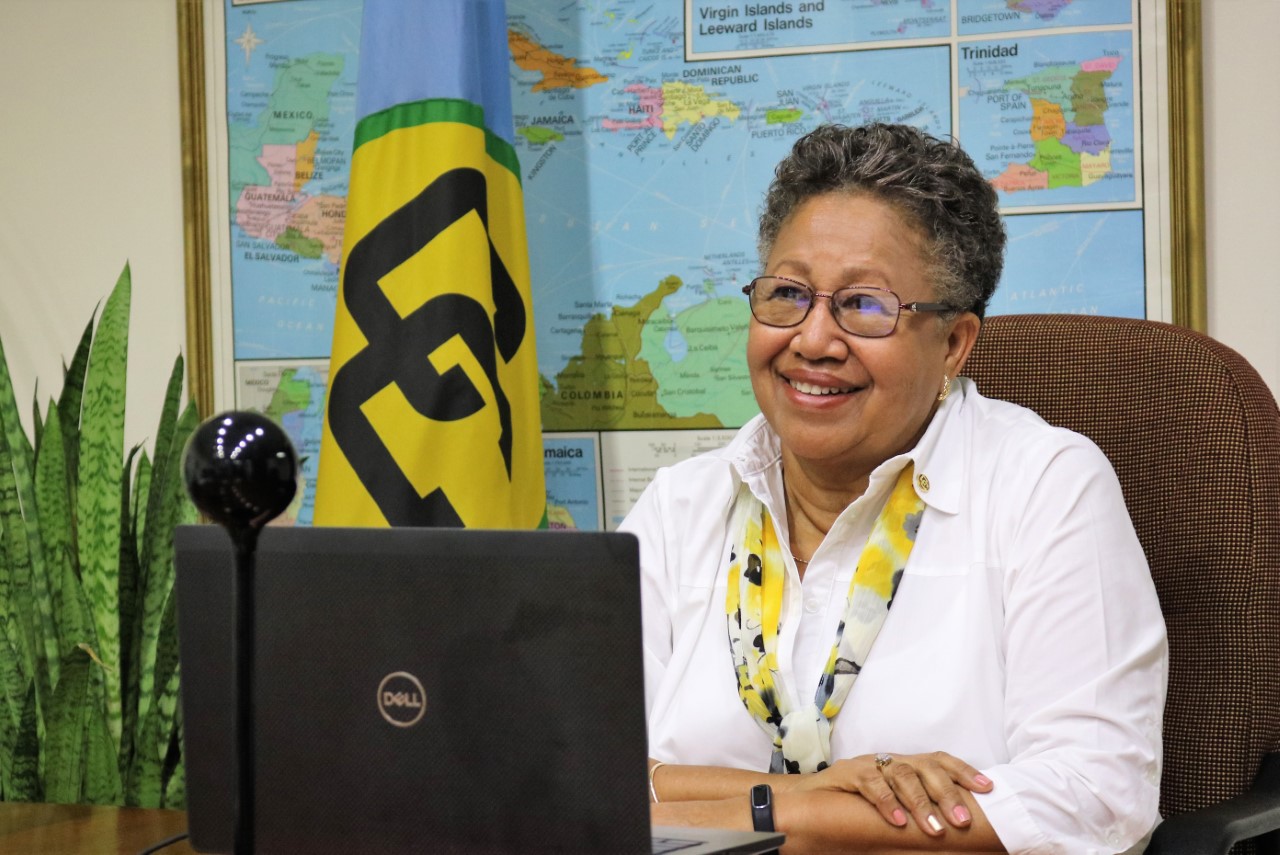
CARICOM backs renewal of Haiti gang force mandate
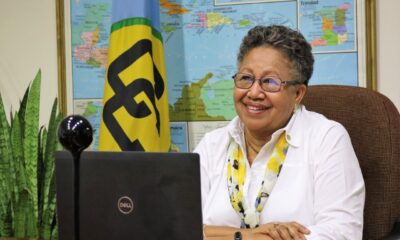
The Caribbean Community, CARICOM has called for the renewal of the mandate of the Gang Suppression Force in Haiti, urging international partners to urgently provide the personnel, funding, equipment and logistics required to strengthen the force’s operations.
The CARICOM Secretary-General, Dr Carla Barnett, made the call while addressing the Regular Meeting of the Permanent Council of the Organization of American States in Washington, D.C., on September 3, 2026.
Barnett said the commitments made by Haiti’s international partners to support the GSF had not been sufficiently fulfilled, stressing that increased assistance was necessary to tackle insecurity and create an enabling environment for elections.
According to her, progress in strengthening the security force would help to “release the chokehold” of armed gangs on Haitians while also providing the conditions required for the country’s electoral process.
She said, “It is clear both our Organisations hold firmly to the view that the mandate of the Gang Suppression Force needs to be renewed.”
The CARICOM chief said the regional bloc was also prepared to work with the OAS on election observation as Haiti’s electoral process gathered momentum.
She noted that CARICOM and the OAS had collaborated on election observation in the past, adding that such cooperation could be revived in the coming months to support Haiti’s return to constitutional and democratic governance.
Barnett also highlighted the need for stronger coordination among regional and international organisations supporting Haiti, saying duplication of efforts must be avoided to ensure that the urgent needs of the Haitian people were adequately addressed.
She spoke against the backdrop of a recent High-Level Inter-American and International Delegation visit to Haiti from August 16 to 19, which included CARICOM representatives.
According to her, the visit strengthened coordination among international actors, facilitated the exchange of experiences and provided a clearer understanding of the situation on the ground.
She added that the delegation’s presence also sent a message to Haitians that they had not been abandoned by the international community despite the prolonged political, social and security crisis.
Barnett said CARICOM was contributing to efforts to resolve the crisis through dialogue and good offices.
She disclosed that the CARICOM Eminent Persons Group, comprising three former prime ministers and established in 2023, had continued engaging political and civil society stakeholders, government officials and representatives of the international community.
The group, she said, was currently visiting Haiti to engage political actors, including emerging parties and coalitions, and facilitate dialogue among stakeholders involved in the electoral process.
Barnett urged continued international attention to the plight of Haitians, particularly those whose livelihoods, education, access to healthcare and freedom of movement had been disrupted by crime and violence.
“Our objective must continue to be to support the Haitian people as they seek to find solutions to the present crises of insecurity and governance,” she said.
She added that resolving the immediate crises would enable Haiti to focus on long-term economic and social development, including investment, job creation and access to essential services.

US, Colombia negotiate tariff deal — Rubio
By Boniface Ihiasota
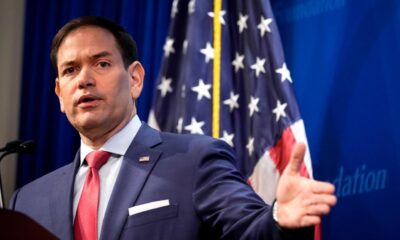
The United States and Colombia are negotiating a bilateral agreement that could lead to the lifting of tariffs imposed on Colombian goods, the US Secretary of State, Marco Rubio, has said.
Rubio disclosed this on Tuesday during a press briefing at the Barranquilla Marriott Hotel in Barranquilla, Colombia.
The secretary said the tariff issue was being handled through a legal process following a decision of the US Supreme Court that invalidated the system previously used by President Donald Trump to impose tariffs.
According to him, the US administration had consequently commenced a new process under Section 301 of the Trade Act, while negotiations with Colombian authorities were ongoing.
He said, “The President of the United States has a desire to reach an agreement with Colombia as soon as possible.”
Rubio explained that US Trade Representative, Ambassador Jamieson Greer, had been working with Colombian officials on the negotiations, adding that two rounds of discussions had already taken place.
“I think it’s going very well, and I hope to have good news soon in regards to that once such an agreement can be reached,” he said.
He added that the negotiations were aimed at reaching a bilateral accord that would address the tariff issue within the legal framework established by the US administration.
Rubio, however, said there would be no immediate announcement on the lifting of the tariffs because the negotiations were still ongoing.
“This is part of a legal process. It does not apply specifically to Colombia, it applies to every country in the world,” he said.
The secretary also said the US was committed to reaching an agreement that would be beneficial to both countries.
His comments came amid efforts by the Colombian government to secure tariff relief as the country seeks to strengthen its economic relationship with Washington.
Rubio also disclosed that the US and Colombia were discussing broader economic cooperation, including possible American investments in Colombia’s reconstruction and infrastructure development.
He said Washington was examining how different US agencies could be used to attract American companies and investment into Colombia.
The secretary stressed that any agreement on tariffs would have to emerge from the ongoing bilateral negotiations and the applicable US legal process.
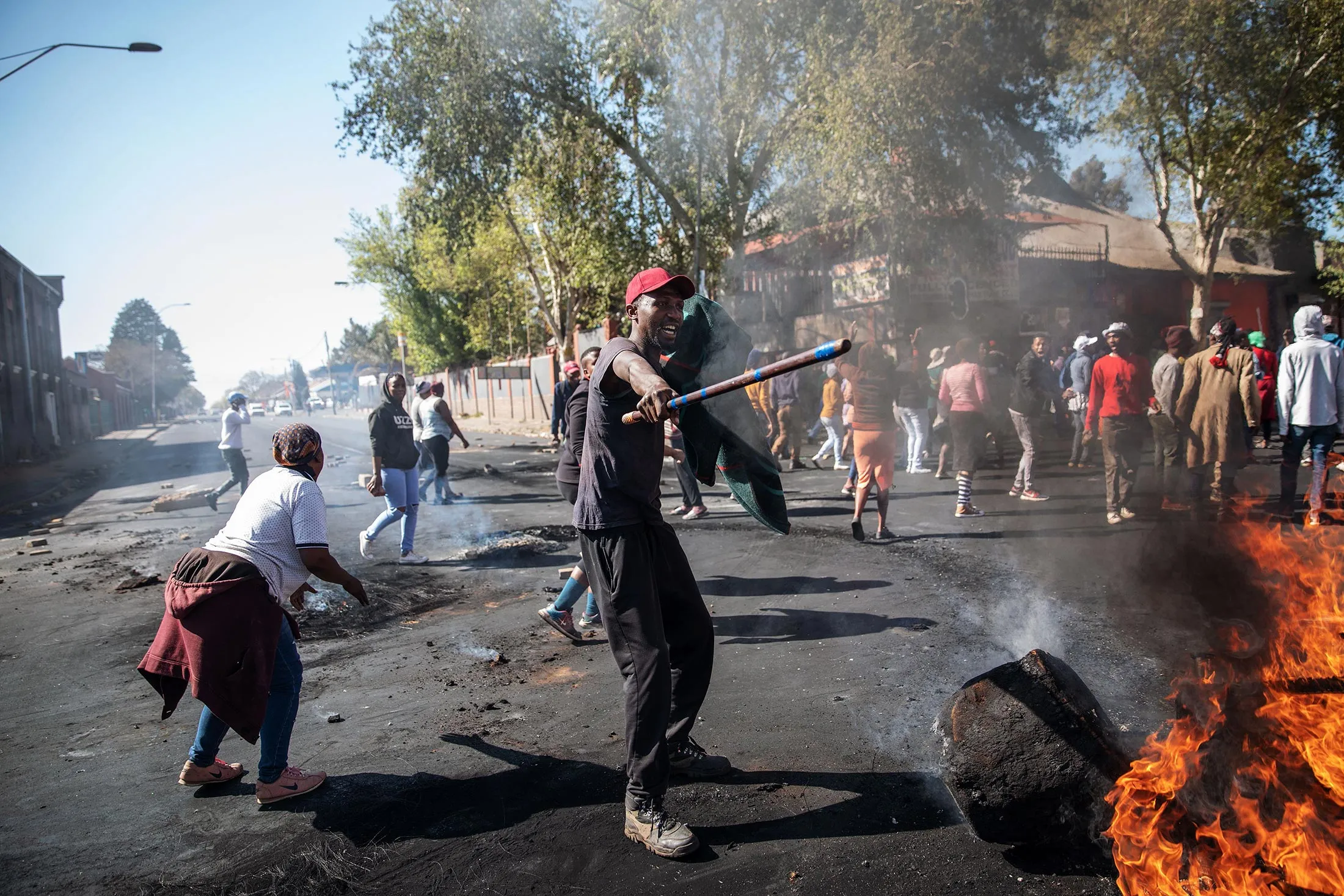
98 Nigerians Killed in South Africa Since 2022, Fresh Deaths Deepen Diplomatic Row
By Alabidun Shuaib AbdulRahman
The killing of two Nigerians in South Africa within 24 hours has renewed concerns over the safety of Nigerian nationals in the country, with Nigeria escalating diplomatic and parliamentary pressure on Pretoria over recurring xenophobic attacks and alleged abuses involving security personnel.
The latest victims were identified as Bishop Michael Taiwo Fakunle and James Uchechukwu Nwankwo.
Fakunle was reportedly shot dead at his residence in Kensington, Johannesburg, on September 4, while Nwankwo was reported dead the following day in an incident involving personnel of the South African Police Service.
The circumstances surrounding the two deaths remain subject to investigation, with Nigerian community representatives and officials demanding that the South African authorities establish what happened and prosecute anyone found culpable.
The deaths came as Nigeria and South Africa were already locked in a diplomatic dispute over attacks on Nigerians and other African nationals, with Nigeria’s National Assembly on Friday suspending official visits to South Africa and boycotting South African-hosted legislative engagements until further notice.
The latest parliamentary action followed months of renewed anti-foreigner mobilisation in South Africa and growing concern in Abuja over the treatment of Nigerian citizens.
The Clerk to the National Assembly, Kamoru Ogunlana, said the legislature was “particularly concerned by reports of Nigerians being killed, injured, displaced and forced to abandon their businesses, investments, homes and other properties as a result of recurring violent attacks.”
The National Assembly said its decision was a “strong expression of concern over the safety, dignity and welfare of Nigerians living and conducting legitimate businesses in South Africa,” while stressing that the measure was not intended to undermine the longstanding historical and diplomatic relationship between both countries.
The latest deaths have therefore brought the long-running dispute to a new point.
Two deaths, different allegations
According to the Nigerian Citizens Association South Africa, two suspects allegedly gained access to Fakunle’s residence in Johannesburg and opened fire on the cleric.
The association’s National President, Rev. Frank Onyekwelu, said the bishop was shot more than seven times.
Onyekwelu said the incident was reported to the Nigerian Consulate General in Johannesburg and that a murder case was opened at Jeppe Police Station.
The Nigerian Consulate subsequently confirmed Fakunle’s death, describing it as a “gruesome murder” and calling on South African authorities to conduct a comprehensive investigation and prosecute anyone found responsible.
The allegation that Fakunle had received threats before his death came from former Nigerian Minister of Aviation and ambassador-designate to South Africa, Femi Fani-Kayode.
In a statement on Friday, Fani-Kayode said he was “mortified and deeply shocked” by the killing.
He alleged that Fakunle had received threats before unidentified assailants went to his home and shot him.
Fani-Kayode also raised the case of Nwankwo, alleging that he died after being subjected to what he described as “gruesome interrogation techniques” by South African police officers.
However, as of Friday evening, there was no immediate public response from the South African Government or SAPS confirming Fani-Kayode’s account of Nwankwo’s death.
Fani-Kayode nevertheless claimed that the two men were the seventh and eighth Nigerians killed in South Africa in 2026 and alleged that four of the eight deaths involved South African police officers.
He further claimed that more than 100 Nigerians had been killed in South Africa between 2022 and September 2026, including more than 30 allegedly killed by SAPS and South African Defence Force personnel.
Nigeria’s 98-death record
Nigeria’s Minister of State for Foreign Affairs, Ambassador Sola Enikanolaiye, told South African International Relations Minister Ronald Lamola during diplomatic discussions in Abuja in July that 98 Nigerians had been killed in South Africa since 2022 in mob actions, hate-related attacks and cases Nigeria described as extrajudicial killings.
“We’ve seen a pattern emerge as early as 1995, in 1998, in 2006, in 2015, in 2016, 2019, 2021, 2024, and 2026,” Enikanolaiye said.
“It is on record that from 2022 alone, 98 Nigerians have died in mob actions, in hate-related actions that we have called Afrophobia, because we found that the primary victims of this ugly situation are Africans, and Nigerians in particular.”
Nigeria has demanded that such allegations be investigated through the appropriate South African institutions.
At the July meeting, Enikanolaiye also acknowledged that some Nigerians had been involved in criminal activities but rejected the idea that criminality should lead to collective punishment.
“Migration is a fact of history,” the minister said, stressing that people who violated the laws of their host country should be dealt with according to established rules.
Pretoria’s response
South Africa has rejected the suggestion that the attacks are sanctioned by its government.
Lamola, who led a South African delegation to Abuja in July, said Pretoria condemned xenophobia and wanted criminality involving foreigners handled through the law.
“The protest and the violence that is happening is not state-sponsored, it is not condoned by the South African government,” Lamola said during the talks.
He added that criminality should be dealt with through legal processes.
“We have agreed that all issues of criminality must be dealt with in terms of the law,” he said.
South Africa insists on its right to enforce immigration laws and deal with criminality.
Nigeria insists that those objectives must not be pursued through mob violence, collective punishment or unlawful treatment of its citizens.
The September 30 deadline
The latest diplomatic concerns have been compounded by another deadline issued by an anti-immigration movement in South Africa.
Diaspora Watch Newspaper reports that March and March, a controversial anti-migrant organisation, has reportedly set September 30 as a new deadline for undocumented foreigners to leave the country.
Fani-Kayode referred to the September 30 deadline in his statement, alleging that organisations behind the campaign had threatened African nationals who failed to comply.
He called on Pretoria to protect Nigerians and other African nationals against unlawful threats and attacks.
The development follows an earlier June 30 deadline around which anti-immigration groups mobilised in South Africa.
The June mobilisation occurred amid a broader wave of protests over undocumented migration, with foreign nationals accused by some campaigners of contributing to unemployment, crime and pressure on public services.
1,695 Nigerians leave South Africa
The consequences of the unrest are already visible in the number of Nigerians returning home.
Nigeria’s Acting High Commissioner to South Africa, Ambassador Ajayi Alexander, said 1,695 Nigerians had been repatriated from South Africa in 2026 amid the security concerns.
According to the envoy, 1,490 were returned through government-sponsored arrangements, while another 205 left with financial support from private individuals.
The Federal Government funded five repatriation flights, each carrying at least 200 Nigerians, while the diplomatic mission arranged additional one-way tickets for citizens who wanted to return.
The Nigerian mission has continued to monitor the situation as the September 30 deadline approaches.
National Assembly steps in
The National Assembly’s decision to suspend legislative engagements with South Africa represents the latest institutional escalation.
Under the directive, official visits by the National Assembly, its committees, lawmakers, officials and staff are suspended.
The restriction also covers conferences, seminars, workshops, parliamentary meetings, legislative exchanges and other activities organised or hosted by South African legislative authorities.
It extends to physical and virtual participation.
The suspension will remain in force until further notice and is subject to review as circumstances change.
The legislature, however, made clear that the action was not intended to sever Nigeria’s broader relationship with South Africa.
Instead, it urged Pretoria to take “urgent and concrete measures” to protect Nigerians and other African nationals, investigate reported attacks, arrest suspects and prosecute those found culpable.
The move followed earlier diplomatic efforts by the Federal Government.
President Bola Tinubu had raised concerns over xenophobic attacks against Nigerians and other Africans, while Nigerian officials engaged their South African counterparts over the security situation.
The July meeting between Enikanolaiye and Lamola was part of those efforts.
The latest parliamentary action indicates that the issue has now moved beyond diplomatic correspondence and into Nigeria’s legislative institutions.


CARICOM backs renewal of Haiti gang force mandate

US seeks roadmap to restart Russia-Ukraine peace talks — Rubio

US, Colombia negotiate tariff deal — Rubio

Pastor Jerry Eze Defends Miracles At UK Conference Amidst Criticism And Controversy

Diaspora Watch 20th Edition (October 14-20, 2024): Your Trusted Source for Global News and Insights

Tanzanian Man Reportedly Dies And Returns To Life Six Times


-

 Analysis6 days ago
The Dark Lessons From Anambra, by Boniface Ihiasota
-
 News6 days ago
98 Nigerians Killed in South Africa Since 2022, Fresh Deaths Deepen Diplomatic Row
-
 Analysis6 days ago
Kaduna’s Security Question, by Alabidun Shuaib AbdulRahman
-
 News6 days ago
CARICOM backs renewal of Haiti gang force mandate
-
 News6 days ago
US, Colombia negotiate tariff deal — Rubio
-
 Politics6 days ago
US seeks roadmap to restart Russia-Ukraine peace talks — Rubio