
News
Nnamdi Kanu’s Detention is ‘Theatre of the Absurd’ — Defence Counsel

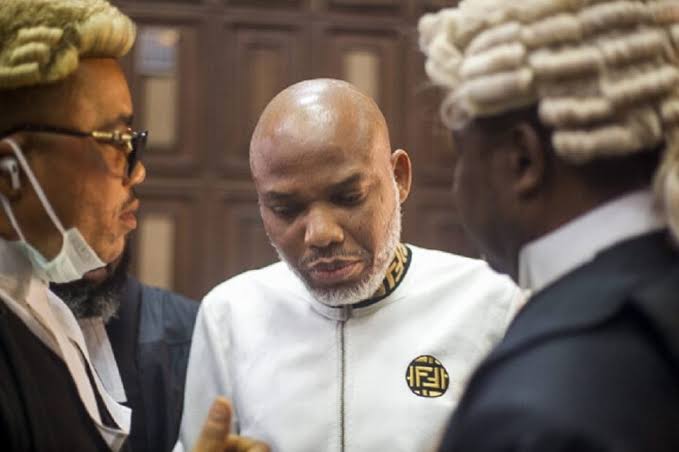
Nnamdi Kanu’s Detention is ‘Theatre of the Absurd’ — Defence Counsel
A member of the legal team defending the detained leader of the Indigenous People of Biafra (IPOB), Mazi Nnamdi Kanu, Barrister Onyedikachi Ifedi, has faulted the Federal Government’s handling of Kanu’s trial, describing it as a “propaganda-driven theatre” with no legal foundation.
In a strongly worded statement on Sunday titled “The real theatre is in Abuja, not IPOB: A legal demolition of the ‘theatrical search for Nnamdi Kanu’s acquittal’ propaganda”, Ifedi accused the government of sponsoring media campaigns against IPOB while clinging to what he termed “dead charges.”
He dismissed a recent article published under the headline “IPOB’s theatrical search for Nnamdi Kanu’s acquittal”, branding it “the very definition of political theatre” pushed by “faceless writers hiding under government mouthpieces.”
The lawyer argued that Kanu’s continued detention violates both domestic and international law, citing his abduction from Kenya in June 2021 in what he described as “a classic case of extraordinary rendition.”
He pointed to the Court of Appeal judgment in FRN v. Kanu (CA/ABJ/CR/625/2022) delivered on October 13, 2022, which nullified proceedings against Kanu on the grounds that his rendition breached his fundamental rights.
“Instead of respecting this binding judgment, the Nigerian Supreme Court somersaulted in its December 15, 2023 ruling, violating centuries of settled law by remitting a case already nullified. That, dear reader, is the real theatre,” Ifedi said.
He further accused the Federal Government of prosecuting Kanu under the repealed Terrorism Prevention (Amendment) Act 2013, noting that Section 49 of the Terrorism Prevention and Prohibition Act 2022 had already invalidated it.
“Every count predicated on the TPAA 2013 is a legal corpse. Yet the Nigerian judiciary continues to entertain it. That is theatre of the absurd,” he declared, citing Supreme Court precedent in FRN v. Ifegwu (2003), which held that offences under a repealed law cannot stand.
On the substantive charges, Ifedi maintained that the government has failed to establish even the most basic elements of a criminal case.
“No victim. No weapon. No violent act attributed personally to Mazi Nnamdi Kanu. At best, there are speeches and broadcasts — constitutionally protected under Section 39 of the 1999 Constitution and Article 9 of the African Charter,” he argued, referencing Nwankwo v. State (1983) which held that mere expression of opinion cannot constitute a crime.
The lawyer also insisted that any appellate discharge of Kanu amounts to acquittal in law, citing Abacha v. State (2002) and Ezeze v. State (2004).
“Since the charges are founded on a repealed statute and brought in violation of jurisdiction through extraordinary rendition, any order of ‘discharge’ by an appellate court is in law an acquittal. To call it otherwise would expose Kanu to double jeopardy, which Section 36(9) of the 1999 Constitution forbids,” he said.
Ifedi concluded by saying that the “real theatrics” lie not in IPOB’s agitation but in Abuja’s legal gymnastics.
“Theatrics are not in IPOB’s demand for acquittal. The real theatrics are: a Supreme Court upholding a repealed law, a prosecution without evidence, a government committing international crimes yet sitting in judgment over its victim, and propaganda outlets hiding under faceless authorship,” he said.
Kanu has been in the custody of the Department of State Services (DSS) since June 2021, with his case continuing to stir political, legal, and diplomatic controversy.

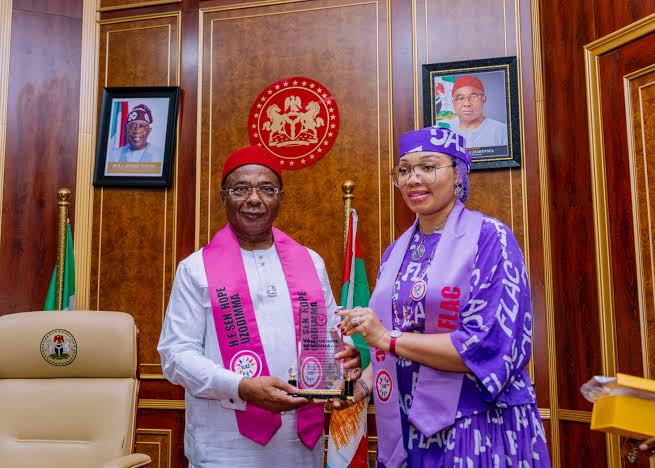
Uzodimma Backs FLAC, Urges Nigerians to Unite Against Cancer
Governor Hope Uzodimma of Imo State has reaffirmed his administration’s commitment to supporting the First Ladies Against Cancer, FLAC Nigeria, while calling on Nigerians to join efforts to combat cancer through increased awareness, early detection and sustained advocacy.
The governor made the pledge during a courtesy visit by members of FLAC and later at a gala night organised in their honour at the Government House in Owerri.
Speaking at the event, Uzodimma commended the organisation for its humanitarian interventions and contributions to improving cancer prevention, treatment and care across the country.
“I am excited to host you in Imo State and I commend your humanitarian services in Nigeria,” the governor said, assuring the delegation of his administration’s continued support for the organisation’s programmes.
He described Imo as the hospitality capital of the South-East and welcomed the delegates on behalf of the state government and people, assuring them of their safety during their stay.
The event also featured emotional testimonies from cancer survivors, including men, women and children, who recounted their experiences with the disease while encouraging Nigerians to embrace early screening and treatment.
Addressing guests at the gala night, Uzodimma stressed that the fight against cancer requires collective action, public education and efforts to eliminate the stigma associated with the disease.
He also lauded the President Bola Tinubu-led Federal Government for its investments in cancer prevention, treatment and palliative care, urging Nigerians to support ongoing reforms in the health sector.
“We need a new Nigeria where everyone participates in nation-building,” the governor said, adding that early detection remains critical to improving survival rates among cancer patients.
Earlier, the Chairperson of FLAC Nigeria and wife of the Imo State Governor, Mrs Chioma Uzodimma, said the delegation visited to appreciate the governor for his consistent support for the organisation’s advocacy and activities.
She explained that FLAC, whose membership comprises serving and former first ladies across the country, marks Cancer Survivors Month every June to celebrate survivors, inspire hope and raise awareness about the disease.
She described the governor as “a special friend of FLAC” and presented him with an award on behalf of the organisation in recognition of his support for its mission.
The gala night featured musical performances, a fashion parade by cancer survivors, comedy, cake cutting, presentation of gifts to survivors and a fundraising session to support the organisation’s advocacy programmes.
Mrs Uzodimma disclosed that more than N100m was raised during the fundraising to support FLAC’s ongoing cancer awareness and advocacy initiatives.
The delegation included the wives of the governors of Adamawa, Zamfara and Ogun states, Hajia Lami Fintiri, Hajia Huriyya Lawal and Mrs Bamidele Abiodun; immediate past FLAC Chairperson, Dr Zainab Shinkafi-Bagudu; former First Lady of Niger State, Dr Amina Abubakar; and former First Lady of Oyo State and ambassador-designate, Dr Florence Ajumobi, among other dignitaries.
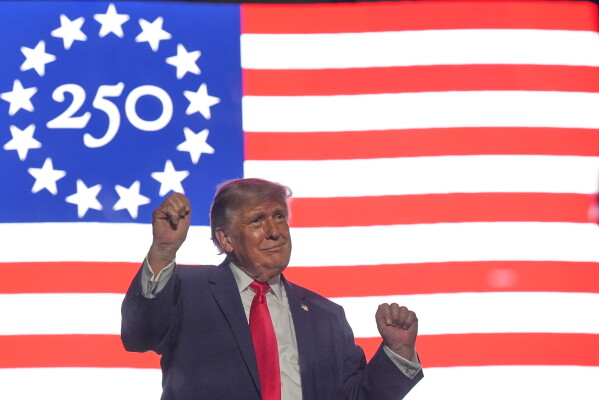
America@250: Trump Unveils Special US Passport
By Alabidun Shuaib AbdulRahman
The administration of United States President Donald Trump has unveiled a limited edition passport featuring the president’s image as part of activities marking America’s 250th anniversary.
Trump disclosed the new design in a post on Truth Social, sharing images of the commemorative passport pages, including one bearing his photograph seated behind the Resolute Desk with the Declaration of Independence in the background and his signature beneath it.
Diaspora Watch Newspaper reports that the US State Department said the special edition passport would be available from July 6 while supplies last.
According to the department, access to the commemorative passport will initially be restricted, as interested applicants must book in-person appointments at the Washington Passport Agency.
The department added that the document would also be available at selected passport acceptance events, with only two such events currently scheduled in Washington, DC.
The White House also shared images of the passport on its X account, describing it as a “Patriot Passport.”
The commemorative passport marks a departure from the traditional US passport design, which features iconic moments in American history, including the Moon landing, alongside national symbols such as the Statue of Liberty.
It is also the first time a serving US president has been featured on an American passport.
The latest design follows an earlier version announced in April, which displayed only Trump’s portrait with a gold-coloured signature and did not include the “250” anniversary inscription.
The passport initiative is part of a broader effort by the Trump administration to commemorate America’s 250th birthday.
The US Mint has also announced plans to issue a commemorative gold coin bearing the president’s image, while Trump is expected to become the first sitting US president to have his signature appear on American banknotes.
The president has also sought to leave a lasting mark on federal institutions and landmarks, including proposals to associate his name with major public projects in Washington, DC.
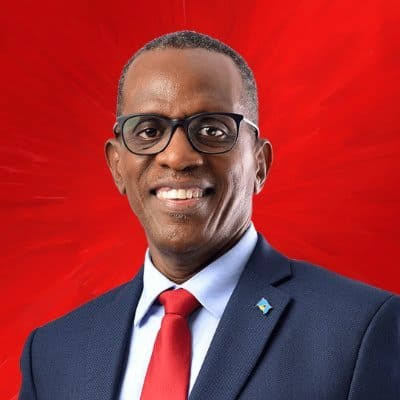
CARICOM must impact citizens’ lives, says incoming Chair Pierre
Prime Minister of Saint Lucia, Philip Pierre, has said the Caribbean Community, CARICOM must deliver tangible benefits that citizens can see and feel in their daily lives, stressing that regional integration should move beyond policy discussions and communiqués.
Pierre stated this during the national media launch of the 51st Regular Meeting of the Conference of Heads of Government of the Caribbean Community, scheduled to hold in Saint Lucia from July 5 to July 8, 2026.
The Saint Lucian leader, who will assume the six-month rotating chairmanship of the regional bloc on July 1, said his administration would prioritise initiatives capable of improving the welfare of Caribbean citizens across member states.
“CARICOM must deliver results that our people can see and feel in their everyday lives. Regional integration must not be something discussed only in conference rooms or reflected solely in communiqués. It must translate into meaningful improvements in the lives of Caribbean people,” Pierre said.
He will take over from Prime Minister Dr Terrance Drew of Saint Kitts and Nevis, who has chaired the regional organisation since January 1, 2026.
Pierre described CARICOM’s rotational leadership arrangement as one of the community’s enduring strengths, noting that it reflects shared responsibility, continuity and collective commitment among member states.
According to him, Saint Lucia is assuming the chairmanship at a critical period marked by significant global and regional challenges, requiring renewed commitment to cooperation and development.
The conference, themed “CARICOM: From Resilience to Renewal in a Changing World,” will focus on strengthening regional integration and addressing emerging socio-economic concerns facing Caribbean nations.
“The Caribbean people have always been resilient. Our history tells a story of endurance, of societies that emerged from colonialism, overcame economic vulnerability and built independent nations guided by hope, determination and unity,” he said.
However, he argued that resilience alone would no longer be sufficient to confront present realities.
“The task before us now is renewal. Renewal of our economies. Renewal of regional cooperation. Renewal of our institutions. Renewal of opportunity for our people. And renewal of confidence in our collective ability to shape our own future,” Pierre added.
The Prime Minister reiterated that CARICOM was founded on the belief that member states could achieve greater success collectively than individually, describing the principle as still relevant in today’s rapidly changing world.
He outlined the contributions of regional institutions in areas including public health, education, disaster preparedness, climate resilience, security cooperation and sustainable development, saying they demonstrate the practical value of regional integration.
Pierre said Saint Lucia’s chairmanship would focus on deepening Caribbean unity, advancing climate resilience and climate justice, strengthening regional security, promoting economic cooperation, improving food and nutrition security and expanding opportunities for citizens across the region.
As part of the conference programme, Heads of Government will participate in a retreat on July 6 aimed at fostering frank discussions and consensus-building on pressing regional issues.
Formal business sessions are expected to take place on July 7 and 8, during which leaders will deliberate on matters considered critical to the future of the Caribbean Community.
Pierre also commended Drew for his stewardship of CARICOM and pledged Saint Lucia’s continued commitment to the advancement of regional integration.
“Hosting the Conference is both an honour and a responsibility. It is also an opportunity for Saint Lucia to showcase our country, our people and our unwavering commitment to regional integration,” he said.
He added that Saint Lucia looked forward to welcoming regional leaders and working collectively to move the Caribbean Community “from resilience to renewal.”


US Supreme Court Blocks Trump’s Bid to Sack Fed Governor

Uzodimma Backs FLAC, Urges Nigerians to Unite Against Cancer

America@250: Trump Unveils Special US Passport

Pastor Jerry Eze Defends Miracles At UK Conference Amidst Criticism And Controversy

Diaspora Watch 20th Edition (October 14-20, 2024): Your Trusted Source for Global News and Insights

Tanzanian Man Reportedly Dies And Returns To Life Six Times


-

 Milestone1 week ago
Godchildren Honour Emmanuel and Joy Ojiribe at 40th Anniversary Celebration in US
-
 Analysis1 week ago
Donald Trump at 80: Assessing His Impact on Africa and Africans, by Boniface Ihiasota
-
 Tech1 week ago
Trump Announces Intel-Apple Chip Deal
-

 Business1 week ago
Ghana eyes local takeover of Gold Fields’ Tarkwa mine
-
 Features1 week ago
Diaspora Watch Vol. 97
-
 Analysis1 week ago
As Ilorin Sets the Pace Again, by Alabidun Shuaib AbdulRahman