
Analysis
Time to Defend Every Nigerian Life, by Boniface Ihiasota

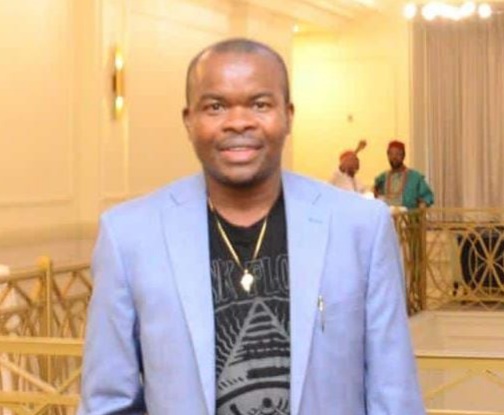
Time to Defend Every Nigerian Life, by Boniface Ihiasota
Nigeria stands today at a moral and historical crossroads, one that demands clear-eyed reflection and courageous action. From the vantage point of the diaspora, with the benefit of distance yet the burden of deep emotional connection, it is impossible to ignore the painful realities unfolding across parts of the Middle Belt and the North. Communities that once lived in harmony now grapple with waves of violence often described with soft, almost technical language — “herder-farmer clashes,” “bandit attacks,” “reprisal killings.”
Behind these labels are fathers and mothers who can no longer return to their farms, children who sleep in fear, elders watching the erosion of traditions that once bound communities together, and families who have endured losses no words can fully capture. These are Nigerians — Christians, Muslims, farmers, herders, artisans, all deserving of dignity and safety.
This crisis is not simply a security failure. It is a moral test of our nationhood. In the diaspora, we encounter societies where public safety, community trust, and national cohesion are not abstract aspirations; they are supported by deliberate, well-funded systems. These systems are not perfect, but they offer models Nigeria can adapt in practical, culturally grounded ways.
And while the statistics on Nigeria’s challenges are sobering, they point not to government guilt, but to the urgent need for coordinated, transparent, data-driven reforms that protect vulnerable communities and rebuild public confidence.
Reports cited by global faith-monitoring organisations, humanitarian groups, and rights bodies present a troubling picture. One frequently referenced dataset in international discourse, including the 2024 World Watch List, places Nigeria among countries where Christians face severe risks, with figures running into the thousands for those reported killed in 2023 alone.
Parliamentary briefings abroad and humanitarian groups such as the Humanitarian Aid Relief Trust have documented recurring attacks, widespread displacement, and systematic destruction of villages. Other organisations, such as Intersociety, also chronicle patterns of violence affecting both Christians and Muslims in rural regions. While some of these figures remain contested within Nigeria, they nevertheless reinforce the urgency of strengthening national protection systems and ensuring that every Nigerian, irrespective of faith or ethnicity, is afforded equal security, equal justice, and equal empathy.
From a diaspora viewpoint, what stands out is not just the scale of the violence but the preventable nature of many tragedies. Advanced countries facing communal tensions have invested in strong early-warning networks, multi-agency coordination mechanisms, and community-centred policing models.
These systems show measurable success by improving response times, reducing escalation, and fostering trust between citizens and security institutions. Nigeria can draw practical lessons from these approaches. Effective national coordination models, such as those used in the United States for crisis management, rely on unified command structures, common communication standards, and the integration of faith-based and community organisations into emergency planning.
A Nigerian adaptation of this model could create a national platform where security agencies, traditional rulers, faith leaders, and civil society jointly analyse threats, share intelligence, and mobilise rapid responses. Such a structure, rooted in Nigeria’s cultural realities but informed by global best practices, would save lives.
Equally important is community policing, not the informal, unregulated kind that fuels abuse or vigilantism, but structured, accountable, measurable partnership policing. Countries like the UK and Canada demonstrate that when local security actors operate with clear legal boundaries, training, and oversight, citizen trust and intelligence flow improve dramatically. Nigeria can replicate this by formally integrating vetted community groups and traditional institutions into local security frameworks under police supervision. This approach respects the local knowledge that rural communities possess while ensuring professional accountability.
Security, however, is only one dimension. The human cost of the violence like displacement, destroyed livelihoods, psychological trauma requires a level of social investment that advanced nations routinely prioritise.
International health bodies highlight that conflict exposure significantly heightens long-term mental health needs. Nigeria will require expanded trauma care, community counselling programs, and accessible psychosocial support delivered through primary healthcare and faith networks. Rebuilding homes, restoring farms, and providing tools and training are equally essential; these interventions not only restore dignity but also deepen trust in government.
Places of worship, too often targeted, need structured protection. Advanced countries have implemented national schemes that support security upgrades for mosques, churches, synagogues, and temples most at risk. Nigeria can create a similar framework in high-risk regions, providing basic infrastructure like lighting, reinforced entry points, and community safety training. Such measures demonstrate state commitment to protecting freedom of worship, a constitutional right and a moral obligation.
As the diaspora, we recognise the efforts the Nigerian government has already made in confronting insurgency and upgrading security architecture. But the next phase requires deliberate attention to vulnerable rural populations in flashpoint areas like Plateau, Benue, and Southern Kaduna. These regions are not peripheral; they are central to Nigeria’s food security, interfaith cohesion, and national stability. Protecting them is both a justice imperative and a strategic necessity.
The path forward must be one of collaboration, not division. Churches and mosques must champion narratives of unity. Civil society must monitor data transparently. Media must avoid sensationalism and focus on verified information. Security agencies must be commended when they act swiftly and fairly, and held accountable when they fall short. Government must demonstrate openness, empathy, and partnership. And the diaspora must continue to contribute technical expertise, advocacy, and resources.
Nigeria has survived darker moments and emerged stronger. With decisive leadership, evidence-based reforms, and a renewed commitment to the sanctity of every Nigerian life, this tragedy can be transformed into an opportunity for national rebirth. The time for blame is over. What Nigeria needs now is compassion anchored in facts, courage backed by action, and collaboration driven by a shared belief that every Nigerian deserves to live and worship without fear.


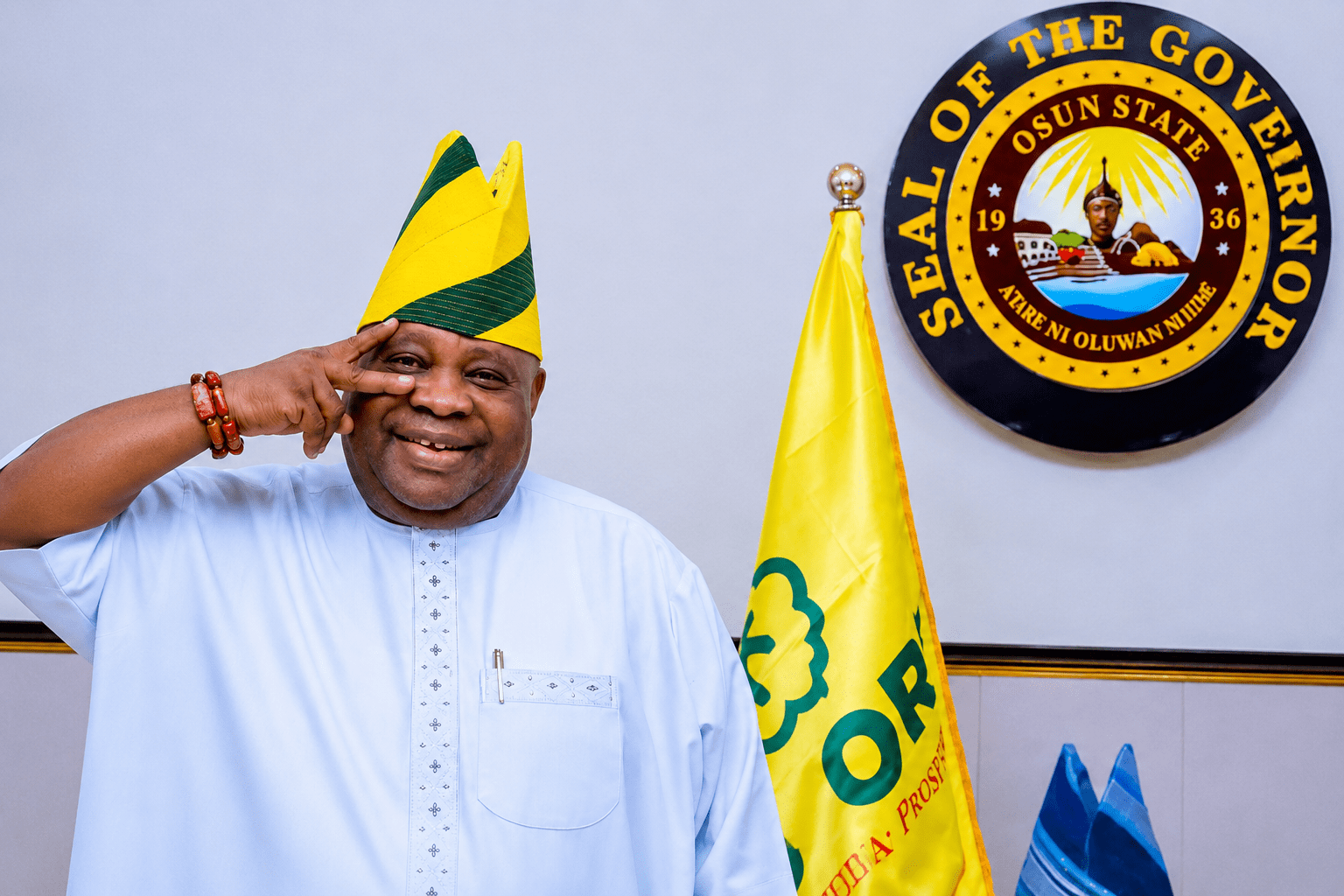
Adeleke’s Osun Victory: What It Means for Nigeria’s 2027 Elections
By Alabidun Shuaib AbdulRahman, Abuja, Nigeria
The re-election of Osun State Governor, Ademola Adeleke, has delivered more than a second term for the incumbent. It has produced a political signal that parties, presidential aspirants and strategists preparing for the 2027 general elections cannot afford to ignore.
Adeleke’s victory on the platform of the Accord Party is particularly significant because it came against a combination of political, institutional and structural obstacles. He defeated the candidate of the ruling All Progressives Congress, Bola Oyebamiji, by 511,067 votes to 444,815, a margin of 66,252 votes. The governor won 19 of the state’s 30 local government areas, while the APC candidate won 11.
The result is, therefore, not simply another off-cycle governorship election. It is a warning against assuming that control of the Federal Government automatically translates into electoral dominance at the state level.
A victory against formidable odds
Perhaps the most striking feature of Adeleke’s victory was the platform on which he contested.
The governor won his first term in 2022 under the Peoples Democratic Party but eventually left the party and contested his re-election under the Accord Party. That was a considerable political gamble. The PDP had historically been an important platform in Osun, while Accord had no comparable electoral weight in the state.
Yet Adeleke transformed what could have been a political liability into an electoral vehicle.
His victory also followed months of political uncertainty surrounding the Accord Party. In June, a Federal High Court judgment deregistering the party created questions about whether Adeleke would be able to contest on its platform. The governor’s camp rejected the development and pursued legal remedies, insisting that the party would remain on the ballot.
That episode demonstrated an important feature of Nigerian politics: electoral machinery is not necessarily the same thing as political popularity.
A party may have a weak national structure but become electorally formidable when a popular incumbent or candidate, political organisation and grassroots network are placed behind it.
Adeleke’s campaign also had to contend with the internal crisis within the PDP. The party’s Osun structure was embroiled in a leadership dispute over support for the governor’s re-election, with rival factions issuing conflicting directives.
Instead of allowing those problems to consume his campaign, Adeleke effectively built his own political structure around the election.
That may ultimately prove to be one of the most important lessons from Osun.
Federal might is not enough
The election also carries a message for the APC.
The party controls the Federal Government, but that advantage did not translate into victory in Osun.
For months, Adeleke and his supporters had warned against attempts to deploy federal institutions for partisan advantage. The governor specifically argued that federal power should be used for governance rather than electoral manipulation.
The significance of that argument became even greater when the EFCC froze an account belonging to the Osun State Government shortly before the election. The development generated political controversy and became another issue around which the election was contested.
Regardless of the competing arguments surrounding the action, the political lesson is clear: the closer an election gets, the more sensitive the public becomes to the actions of federal institutions.
For the APC, the Osun result should therefore trigger serious introspection ahead of 2027.
Federal incumbency gives a party enormous resources and visibility, but voters ultimately retain the power to separate federal politics from state politics.
Adeleke has also changed the South-West equation
Osun has traditionally been an important component of the South-West political equation.
The APC’s dominance in much of the region has often created the impression that the party possesses an almost automatic electoral advantage there. But Adeleke’s victory shows that the South-West remains politically competitive.
The governor did not merely defeat the APC. He did so after changing parties and without relying on the traditional strength of the PDP structure.
That raises a crucial question ahead of 2027: Can opposition politicians build electoral coalitions that transcend party labels? The Osun experience suggests that they can.
A popular candidate with an effective grassroots organisation can potentially survive the weakness of his party if voters are sufficiently convinced about his personal record, political identity and campaign message.
This could become particularly important in 2027, when the presidential contest is expected to be shaped not only by party structures but also by alliances, defections and personality-driven campaigns.
A message for Tinubu and the APC
Interestingly, Adeleke has publicly backed President Bola Tinubu for the 2027 presidential election despite being outside the APC. The development was reported in March and the governor reaffirmed his support for Tinubu’s re-election bid again immediately after he was announced.
That creates an unusual political configuration.
Adeleke has defeated Tinubu’s party in a governorship election but has simultaneously expressed support for Tinubu’s presidential ambition.
This demonstrates that Nigerian electoral politics is becoming increasingly transactional and candidate-driven. State-level contests may not necessarily reproduce presidential alliances.
In other words, a governor can oppose the President’s party in a state election without necessarily opposing the President at the national level.
That distinction will matter enormously in 2027.
If similar arrangements emerge across the country, the presidential election could produce alliances that cut across conventional party boundaries.
The PDP should be worried — but not entirely defeated
The outcome is also a complicated development for the PDP.
On one hand, the party can point to the fact that a governor who won his first term under its platform has retained his seat. On the other hand, Adeleke did not win under the PDP. He won under Accord. That distinction should worry the opposition party.
If popular politicians begin to believe that they can win elections by creating alternative platforms rather than depending on established parties, the traditional political parties may lose some of their bargaining power.
The PDP’s internal crisis in Osun before the election only reinforces the problem.
For the party to remain competitive in 2027, it must address its factional disputes, candidate-selection problems and leadership disagreements. Otherwise, politicians may increasingly seek alternative platforms.
The real winner: the voter?
There is another dimension to the Osun result that deserves attention.
Adeleke’s victory came in an election involving 15 political parties and more than one million accredited voters. The final result showed a competitive contest rather than a one-sided political coronation.
Adeleke secured 511,067 votes, while Oyebamiji of APC obtained 444,815.
The 66,252-vote margin is substantial, but it is not overwhelming when placed against the size of the electorate.
That means the APC cannot dismiss the result as an insignificant defeat, just as Adeleke cannot interpret it as an unlimited mandate.
The governor has won another four years, but the election has demonstrated that a sizeable portion of Osun voters still preferred the opposition candidate. The lesson for 2027 is that every serious vote will matter.
What Osun tells us about 2027
The first major lesson is that incumbency remains powerful, but it is not invincible. Adeleke used the advantages of incumbency, his administration’s record and his personal popularity to overcome a major party disadvantage.
Second, party affiliations may become less important than candidates and coalitions.
The Accord Party’s victory in Osun is particularly instructive because it demonstrates that a relatively small political platform can become competitive when attached to a sitting governor with a strong electoral base.
Third, internal party crisis can cost elections.
The PDP’s troubles and the APC’s inability to convert its federal dominance into a state victory should serve as warnings to the major parties.
Fourth, the South-West should not be treated as a political monolith.
The region will remain central to the 2027 presidential contest, but Osun has demonstrated that voters can make different choices at different electoral levels.
Finally, the credibility of electoral institutions will be critical.
The controversies preceding the election, including the dispute over Accord’s legal status and concerns surrounding political and security developments, underline the importance of INEC and security agencies maintaining public confidence. Although President Tinubu had charged security chiefs to ensure maximum security and urged INEC to guarantee a free and fair election.
The bigger political warning
Adeleke’s second-term victory should not be interpreted as a prediction that the APC will lose the 2027 presidential election. That would be an overstatement. Neither should it be interpreted as proof that opposition parties have suddenly become stronger than the ruling party.
What Osun has done is more important: it has challenged the assumption that electoral outcomes can be predetermined by party dominance, federal power or political calculations made in Abuja.
The 2027 election will ultimately be decided state by state, ward by ward and polling unit by polling unit.
The Osun electorate has shown that voters can reward an incumbent even when he changes political platforms and can reject a candidate backed by the dominant party.
For President Tinubu and the APC, the message is unmistakable: the 2027 election cannot be won by assuming that incumbency alone guarantees victory.
For the opposition, the lesson is equally sobering: Adeleke’s formula cannot simply be copied. A strong personality, an effective grassroots organisation, a credible campaign and a candidate capable of building alliances were all necessary.
The Osun election has therefore changed the political conversation ahead of 2027. Adeleke has secured another four years.
But perhaps his most important achievement is that, in defeating the political establishment in Osun, he has demonstrated that Nigeria’s next general election may be far more competitive, unpredictable and candidate-driven than many of the country’s political calculations currently suggest.
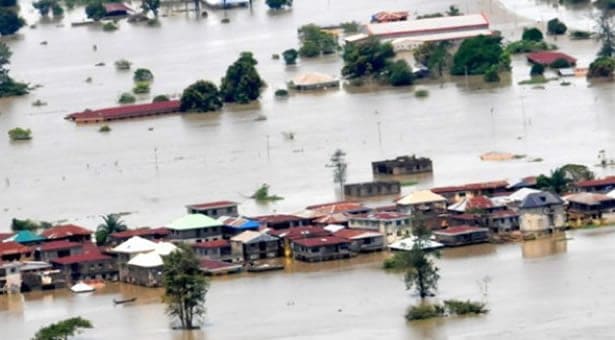
Before Wike Turns Abuja City to Jakarta, by Alabidun Shuaib AbdulRahman
There is something deeply unsettling about watching Abuja, a city conceived as one of Africa’s most ambitious experiments in planned urban development, repeatedly surrender parts of itself to floodwater.
The latest flooding in parts of the Federal Capital Territory is not merely another rainy-season inconvenience. It is a warning. And the warning is bigger than the immediate political argument over whether Minister of the Federal Capital Territory, Nyesom Wike, should be blamed for what happened.
The more important question is whether Abuja is gradually developing the same urban pathologies that have made Jakarta a global symbol of uncontrolled urban expansion, disappearing waterways, inadequate drainage, environmental degradation and the expensive consequences of allowing development to outrun planning.
That comparison should not be misunderstood. Abuja is not Jakarta. Abuja is inland, while Jakarta is a coastal megacity battling sea-level rise and severe land subsidence. Parts of North Jakarta, for instance, have recorded subsidence of between 15 and 25 centimetres annually, dramatically worsening its exposure to flooding. But cities do not have to share the same geography to share the same mistakes. That is where Wike must be careful.
The former Rivers State governor has unquestionably changed the physical appearance of Abuja since President Bola Tinubu appointed him FCT minister in August 2023. Roads have been reconstructed, bridges completed, neglected infrastructure revived and several long-abandoned projects pushed towards completion.
By July this year, Wike said the FCT had inaugurated its 50th project since the Tinubu administration came into office. The projects include roads, water infrastructure and other public works across the territory. To be fair to him, that record deserves commendation. However, roads alone do not make a city.
A city is a living system. Its roads, drainage channels, wetlands, parks, residential districts or areas, commercial centres, waterways and population must function together. When one element is aggressively developed while another is ignored, the consequences eventually become visible.
The flooding witnessed in Abuja this August should therefore force a more uncomfortable conversation about the direction of the capital. On August 18, Wike visited flood-affected areas in Maitama and reportedly discovered a structure sitting on a drainage area whose allocation had been revoked in 2011 in the public interest. That discovery is important for a reason that goes beyond the particular building because if a plot officially designated as a drainage area could be allocated, revoked and subsequently developed despite the restriction, then Abuja’s problem is not simply rainfall. It is governance.
And governance is precisely where the Jakarta analogy becomes relevant. Jakarta’s flooding crisis was not created overnight. Years of rapid urbanisation, excessive groundwater extraction, loss of natural absorption areas, pressure on drainage systems and development along waterways combined to produce a crisis that became progressively more difficult and expensive to reverse. The World Resources Institute has noted that Jakarta’s land subsidence averages about 12 centimetres annually, with parts of the northern coast experiencing rates as high as 25 centimetres.
As it stands, Abuja does not face Jakarta’s sinking-land problem. But Abuja faces a related urban danger: the gradual destruction of the spaces through which water is supposed to move. A drainage channel is not an empty piece of land waiting for a developer. A wetland is not idle property. A green area is not necessarily undeveloped land begging for a building. They are components of the city’s natural infrastructure. And once politicians, civil servants, developers and influential residents begin treating them as disposable, the city starts paying the price.
This is why Wike’s decision to order the demolition of structures obstructing designated waterways is both necessary and politically dangerous. To some extent, that is the right principle. But principles become meaningful only when they are applied consistently. If Wike demolishes the house of an ordinary resident while a politically connected developer is allowed to retain an equally illegal structure, then the exercise will become another chapter in Nigeria’s familiar story of selective enforcement.
The minister should therefore resist the temptation to turn the demolition campaign into a spectacle. What Abuja needs is not demolition theatre. It needs urban discipline. There must be a comprehensive audit of drainage corridors, floodplains, wetlands and waterways across the Federal Capital City and the satellite towns. Every questionable allocation should be investigated. Every revoked plot should be reconciled with the physical structures standing on it. And where demolition becomes unavoidable, compensation and relocation questions must be handled according to law and due process.
The Abuja Master Plan was conceived precisely to prevent the kind of urban disorder now threatening the capital. The original plan was formulated in 1979, while the detailed plan for the central district was developed in the early 1980s under the direction of Japanese architect Kenzo Tange. That is one of the ironies of modern Abuja. A city designed with extraordinary attention to order is increasingly being tested by disorder.
The original planners could not have predicted Abuja’s current population pressures, real estate boom, traffic density, climate pressures and sprawling satellite settlements. The city has changed dramatically since the 1970s. Yet the answer cannot be to abandon planning. The answer is to update it. Indeed, an urban planning review has noted that Abuja’s 1979 master plan has remained largely unchanged despite more than four decades of rapid urbanisation. This is where Wike’s legacy will ultimately be judged. Will he merely construct more roads within an old urban framework, or will he help create a modern Abuja capable of surviving the pressures of the next 50 years?
Abuja needs an integrated storm-water management strategy, not sporadic intervention after every major rainfall. Drainage channels must be mapped, cleared and maintained before the rains. Construction permits must be linked to proper hydrological assessments. Developers should be required to demonstrate how their projects will manage storm-water runoff. The administration must also look beyond Maitama, Wuse, Garki and the other affluent districts.
The real test of Abuja’s planning system lies in its rapidly expanding outskirts. Kuje, Gwagwalada, Bwari, Kubwa, Lugbe, Karu and other growth corridors are experiencing enormous development pressures. Wike has invested heavily in connecting these communities with roads and other infrastructure. That is commendable. But every new road creates development pressure. Every new interchange increases land value. Every improved corridor attracts houses, shopping centres, estates, filling stations and commercial activity. Infrastructure therefore creates both opportunity and responsibility.
If roads arrive without drainage, planning enforcement, waste management and environmental protection, today’s infrastructure investment can become tomorrow’s flooding problem. This is how cities drift into crisis. Not because one administration deliberately sets out to destroy them, but because thousands of individual decisions accumulate until the city itself begins to malfunction.
Jakarta offers that warning. Its experience demonstrates that once urban environmental damage reaches a certain point, governments spend enormous sums trying to repair problems that could have been prevented much more cheaply through planning and enforcement. Jakarta has consequently had to undertake massive flood-control interventions while simultaneously confronting the consequences of decades of groundwater extraction and uncontrolled urban expansion.
Abuja still has the advantage Jakarta wishes it had, which is time. Wike should therefore see the August flooding as more than an opportunity to order demolitions. It should be the beginning of a comprehensive Abuja Resilience Strategy. That strategy should combine the enforcement of the master plan with a modern review of the master plan itself. It should protect wetlands, restore drainage corridors, expand green infrastructure, improve waste management and establish a transparent digital register of land allocations and planning approvals.
Most importantly, it must end the culture in which political influence can bend urban planning rules. The Maitama discovery is a warning in this regard. A drainage area revoked more than a decade ago should not later become a building site.
Abuja does not need another powerful minister who can demolish structures. It needs institutions powerful enough to prevent illegal structures from being approved in the first place.
Wike has shown that he understands the politics of physical development. He has demonstrated urgency in pushing contractors and completing projects. His administration has been particularly aggressive about roads and other visible infrastructure, with dozens of projects commissioned. Now he must demonstrate that he understands the politics of urban sustainability.
Wike still has an opportunity to change the trajectory of anyhowness building of structures in the city. He can leave Abuja with hundreds of kilometres of roads and dozens of commissioned projects. Or he can leave something more enduring: a capital whose development respects the ecological systems that make urban life possible.
Alabidun is a media practitioner and can be reached via alabidungoldenson@gmail.com
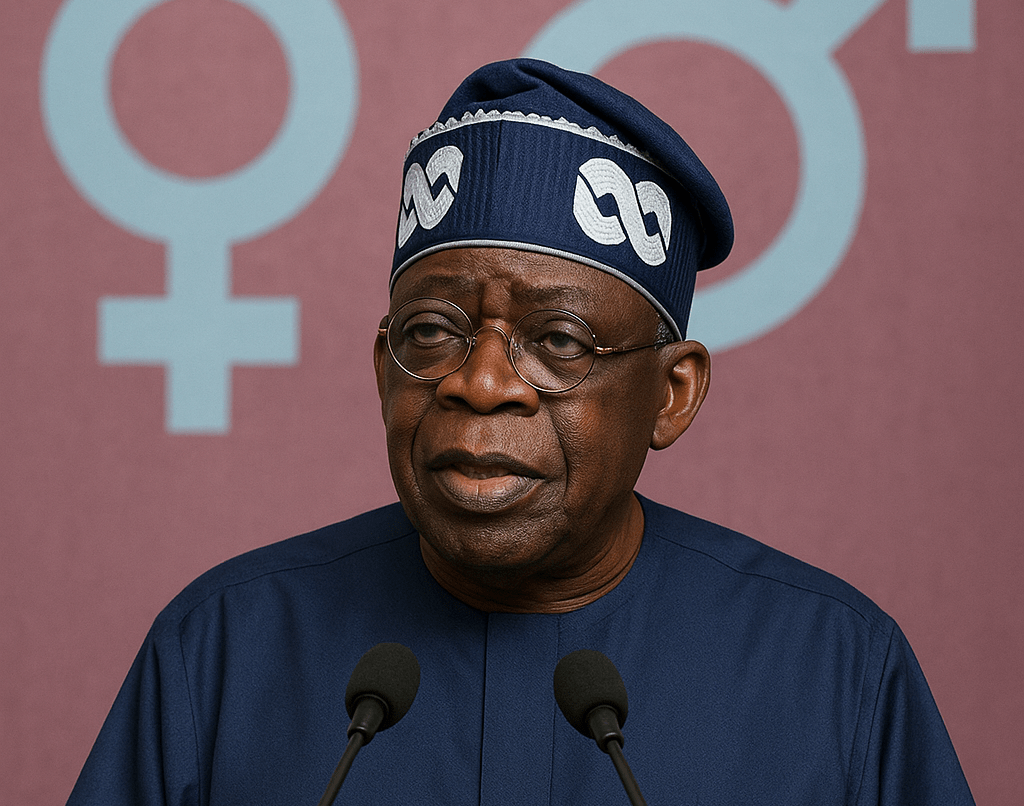
Tinubu, EFCC and the Danger of Political Interference, by Alabidun Shuaib AbdulRahman
There are moments when the intention behind an official decision may be defensible, yet the decision itself opens a door that ought to concern every citizen. President Bola Ahmed Tinubu’s intervention in the Economic and Financial Crimes Commission’s freezing of an Osun State Government account is one of those moments.
On August 6, 2026, with the Osun governorship election only nine days away, Tinubu directed the EFCC to return to court, vacate the order freezing an account belonging to the Osun State Government and discontinue the action it had instituted. The President said he was “deeply embarrassed” not by the EFCC’s exercise of its mandate, which he acknowledged was backed by a court order, but by its timing.
His explanation was understandable. Tinubu said actions taken by federal institutions were ordinarily attributed to him as President, whether or not he had prior knowledge of them. Since the election was approaching, he argued, nothing should be done that could create the impression that the EFCC or another Federal Government agency was being used to influence the election.
The argument is “morally” correct. But it also creates a difficult constitutional and institutional question: where does legitimate presidential concern about an election end and operational interference in an anti-corruption agency begin?
The EFCC did not arbitrarily descend on Osun. The commission said it had observed “huge transfers of funds into different corporate entities” from the state account and had acted to halt what it considered suspicious movement of public money. It argued that the approaching election could not become an excuse for an anti-corruption agency to ignore suspected movement of public funds.
Governor Ademola Adeleke, however, said the account was used for workers’ salaries and had been placed on a “Post No Debit” status. He demanded an explanation from EFCC Chairman Ola Olukoyede and described the action as another assault on Osun’s democracy.
The political atmosphere surrounding the matter had also been poisoned long before the account was frozen. In June, the Diaspora Committee of the All Progressives Congress Governorship Campaign Council in Osun asked the EFCC to freeze accounts allegedly connected with a reported N13.7bn annual ghost-workers payroll scandal. The committee claimed the money could be diverted to finance vote-buying ahead of the August 15 election. That background makes the EFCC’s action politically sensitive. But sensitivity is precisely why institutional independence matters.
The EFCC is a creation of statute. Under the EFCC (Establishment) Act, its chairman and members are appointed by the President, subject to Senate confirmation, while the law also provides for the chairman’s tenure and removal. The Presidency therefore has substantial influence over the commission’s leadership. That, however, does not make the President the operational head of every EFCC investigation.
There is an important distinction between constitutional authority over an institution and operational control of its investigations. A President may appoint the EFCC chairman, exercise statutory powers concerning the office, formulate broad government policy and demand accountability from federal agencies. But an anti-corruption agency must retain sufficient operational independence to determine whom to investigate, what evidence to pursue and what enforcement action to take.
Curiously, Tinubu himself made this case in the same statement. He said that since assuming office in May 2023, he had consistently maintained that anti-corruption and law-enforcement agencies should perform their statutory responsibilities independently and professionally, “without fear or favour, or political interference.” He added that he had deliberately refrained from directing or interfering in EFCC operations. That is why the Osun intervention becomes more concerning.
If a President can intervene in an operational decision because its timing might create an appearance of political interference, then the President has necessarily exercised influence over an operational decision. That does not automatically make the intervention unlawful. But it creates a precedent that future administrations may exploit.
Tinubu may genuinely believe the EFCC action could have been interpreted as an attempt to influence the Osun election. Another President could make the same argument about an investigation involving a governor, a minister, a major campaign financier or a politically influential contractor. If the principle becomes that the Presidency can intervene whenever enforcement action creates political controversy, the exception could eventually swallow the rule.
Nigeria’s history with the EFCC offers enough warnings. The commission was established in 2002 and began operations under President Olusegun Obasanjo, with Nuhu Ribadu becoming its pioneer chairman in 2003. Ribadu’s aggressive pursuit of governors, ministers, bankers and other powerful Nigerians gave the EFCC international prominence. But his controversial removal in 2007 also generated questions about the vulnerability of the commission to presidential and political interests.
Farida Waziri’s tenure produced another controversy. Appointed by President Umaru Musa Yar’Adua in 2008, she was removed by President Goodluck Jonathan on November 23, 2011. Years later, Waziri alleged that Jonathan’s administration had interfered with investigations and that her refusal to back down from a probe contributed to her removal. Though Jonathan rejected the allegation and challenged her to identify whom he had allegedly ordered her not to investigate.
The significance of those disputes is not simply who was right. It is that Nigerians repeatedly witnessed a situation in which the political leadership had enormous influence over the institution expected to investigate politically powerful people.
The Muhammadu Buhari administration provided another example. Buhari appointed Ibrahim Magu as acting EFCC chairman in 2015, despite the controversy that followed the Senate’s rejection of his nomination for substantive confirmation. On July 10, 2020, Buhari approved Magu’s suspension to allow a presidential panel to investigate allegations against him.
Again, the larger issue was institutional. The leadership of the EFCC remained heavily dependent on the Presidency, even though the commission’s work could directly affect members and allies of the governing political establishment. That is the weakness Nigeria has failed to resolve.
The President appoints the EFCC chairman. The commission investigates people who may have enormous political connections. The chairman therefore operates within an institutional structure in which the most powerful political office in the country has significant influence over the leadership of the agency.
This is why the Osun matter cannot be reduced to whether Tinubu had the right to be concerned about the election. Of course, he did. Elections must be protected from intimidation, manipulation and the misuse of state institutions. The harder question is whether that legitimate concern should be exercised through a presidential direction concerning a live EFCC enforcement matter.
There is also an important constitutional distinction regarding Adeleke. Section 308 of the 1999 Constitution grants a sitting governor immunity from civil or criminal proceedings in specified circumstances. But immunity is not exoneration. It does not mean a governor cannot be investigated, that evidence cannot be gathered or that public funds associated with a state government are beyond investigation.
If the EFCC had credible evidence of suspicious transfers, Adeleke’s candidacy should not automatically extinguish the commission’s investigative responsibility. Conversely, the approaching election should not give the EFCC licence to turn an investigation into a political weapon. The law must be stronger than both impulses.
That is why the better solution should have been procedural rather than presidential. If the EFCC had obtained a freezing order from a court and concerns subsequently arose about its timing or effect on essential state services, those concerns could have been presented before the court. If salaries needed to be paid, the government could have sought appropriate judicial relief.
Adeleke, too, must allow due process to take its course. If the EFCC acted unlawfully, the courts provide the remedy. If the allegations are false, evidence and due process should establish that fact.
For Olukoyede, the lesson is equally clear. The EFCC’s greatest asset is not proximity to the President but distance from political instruction. The commission must be prepared to investigate opposition politicians and members of the ruling party, governors and former governors, ministers and political financiers according to the same evidentiary standard.
Tinubu’s intervention, even if motivated by a legitimate desire to protect the integrity of the Osun election, should concern Nigerians. Institutions survive governments. Presidents come and go. Political parties win and lose elections.
If Tinubu truly wants Nigerians to believe that the EFCC is independent, the next step is obvious. He should help build an institutional framework in which no future President will need to intervene to prove that the EFCC is not being used politically. That is the real test of leadership. And that is the difference between fighting corruption under a President and building a country where the fight against corruption does not depend on the President.
Alabidun is a media practitioner and can be reached via alabidungoldenson@gmail.com



Rubio Reveals Late-Night Calls, Says No ‘Typical Day’ as US Security Chief

Chiemela Nathan: The ‘Girl With an Agenda’ Who Turned Excellence Into Leadership

CARICOM Urges Youths to Build Skills, Embrace Entrepreneurship

Pastor Jerry Eze Defends Miracles At UK Conference Amidst Criticism And Controversy

Diaspora Watch 20th Edition (October 14-20, 2024): Your Trusted Source for Global News and Insights

Tanzanian Man Reportedly Dies And Returns To Life Six Times


-
 Analysis4 days ago
Adeleke’s Osun Victory: What It Means for Nigeria’s 2027 Elections
-
 News4 days ago
Five Years on the Throne: Reflecting on the Reign of the Olu of Warri, by Boniface Ihiasota
-
 Milestone4 days ago
Chiemela Nathan: The ‘Girl With an Agenda’ Who Turned Excellence Into Leadership
-
 Analysis4 days ago
Before Wike Turns Abuja City to Jakarta, by Alabidun Shuaib AbdulRahman
-
 News4 days ago
Rubio Reveals Late-Night Calls, Says No ‘Typical Day’ as US Security Chief
-

 News4 days ago
Harry, Meghan to return to Britain with children six years after royal exit