
Health
LIFESTYLE


Health and lifestyle experts have urged women to prioritize healthy living and challenge misconceptions surrounding Polycystic Ovary Syndrome, assuring patients that the condition does not prevent them from living fulfilled and productive lives.
The call was made at the Complete 360 Woman Conference themed “Rebirth,” held in Lagos, where stakeholders emphasized the need for greater awareness and intentional self-care among women. At the conference, professionals across health, wellness and personal development sectors converged to address issues affecting women’s well-being and encourage self-rediscovery despite prevailing social and economic pressures.
Delivering the keynote address, Publisher of Exquisite Magazine, Tewa Onasanya, stressed the importance of mental transformation and self-belief, noting that many women unconsciously limit their own growth due to negative internal narratives. Onasanya said many individuals are constrained not by lack of competence or opportunity, but by beliefs that shape their decisions, adding that embracing a mindset of growth is essential to unlocking potential and achieving purpose.
She described “rebirth” as a continuous process, urging women to make daily decisions that prioritize purpose over fear, growth over comfort, and confidence over doubt in their personal and professional
journeys. Convener of the conference and global emotional intelligence coach, Omotola Ade-Onojobi, explained that the initiative was designed to help women reconnect with their purpose and unlock
hidden potential despite financial, emotional and marital challenges.
During a panel session titled “Revitalize Your Health,” nutritionist and Chief Executive Officer of Zeelicious Foods, Winifred Nwania, highlighted the role of balanced diets and healthy routines in managing hormonal conditions, noting that lifestyle choices significantly influence overall well-being.
Also speaking, actress and medical doctor, Annetta Adebusuyi, said women diagnosed with PCOS could still lead complete lives and achieve motherhood, stressing that proper management, accurate information and a positive mindset remain key to overcoming the condition.
#lifestyle #health #pcos #healthy living













Trump Proposes Five-Way Split of Childhood Vaccines
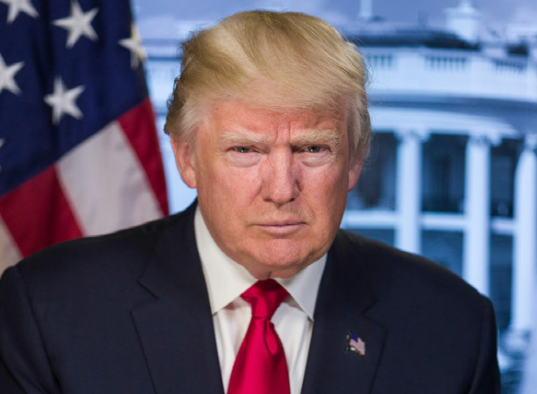
President Donald Trump has proposed splitting some childhood vaccines into five separate doses administered six months apart, a plan that vaccine experts say could leave children inadequately protected if the individual doses contain too little vaccine.
Trump made the proposal on Friday while speaking about his administration’s plans to alter the United States childhood immunisation schedule.
He said children could receive doses labelled one through five, with each containing what he described as about 20 per cent of the usual amount.
“Instead of a child going in and having a tremendous amount of different vaccines pumped into a big proportion of the body … we’re going to recommend that they do five doses marked one, two, three, four, five and that they be given in six-month intervals,” Trump said.
Trump did not identify all the vaccines that would be affected. He specifically referred to the polio vaccine, which he described as having been “amazing”.
However, vaccine specialist Dr Paul Offit, director of the Vaccine Education Centre at the Children’s Hospital of Philadelphia, said the proposed approach would not provide the intended protection.
Offit explained that vaccines are developed through dose-response studies to determine the smallest quantity capable of producing a protective immune response.
“You don’t want to give too much, where you know you don’t need all that, and you don’t want to give too little,” he said.
He told CNN that administering vaccines at doses below the level required to generate an immune response could make them ineffective rather than safer.
Trump also linked the proposed changes to autism, saying he expected them to lead to a “massive reduction” in autism.
However, decades of scientific research have found no causal link between childhood vaccines and autism.
The President’s comments came amid broader efforts by his administration to alter federal childhood vaccination policy.
In August, Trump signed an executive order seeking changes to the childhood immunisation schedule, including separating the measles, mumps and rubella vaccine into individual shots.
The administration has argued that the changes would reduce the number of vaccines given to children and address concerns about the existing schedule.
Health and Human Services Secretary Robert F. Kennedy Jr., who was with Trump as he outlined the proposal, has also backed changes to federal vaccine policy.
Kennedy spoke on Thursday at a conference organised by Children’s Health Defense, an organisation associated with vaccine scepticism.

DRC gets 70,000 Ebola vaccine doses as trial targets Bundibugyo virus
The Democratic Republic of Congo has received 70,000 doses of the Ervebo Ebola vaccine from the global vaccine stockpile as health authorities intensify efforts to contain an outbreak of Bundibugyo virus disease.
The doses were released by the International Coordinating Group on Vaccine Provision following a request from the DRC government last week.
The development comes amid uncertainty over the effectiveness of Ervebo against the Bundibugyo strain, which is different from the Zaire ebolavirus for which the vaccine was originally developed and licensed.
Of the 70,000 doses, 20,000 have been allocated for a Phase 3 clinical trial designed to assess the vaccine’s potential impact against the Bundibugyo virus, while 50,000 doses will be administered to frontline and health workers in line with recommendations from the World Health Organisation’s Strategic Advisory Group of Experts on Immunization.
The effectiveness of Ervebo against Bundibugyo virus in humans is currently unknown.
However, preliminary laboratory and animal studies have suggested that the vaccine could offer some protection, prompting researchers to investigate its potential through the clinical trial.
The trial is expected to generate evidence that could guide future decisions on the use of Ervebo in outbreaks involving the Bundibugyo strain.
Health authorities have also stressed the importance of informed consent, saying people offered the vaccine must be adequately informed about its potential risks, benefits and limitations in relation to the current outbreak.
The ICG is made up of the WHO, International Federation of Red Cross and Red Crescent Societies, Médecins Sans Frontières and UNICEF, while Gavi, the Vaccine Alliance, funds the global vaccine stockpile.
The WHO and Africa Centres for Disease Control and Prevention welcomed the allocation, supporting the DRC’s efforts to protect affected communities and contain the outbreak through a community-led response.
Both organisations said they would continue to support the DRC government in protecting communities, saving lives and generating scientific evidence that could strengthen Africa’s preparedness for future viral outbreaks.
The Bundibugyo outbreak has renewed attention on the need for effective vaccines and rapid scientific responses to emerging infectious diseases, with the outcome of the DRC trial expected to provide important information for future outbreak control.
Africa CDC, WHO demand urgent scale-up of DRC Ebola response
The Africa Centres for Disease Control and Prevention and the World Health Organisation have called for an urgent scale-up of the community-led response to the Ebola outbreak in the Democratic Republic of the Congo.
The organisations said the response must focus on early detection, contact tracing, access to treatment, protection of frontline health workers and faster deployment of resources to affected communities.
The call followed a joint high-level mission to Uganda and the DRC on August 4 and 5, led by the WHO Director-General, Dr Tedros Adhanom Ghebreyesus; Director-General of Africa CDC, Dr Jean Kaseya; and WHO Regional Director for Africa, Dr Mohamed Janabi.
The delegation visited Kampala, Bunia and Kinshasa, where it held discussions with government officials, response coordinators, health workers, community representatives and development partners.
In Uganda, the delegation commended the country for successfully containing local transmission after it declared the end of its outbreak on July 28.
Uganda recorded 20 confirmed cases and two deaths, while all identified contacts completed their follow-up.
The organisations said Uganda’s experience demonstrated the importance of early detection, rapid contact tracing, coordinated government action, community engagement and effective cross-border surveillance.
However, they warned that continued transmission in the DRC meant neighbouring countries remained at risk and should maintain surveillance, laboratory readiness and cross-border coordination.
The delegation subsequently travelled to Bunia, the epicentre of the outbreak in Ituri Province, where it met provincial authorities, health workers, community leaders and response partners.
It also visited the Rwangole Ebola Treatment Centre to assess its readiness to expand access to timely and quality care.
The delegation stressed that communities would play a central role in containing the outbreak, urging authorities to ensure that residents receive accurate information from trusted sources and can report suspected cases and seek treatment without fear.
It also identified community, religious, women and youth leaders as critical partners in building confidence and ensuring that response measures reflect local realities.


The Likes of Kila in Our Society, by Alabidun Shuaib AbdulRahman

CARICOM, Türkiye explore cooperation in trade, energy, food security

Britain restricts Eritrean diplomats, threatens entry ban

Pastor Jerry Eze Defends Miracles At UK Conference Amidst Criticism And Controversy

Diaspora Watch 20th Edition (October 14-20, 2024): Your Trusted Source for Global News and Insights

Tanzanian Man Reportedly Dies And Returns To Life Six Times


-
 Analysis7 days ago
Africa’s Resources Must Build Africa, by Alabidun Shuaib AbdulRahman
-

 Analysis2 days ago
France in Crisis: Anger and Unrest Shake the Nation
-
 News6 days ago
Trump’s fuel price cuts face hurdles ahead of midterm elections
-
 Diplomacy6 days ago
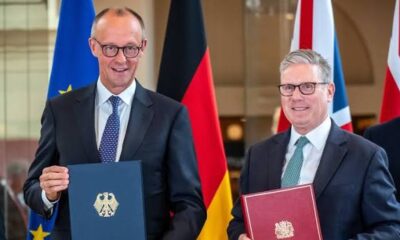
UK, Germany ratify defence treaty amid Russian threat
-
 News6 days ago
Trump Rules Out Iran Deal as US Weighs Fresh Military Strikes
-
 News6 days ago
CARICOM assesses regional capacity to produce four key products