
Diaspora
POLITICS

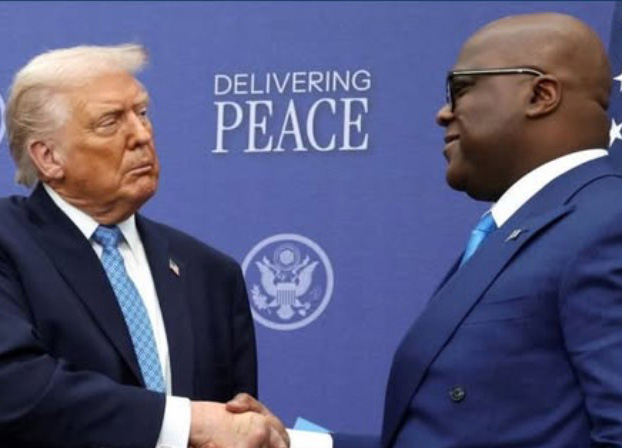
Fifteen foreign nationals deported from the United States, mostly believed to be South Americans, have arrived in the Democratic Republic of Congo (DRC) under a temporary hosting arrangement that is already drawing international attention and debate over migration policy and diplomatic cooperation.
The deportees landed at N’djili International Airport in Kinshasa in the early hours of Friday, according to airport sources who confirmed that the group was largely made up of Colombian and Peruvian nationals.
The arrangement marks the first known batch of deportees sent to the Central African nation under a broader US policy of relocating “third-country migrants”, individuals returned to a country that is neither their origin nor initial destination.
A Congolese government source said the individuals were admitted under short-stay permits and in line with national immigration laws governing the entry and residence of foreigners.
However, authorities stressed that the arrangement is strictly temporary. “The individuals concerned are admitted to the national territory under short-stay permits, in accordance with national legislation concerning the entry and residence of foreigners,” the government stated, while offering no additional details about the identities or conditions of the deportees.
Kinshasa had earlier defended its decision to participate in the arrangement, describing it as consistent with its commitment to human dignity, migrant protection, and international solidarity.
Officials were quick to clarify, however, that the agreement should not be interpreted as a long-term relocation scheme or a form of outsourced migration control.
The United States, under its ongoing immigration enforcement policy, has expanded the practice of transferring deportees to third countries. Similar arrangements have reportedly been made with Ghana, South Sudan, and Eswatini, as Washington intensifies its crackdown on irregular migration.
Although the US State Department declined to comment on specific diplomatic communications with partner countries, it reaffirmed the administration’s hardline stance.
The department said the government remains “unwavering in its commitment to end illegal and mass immigration and bolster America’s border security.”
A minority report from the US Senate Foreign Relations Committee further suggested that the administration may have spent more than $40 million on third-country deportations up to January 2026, though officials concede that the full cost remains unclear.
The report also indicated that over $32 million had been directly disbursed to several partner countries, including Equatorial Guinea, Rwanda, El Salvador, Eswatini, and Palau.
Beyond immigration cooperation, the development comes at a time of deepening US engagement in the DRC over strategic mineral resources.
Washington is reportedly negotiating access to the country’s vast reserves of cobalt, lithium, tantalum, and copper, minerals critical to global technology and energy industries.
The arrangement also coincides with renewed diplomatic efforts aimed at stabilizing eastern Congo, where conflict involving the Rwanda-backed M23 rebel group continues to threaten regional peace.
Following recent talks mediated by the United States and Qatar in Switzerland, both the Congolese government and rebel representatives agreed on measures including humanitarian access, civilian protection, and steps toward a monitored ceasefire.
Despite these diplomatic advances, tensions remain high.
Rwanda has repeatedly denied allegations of supporting the M23 rebels, insisting instead that its military posture is defensive in nature and aimed at countering security threats from armed groups operating within Congolese territory.









BCD Fashion-House

Hawah Kromah, Founder of BCD Fashion House

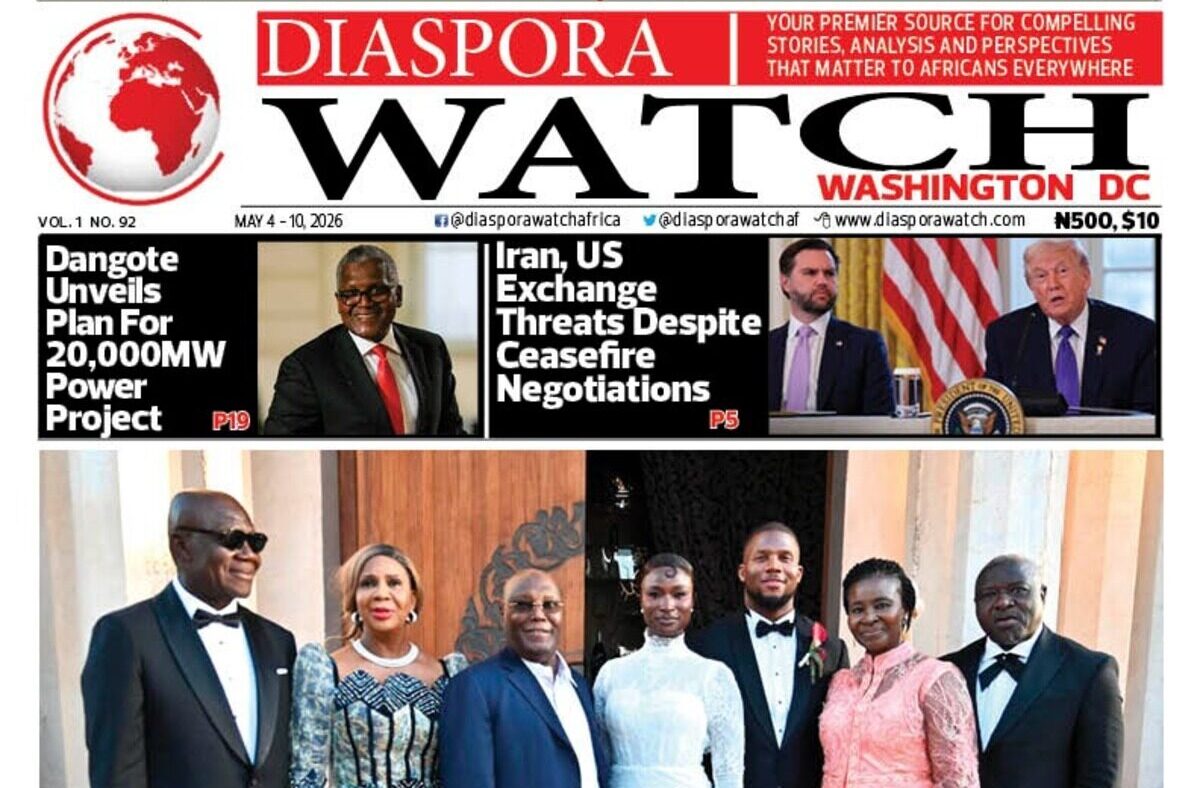
The management of Diaspora Watch Newspaper proudly announces the release of the 92nd edition of the newspaper, a compelling and globally engaging publication that captures the defining political, diplomatic, economic, cultural, and entertainment developments shaping conversations across continents.
This latest edition presents readers with an extraordinary blend of international diplomacy, economic transformation, royal engagements, security concerns, African excellence, and high society glamour, reaffirming Diaspora Watch Newspaper’s commitment to credible journalism, balanced reporting, and insightful global storytelling.
Diaspora Watch FREE Digital View: https://diasporawatch.com/3d-flip-book/diaspora-watch-vol-92/
On Demand Print: https://www.magcloud.com/browse/issue/3327462?__r=1069759
SUBSCRIBE TO DIASPORA WATCH NOW ON THE LINK BELOW!!!
https://diasporawatch.com/subscribe-to-diaspora-watch-newspaper/
Leading the headlines is the intensifying conflict between the United States and Iran as both nations exchange threats despite ongoing ceasefire negotiations, alongside US President Donald Trump rejecting Iran’s peace response and describing the proposal as “totally unacceptable.” The edition also offers deeper insight into the geopolitical implications of the crisis and its potential impact on global stability.
In a celebration of African prestige and international elegance, this edition extensively covers the grand wedding ceremony of Munachi “Muna” Ezeibe and Cherina Zerbo Lassina in Marrakech, Morocco, an event that attracted top African dignitaries, diplomats, business leaders, and influential personalities from across the continent.
Readers will also find exclusive reports on Aliko Dangote’s ambitious 20,000MW power project initiative, a development expected to significantly reshape Africa’s energy landscape and industrial future. Equally noteworthy is the report on Angola’s Cabinda Refinery commencing fuel exports, marking a major milestone in Africa’s refining capacity and economic independence.
The edition further highlights significant global diplomatic and societal developments, including King Charles III hosting the first Buckingham Palace Garden Party of 2026, the accreditation of a new United Kingdom ambassador by CARICOM, and concerns raised by China’s spy agency over the growing “lying flat” culture among young people.
On the back page, readers are treated to dazzling coverage of the 2026 edition of the Africa Magic Viewers’ Choice Awards 2026, where celebrities transformed Lagos into a spectacular runway of glamour, fashion, and unforgettable red-carpet moments.
As always, Diaspora Watch Newspaper remains steadfast in its mission to inform, educate, connect, and amplify global African perspectives through responsible journalism and compelling narratives.
The 92nd edition is now available for readers, stakeholders, institutions, and members of the global diaspora community.
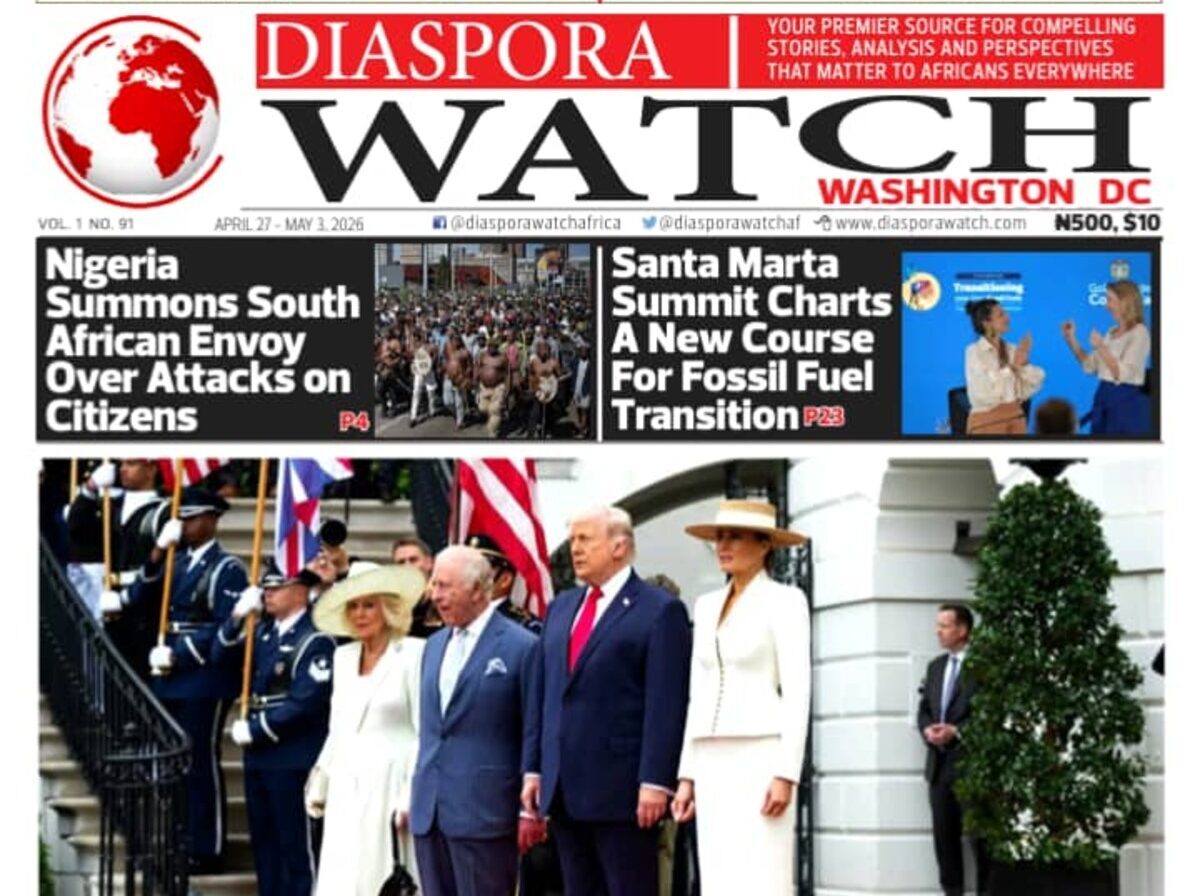
Diaspora Watch Newspaper Releases it’s 91st Edition.
Diaspora Watch Newspaper is proud to announce the release of its 91st edition, delivering a compelling blend of international headlines, geopolitical analysis, and cultural commentary that reflect the dynamic realities shaping the global community.
Diaspora Watch FREE Digital View: https://diasporawatch.com/3d-flip-book/diaspora-watch-vol-91/
On Demand Print: https://www.magcloud.com/browse/issue/3321550?__r=1069759
SUBSCRIBE TO DIASPORA WATCH NOW ON THE LINK BELOW!!!
https://diasporawatch.com/subscribe-to-diaspora-watch-newspaper/
Leading this edition is a major diplomatic spotlight: “Trump Hosts King Charles, Queen Camilla at White House, Hails ‘Unbreakable’ US-UK Ties.” The story examines renewed transatlantic relations and the strategic implications of high-level engagements between the United States and the United Kingdom.
Also featured prominently is Nigeria’s strong diplomatic response to rising tensions in Southern Africa, as the Government summons South Africa’s envoy over reported attacks on its citizens. This development underscores ongoing concerns about the safety and welfare of Nigerians in the diaspora.
In security and defense, the edition reports on the disappearance of two United States troops during military drills in Morocco, raising questions about operational risks and international military cooperation.
On the economic and developmental front, Caribbean leaders take decisive steps toward reducing import dependence through a new food security framework under CARICOM, while the Santa Marta Summit provides fresh momentum for a global transition away from fossil fuels.
Energy discourse is further amplified as the African Petroleum Producers’ Organization advocates for the establishment of regional energy hubs to drive investment in Africa’s oil and gas sector, signaling a strategic shift toward intra-continental collaboration.
In another major geopolitical development, the United States imposes sanctions on former DR Congo President Joseph Kabila over alleged links to the M23 rebel group, reflecting growing international scrutiny over instability in Central Africa.
Meanwhile, tensions in the Middle East deepen as the United Arab Emirates issues a stern warning on Iran’s reliability in managing the Strait of Hormuz, highlighting concerns over global energy security amid escalating US–Tehran relations.
Rounding off the edition on the back page is a cultural reflection from global music icon Jay-Z, who emphasizes authenticity in hip-hop culture with the thought-provoking stance: “Hip-Hop Must Stay Real, Not Trendy.”
Stay informed and ahead of the curve with the 91st edition of Diaspora Watch where we the complex dynamics shaping our world and provide insights into the stories that matter.


EDITORIAL: Tackling Poverty in Africa

Spain battles political fallout as 60,000 migrants overwhelm Ceuta border

Hamas agrees to disarm as Gaza withdrawal deal gains momentum

Pastor Jerry Eze Defends Miracles At UK Conference Amidst Criticism And Controversy

Diaspora Watch 20th Edition (October 14-20, 2024): Your Trusted Source for Global News and Insights

Tanzanian Man Reportedly Dies And Returns To Life Six Times


-
 Milestone6 days ago
Nigerian bags HVAC Engineering degree in US, lands full-time job
-
 Analysis6 days ago
Lessons from the Catholic Bishops’ Visit to Tinubu, by Boniface Ihiasota
-
 News6 days ago
CARICOM chair renews reparations demand
-

 Analysis6 days ago
Obasanjo, Atiku and the Burden of Broken Trust, by Alabidun Shuaib AbdulRahman
-
 News5 days ago
Hamas agrees to disarm as Gaza withdrawal deal gains momentum
-
 Opinion5 days ago
EDITORIAL: Tackling Poverty in Africa