
Analysis
Niger’s 37 Dead: When Poverty Meets the Failure of the State, by Boniface Ihiasota

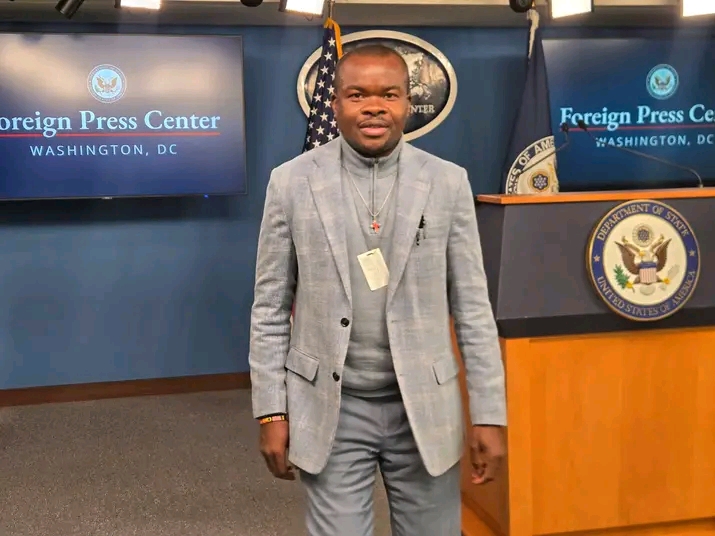
Niger’s 37 Dead: When Poverty Meets the Failure of the State, by Boniface Ihiasota
I can’t understand how about 37 people died in the custody of the state within hours of being arrested for allegedly engaging in illegal mining. It is unsettling not merely because of the number of lives lost, but because of what the incident in Minna, Niger State, says about the relationship between poverty, law enforcement and the Nigerian state.
Between September 15 and 16, 2026, the Nigeria Security and Civil Defence Corps reportedly arrested scores of suspected illegal miners during enforcement operations in the M.I. Wushishi and Lukoto areas of Minna. On Thursday, September 17, 37 of those detained were found dead in NSCDC custody. The exact cause of death has not been conclusively established. The NSCDC initially referred to a suspected disease outbreak, while survivors alleged that overcrowding and poor ventilation caused detainees to struggle for breath. The bodies were taken to the General Hospital, Minna, for medical examination and autopsy.
In a country where public outrage can quickly become a substitute for evidence, the temptation is to pronounce judgment before investigators establish what happened. But there is an equally dangerous temptation to hide behind an investigation when the circumstances demand immediate accountability. The men and boys who died were suspects, not convicts.
Even if every one of them had been guilty of illegal mining, the state had a duty to keep them alive and treat them humanely while they were in custody. The law does not confer a licence to punish suspects outside the judicial process. A person does not lose his right to life because he has been accused of breaking the law.
Niger State is endowed with gold and other mineral resources, but much of the artisanal mining economy exists at the intersection of poverty, unemployment, weak regulation and insecurity. For many young Nigerians, particularly in impoverished communities, mining is not an ideological rebellion against the state. It is often a desperate attempt to make money where legitimate economic opportunities are scarce.
That does not make illegal mining lawful. It does, however, make the phenomenon more complicated than a security problem.
Some reports have indicated that several of those detained were between 14 and 18 years old. Women in Mining Nigeria has called for the ages and identities of the deceased to be independently verified, alongside independent monitoring of autopsies. If the presence of children among those arrested is confirmed, another uncomfortable question emerges: where were the schools, families, social protection systems and economic alternatives that should have kept children away from hazardous mining sites? Nigeria cannot police poverty out of existence.
The protests that followed the deaths in Minna on Friday, September 18, further demonstrated how quickly mistrust between citizens and security agencies can turn tragedy into confrontation. The Niger State Government imposed a curfew as unrest spread, while police and other security personnel were deployed.
President Bola Ahmed Tinubu subsequently directed a comprehensive investigation. On September 19, Interior Minister Olubunmi Tunji-Ojo announced a 10-member independent committee chaired by retired DSS Deputy Director-General Jonathan Kure, with Professor Isa Hayatu Chiroma, SAN, as secretary. Professor Olayinka Buhari, a histopathologist and former Chief Medical Director of the University of Ilorin Teaching Hospital, is among the members. The committee is expected to establish the identities of the dead, examine their arrest and detention, determine the circumstances of their deaths and identify any negligence or misconduct. Twenty-one NSCDC officers, including the Niger State Commandant, Suberu Siyaka Aniviye, have also been suspended pending the investigation.
That investigation must be more than another government exercise that produces a report and then disappears into an archive. The families deserve names. They deserve facts. They deserve to know how their relatives died. And where wrongdoing is established, they deserve justice.
There is a mining economy that needs regulation rather than perpetual chaos; communities that need legitimate livelihoods; children who need schools instead of mine sites; and security institutions that need stronger standards for detention, medical response, ventilation and protection of human life.
The lesson from Minna is therefore not simply that illegal mining must be stopped. It is that enforcement without institutional responsibility can produce another tragedy while attempting to prevent one.
A government that asks citizens to obey the law must demonstrate that those enforcing the law are equally bound by it.
From the Diaspora, this is perhaps the most troubling reflection: the true measure of a state is not how forcefully it can arrest the vulnerable, but how responsibly it treats them after they fall into its hands.
The 37 who died in Minna should not become another statistic in Nigeria’s long catalogue of preventable deaths. Their deaths should become a test of whether accountability in Nigeria is capable of reaching those who wield the authority of the state.
Because when a suspect enters government custody, the responsibility of government does not diminish. It begins.



What Succour Has CNG Brought? By Alabidun Shuaib AbdulRahman
When President Bola Ahmed Tinubu announced the removal of the petrol subsidy on May 29, 2023, Nigerians were told that the decision, though painful, would eventually redirect public resources towards productive sectors, strengthen the economy and eliminate the distortions associated with the subsidy regime. What followed, however, was an immediate and devastating increase in the cost of living, with transportation becoming one of the most difficult expenses for millions of Nigerians to manage.
For a country where millions of workers depend on commercial buses, taxis, motorcycles and tricycles to earn their daily living, the increase in petrol prices was not merely an adjustment in the energy market. It has affected virtually everything, including household incomes, access to education, healthcare, employment and small businesses. The price of transportation rose, food became more expensive because of distribution costs, and the purchasing power of ordinary Nigerians continued to deteriorate.
It was against this background that the Federal Government introduced Compressed Natural Gas, CNG as a major alternative to petrol-powered transportation through the Presidential CNG Initiative, with commercial rollout and initial asset deliveries commenced in October 2023. The initiative was presented as a practical intervention that would reduce the cost of operating vehicles, encourage investment in domestic gas utilisation, create employment and ultimately bring down transportation fares.
The idea was not misplaced. Nigeria is endowed with enormous natural gas resources, estimated at approximately 215 trillion cubic feet of proven reserves. There is little economic justification for a country with such resources to remain excessively vulnerable to the price of imported petroleum products and the volatility of international energy markets.
But nearly three years after the programme began, what succour has CNG actually brought to the Nigerian commuters and the populace? The answer cannot be determined by government announcements, commissioned facilities or the number of conversion kits distributed. It must be measured by the difference between what Nigerians paid for transportation before the intervention and what they pay today.
There is evidence that CNG has delivered benefits to some vehicle owners and selected public transport corridors. However, there is equally compelling evidence that the promised relief has not been felt by the majority.
The Presidential Initiative on CNG and Electric Vehicles has reported substantial progress. Its October 2026 impact report puts the number of vehicles converted at more than 140,000, with over 400 certified conversion centres established nationwide. It also reports more than $2.5bn in secured investment, over 5,880 jobs created and more than 8,000 technicians trained.
The initiative’s published station register, updated in October 2026, lists 105 CNG refuelling stations across 24 states and the Federal Capital Territory. This is an improvement from the earlier network of 61 operational stations reported in January 2026. The figures demonstrate expansion, but they also expose the distance between the country’s ambition and the infrastructure currently available.
At the maiden National CNG Summit in Abuja on November 4, 2026, the Executive Chairman of the Presidential Initiative on CNG and Electric Vehicles, Ahmad Ismael, disclosed that Nigeria had 105 operational stations, while another 127 were at various stages of completion. He said the government was working towards establishing 1,000 additional stations, comprising an earlier target of 500 and another 500 subsequently announced. These are encouraging projections, but a station under construction cannot serve a passenger today.
There is also a need to distinguish between CNG refuelling stations, gas processing facilities, mother stations, daughter stations and factories manufacturing conversion equipment or cylinders. They are different components of the value chain. A mother station compresses gas for distribution, while a daughter station receives compressed gas transported by specialised trucks. Neither should be described as a manufacturing factory.
As at the time of writing this column, there is no sufficiently detailed, consolidated and independently verifiable public inventory establishing the number of dedicated CNG manufacturing factories operating in Nigeria, their production capacities and their respective locations. The government must publish this information rather than allowing infrastructure announcements to blur the distinction between local manufacturing, gas compression, vehicle conversion and retail dispensing.
Geographical distribution is another concern. The official register demonstrates that CNG infrastructure is no longer restricted to Lagos and Abuja. Edo, Delta, Rivers, Lagos, Ogun, Oyo, Ondo, Ekiti, Osun, Enugu, Imo, Kaduna, Kano, Katsina, Sokoto, Kogi, Nasarawa, Kwara, Niger, Adamawa, Gombe and Borno are among the states represented in the published network, alongside the FCT. However, the remaining states are not adequately represented in the register.
This is not the sort of national spread required for a country with 36 states and the Federal Capital Territory. A resident of a state without a conveniently accessible refuelling facility cannot enjoy the economic advantage of CNG simply because a station has been commissioned in another geopolitical zone.
Even within states where stations exist, accessibility remains a practical challenge. A commercial driver who must travel several kilometres, queue for gas and return to his route has additional operational costs. The savings that appear attractive on paper can become less substantial when time, distance, availability and maintenance are considered.
Taken all in all, the most troubling aspect of the programme is the failure to establish a dependable relationship between cheaper fuel and cheaper transportation.
On October 17, 2026, TheCable published an investigation illustrating this issue through the experience of commercial transport operators in Lagos. At the time of its report, petrol sold for between N1,385 and N1,400 per litre in Ogba, while CNG sold for about N380 per standard cubic metre. Despite this considerable difference, a seven-seater commercial bus operating between Ogba and Ojota charged N500 per passenger, irrespective of whether it used petrol or CNG.
The investigation reported that a CNG-powered bus operator spent approximately N5,000 daily on gas, compared with about N30,000 spent by a petrol-powered operator. Yet passengers paid the same fare.
One driver, Olawale Aremu, explained that charging less would undermine the business of other drivers on the same route because passengers would naturally prefer the cheaper vehicle. This is a revealing admission. It shows that the problem is not simply the price of gas but the structure of commercial transportation, where fares are often determined collectively rather than by the actual operating expenses of individual vehicles. In other words, some of the economic benefits of CNG are being retained by operators instead of reaching the commuters whose suffering justified the intervention in the first place.
There are exceptions that demonstrate what is possible when government deliberately connects alternative energy with public transportation policy. In a statement issued on September 19, 2026, President Tinubu cited Borno, where alternative-energy buses were reportedly carrying passengers for between N50 and N100 on routes where commercial operators charged between N300 and N600.
He also reported that Kaduna’s 100 CNG-powered buses carried approximately 3.2 million passengers during their first year, saving commuters more than N3.5bn. In Oyo, the Lagos-Ibadan fare reportedly fell from about N8,000 to N3,200 during the initial deployment of CNG buses by Pacesetter Transport. Enugu reportedly reduced the Enugu-Nsukka fare from N2,500 to N1,500 through its CNG bus deployment.
These examples deserve recognition. They also establish an important point: CNG can reduce transportation costs when government takes responsibility for ensuring that the savings are transferred to passengers. But isolated achievements should not be mistaken for a nationwide transformation. Nigerians must be able to experience the benefits in their respective communities, not merely hear about them at government events.
The experience of other countries offers Nigeria a useful lesson. India, for instance, has demonstrated what sustained investment, regulatory coordination and deliberate expansion of gas distribution infrastructure can achieve. According to India’s Ministry of Petroleum and Natural Gas, the country had 9,096 CNG stations as of July 31, 2026. Its CNG infrastructure is supported by an extensive city gas distribution network, regulatory planning and the growing use of gas-powered public transport.
India’s experience did not emerge from the mere declaration of an alternative energy policy. It involved years of investment in pipelines, distribution networks, vehicle conversion, public transport fleets and private-sector participation. The Petroleum and Natural Gas Regulatory Board has also reported that India added 1,206 CNG stations during the 2024/2025 financial year, while its CNG vehicle fleet increased from 5.861 million in March 2023 to 8.195 million in March 2025.
The comparison is important. Nigeria cannot reasonably expect a transportation revolution with barely over 100 operational stations when a country such as India has developed thousands. Their population sizes and transport systems differ, but that does not diminish the lesson about infrastructure, continuity and policy execution.
What Nigeria needs is a programme that goes beyond vehicle conversion. The Federal Government must develop a national CNG distribution framework that connects gas-producing facilities to major commercial centres, industrial corridors, interstate highways and rural transportation networks. States should be encouraged to identify suitable locations, provide land, facilitate private investment and establish clear implementation targets.
More importantly, government must prioritise mass transportation. Rather than concentrating largely on individual vehicle conversions, there should be a deliberate expansion of affordable CNG-powered buses, tricycles and other public transport fleets. State transport authorities should operate these services on routes with demonstrable passenger demand and publish their fares, operational costs and passenger numbers.
There must also be a transparent fare-monitoring arrangement. Where public funds, subsidised conversion kits or government-supported gas infrastructure reduce operators’ expenses, a measurable portion of those savings should translate into lower passenger fares. Transport unions should be involved in negotiating practical fare arrangements without allowing collective pricing practices to erase the advantages of cheaper fuel.
On the Killing of Masussuka, by Alabidun Shuaib AbdulRahman
Religion is supposed to illuminate the human conscience, not extinguish the lives of those who understand it differently. Yet, in a country where religious differences are increasingly manipulated by extremists, the murder of Sheikh Yahaya Ibrahim Masussuka in Dutsin-Ma, Katsina State, on October 26, 2026, presents a disturbing thought.
A Muslim preacher who reportedly advocated peaceful coexistence between Christians and Muslims was allegedly targeted because his religious convictions and public positions offended those who claimed to defend Islam. If the circumstances surrounding his assassination and the subsequent claim of responsibility by Ansaru are established, it means there is fire on the mountain.
Masussuka, 47, was reportedly shot alongside his associate, Adamu Abubakar, by two motorcycle-riding gunmen outside his residence. Both men were taken to a nearby hospital but were pronounced dead. The Katsina State Police Command confirmed the incident and announced the deployment of security personnel to apprehend the perpetrators.
Born in Bauchi State but resident in Dutsin-Ma, Masussuka reportedly began preaching in Quranic schools at 13, studied at Al-Azhar University in Egypt and pursued further studies in Oman. He was associated with a Quran-centred interpretation of Islam, questioning the authority of certain Hadith traditions and rejecting some established teachings concerning life after death. These positions generated disagreements with mainstream Islamic scholars, particularly those who consider the Sunnah indispensable to understanding the Qur’an and practising Islam.
His views were controversial, but as it should be, controversy is not a crime punishable by death. Islamic scholarship has historically accommodated disagreements over theology, jurisprudence and interpretation. Scholars have challenged one another, defended competing positions and subjected religious arguments to rigorous intellectual examination. Such disagreements are part of scholarship.
Masussuka’s activities extended beyond preaching. In April 2024, he established Qur’an TV/Radio and Masussuka International School in Dutsin-Ma, combining religious and conventional education. He also used social media to communicate his teachings. His advocacy for peaceful coexistence earned him a Peace Ambassador Award from the Network for Good Governance and Transparency in June 2025.
More significantly, he was preparing to organise a peace gathering on October 31, 2026, barely five days after his murder. In a recorded message concerning the event, he spoke about restoring the cordial relationships that once existed among people of different religious persuasions. There is a painful irony in the fact that a man preparing to convene a gathering for peace was killed before he could host it.
His disagreements with other Islamic scholars had previously attracted government attention. In November 2025, the Katsina State Government summoned him following complaints about his teachings. The government also acknowledged his complaints about insults and threats from individuals he associated with Jama’atu Izalatil Bidia Wa Ikamatus Sunna, popularly known as JIBWIS. The matter was referred to the Katsina Emirate Council, while Governor Dikko Umaru Radda directed him to appear before a committee of Islamic scholars.
There is no established evidence that JIBWIS, as an institution, ordered or participated in his assassination. Indeed, Imam Ibrahim Aliyu Kaduna, a JIBWIS official speaking in his personal capacity, condemned the killing despite disagreeing with Masussuka’s religious positions.
The most disturbing development came on October 27, when Jama’atu Ansarul Muslimina Fi Biladis Sudan, popularly known as Ansaru, reportedly claimed responsibility for the assassination in a four-minute video obtained by PREMIUM TIMES. The group allegedly described Masussuka as an infidel and accused him of confusing Muslims and undermining Islam. His advocacy for interfaith coexistence and disagreement with certain Hadith traditions were reportedly cited among the reasons for his killing. It also threatened others accused of belittling the Hadith.
Although the claim requires independent investigation and must not be mistaken for conclusive proof of the identities of the attackers, its ideological implications are frightening. It suggests that an armed organisation believes it possesses the authority to determine the boundaries of religious orthodoxy and eliminate anyone who falls outside them.
What kind of religious belief requires the murder of another person to establish its authority? What kind of faith cannot withstand intellectual disagreement? And what kind of movement mistakes the elimination of an ideological opponent for the defence of religion?
Nigeria has witnessed the destructive consequences of extremist ideologies through the Boko Haram insurgency and other violent organisations. The reported circumstances of Masussuka’s death should therefore be treated as a serious security warning.
Perhaps the greatest injustice in this tragedy is the attempt to present intolerance and murder as expressions of Islamic devotion. The Qur’an is explicit on religious freedom. Surah Al-Baqarah, verse 256, declares: “There is no compulsion in religion.” This principle leaves little room for anyone to claim that faith can legitimately be imposed through threats or violence.
In Surah Al-Mumtahanah, verse 8, Allah permits kindness and justice towards those who neither fight Muslims on account of religion nor drive them from their homes. Surah Al-Hujurat, verse 13, further explains that humanity was created in different nations and tribes so that people might know one another. Diversity is therefore not an invitation to hostility.
More importantly, Surah Al-Ma’idah, verse 32, describes the unlawful killing of an innocent person as comparable to killing all humanity, while saving a life is likened to saving all humanity. The Hadith recorded in Sahih al-Bukhari also warns against killing a non-Muslim who enjoys a covenant of protection.
These teachings cannot reasonably be reconciled with the deliberate assassination of people because of their religious opinions or relationships with adherents of other faiths.
This does not mean Masussuka’s theological positions were beyond criticism. Imam Ibrahim Aliyu Kaduna argued that the Sunnah is indispensable to understanding Islamic worship, including the practical requirements of prayer and pilgrimage. That is a legitimate scholarly position. Other scholars have every right to challenge Masussuka’s rejection of certain Hadith traditions and defend their understanding of Islam through evidence and reason. But disagreement must remain within the boundaries of peaceful engagement.
A religion confident in its teachings does not need armed men to defend it. Knowledge, scholarship, persuasion and moral example are stronger instruments of religious conviction than intimidation and murder.
Islamic jurisprudence treats murder as one of the gravest offences. Surah Al-Baqarah, verse 178, establishes Qisas, or lawful retribution, while recognising forgiveness and compensation, known as Diyah, within the prescribed legal framework. This is not an invitation for individuals or organisations to appoint themselves judges and executioners. Justice requires evidence, lawful adjudication and competent judicial authority.
Nigeria’s Constitution is equally clear. Section 33 of the 1999 Constitution protects the right to life, while Section 38 guarantees freedom of thought, conscience and religion. Murder attracts the prescribed criminal punishment when established through due process. Where evidence establishes a terrorist motive or involvement, applicable provisions of the Terrorism (Prevention and Prohibition) Act 2022 may also be invoked.
The Katsina State Government must also explain what followed its November 2025 intervention. Having received complaints concerning threats and religious disagreements surrounding Masussuka, were the allegations investigated? Were protective measures considered? Did the authorities assess the possibility that the dispute could escalate into violence? These questions deserve answers, not as an attempt to assign blame without evidence, but to determine whether preventable warning signs were overlooked.
The police must identify and prosecute everyone involved in the murders of Masussuka and Abubakar, including those who planned, financed or facilitated the operation. Religious identity must not become protection from criminal accountability.
Religious leaders, meanwhile, must confront the misuse of takfir, the practice of declaring another Muslim an unbeliever, particularly when it is employed to legitimise persecution and violence. No theological disagreement gives anyone the authority to take another person’s life.
Masussuka was not infallible, and his teachings should remain open to scholarly scrutiny. But neither his controversial positions nor his advocacy for interfaith coexistence justified his murder. His death must not become another opportunity for religious factions to trade accusations or deepen divisions.
The best way to honour Masussuka is not to endorse every theological position he held, but to defend the fundamental right to life, freedom of conscience and peaceful coexistence. A society that allows people to be killed for interpreting religion differently has surrendered both its humanity and its sense of justice.
Faith should inspire conviction, not violence. And no individual, however loudly he claims to defend religion, has the authority to place himself above the sanctity of human life.
Pastor Adeboye, Tinubu and the Pulpit, by Boniface Ihiasota
There is a question increasingly finding its way into Nigeria’s public conversation, particularly among citizens struggling to reconcile the economic realities of today with the interventions of influential religious leaders during previous administrations: Does the courage to speak truth to power change when the person occupying the seat of power becomes someone closer to the pulpit?
The controversy surrounding Pastor Enoch Adejare Adeboye, General Overseer of the Redeemed Christian Church of God (RCCG), has reopened this uncomfortable conversation. Popular social media activist, Martins Vincent Otse, better known as VeryDarkMan (VDM), has questioned the cleric’s perceived response to the economic hardship under President Bola Tinubu, drawing comparisons with his public interventions during previous administrations.
Nigeria’s economic circumstances provide sufficient reason for such questions. On May 29, 2023, President Tinubu announced the removal of the petrol subsidy in his inauguration speech. Within days, petrol prices rose from the regulated levels of approximately ₦185 per litre in parts of the country to between ₦488 and ₦557, depending on location. By October 2024, the Nigerian National Petroleum Company had increased prices to approximately ₦998 per litre in Lagos and ₦1,030 in Abuja. The National Bureau of Statistics subsequently reported an average retail price of ₦1,034.76 per litre in January 2026.
Behind these figures are households spending more on transportation, businesses struggling with operating costs, manufacturers battling energy expenses and families adjusting their food budgets to accommodate rising living costs.
The question, therefore, is not whether Nigerians have reasons to complain. They do. It is whether those who previously considered it necessary to speak forcefully about national suffering maintain the same moral urgency when the political circumstances change.
Adeboye has publicly acknowledged President Tinubu as his beloved in-law, while First Lady Oluremi Tinubu was ordained an RCCG assistant pastor in 2018. These relationships have inevitably attracted public attention, although they do not, by themselves, establish that the cleric’s public interventions are influenced by family or religious connections.
Indeed, RCCG has maintained that Adeboye has not been silent about national challenges. The church has cited his November 2025 intervention on insecurity, during which he reportedly urged the government to hold security chiefs accountable and tackle both terrorists and their sponsors.
Yet, Nigerians are entitled to examine the tone, frequency and substance of such interventions. A religious leader does not have to organise street demonstrations to demonstrate concern about the suffering of citizens. But neither should spiritual authority become a reason to shield political leaders from difficult questions.
There is an important distinction between encouraging citizens to exercise patience and asking them to accept prolonged suffering without demanding accountability. Governments may require time to implement reforms, and the removal of fuel subsidies was defended on fiscal grounds, including the enormous cost of maintaining the system. The World Bank, however, documented the immediate 170 per cent increase in petrol prices following the May 2023 policy announcement and warned of the wider economic implications.
Religious leaders have a unique position in Nigerian society. Their congregations cut across economic classes, political interests and geographical boundaries. Their words can inspire hope, but they can also encourage accountability. That influence comes with a responsibility to speak consistently, particularly when ordinary citizens are bearing the consequences of public policies.
This is not a demand that Pastor Adeboye should become an opposition politician, nor is it an invitation to condemn him based on unverified social media videos. It is a reminder that moral authority must remain independent of political convenience.
From the Diaspora, the concern is not about whether a particular pastor supports a particular president. It is about whether the pulpit remains a platform for speaking truth to power or becomes increasingly cautious when the powerful happen to be familiar.
Nigeria needs religious leaders who can pray for presidents without surrendering the responsibility to question them. It needs voices that can encourage patience without normalising hardship and offer spiritual hope without diminishing the urgency of economic justice.
When the poor are hurting, should the pulpit speak differently because the occupant of the presidential villa is a friend, an associate or an in-law?


EDITORIAL: Poverty Is No Licence for Terrorism

CARICOM Election Observation Mission to Grenada General Elections

What Succour Has CNG Brought? By Alabidun Shuaib AbdulRahman

Pastor Jerry Eze Defends Miracles At UK Conference Amidst Criticism And Controversy

Diaspora Watch 20th Edition (October 14-20, 2024): Your Trusted Source for Global News and Insights

Tanzanian Man Reportedly Dies And Returns To Life Six Times


-
News4 days ago
Waliya Bet Reviews – Ethiopian Players’ Guide to Registration, Verification & Bonuses
-
News4 days ago
www waliya bet et security guide
-
News4 days ago
www waliya bet com – Full Ethiopian Guide: Registration, Bonuses, Payments, Withdrawals & Mobile
-
News4 days ago
hulusport online betting app and mobile guide for Ethiopian players
-
News4 days ago
www waliya bet com bonus guide for Ethiopian players
-
 Diplomacy10 hours ago
Trump, Putin, Xi meeting: A new world order or diplomatic spectacle?