
Analysis
Midterms Vote: The World Watches as America Decides Trump’s Fate

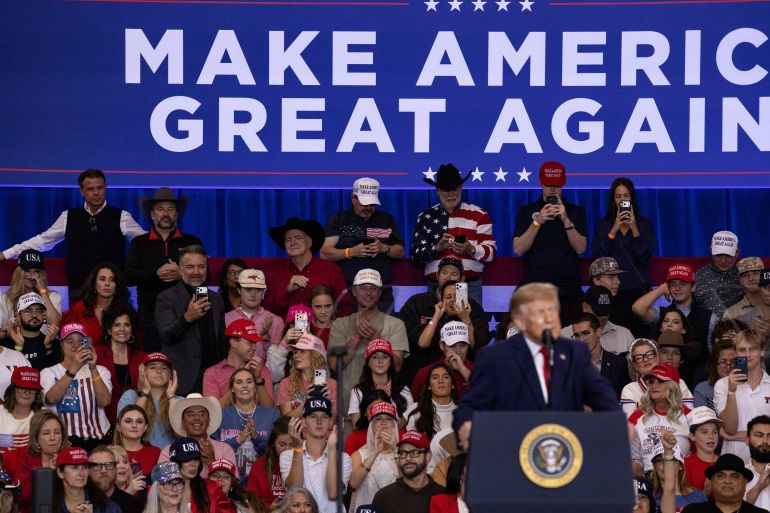
Midterms Vote: The World Watches as America Decides Trump’s Fate
By Boniface Ihiasota, Washington DC and Alabidun Shuaib AbdulRahman, Nigeria
The elections, scheduled for Tuesday, November 3, 2026, will determine the balance of power in the United States Congress, where Republicans currently control both chambers. Although President Donald Trump is not seeking election, his administration’s policies, economic record, immigration programme, foreign military engagements and relationship with America’s democratic institutions have become central issues in the campaigns.
The stakes extend beyond Washington. The election could influence America’s position on international conflicts, trade negotiations, foreign assistance, immigration, climate policy and its relationships with strategic partners across Africa, Europe, Asia and the Middle East.
A battle for control of Congress
At the centre of the 2026 midterm elections is the struggle for control of the 119th United States Congress and the direction of the federal government during the final two years of Trump’s second presidential term.
The American Congress consists of two chambers: the House of Representatives and the Senate. While all 435 seats in the House are contested every two years, senators serve six-year terms, with approximately one-third of the Senate facing election every two years.
According to the Associated Press, this year’s election coverage encompasses 35 Senate contests, all 435 House seats, 36 gubernatorial contests and 5,587 state legislative races. The wider electoral exercise covers nearly 7,000 races across the 50 states.
Republicans entered the final campaign period with a narrow 218-214 advantage in the House of Representatives, with two vacancies and one independent member who caucuses with Republicans. In the Senate, they hold 53 seats against the Democrats’ 47.
The arithmetic makes the contest particularly consequential. Democrats need a net gain of four seats in either chamber to establish a majority. That relatively small numerical shift could transform the political relationship between the White House and Congress.
A Democratic victory in the House would place the speakership within reach of House Minority Leader Hakeem Jeffries of New York. It would also give Democrats control of important congressional committees, including those responsible for oversight, appropriations, national security and investigations.
Republicans, meanwhile, are fighting to preserve their legislative advantage and prevent the emergence of a divided government that could frustrate the president’s policy objectives.
The Senate presents a more complicated challenge for Democrats because of the geographical distribution of competitive seats and the states in which Republicans are defending their positions.
Trump’s presidency faces its first major electoral verdict
Perhaps the most important political dimension of the election is that it represents the first nationwide electoral assessment of Trump’s second administration.
Since returning to the White House in January 2025, Trump has pursued an aggressive political and economic programme, seeking to reshape immigration enforcement, federal spending, international trade, taxation and America’s military posture.
His supporters regard his approach as an attempt to restore American economic strength, strengthen national security, protect domestic industries and challenge what they consider an entrenched political establishment.
His opponents, however, argue that the administration’s approach has intensified political divisions, created economic uncertainty and weakened confidence in American democratic institutions.
The latest polling suggests that the president is entering the election under considerable political pressure.
A Reuters/Ipsos survey completed on October 26 put Trump’s approval rating at 32 per cent, one percentage point above the previous week’s record low. More significantly, registered voters preferred Democratic congressional candidates over Republicans by 47 per cent to 36 per cent in the generic congressional ballot.
When undecided voters were asked which party they were leaning towards, the Democratic advantage stood at 50 per cent to 41 per cent. Among likely voters, Democrats also maintained an advantage of 53 per cent to 44 per cent.
The poll surveyed 1,679 American adults, including 1,280 registered voters, with a margin of error of two percentage points among all adults and three percentage points among registered voters.
These figures suggest that Republicans are facing a difficult electoral environment. Nevertheless, national polling should not be confused with a prediction of individual constituency outcomes. Congressional elections are determined by separate contests across states and districts, not by a single nationwide popular vote.
A party can win the national congressional vote and still fail to secure control of the Senate because of the geographical distribution of its support.
The election is therefore not simply a referendum on Trump’s popularity. It is also a test of the ability of both parties to convert national political sentiment into victories in strategically important constituencies.
The economy: The issue that could determine the outcome
Economic anxiety has emerged as one of the strongest forces shaping the 2026 midterm campaign.
For many American households, the central question is no longer simply whether the economy is growing, but whether economic growth is translating into affordable housing, lower food prices, manageable electricity bills, employment opportunities and improved living standards.
The administration has pointed to economic expansion, employment and investment as evidence that its policies are producing results. However, the political challenge is that positive national economic indicators do not necessarily translate into improved financial circumstances for ordinary households.
A Reuters economic assessment published on November 2 reported that the American economy expanded at an annualised rate of 3.4 per cent in the previous quarter, while business investment increased at an annualised rate of 12.7 per cent.
Unemployment stood at 4.2 per cent in September, and the country had maintained an unemployment rate at or below 4.5 per cent for five consecutive years, the longest such period on record.
Yet the same report identified persistent inflation and affordability concerns as major sources of public dissatisfaction.
Consumer prices and average hourly earnings had both increased by approximately 5.5 per cent since Trump assumed office in January 2025. This meant that, in broad purchasing-power terms, workers had experienced little improvement in their financial position.
Mortgage rates exceeding seven per cent have also placed homeownership beyond the reach of many households, particularly younger Americans and first-time buyers.
This contradiction between economic growth and household frustration presents a serious political problem for the Republican Party.
The Democratic Party has sought to turn affordability into a central campaign argument, accusing the administration of failing to adequately address the cost-of-living pressures confronting working and middle-income Americans.
Republicans, on the other hand, have defended their economic programme, arguing that tariffs, tax policies, deregulation and domestic investment are necessary to strengthen American industries and improve long-term prosperity.
The election will offer an important indication of which argument has gained greater acceptance among voters.
Iran war, foreign policy and the price of American leadership
One of the most significant developments distinguishing the 2026 midterms from previous American election cycles is the extent to which foreign policy has become connected to domestic economic concerns.
The US military campaign against Iran, launched in February 2026 alongside Israel, has introduced a major national security and economic dimension into the election.
The conflict has affected energy markets, particularly because of disruptions around the Strait of Hormuz, a strategic maritime passage through which a substantial proportion of the world’s oil and liquefied natural gas trade moves.
The consequences have extended beyond the Middle East, with higher energy costs contributing to inflationary pressures and renewed uncertainty in international markets.
For Democrats, the conflict presents an opportunity to challenge the administration’s foreign policy decisions and scrutinise the financial resources committed to military operations.
A Democratic-controlled Congress could exercise greater influence over defence appropriations, military funding and congressional oversight of the conflict.
However, it would be inaccurate to assume that a change in congressional control would automatically terminate American military operations. The president retains substantial constitutional authority over the conduct of foreign policy and military operations, although Congress possesses important powers over funding, legislation and oversight.
Immigration, identity politics and the changing American electorate
Immigration remains another defining issue in the election, particularly among Hispanic voters and communities with significant immigrant populations.
Trump returned to office promising tougher border enforcement, mass deportations and stricter immigration controls. His administration has subsequently expanded immigration enforcement and strengthened the authority of federal agencies responsible for implementing its policies.
For Republicans, immigration remains an important political issue because the party believes stronger border controls respond to longstanding concerns about national security, illegal migration and pressure on public services.
However, the administration’s enforcement methods have attracted criticism, including concerns about deportations, family separation, detention practices and the treatment of immigrants.
The political consequences could be significant because Hispanic voters have become increasingly important to electoral calculations in several battleground states.
In the 2024 presidential election, Trump made substantial gains among Latino voters compared with previous Republican presidential candidates. However, economic dissatisfaction and concerns about immigration enforcement have raised questions about whether some of those voters will maintain their support.
The battleground states that could determine the Senate
Although the House of Representatives is widely considered the Democrats’ more attainable opportunity, the Senate contest could become the defining political struggle of the election.
The Senate’s geographical composition means that a party’s national popularity does not automatically translate into a majority.
Several races have attracted particular attention because they could determine whether Republicans retain control.
Among the states receiving significant attention are Maine, Ohio, North Carolina, Iowa, Alaska, Georgia, Texas, Michigan and Kansas.
In Alaska, Republican Senator Dan Sullivan faces Democratic former Representative Mary Peltola. The contest has attracted additional attention because another candidate bearing the same name as the incumbent is also on the ballot.
Alaska operates a ranked-choice voting system, making the distribution of voters’ subsequent preferences important to the final outcome.
Iowa is another significant contest. Republican Senator Joni Ernst’s decision not to seek re-election has created an open-seat race between Republican Representative Ashley Hinson and Democratic state Representative Josh Turek.
Kansas has also become unexpectedly competitive. Republican Senator Roger Marshall is defending his seat against Democratic challenger Adam Hamilton, despite Trump’s 16-percentage-point victory in the state in 2024.
The importance of Kansas lies in what a Democratic victory would signify: the possibility that dissatisfaction with the administration is extending into traditionally Republican territory.
Ohio and Texas are equally important because Republican victories there would strengthen the party’s chances of retaining the Senate, while Democratic breakthroughs would substantially change the national political calculation.
Campaign financing: The influence of money in American democracy
The 2026 midterm elections have also exposed the enormous financial resources required to compete in modern American politics.
Campaign advertising, political action committees, digital campaigning, television commercials and direct-mail operations have become essential components of electoral mobilisation.
According to Reuters, more than $3.8bn had been spent on aired political advertisements as of October 12, making the campaign an exceptionally expensive midterm election cycle.
The report also identified approximately $366m in political spending by billionaire businessman Elon Musk to support Republican candidates during the election cycle.
In a separate assessment published on November 2, Reuters reported that Trump had spent more than $277m, largely through his MAGA Inc. super PAC, on television advertising and direct-mail activities supporting Republican candidates.
Musk’s expenditure included approximately $276m since July.
These figures raise important questions about the influence of wealthy individuals and organised financial interests in American democratic competition.
Although campaign financing is constitutionally protected within the American political system, the growing financial concentration surrounding elections has intensified debates about political access, accountability and the influence of private wealth over public policy.
The 2028 presidential election begins with the 2026 midterms
Although the immediate objective is control of Congress, the political consequences of the midterms will extend into the next presidential election scheduled for November 2028.
For Democrats, the results will provide an opportunity to determine which political message offers the strongest prospect of defeating the Republican Party in the next presidential contest.
The party has faced internal disagreements over whether it should embrace a more populist economic programme focused on working-class concerns or adopt a centrist strategy aimed at winning back moderate and independent voters.
A strong performance by progressive candidates could strengthen the argument for a more aggressive economic and social policy platform.
Conversely, victories by moderate Democrats in competitive districts could reinforce the argument that electoral success depends on appealing to politically diverse constituencies.
Republicans will also use the outcome to assess the future of Trump’s political movement and identify potential successors.
Although Trump cannot constitutionally be elected to a third presidential term, his influence over the Republican Party remains considerable.
The midterms could therefore shape the emergence of a new generation of Republican presidential contenders and determine whether the party continues to define itself primarily through Trump’s political philosophy or begins a gradual transition towards a post-Trump leadership structure.
The election is, in this sense, also an early contest over the political future of both parties.
What happens if Democrats win, and what if Republicans retain control?
The implications of the election will depend significantly on the final distribution of congressional victories.
If Democrats secure the House while Republicans retain the Senate, the United States will enter a period of divided government.
Such an arrangement would make it more difficult for Trump to advance major legislative proposals, particularly those requiring approval from both chambers.
Democratic leaders could use committee control to investigate executive decisions, demand documents, summon officials and examine controversial government programmes.
Appropriations negotiations could also become more complicated, increasing the possibility of legislative deadlock and disputes over federal spending.
If Democrats secure both chambers, the political consequences could be considerably greater.
The administration would face stronger congressional opposition, more extensive oversight and increased resistance to legislative proposals.
However, a Democratic majority would not automatically provide sufficient votes to override presidential vetoes or pass every proposal. Constitutional requirements, Senate procedures and internal party disagreements would continue to constrain legislative action.
If Republicans retain both chambers, Trump would have a stronger opportunity to continue implementing his legislative programme.
Republican leaders could pursue additional tax and spending measures, defence priorities and changes to federal regulatory and social programmes.
Such a result would also strengthen Trump’s influence within his party and potentially weaken internal Republican opposition to controversial administration policies.
Neither outcome would remove the constitutional separation of powers that defines American government. What would change is the political balance within those institutions.

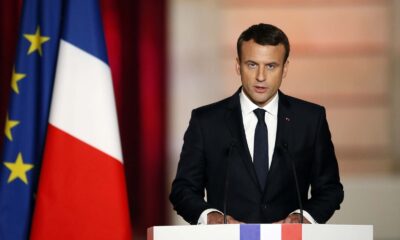


On the Killing of Masussuka, by Alabidun Shuaib AbdulRahman
Religion is supposed to illuminate the human conscience, not extinguish the lives of those who understand it differently. Yet, in a country where religious differences are increasingly manipulated by extremists, the murder of Sheikh Yahaya Ibrahim Masussuka in Dutsin-Ma, Katsina State, on October 26, 2026, presents a disturbing thought.
A Muslim preacher who reportedly advocated peaceful coexistence between Christians and Muslims was allegedly targeted because his religious convictions and public positions offended those who claimed to defend Islam. If the circumstances surrounding his assassination and the subsequent claim of responsibility by Ansaru are established, it means there is fire on the mountain.
Masussuka, 47, was reportedly shot alongside his associate, Adamu Abubakar, by two motorcycle-riding gunmen outside his residence. Both men were taken to a nearby hospital but were pronounced dead. The Katsina State Police Command confirmed the incident and announced the deployment of security personnel to apprehend the perpetrators.
Born in Bauchi State but resident in Dutsin-Ma, Masussuka reportedly began preaching in Quranic schools at 13, studied at Al-Azhar University in Egypt and pursued further studies in Oman. He was associated with a Quran-centred interpretation of Islam, questioning the authority of certain Hadith traditions and rejecting some established teachings concerning life after death. These positions generated disagreements with mainstream Islamic scholars, particularly those who consider the Sunnah indispensable to understanding the Qur’an and practising Islam.
His views were controversial, but as it should be, controversy is not a crime punishable by death. Islamic scholarship has historically accommodated disagreements over theology, jurisprudence and interpretation. Scholars have challenged one another, defended competing positions and subjected religious arguments to rigorous intellectual examination. Such disagreements are part of scholarship.
Masussuka’s activities extended beyond preaching. In April 2024, he established Qur’an TV/Radio and Masussuka International School in Dutsin-Ma, combining religious and conventional education. He also used social media to communicate his teachings. His advocacy for peaceful coexistence earned him a Peace Ambassador Award from the Network for Good Governance and Transparency in June 2025.
More significantly, he was preparing to organise a peace gathering on October 31, 2026, barely five days after his murder. In a recorded message concerning the event, he spoke about restoring the cordial relationships that once existed among people of different religious persuasions. There is a painful irony in the fact that a man preparing to convene a gathering for peace was killed before he could host it.
His disagreements with other Islamic scholars had previously attracted government attention. In November 2025, the Katsina State Government summoned him following complaints about his teachings. The government also acknowledged his complaints about insults and threats from individuals he associated with Jama’atu Izalatil Bidia Wa Ikamatus Sunna, popularly known as JIBWIS. The matter was referred to the Katsina Emirate Council, while Governor Dikko Umaru Radda directed him to appear before a committee of Islamic scholars.
There is no established evidence that JIBWIS, as an institution, ordered or participated in his assassination. Indeed, Imam Ibrahim Aliyu Kaduna, a JIBWIS official speaking in his personal capacity, condemned the killing despite disagreeing with Masussuka’s religious positions.
The most disturbing development came on October 27, when Jama’atu Ansarul Muslimina Fi Biladis Sudan, popularly known as Ansaru, reportedly claimed responsibility for the assassination in a four-minute video obtained by PREMIUM TIMES. The group allegedly described Masussuka as an infidel and accused him of confusing Muslims and undermining Islam. His advocacy for interfaith coexistence and disagreement with certain Hadith traditions were reportedly cited among the reasons for his killing. It also threatened others accused of belittling the Hadith.
Although the claim requires independent investigation and must not be mistaken for conclusive proof of the identities of the attackers, its ideological implications are frightening. It suggests that an armed organisation believes it possesses the authority to determine the boundaries of religious orthodoxy and eliminate anyone who falls outside them.
What kind of religious belief requires the murder of another person to establish its authority? What kind of faith cannot withstand intellectual disagreement? And what kind of movement mistakes the elimination of an ideological opponent for the defence of religion?
Nigeria has witnessed the destructive consequences of extremist ideologies through the Boko Haram insurgency and other violent organisations. The reported circumstances of Masussuka’s death should therefore be treated as a serious security warning.
Perhaps the greatest injustice in this tragedy is the attempt to present intolerance and murder as expressions of Islamic devotion. The Qur’an is explicit on religious freedom. Surah Al-Baqarah, verse 256, declares: “There is no compulsion in religion.” This principle leaves little room for anyone to claim that faith can legitimately be imposed through threats or violence.
In Surah Al-Mumtahanah, verse 8, Allah permits kindness and justice towards those who neither fight Muslims on account of religion nor drive them from their homes. Surah Al-Hujurat, verse 13, further explains that humanity was created in different nations and tribes so that people might know one another. Diversity is therefore not an invitation to hostility.
More importantly, Surah Al-Ma’idah, verse 32, describes the unlawful killing of an innocent person as comparable to killing all humanity, while saving a life is likened to saving all humanity. The Hadith recorded in Sahih al-Bukhari also warns against killing a non-Muslim who enjoys a covenant of protection.
These teachings cannot reasonably be reconciled with the deliberate assassination of people because of their religious opinions or relationships with adherents of other faiths.
This does not mean Masussuka’s theological positions were beyond criticism. Imam Ibrahim Aliyu Kaduna argued that the Sunnah is indispensable to understanding Islamic worship, including the practical requirements of prayer and pilgrimage. That is a legitimate scholarly position. Other scholars have every right to challenge Masussuka’s rejection of certain Hadith traditions and defend their understanding of Islam through evidence and reason. But disagreement must remain within the boundaries of peaceful engagement.
A religion confident in its teachings does not need armed men to defend it. Knowledge, scholarship, persuasion and moral example are stronger instruments of religious conviction than intimidation and murder.
Islamic jurisprudence treats murder as one of the gravest offences. Surah Al-Baqarah, verse 178, establishes Qisas, or lawful retribution, while recognising forgiveness and compensation, known as Diyah, within the prescribed legal framework. This is not an invitation for individuals or organisations to appoint themselves judges and executioners. Justice requires evidence, lawful adjudication and competent judicial authority.
Nigeria’s Constitution is equally clear. Section 33 of the 1999 Constitution protects the right to life, while Section 38 guarantees freedom of thought, conscience and religion. Murder attracts the prescribed criminal punishment when established through due process. Where evidence establishes a terrorist motive or involvement, applicable provisions of the Terrorism (Prevention and Prohibition) Act 2022 may also be invoked.
The Katsina State Government must also explain what followed its November 2025 intervention. Having received complaints concerning threats and religious disagreements surrounding Masussuka, were the allegations investigated? Were protective measures considered? Did the authorities assess the possibility that the dispute could escalate into violence? These questions deserve answers, not as an attempt to assign blame without evidence, but to determine whether preventable warning signs were overlooked.
The police must identify and prosecute everyone involved in the murders of Masussuka and Abubakar, including those who planned, financed or facilitated the operation. Religious identity must not become protection from criminal accountability.
Religious leaders, meanwhile, must confront the misuse of takfir, the practice of declaring another Muslim an unbeliever, particularly when it is employed to legitimise persecution and violence. No theological disagreement gives anyone the authority to take another person’s life.
Masussuka was not infallible, and his teachings should remain open to scholarly scrutiny. But neither his controversial positions nor his advocacy for interfaith coexistence justified his murder. His death must not become another opportunity for religious factions to trade accusations or deepen divisions.
The best way to honour Masussuka is not to endorse every theological position he held, but to defend the fundamental right to life, freedom of conscience and peaceful coexistence. A society that allows people to be killed for interpreting religion differently has surrendered both its humanity and its sense of justice.
Faith should inspire conviction, not violence. And no individual, however loudly he claims to defend religion, has the authority to place himself above the sanctity of human life.
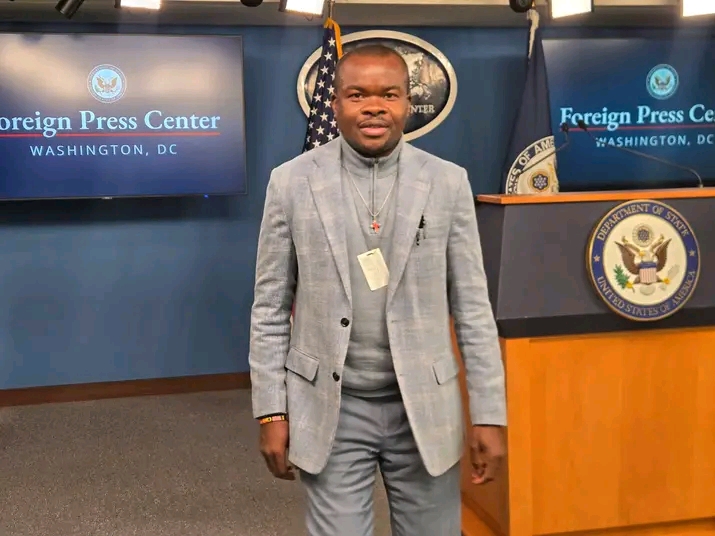
Pastor Adeboye, Tinubu and the Pulpit, by Boniface Ihiasota
There is a question increasingly finding its way into Nigeria’s public conversation, particularly among citizens struggling to reconcile the economic realities of today with the interventions of influential religious leaders during previous administrations: Does the courage to speak truth to power change when the person occupying the seat of power becomes someone closer to the pulpit?
The controversy surrounding Pastor Enoch Adejare Adeboye, General Overseer of the Redeemed Christian Church of God (RCCG), has reopened this uncomfortable conversation. Popular social media activist, Martins Vincent Otse, better known as VeryDarkMan (VDM), has questioned the cleric’s perceived response to the economic hardship under President Bola Tinubu, drawing comparisons with his public interventions during previous administrations.
Nigeria’s economic circumstances provide sufficient reason for such questions. On May 29, 2023, President Tinubu announced the removal of the petrol subsidy in his inauguration speech. Within days, petrol prices rose from the regulated levels of approximately ₦185 per litre in parts of the country to between ₦488 and ₦557, depending on location. By October 2024, the Nigerian National Petroleum Company had increased prices to approximately ₦998 per litre in Lagos and ₦1,030 in Abuja. The National Bureau of Statistics subsequently reported an average retail price of ₦1,034.76 per litre in January 2026.
Behind these figures are households spending more on transportation, businesses struggling with operating costs, manufacturers battling energy expenses and families adjusting their food budgets to accommodate rising living costs.
The question, therefore, is not whether Nigerians have reasons to complain. They do. It is whether those who previously considered it necessary to speak forcefully about national suffering maintain the same moral urgency when the political circumstances change.
Adeboye has publicly acknowledged President Tinubu as his beloved in-law, while First Lady Oluremi Tinubu was ordained an RCCG assistant pastor in 2018. These relationships have inevitably attracted public attention, although they do not, by themselves, establish that the cleric’s public interventions are influenced by family or religious connections.
Indeed, RCCG has maintained that Adeboye has not been silent about national challenges. The church has cited his November 2025 intervention on insecurity, during which he reportedly urged the government to hold security chiefs accountable and tackle both terrorists and their sponsors.
Yet, Nigerians are entitled to examine the tone, frequency and substance of such interventions. A religious leader does not have to organise street demonstrations to demonstrate concern about the suffering of citizens. But neither should spiritual authority become a reason to shield political leaders from difficult questions.
There is an important distinction between encouraging citizens to exercise patience and asking them to accept prolonged suffering without demanding accountability. Governments may require time to implement reforms, and the removal of fuel subsidies was defended on fiscal grounds, including the enormous cost of maintaining the system. The World Bank, however, documented the immediate 170 per cent increase in petrol prices following the May 2023 policy announcement and warned of the wider economic implications.
Religious leaders have a unique position in Nigerian society. Their congregations cut across economic classes, political interests and geographical boundaries. Their words can inspire hope, but they can also encourage accountability. That influence comes with a responsibility to speak consistently, particularly when ordinary citizens are bearing the consequences of public policies.
This is not a demand that Pastor Adeboye should become an opposition politician, nor is it an invitation to condemn him based on unverified social media videos. It is a reminder that moral authority must remain independent of political convenience.
From the Diaspora, the concern is not about whether a particular pastor supports a particular president. It is about whether the pulpit remains a platform for speaking truth to power or becomes increasingly cautious when the powerful happen to be familiar.
Nigeria needs religious leaders who can pray for presidents without surrendering the responsibility to question them. It needs voices that can encourage patience without normalising hardship and offer spiritual hope without diminishing the urgency of economic justice.
When the poor are hurting, should the pulpit speak differently because the occupant of the presidential villa is a friend, an associate or an in-law?
Who Silenced Dele Giwa? By Alabidun Shuaib AbdulRahman
On the morning of October 19, 1986, a parcel bomb delivered to the Ikeja residence of Dele Giwa, founding editor-in-chief of Newswatch magazine, shattered more than the silence of an ordinary Sunday. It killed a 39-year-old journalist whose work had challenged the conventions of Nigerian journalism and whose death would expose the dangerous relationship between political power and the freedom to question it. Forty years later, the most disturbing feature of the assassination is not simply that Giwa died violently, but that Nigeria has yet to establish a definitive judicial account of who orchestrated his killing and why.
The question, therefore, is not merely who silenced Dele Giwa. It is why a country that has experienced successive military administrations, seven presidential elections since its return to democratic government in 1999, and decades of constitutional rule has failed to resolve one of the most consequential crimes in its media history. When a journalist can be killed through such a calculated method and the circumstances remain unresolved across generations, the failure extends beyond the victim and his family. It becomes a test of the state’s capacity to protect the public interest against the influence of powerful individuals.
Giwa’s significance to Nigerian journalism cannot be understood without considering the institution he helped build. In 1984, he joined Ray Ekpu, Dan Agbese and Yakubu Mohammed in establishing Newswatch, a magazine that sought to move Nigerian journalism beyond routine announcements and official statements towards sustained investigation of public affairs. Its founders believed that journalism had a responsibility to examine how power was exercised, question the conduct of public officials and give citizens information that those in authority might prefer to keep from them.
That ambition carried particular risks under military government. General Ibrahim Babangida seized power in August 1985 after overthrowing Major General Muhammadu Buhari. His administration promised political reform and a transition to civilian rule, but the military remained the dominant force in national affairs. The press operated within a political environment in which independent reporting could be treated as a challenge to authority rather than a legitimate component of public accountability.
Newswatch’s emergence in such circumstances was an assertion that government authority did not place its occupants beyond scrutiny. Giwa understood that journalism could not fulfil its democratic purpose if powerful people alone determined what the public was permitted to know. His assassination consequently became a defining event in the struggle over whether Nigerian journalists could investigate those who governed without placing their lives at unacceptable risk.
The circumstances surrounding his final days intensified public suspicion. Giwa had contacts with security officials shortly before his death, including Colonel Halilu Akilu, then Director of Military Intelligence, and Lieutenant Colonel A.K. Togun, a senior State Security Service official. Their names became central to the public controversy surrounding the case. Yet a responsible examination of the assassination must distinguish the existence of unanswered questions from proof of criminal involvement. Neither association with the victim nor public suspicion establishes guilt, and neither officer should be declared responsible without sufficient evidence and a lawful determination.
In February 1988, a Nigerian High Court dismissed murder and conspiracy charges against Akilu and Togun after finding that the prosecution had not established a sufficient case against them. The proceedings did not produce a definitive judicial account of who ordered Giwa’s killing. Even though the failure to establish guilt against particular defendants is not proof that an alternative theory is correct, just as the absence of a conviction does not mean that every circumstance surrounding the crime has been explained.
The problem is that the investigation never delivered the comprehensive answers Nigerians had reason to expect. The passage of time has allowed speculation to survive where an authoritative account should have prevailed. That is precisely why the state must resist the temptation to treat public interest in the case as an inconvenience. The proper response to persistent suspicion is not to endorse unproven allegations, but to establish what the evidence can support.
Nigeria’s return to civilian rule in May 1999 presented an opportunity to confront the institutional failures inherited from military government. Democratic administrations could have demonstrated that the political sensitivities surrounding Giwa’s assassination would not prevent a serious examination of the evidence. Instead, the case continued to represent the distance between democratic promises and the practical delivery of justice.
A significant development occurred in February 2024, when Justice Inyang Ekwo of the Federal High Court in Abuja ordered the Federal Government to reopen the investigation and prosecution relating to Giwa’s murder. The judgment arose from a suit filed by Media Rights Agenda, which challenged the state’s failure to protect journalists and adequately investigate attacks against media practitioners. The court also directed the government to take measures to prevent attacks on journalists and investigate and prosecute those responsible for such offences.
Yet the subsequent legal development raises further questions about the government’s commitment to implementing that order. In January 2026, reports emerged that the Federal Government had approached the Court of Appeal in Abuja for an extension of time to challenge the February 2024 judgment, having missed the prescribed period for filing an appeal. The application was not itself a final determination of the appeal, but it placed the government’s response to a long-unresolved assassination under renewed probe.
This is where the matter becomes an institutional test. If the government believes that the judgment should be set aside, it must pursue its legal position through the appropriate process. But the public is equally entitled to ask what the state has done to establish the facts of a killing that has remained unresolved for four decades. Legal proceedings should not become a substitute for the substantive obligation to investigate an unlawful death.
The distinction between justice and political convenience is fundamental. A credible investigation must examine surviving case files, assess the reliability of previous accounts, identify available documentary evidence and determine whether witnesses or other relevant material can still be obtained. Investigators must distinguish between the person who delivered the bomb, those who prepared or financed it and anyone who may have ordered the killing. These are separate questions, and each requires evidence capable of withstanding judicial investigation.
The objective must not be to manufacture a dramatic conclusion for an anniversary or satisfy public anger with a convenient name. It must be to establish the truth through a process sufficiently independent to withstand political pressure and sufficiently rigorous to support prosecution where the evidence warrants it.
The assassination of Maltese investigative journalist Daphne Caruana Galizia demonstrates why such persistence matters. On October 16, 2017, she was killed by a car bomb near her home in Bidnija, Malta, after years of investigating alleged corruption and connections between political and business interests. Several participants were subsequently convicted. In June 2025, Jamie Vella and Robert Agius were convicted of complicity in her murder for supplying the bomb and received life sentences.
Nevertheless, the Maltese case has not produced an uncomplicated conclusion. On September 2, 2026, businessman Yorgen Fenech was acquitted by a jury of charges relating to complicity in Caruana Galizia’s murder. Malta’s Attorney General appealed the acquittal later that month. The acquittal must be respected unless overturned through the legal process, and allegations against Fenech cannot be presented as proven guilt. The case illustrates both the possibilities of sustained investigation and the limits of what can responsibly be claimed before judicial proceedings have concluded.
The lesson for Nigeria is not that another country’s legal system offers a perfect model. It is that a journalist’s assassination demands more than an initial investigation followed by years of silence. Where evidence permits, investigations must proceed, suspects must receive due process, and courts must be allowed to determine criminal responsibility without political interference. Justice cannot be measured by the number of statements issued after a killing. It must be measured by the quality of the investigation and the integrity of the legal process.
For contemporary Nigerian journalists, Giwa’s legacy must also be understood beyond the familiar description of him as a fearless reporter. Courage is indispensable to investigative journalism, but it should not become an excuse for romanticising danger or accepting the avoidable deaths of those who challenge authority. A journalist’s duty is to establish and communicate the truth, not to sacrifice personal safety to prove professional commitment.
Investigative reporting requires disciplined verification, documentary evidence, reliable sources and a fair opportunity for those facing allegations to respond. It also requires the willingness to distinguish what is established from what remains uncertain. The more powerful the subject of an investigation, the greater the need for accuracy and professional restraint. An unsupported accusation does not become journalism merely because it is directed at an influential individual.
Media owners and editors must recognise their own responsibilities. News organisations that demand courageous reporting but provide neither legal assistance nor practical protection for threatened staff place an unreasonable burden on individual journalists. Press freedom requires institutional support, adequate resources and professional systems for documenting threats, preserving evidence and responding to intimidation. Journalists should not be expected to confront powerful interests alone while their employers celebrate their courage from a distance.
The Nigerian state bears a constitutional obligation to protect life and freedom of expression. Sections 33 and 39 of the 1999 Constitution, as amended, respectively protect the right to life and freedom of expression, subject to the Constitution’s provisions. Those guarantees are weakened when journalists can be attacked without a credible effort to identify and prosecute those responsible.
A government cannot claim to defend press freedom simply because newspapers remain in circulation or broadcasters criticise its policies. It must also ensure that violence against journalists attracts the same seriousness of investigation expected when other grave crimes are committed. The obligation survives changes of administration because the protection of life and the pursuit of justice are responsibilities of the state, not favours dispensed by individual officeholders.
Forty years after Giwa’s assassination, the passage of time presents undeniable investigative difficulties. Some witnesses may have died, memories may have faded and records may be difficult to retrieve. These realities should shape the investigation, but they cannot automatically excuse its abandonment. The authorities should explain the steps taken since the February 2024 judgment, clarify the status of the related proceedings and identify what further lawful action remains possible.
The cost of continued silence is greater than the unresolved fate of one case. It reinforces the perception that crimes involving powerful interests can outlast public attention and escape meaningful accountability. For journalists working today, that perception can encourage fear and self-censorship. For citizens, it weakens confidence that the law applies equally regardless of political influence.
On October 19, 1986, a parcel bomb silenced Dele Giwa. Forty years later, the question of who ordered his assassination remains without a definitive judicial answer. Nigeria cannot rewrite that morning, but it can decide whether the unanswered questions surrounding his death will continue to define its relationship with investigative journalism.
The country owes Dele Giwa more than annual tributes. It owes his family a serious pursuit of the truth, its journalists a credible assurance that attacks against them will not be ignored, and its citizens a justice system willing to confront even the most politically uncomfortable crimes. Until the state demonstrates that commitment through lawful, transparent and effective action, the question of who silenced Dele Giwa will remain not merely a mystery of the past, but an indictment of the present.


Climate Change Threatens Global Health as Heat Deaths Rise 36% – Report

On the Killing of Masussuka, by Alabidun Shuaib AbdulRahman

Pastor Adeboye, Tinubu and the Pulpit, by Boniface Ihiasota

Pastor Jerry Eze Defends Miracles At UK Conference Amidst Criticism And Controversy

Diaspora Watch 20th Edition (October 14-20, 2024): Your Trusted Source for Global News and Insights

Tanzanian Man Reportedly Dies And Returns To Life Six Times


-
 Extra1 week ago
Enyimba Social Club Inaugurates Washington DC Chapter, Honours Women Founders
-
 News1 week ago
Trump’s Immigration Crackdown: US Border Crossings Drop, Deportations Rise
-
 Analysis1 week ago
Arise Nigerian Youths, It’s Time! By Boniface Ihiasota
-

 Diplomacy1 week ago
US withdraws diplomats’ families from Gulf amid Houthi attacks
-
 Analysis1 week ago
Who Silenced Dele Giwa? By Alabidun Shuaib AbdulRahman
-
 News1 week ago
CARICOM seeks stronger biodiversity data to meet global targets