
Features
Don’t Betray “America First” With a War on Iran

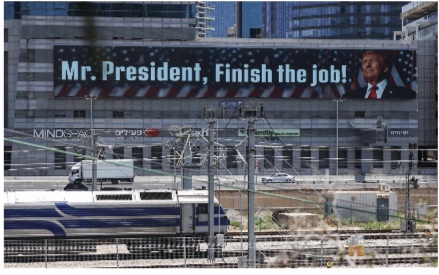
By Reid Smith
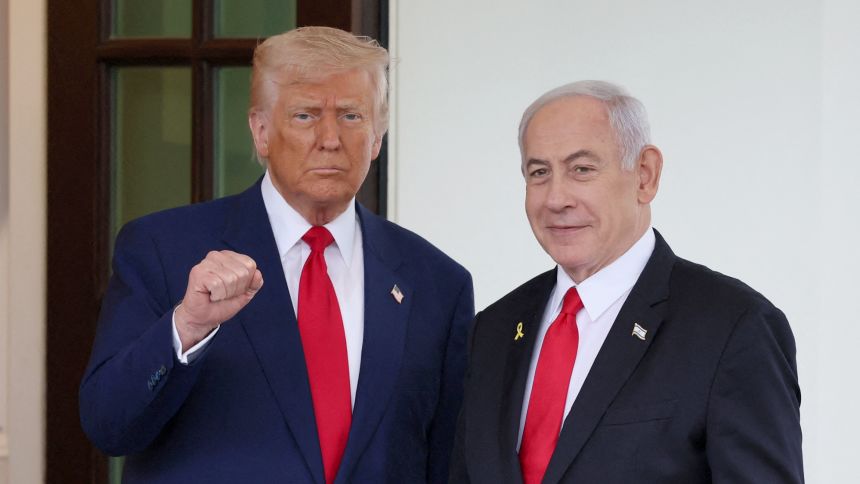
Sometimes, the most crucial test of a powerful country involves not its strength but its judgment. The United States faces just such a test now, as Israel wages a determined campaign against Iran and U.S. President Donald Trump weighs whether to join it.
In recent days, the president has sent mixed signals. “We now have complete and total control of the skies over Iran,” he posted yesterday on Truth Social, pointedly using the first-person plural. In other posts the same day, he mused about killing the supreme leader of Iran and demanded “UNCONDITIONAL SURRENDER!” from the Islamic Republic. After months of talking up the prospects for diplomacy with Iran (and years of bemoaning past American military failures in the Middle East), the famously mercurial Trump seemed to have embraced a more hawkish view.
Earlier today, however, he was more equivocal. “I may do it,” he told reporters. “I may not do it. I mean, nobody knows what I’m going to do.”
If the United States does wind up at war with Iran, it would hardly come as a shock. Enmity toward the Islamic Republic runs deep in Washington—and understandably so. The Iranian regime has held Americans hostage and supported terrorists and insurgents who have killed U.S. service members in Lebanon and Iraq. And a sense of American solidarity with Israel naturally springs from cultural bonds, mutual security interests, and decades of strategic partnership. What is more, this is a fight that makes sense for Israel—a country that is pursuing the kind of strategic clarity that Washington has failed to achieve in its own recent wars. Emerging from the trauma of the October 7 attacks, Israel has sought to eliminate profound threats rather than merely manage them. Israel shattered Hezbollah’s command structure and political standing in Lebanon, helped collapse Bashar al-Assad’s brutal regime in Damascus, and devastated Hamas in Gaza. With Iran’s proxies dismantled and Syrian airspace suddenly open to Israeli jets, the Islamic Republic has become a far more vulnerable adversary. It now faces an Israeli military with formidable intelligence capabilities, superior weaponry, and the political resolve to finish the fight.
There is little doubt that the world is better off without a nuclear-armed Iran. And the United States should always support its allies and partners. But those countries’ wars of necessity should not become Washington’s wars of choice. The United States has a role to play in this conflict, but it should not cross the threshold into direct military action against Iran. Calls for U.S. military strikes rest on the dangerous assumption that such action would be clean, quick, and contained. If Trump decides to enter this war, however, it would likely escalate in ways that would produce severe negative consequences for the United States, its allies, and the global economy. Washington can and should continue to assist Israel by providing missile defense interceptors and logistical aid to protect Israeli civilians from Iranian drone and missile attacks. But it should not take part in airstrikes against Iranian targets, join in any efforts to carry out regime change, or deploy U.S. ground forces. Simply put, the United States should not become a co-combatant in this war.
Doing otherwise would represent a catastrophic error of judgment on Trump’s part. It would also compromise the “America first” foreign policy that helped bring him to power and that a large majority of Americans support. When he burst onto the political scene in 2015, a significant part of Trump’s appeal rested on his refreshing honesty about Washington’s blunders in the Middle East. At a time when most Republican officials were still trying to say as little as possible about the disastrous Iraq war, Trump loudly echoed the conclusion that the vast majority of Americans had reached years earlier: “Obviously, the war in Iraq was a big, fat mistake,” as he put it in an early GOP primary debate that year.
Now, however, Trump risks making a similarly significant error in the Middle East. His strategic instincts seem to be leading him astray. With any luck, his strong political instincts will kick in, and he will step back from the brink.
ONE THING LEADS TO ANOTHER
The notion that the United States could conduct a limited action against Iran without provoking a desperate and ferocious response reflects a lack of imagination. What begins as a surgical strike on hardened Iranian enrichment facilities buried deep underground at the Fordow site risks spiraling in unpredictable directions. Reprisal attacks would ensue, and all sides would climb the escalation ladder.
Iran would likely retaliate against U.S. troops stationed at exposed and vulnerable bases in Iraq and Syria. It might also hit major American military installations such as the Al Udeid Air Base in Qatar and the U.S. Navy’s Fifth Fleet headquarters in Bahrain. Cyberattacks targeting American energy, financial, and communications infrastructure could follow. Iran could cripple global shipping by lining the Strait of Hormuz with mines and encouraging the Yemen-based Houthi militia to step up its attacks on ships in the Red Sea. In response, the U.S. would almost certainly launch its own retaliatory strikes at a broad array of Iranian military and proxy targets across the region.
As in past American interventions in the Middle East, the conflict could become self-perpetuating. Political off-ramps may evaporate under the inevitable pressure to escalate. What began as a limited strike could transform into a regional war.
Meanwhile, China would probably seek to exploit such a situation to advance its own interests. In recent days, after the Pentagon ordered the USS Nimitz aircraft carrier to relocate from the Indo-Pacific to the Middle East, the Chinese military carried out provocative sea and air patrols in which it shadowed U.S. allies in contested waters. If U.S. forces wind up deployed to the Middle East for a longer period, China could increase its pressure on Taiwan and ramp up its harassment of vessels from the Philippines and Japan. Such provocations would test the resolve of U.S. allies in the region and raise doubts about Washington’s reliability.
MR. MERCURIAL
In addition to posing risks to U.S. interests, American military intervention in Iran could also hurt the very party it intended to help: Israel. For decades, Israeli leaders have made the case that they must defend themselves, by themselves. They have invested heavily in airpower, missile defenses, and cyber-capabilities precisely to ensure that, during a crisis, they are not dependent on an outside power or the whims of their patrons in Washington. American intervention now would render those efforts meaningless, solidifying Israel’s dependence and its junior-partner role in its relationship with Washington.
An American entry could also alter the contours of Israel’s war aims. Even if Trump decides to enter the fight, he may have another change of heart and pressure (or force) Israel to stop short of what Israeli leaders would otherwise consider a satisfactory end state. Trump, after all, is hardly a paragon of consistency. A mere month ago, he demoted his national security adviser, Mike Waltz, by nominating him to serve instead as U.S. ambassador to the United Nations; according to The Washington Post, Trump was irritated that, while he was pursuing a deal with Iran, Waltz had been coordinating closely with Israeli Prime Minister Benjamin Netanyahu on plans to attack. Now, however, Trump himself has apparently leapt into such planning.
Trump might reverse course again, however, especially if he believes the American public—and, in particular, his supporters—are not on board. An Economist/YouGov poll of Americans conducted between June 12 and June 16 asked: “Do you think the U.S. military should get involved in the conflict between Israel and Iran?” Just 16 percent of respondents said yes, while a striking 60 percent said no. Even among Trump voters, who are not necessarily more hawkish but tend to fall in line with the president, only 19 percent supported U.S. military intervention, whereas 53 percent opposed it. Trump is likely keeping a close eye on such numbers—as is Netanyahu.
American military intervention in Iran could hurt the very party it intended to help: Israel.
There is also the question of congressional authorization for any American military action, which remains a bedrock constitutional requirement, although one that has been routinely ignored in the past few decades. There is no standing Authorization for Use of Military Force that applies to Iran. If the administration believes direct military action is warranted, it should appear before Congress and make the case to the American people.
Trump, however, is highly unlikely to ask for congressional approval before acting. With a pliant GOP in charge of both houses, he may feel he can ignore Capitol Hill altogether. But Congress could complicate things for Trump, especially if a critical mass of Republican legislators began to oppose U.S. military action. Prominent conservatives are already sowing doubt. “I don’t want us fighting a war. I don’t want another Mideast war,” Senator Josh Hawley, a Republican from Missouri and a fervent supporter of Israel, told a reporter from CNN earlier today. “I’m a little concerned about our sudden military buildup in the region,” he added. American intervention, particularly if U.S. service members are killed, could trigger high-profile congressional hearings and vocal opposition in conservative media outlets. This could amplify public skepticism and further erode support for U.S. participation in the war.
Given these strategic, political, and constitutional considerations, the United States should help Israel finish this war on its own, and on its own terms. But that is all Washington should do. This is Israel’s fight, and Israel’s war to win. There is no reason to make it Washington’s war to lose.







The United States, Israel and the Iran Question, by Alabidun Shuaib AbdulRahman
In the theatre of West Asian geopolitics, few rivalries have proved as enduring, combustible and globally consequential as that between the Islamic Republic of Iran on one side and the United States and Israel on the other. Though there has been no formally declared all-out war between Washington, Tel Aviv and Tehran, what has unfolded over decades is a sustained shadow war—punctuated by assassinations, cyberattacks, proxy confrontations, economic strangulation and calibrated military strikes. To describe it merely as standoff is to understate its strategic depth; to label it a conventional war is to misunderstand its hybrid, multi-layered character.
The roots of hostility between the United States and Iran trace back to 1979. On February 11 of that year, the Iranian Revolution led by Ayatollah Ruhollah Khomeini overthrew Shah Mohammad Reza Pahlavi, a key American ally in the Persian Gulf. The subsequent seizure of the US Embassy in Tehran on November 4, 1979, and the 444-day hostage crisis marked a definitive rupture. Diplomatic relations were severed in April 1980. Since then, relations have oscillated between cautious engagement and open confrontation, but never reconciliation.
For Israel, Iran’s transformation into an ideologically anti-Zionist state posed an existential dilemma. The Islamic Republic’s leadership has consistently refused to recognise Israel and has supported armed groups such as Hezbollah in Lebanon and Hamas in Gaza. This ideological antagonism hardened over time into strategic rivalry, especially as Iran expanded its regional footprint in Iraq, Syria and Lebanon after the 2003 US-led invasion of Iraq.
The nuclear question sharpened the conflict. In 2002, revelations about undisclosed Iranian nuclear facilities in Natanz and Arak intensified Western suspicions about Tehran’s intentions. Israel, under successive prime ministers including Ariel Sharon and later Benjamin Netanyahu, framed Iran’s nuclear programme as an existential threat. Netanyahu’s address to the United States Congress on March 3, 2015—delivered in opposition to then-President Barack Obama’s policy—underscored Israel’s resistance to any deal that, in its view, left Iran with nuclear latency.
That deal materialised on July 14, 2015, when Iran and the P5+1 (the United States, United Kingdom, France, Russia, China and Germany) signed the Joint Comprehensive Plan of Action (JCPOA). The agreement imposed strict limits on Iran’s uranium enrichment in exchange for sanctions relief. However, on May 8, 2018, President Donald Trump withdrew the United States from the accord, describing it as “the worst deal ever negotiated.” The reimposition of sweeping sanctions under the “maximum pressure” campaign plunged Iran’s economy into recession and escalated rivalries across the Gulf.
What followed was a cycle of escalation. On January 3, 2020, a US drone strike near Baghdad International Airport killed Major General Qassem Soleimani, commander of Iran’s Quds Force. The strike marked one of the most dramatic overt confrontations between the two states. Iran responded on January 8, 2020, by launching ballistic missiles at US bases in Iraq, injuring dozens of American personnel. The region teetered on the brink of open war, but both sides ultimately calibrated their actions to avoid full-scale conflict.
Parallel to the US-Iran confrontation, Israel intensified what it termed the “campaign between wars” (MABAM), targeting Iranian military infrastructure in Syria. Since 2013, Israel has conducted hundreds of airstrikes aimed at preventing Iran from entrenching itself militarily near Israeli borders. The covert dimension of this war has included cyber operations—most notably the Stuxnet virus, widely attributed to US-Israeli cooperation around 2010, which damaged Iranian centrifuges at Natanz—and assassinations of Iranian nuclear scientists, including Mohsen Fakhrizadeh, killed on November 27, 2020.
Geopolitically, the conflict is nested within broader power realignments. The Abraham Accords, signed on September 15, 2020, normalised relations between Israel and the United Arab Emirates and Bahrain, later joined by Morocco and Sudan. Though framed as peace agreements, they also represented the crystallisation of a tacit anti-Iran coalition among certain Arab states and Israel. Saudi Arabia, while not formally part of the Accords, has long viewed Iran as its principal regional rival, particularly in Yemen and the Gulf.
Iran, for its part, has relied on asymmetric warfare and proxy networks. Hezbollah in Lebanon, the Popular Mobilisation Forces in Iraq, the Houthis in Yemen and various militias in Syria form what analysts describe as Iran’s “Axis of Resistance.” This network enables Tehran to project power without inviting direct conventional confrontation with superior US and Israeli forces.
The world economy sits uncomfortably at the heart of this contest. Iran borders the Strait of Hormuz, through which roughly 20 per cent of global oil supply transits. Any significant disruption would reverberate through energy markets. During periods of heightened crisis—such as June 2019, when oil tankers were attacked near the Gulf of Oman—global crude prices spiked. The mere spectre of closure of the Strait can unsettle markets from New York to Shanghai.
Sanctions have had mixed global effects. For Iran, they have meant currency depreciation, inflation and reduced oil exports. For global markets, they have tightened supply, particularly when combined with other shocks such as Russia’s invasion of Ukraine in February 2022. Energy-importing countries, including many in sub-Saharan Africa, feel the downstream effects in fuel prices and inflationary pressures. Nigeria, despite being an oil producer, is not insulated; global price volatility influences domestic subsidy debates, fiscal planning and foreign exchange stability.
Allies of the United States are caught in a delicate balancing act. European signatories to the JCPOA—France, Germany and the United Kingdom—have consistently supported diplomatic engagement while criticising Iran’s ballistic missile programme and regional activities. The European Union has attempted to preserve the nuclear deal framework even after Washington’s withdrawal, though with limited success. NATO as an institution is not formally engaged in hostilities with Iran, but US actions inevitably affect alliance cohesion.
Israel’s allies, particularly the United States, have reaffirmed an “ironclad” commitment to its security. Military aid to Israel has averaged approximately $3.8 billion annually under a 10-year memorandum of understanding signed in 2016. In times of heightened tension, Washington has deployed carrier strike groups to the Eastern Mediterranean and Persian Gulf as a deterrent signal to Tehran.
On the other side, Iran’s strategic partnerships with Russia and China have deepened. In March 2021, Iran and China signed a 25-year cooperation agreement covering energy, infrastructure and security. Russia and Iran have also expanded military and economic ties, particularly after Western sanctions isolated Moscow in 2022. Yet neither Beijing nor Moscow appears eager to be drawn into a direct war on Iran’s behalf; their support is calibrated, not unconditional.
What of the broader Global South? Countries in Africa, Latin America and parts of Asia often view the US-Iran-Israel confrontation through the prism of non-alignment and economic pragmatism. Many rely on Gulf remittances, energy imports or trade routes vulnerable to instability. An open war would likely trigger oil price surges, shipping disruptions and currency volatility. For fragile economies already grappling with debt distress and food insecurity, such shocks could prove destabilising.
There is also the nuclear proliferation dimension. If Iran were to cross the nuclear threshold—an outcome Israeli leaders have repeatedly vowed to prevent—regional rivals such as Saudi Arabia might pursue their own nuclear capabilities. Crown Prince Mohammed bin Salman stated in a March 2018 interview with CBS that if Iran developed a nuclear weapon, “we will follow suit as soon as possible.” The prospect of a multipolar nuclear Middle East would dramatically alter global security calculations.
Yet it is important to distinguish rhetoric from reality. As of the latest publicly available assessments by the International Atomic Energy Agency, Iran has enriched uranium to high levels but has not formally declared a nuclear weapons programme. Israel, widely believed to possess nuclear weapons though it maintains a policy of ambiguity, has not signed the Nuclear Non-Proliferation Treaty. The asymmetry complicates diplomatic discourse and fuels mutual suspicion.
What, then, is expected of allies? For the United States, allies will likely provide diplomatic backing, intelligence cooperation and, in some cases, logistical support. Direct troop commitments appear improbable outside extreme scenarios. For Israel, regional partners under the Abraham Accords may quietly facilitate airspace access or intelligence sharing, though overt participation in strikes against Iran would risk domestic backlash.
For Iran’s allies and partners, the expectation would centre on economic lifelines and diplomatic shielding at the United Nations Security Council. Russia and China could veto resolutions perceived as authorising force. However, both powers must weigh their broader economic ties with Gulf states and Israel.
Ultimately, the “war” waged on Iran by the United States and Israel is less a single conflagration than a prolonged strategic contest. It is fought in airspace over Syria, in the waters of the Gulf, in cyber networks and in negotiating rooms from Vienna to New York. Its tempo fluctuates, but its structural drivers—ideology, security dilemmas, regional hegemony and nuclear anxieties—remain entrenched.
For the global world, the implications are sobering. Energy markets remain hostage to escalation. International law is strained by targeted killings and covert operations. Multilateral diplomacy oscillates between revival and collapse. In an era already defined by great power rivalry, the Iran question adds another layer of volatility.
The lesson of the past four decades is that neither maximum pressure nor calibrated strikes have resolved the underlying dispute. Nor has Iran’s strategy of resistance compelled recognition on its terms. The path forward, if there is one, lies not in rhetorical absolutism but in a recalibration of deterrence and diplomacy.
Alabidun is a media practitioner and can be reached via alabidungoldenson@gmail.com
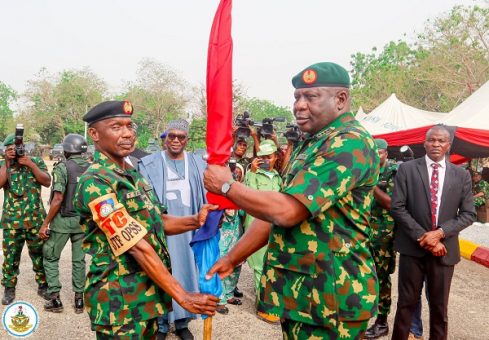
Savannah Shield and the Security Recalibration of Kwara State
By Alabidun Shuaib AbdulRahman
On Thursday, 19 February 2026, at the historic Sobi Barracks in Ilorin, Kwara State did more than launch a security operation. It signalled a recalibration. The formal flag-off of Operation Savannah Shield by Governor AbdulRahman AbdulRazaq alongside the Chief of Defence Staff, General Olufemi Oluyede, the Chief of Army Staff, Lieutenant General Waidi Shaibu, senior Nigerian Army commanders and heads of security agencies represented a strategic adjustment to a changing threat landscape.
Having covered Nigeria’s major military theatres for nearly a decade — from Operation Sharan Daji to Operation Accord and to Operation Sahel Sanity and now Hadarin Daji in the North-West to Operation Delta Safe in the South-South and Operation Safe Haven and Operation Whirl Stroke in the North-Central — I have come to understand that recalibration, not reaction, defines sustainable security. Savannah Shield is best understood within that framework: a preventive correction designed to interrupt an emerging trajectory before it hardens into crisis.
Kwara’s security story over the past two years has been one of gradual but undeniable pressure. Between 2024 and 2025, reported kidnapping incidents along the Ilorin–Jebba–Mokwa corridor and rural incursions in parts of Kaiama and Baruten Local Government Areas raised alarm within security circles. National crime tracking datasets and internal security briefings presented in Abuja in late 2025 reflected a broader pattern: North-Central Nigeria recorded an increase in abduction cases year-on-year, mirroring spillover effects from the North-West’s entrenched banditry networks.
Kwara was not yet a frontline theatre. But it was no longer peripheral. Geography partly explains the vulnerability. The state shares strategic boundaries with Niger State to the north and Kogi to the east, while expansive savannah woodland and forest belts — particularly near Kainji Lake — provide concealment corridors. In conflict reporting, terrain is destiny. In Zamfara, forests became staging grounds for bandits. In Kaduna, forest belts enabled mobile kidnapping cells. Kwara’s terrain, if left insufficiently policed, risked similar exploitation.
It is important to distinguish threat types accurately. Kwara is not contending with a large-scale ideological insurgency akin to Boko Haram’s campaign in Borno. The dominant security pattern has been criminal banditry — kidnapping for ransom, cattle rustling and sporadic attacks targeting vulnerable communities. Yet the distinction offers little comfort if criminal enclaves begin to entrench themselves. Across Nigeria, the line between economic criminality and violent extremism has proven porous when safe havens emerge.
Operation Savannah Shield therefore represents an anticipatory defence. Its structure reflects lessons from other theatres. Rather than a fragmented deployment, it integrates the Nigerian Army, Nigeria Police Force, Nigeria Security and Civil Defence Corps and intelligence services under coordinated planning. Area domination patrols, forest clearance missions and rapid-response operations are being conducted simultaneously with intelligence gathering and surveillance.
The February 19 launch was not ceremonial theatre. It followed months of consultation between the Kwara State Government and federal authorities. Governor AbdulRahman AbdulRazaq’s engagement with the Presidency and defence leadership secured additional military reinforcement. The visible presence of the Chief of Defence Staff at the launch conveyed federal seriousness — a signal that Kwara’s recalibration had national backing.
From a factual standpoint, the state government has not limited itself to rhetoric. In the 2025 fiscal cycle, budgetary allocations supporting security logistics were increased. Confirmed procurement of patrol vehicles and communication equipment enhanced operational mobility. Community policing initiatives were expanded, and liaison structures strengthened between security agencies and traditional institutions.
Mobility and intelligence are operational currencies. In Kaduna between 2021 and 2023, the integration of aerial surveillance and ground coordination under Operation Thunder Strike reduced high-profile highway kidnappings along key corridors. In Zamfara, initial fragmentation under Operation Hadarin Daji slowed results until unified command structures were enforced. Kwara appears to have internalised those lessons from inception.
Since the launch of Operation Savannah Shield, early field reports suggest measurable improvements in patrol visibility along previously vulnerable routes. Residents in parts of Kwara North have reported increased security presence compared with late 2025. Security officials privately confirm that sustained patrol cycles have disrupted criminal mobility patterns. While comprehensive operational statistics remain confidential for tactical reasons, the qualitative indicators point to stabilisation momentum.
But recalibration demands depth, not just deployment. The sustainability question looms large. Military offensives can suppress activity; lasting stability depends on institutional reinforcement. The Nigeria Police Force in Kwara must build intelligence capacity and data-driven crime mapping systems to assume long-term stabilisation roles once immediate military pressure reduces threat intensity.
In every theatre I have covered, gains proved fragile when civilian policing capacity lagged behind military success.
Judicial coordination is equally critical. Arrested suspects must face timely prosecution. Kaduna’s experience in strengthening prosecution processes between 2022 and 2023 offers a useful blueprint. Deterrence is anchored not merely in arrest numbers but in the certainty of consequence. Kwara’s Ministry of Justice must align operational tempo with judicial throughput.
Security recalibration also intersects with economic policy. Kwara’s northern agricultural belt contributes significantly to food production. When insecurity disrupts planting and harvesting cycles, economic ripple effects follow — affecting markets, employment and food inflation. By stabilising rural communities, Savannah Shield safeguards both livelihoods and macroeconomic resilience.
Inter-state coordination will determine whether recalibration endures. Criminal networks relocate under pressure. I observed this dynamic in the North-West, where offensives in one state displaced bandits into neighbouring territories. Kwara must institutionalise intelligence-sharing protocols with Niger, Kogi, Oyo and Osun to prevent displacement cycles. A shield is only as strong as its perimeter.
Public communication deserves commendation. Transparent advisories and engagement with community leaders have sustained trust. In conflict zones, misinformation amplifies fear and undermines operations. Kwara’s measured communication approach counters panic while reinforcing cooperation.
Of course, realism tempers optimism. Security operations demand sustained funding. Logistics, fuel, maintenance and personnel welfare cannot be episodic. If Savannah Shield is to remain effective beyond its launch phase, fiscal consistency must accompany strategic clarity.
Yet what distinguishes Savannah Shield is not perfection but intent backed by structure. The recalibration is evident in three dimensions: anticipatory deployment before escalation, integrated command rather than siloed action, and alignment between security and development policy.
From a regional lens, the significance is broader. North-Central Nigeria is a strategic hinge between insurgency-prone North-East and bandit-dominated North-West. Preventing entrenchment in relatively stable states like Kwara strengthens national security coherence. Savannah Shield contributes to that containment logic.
After nearly a decade reporting from Nigeria’s security corridors, I have learned that the most meaningful victories are incremental. They manifest in reopened schools, functioning markets and uninterrupted farming seasons. They are measured in the quiet return of routine.
Kwara’s recalibration signals an understanding that waiting invites escalation. Acting early reduces long-term cost — human and economic. The February 19 launch was therefore less about spectacle and more about strategic timing.
Savannah Shield is not a silver bullet. No operation is. But it is a structured assertion that Kwara will not surrender its harmony to creeping insecurity. It is a commitment that governance will adapt to emerging threats rather than deny them.
In a national landscape often fatigued by crisis headlines, Kwara’s approach offers a measured alternative: acknowledge vulnerability, mobilise partnership, invest in logistics, align institutions and communicate transparently.
Security recalibration is not merely about raising a shield. It is about strengthening the arm that holds it and reinforcing the society it protects. If sustained with discipline, institutional learning and inter-state cooperation, Savannah Shield can become more than an operation. It can become a model of preventive governance in North-Central Nigeria and beyond.
Alabidun is a media practitioner and can be reached via alabidungoldenson@gmail.com
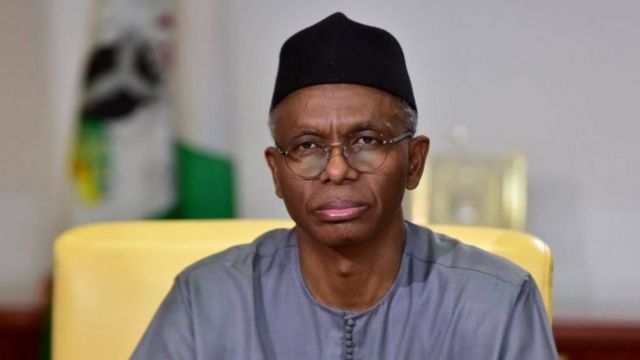
Is Nasir El-Rufai on the Peril? By Alabidun Shuaib AbdulRahman
There is something almost Shakespearean about the current phase of Nasir Ahmad El-Rufai’s political journey. Once firmly lodged within Nigeria’s innermost corridors of power, the former governor of Kaduna State now finds himself navigating choppy waters—estranged from elements of the establishment he helped midwife, locked in public disagreements with former allies, and increasingly defined by sharp media interventions rather than executive authority. The question therefore suggests itself with urgency: is Nasir El-Rufai on the peril, politically speaking, or merely repositioning for another audacious ascent?
To answer that, one must first understand the architecture of his rise. El-Rufai has always thrived at the intersection of intellect and insurgency. From his days as Director-General of the Bureau of Public Enterprises to his tenure as Minister of the Federal Capital Territory between 2003 and 2007, he cultivated the persona of a reformer unafraid of entrenched interests. In Abuja, he enforced the capital’s master plan with relentless precision, demolishing structures deemed illegal and digitising land administration through the Abuja Geographic Information System. Admirers saw courage; critics saw cold technocracy. But none doubted his influence.
His political resurrection after years in relative exile was equally strategic. As a central figure in the coalition that birthed the All Progressives Congress in 2013, El-Rufai demonstrated both tactical patience and elite networking. The APC’s 2015 victory was not merely a partisan turnover; it was a reconfiguration of Nigeria’s power map. In securing the governorship of Kaduna State that same year, El-Rufai transitioned from federal reform czar to subnational executive with a mandate to replicate structural transformation.
Kaduna was never going to be an easy laboratory. With its near parity of Muslim and Christian populations and a history of sectarian volatility, governance required not only administrative efficiency but also delicate social navigation. El-Rufai chose the path he knew best—structural reform. He implemented a Treasury Single Account to streamline finances, overhauled the civil service, and embarked on sweeping education reforms that culminated in the disengagement of more than 20,000 primary school teachers who failed competency tests. The state borrowed heavily for infrastructure, betting that long-term growth would justify short-term fiscal strain.
To his supporters, these were acts of bold leadership in a polity allergic to tough decisions. To his critics, they revealed a governor more comfortable with spreadsheets than sentiments. Southern Kaduna’s recurrent violence further complicated his record. His insistence on framing the crisis largely as criminality rather than ethno-religious persecution was analytically defensible in some respects, yet politically combustible. Perception hardened into distrust among segments of the population who felt unseen and unheard.
Even so, he secured re-election in 2019, proof that reform and controversy can coexist in Nigeria’s electoral calculus. But it was the transition from governor to elder statesman that has proven most perilous.
El-Rufai entered the 2023 political season as a visible ally of President Bola Tinubu during the APC primaries. His intellectual heft and northern pedigree positioned him as a bridge-builder within the party’s power arithmetic. When Tinubu won the presidency, many assumed El-Rufai would feature prominently in the new administration. His nomination as a minister appeared to confirm that trajectory until the Senate declined to confirm him, reportedly citing security concerns.
In Nigerian politics, symbolism often outweighs substance. The rejection was more than procedural; it signalled a rupture. For a politician accustomed to shaping events rather than reacting to them, the development marked a subtle but unmistakable shift from insider to outsider. Since then, his public commentary has grown more pointed. He has questioned the direction of the ruling party, hinted at betrayals, and portrayed himself as a custodian of principles sidelined by expediency.
Is this evidence of peril or repositioning?
There are at least three dimensions to consider. The first is institutional. El-Rufai no longer controls a state apparatus. Without the leverage of executive office, influence must be exerted through persuasion, coalition-building and narrative framing. This transition is difficult for leaders whose authority was reinforced by command structures. His recent media engagements which implies candid, combative and occasionally accusatory suggest a man recalibrating his tools.
The second dimension is relational. Politics is sustained by networks, and networks are sustained by trust. Reports of mistrusts between El-Rufai and key federal figures, as well as friction with his successor in Kaduna, complicate his positioning. In Kaduna, reviews of past contracts and policies have cast shadows backward, feeding narratives of vendetta on both sides. At the federal level, silence has often met his critiques, a strategy that can either isolate a critic or amplify him, depending on public mood.
The third dimension is strategic. Nigeria’s political elite operates in long cycles. Conversations about 2027 are already underway in quiet rooms. El-Rufai’s national profile, intellectual agility and northern base make him a potential factor in any future coalition calculus. His current dissent may therefore be less about grievance and more about differentiation—an effort to craft an identity distinct from a government facing economic and security headwinds.
Yet peril remains a real possibility. Nigeria’s political memory can be unforgiving. Leaders who overplay their hand risk alienation from both establishment and grassroots. If El-Rufai’s critiques are perceived as personal vendetta rather than principled dissent, his moral capital may erode. Moreover, the electorate has grown increasingly wary of elite quarrels that appear disconnected from everyday hardship. A politician who once sold reform as necessity must now demonstrate empathy as convincingly as efficiency.
Still, history suggests that El-Rufai has often converted adversity into opportunity. After leaving the Obasanjo administration under clouds of controversy, he returned stronger within a new coalition. After early resistance in Kaduna, he consolidated his authority and reshaped the state’s administrative culture. His career has been punctuated by phases of apparent crisis followed by strategic resurgence.
The deeper question may not be whether he is on the peril, but whether Nigeria’s political environment can accommodate his style of engagement. El-Rufai thrives on intellectual contestation and structural overhaul. He is less adept at the slow, conciliatory art of consensus politics. In a federation where legitimacy often rests on accommodation as much as achievement, this imbalance can be costly.
There is also the matter of narrative control. El-Rufai has long been his own chief spokesman, deploying social media and interviews with precision. In the absence of political office as he is currently, narrative becomes power. His recent outbursts once again keep him in the national conversation. Silence would have signified retreat.
So, is Nasir El-Rufai on the peril? The answer is layered. Institutionally, yes—he stands as an outsider in the power structure he once influenced. Relationally, yes—alliances appear strained and rivalries sharpened. Strategically, however, peril can be prelude. In politics, moments of vulnerability often precede recalibration and El-Rufai has always been a master of that.
Ultimately, El-Rufai’s future will hinge on whether he can transform dissent into constructive coalition-building. If he remains defined by grievance, the peril may deepen into isolation. If he channels critique into a broader vision that resonates beyond elite circles, the current turbulence could become a staging ground.
For now, he occupies an ambiguous space: not dethroned, not enthroned; neither silenced nor fully embraced. In that ambiguity lies both danger and possibility. Nasir El-Rufai has built a career on defying expectations. Whether this chapter marks decline or reinvention will depend less on his adversaries than on his capacity to balance conviction with conciliation.
The peril, if it exists, is not merely political. It is existential—the risk that a man defined by reform and combat may struggle in an era demanding reconciliation and breadth. But in Nigeria’s ever-shifting theatre of power, yesterday’s peril can become tomorrow’s platform.
Alabidun is a media practitioner and can be reached via alabidungoldenson@gmail.com


CARICOM pushes unified response to global shifts, backs Guyana’s COP35 bid

Nigeria’s Stakes in a Fractured Middle East, by Boniface Ihiasota

The United States, Israel and the Iran Question, by Alabidun Shuaib AbdulRahman

Pastor Jerry Eze Defends Miracles At UK Conference Amidst Criticism And Controversy

Diaspora Watch 20th Edition (October 14-20, 2024): Your Trusted Source for Global News and Insights


