
Politics
France Summons US Ambassador Over Allegations of Rising Antisemitism

France Summons US Ambassador Over Allegations of Rising Antisemitism
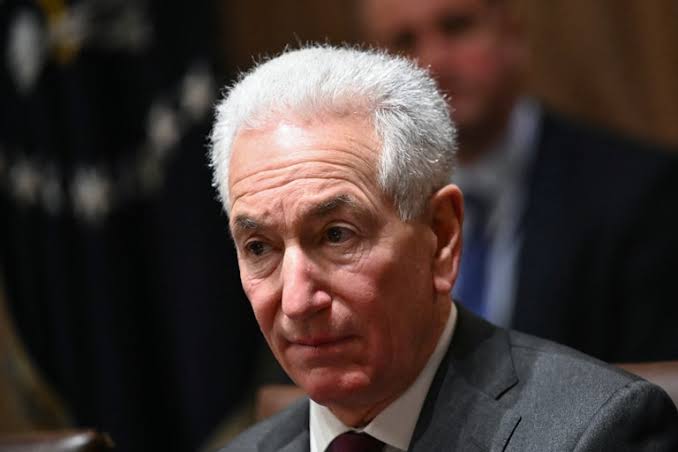
France has said it will summon the United States Ambassador to Paris, Charles Kushner, following remarks the diplomat made accusing French authorities of failing to address a surge in antisemitism linked to the Gaza war.
In a strongly worded statement on Sunday, the French foreign ministry described Kushner’s comments as “unacceptable” and a breach of diplomatic convention, stressing that the envoy would appear before officials on Monday.
Kushner, who is Jewish and the father-in-law of US President Donald Trump’s daughter Ivanka, made the claims in an open letter to President Emmanuel Macron published in the Wall Street Journal.
He alleged that Jews in France faced “daily assaults,” vandalism of synagogues, schools, and businesses, and warned of a “long-standing scar” of antisemitism in French society.
The ambassador also urged Macron to tone down his criticism of Israel while offering to collaborate on what he described as a “serious plan” to confront the menace.
Paris swiftly dismissed the accusations, noting that France has stepped up security around Jewish institutions and categorically rejecting the notion that it tolerates antisemitism.
“France firmly refutes these latest allegations,” the foreign ministry said. “Since the 1961 Vienna Convention, ambassadors are not permitted to interfere in the internal affairs of the host country.”
Kushner’s intervention comes on the heels of a letter from Israeli Prime Minister Benjamin Netanyahu, who accused Macron of fuelling antisemitism by pushing for international recognition of a Palestinian state.
France has announced plans to formally recognise Palestine in September, with Macron insisting that “there is no alternative” to a two-state solution that guarantees Israel’s security and Palestine’s viability.
The exchange underscores growing tensions between Paris, Washington, and Tel Aviv over the Gaza war, which erupted after Hamas attacked southern Israel on 7 October 2023, killing about 1,200 people and taking more than 250 hostage.
Israel’s military response has since left over 60,000 dead in Gaza, according to the enclave’s Hamas-run health ministry, with famine recently declared in parts of the territory.
Despite these humanitarian concerns, Israel continues to deny claims of starvation in Gaza, branding a UN-backed report on food insecurity an “outright lie.”
For France, however, the diplomatic row with Washington threatens to overshadow its domestic efforts to tackle antisemitism while balancing a firm stance on the Middle East peace process.

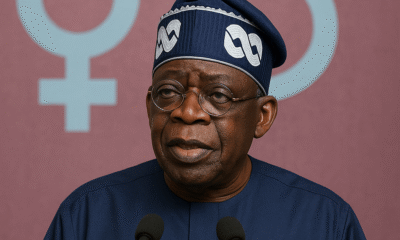
Tinubu, EFCC and the Danger of Political Interference, by Alabidun Shuaib AbdulRahman
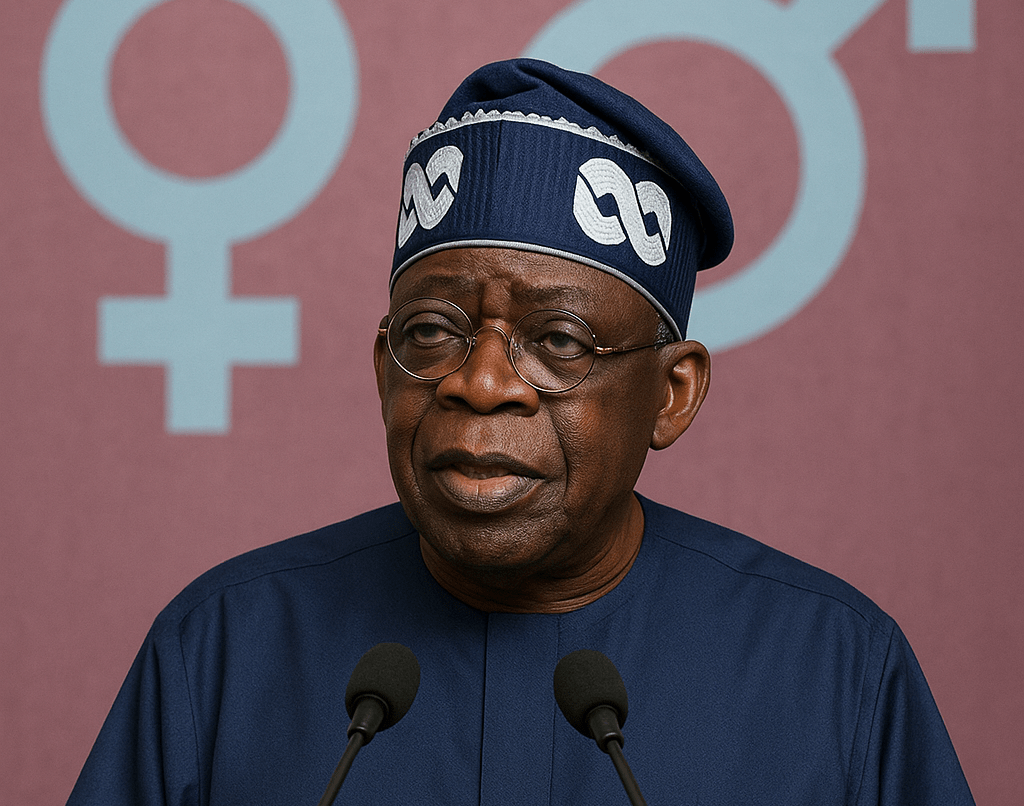
There are moments when the intention behind an official decision may be defensible, yet the decision itself opens a door that ought to concern every citizen. President Bola Ahmed Tinubu’s intervention in the Economic and Financial Crimes Commission’s freezing of an Osun State Government account is one of those moments.
On August 6, 2026, with the Osun governorship election only nine days away, Tinubu directed the EFCC to return to court, vacate the order freezing an account belonging to the Osun State Government and discontinue the action it had instituted. The President said he was “deeply embarrassed” not by the EFCC’s exercise of its mandate, which he acknowledged was backed by a court order, but by its timing.
His explanation was understandable. Tinubu said actions taken by federal institutions were ordinarily attributed to him as President, whether or not he had prior knowledge of them. Since the election was approaching, he argued, nothing should be done that could create the impression that the EFCC or another Federal Government agency was being used to influence the election.
The argument is “morally” correct. But it also creates a difficult constitutional and institutional question: where does legitimate presidential concern about an election end and operational interference in an anti-corruption agency begin?
The EFCC did not arbitrarily descend on Osun. The commission said it had observed “huge transfers of funds into different corporate entities” from the state account and had acted to halt what it considered suspicious movement of public money. It argued that the approaching election could not become an excuse for an anti-corruption agency to ignore suspected movement of public funds.
Governor Ademola Adeleke, however, said the account was used for workers’ salaries and had been placed on a “Post No Debit” status. He demanded an explanation from EFCC Chairman Ola Olukoyede and described the action as another assault on Osun’s democracy.
The political atmosphere surrounding the matter had also been poisoned long before the account was frozen. In June, the Diaspora Committee of the All Progressives Congress Governorship Campaign Council in Osun asked the EFCC to freeze accounts allegedly connected with a reported N13.7bn annual ghost-workers payroll scandal. The committee claimed the money could be diverted to finance vote-buying ahead of the August 15 election. That background makes the EFCC’s action politically sensitive. But sensitivity is precisely why institutional independence matters.
The EFCC is a creation of statute. Under the EFCC (Establishment) Act, its chairman and members are appointed by the President, subject to Senate confirmation, while the law also provides for the chairman’s tenure and removal. The Presidency therefore has substantial influence over the commission’s leadership. That, however, does not make the President the operational head of every EFCC investigation.
There is an important distinction between constitutional authority over an institution and operational control of its investigations. A President may appoint the EFCC chairman, exercise statutory powers concerning the office, formulate broad government policy and demand accountability from federal agencies. But an anti-corruption agency must retain sufficient operational independence to determine whom to investigate, what evidence to pursue and what enforcement action to take.
Curiously, Tinubu himself made this case in the same statement. He said that since assuming office in May 2023, he had consistently maintained that anti-corruption and law-enforcement agencies should perform their statutory responsibilities independently and professionally, “without fear or favour, or political interference.” He added that he had deliberately refrained from directing or interfering in EFCC operations. That is why the Osun intervention becomes more concerning.
If a President can intervene in an operational decision because its timing might create an appearance of political interference, then the President has necessarily exercised influence over an operational decision. That does not automatically make the intervention unlawful. But it creates a precedent that future administrations may exploit.
Tinubu may genuinely believe the EFCC action could have been interpreted as an attempt to influence the Osun election. Another President could make the same argument about an investigation involving a governor, a minister, a major campaign financier or a politically influential contractor. If the principle becomes that the Presidency can intervene whenever enforcement action creates political controversy, the exception could eventually swallow the rule.
Nigeria’s history with the EFCC offers enough warnings. The commission was established in 2002 and began operations under President Olusegun Obasanjo, with Nuhu Ribadu becoming its pioneer chairman in 2003. Ribadu’s aggressive pursuit of governors, ministers, bankers and other powerful Nigerians gave the EFCC international prominence. But his controversial removal in 2007 also generated questions about the vulnerability of the commission to presidential and political interests.
Farida Waziri’s tenure produced another controversy. Appointed by President Umaru Musa Yar’Adua in 2008, she was removed by President Goodluck Jonathan on November 23, 2011. Years later, Waziri alleged that Jonathan’s administration had interfered with investigations and that her refusal to back down from a probe contributed to her removal. Though Jonathan rejected the allegation and challenged her to identify whom he had allegedly ordered her not to investigate.
The significance of those disputes is not simply who was right. It is that Nigerians repeatedly witnessed a situation in which the political leadership had enormous influence over the institution expected to investigate politically powerful people.
The Muhammadu Buhari administration provided another example. Buhari appointed Ibrahim Magu as acting EFCC chairman in 2015, despite the controversy that followed the Senate’s rejection of his nomination for substantive confirmation. On July 10, 2020, Buhari approved Magu’s suspension to allow a presidential panel to investigate allegations against him.
Again, the larger issue was institutional. The leadership of the EFCC remained heavily dependent on the Presidency, even though the commission’s work could directly affect members and allies of the governing political establishment. That is the weakness Nigeria has failed to resolve.
The President appoints the EFCC chairman. The commission investigates people who may have enormous political connections. The chairman therefore operates within an institutional structure in which the most powerful political office in the country has significant influence over the leadership of the agency.
This is why the Osun matter cannot be reduced to whether Tinubu had the right to be concerned about the election. Of course, he did. Elections must be protected from intimidation, manipulation and the misuse of state institutions. The harder question is whether that legitimate concern should be exercised through a presidential direction concerning a live EFCC enforcement matter.
There is also an important constitutional distinction regarding Adeleke. Section 308 of the 1999 Constitution grants a sitting governor immunity from civil or criminal proceedings in specified circumstances. But immunity is not exoneration. It does not mean a governor cannot be investigated, that evidence cannot be gathered or that public funds associated with a state government are beyond investigation.
If the EFCC had credible evidence of suspicious transfers, Adeleke’s candidacy should not automatically extinguish the commission’s investigative responsibility. Conversely, the approaching election should not give the EFCC licence to turn an investigation into a political weapon. The law must be stronger than both impulses.
That is why the better solution should have been procedural rather than presidential. If the EFCC had obtained a freezing order from a court and concerns subsequently arose about its timing or effect on essential state services, those concerns could have been presented before the court. If salaries needed to be paid, the government could have sought appropriate judicial relief.
Adeleke, too, must allow due process to take its course. If the EFCC acted unlawfully, the courts provide the remedy. If the allegations are false, evidence and due process should establish that fact.
For Olukoyede, the lesson is equally clear. The EFCC’s greatest asset is not proximity to the President but distance from political instruction. The commission must be prepared to investigate opposition politicians and members of the ruling party, governors and former governors, ministers and political financiers according to the same evidentiary standard.
Tinubu’s intervention, even if motivated by a legitimate desire to protect the integrity of the Osun election, should concern Nigerians. Institutions survive governments. Presidents come and go. Political parties win and lose elections.
If Tinubu truly wants Nigerians to believe that the EFCC is independent, the next step is obvious. He should help build an institutional framework in which no future President will need to intervene to prove that the EFCC is not being used politically. That is the real test of leadership. And that is the difference between fighting corruption under a President and building a country where the fight against corruption does not depend on the President.
Alabidun is a media practitioner and can be reached via alabidungoldenson@gmail.com
Lessons from the Catholic Bishops’ Visit to Tinubu, by Boniface Ihiasota
The recent visit of the Catholic Bishops’ Conference of Nigeria to President Bola Ahmed Tinubu at the Presidential Villa was more than a ceremonial engagement. It became one of the clearest illustrations yet of the widening gap between official optimism and the daily realities confronting millions of Nigerians. The discussions that followed—and the public reactions they generated—have once again underscored the indispensable role of religious institutions in shaping national conversations on governance, accountability and social justice.
Led by the President of the Catholic Bishops’ Conference of Nigeria, Archbishop Matthew Man-Oso Ndagoso, the bishops used the opportunity to raise concerns over insecurity, economic hardship, unemployment and the general welfare of Nigerians. They also urged President Tinubu to formally invite Pope Leo XIV to Nigeria, arguing that such a visit would strengthen peace, unity and national reconciliation.
President Tinubu, on his part, defended his administration’s reforms, insisting that the difficult decisions taken since assuming office were necessary to rescue the economy from years of structural distortions. He maintained that security architecture was being repositioned and that prosperity would eventually follow the current sacrifices.
Ordinarily, such exchanges between government and faith leaders are healthy in every democracy. However, the conversation assumed greater significance after Cardinal John Onaiyekan publicly disclosed that the President disagreed with many of the bishops’ assessments. According to the Cardinal, the bishops told Tinubu that “the economy is not helping our poor people,” while the President maintained that the economy was improving. The revelation immediately triggered widespread debate across political and religious circles because it exposed two sharply contrasting narratives about the state of the nation.
Yet, facts remain stubborn. Nigeria continues to face severe economic challenges. Inflation has remained elevated over the past two years, food prices have climbed dramatically, and millions of households continue to struggle with declining purchasing power. The World Bank has repeatedly warned that while reforms such as fuel subsidy removal and exchange-rate liberalisation may improve long-term fiscal sustainability, they also impose painful short-term costs on vulnerable citizens unless accompanied by robust social protection measures.
This explains why the bishops’ intervention resonated beyond the Catholic faithful. Religious leaders occupy a unique position in Nigerian society. They interact daily with ordinary citizens who seek assistance through churches, mosques and community organisations. Consequently, their assessment of public suffering often reflects grassroots realities that official statistics may not immediately capture.
The reactions also revealed an important democratic principle. Criticism of government should not automatically be interpreted as political opposition. Throughout Nigeria’s democratic history, both Christian and Muslim leaders have consistently spoken against corruption, insecurity, injustice and poverty irrespective of which party occupies Aso Rock. Their constitutional freedom to speak truth to power remains essential to democratic accountability.
At the same time, government officials equally have the responsibility to explain policies and defend their decisions. Democracy thrives not when everyone agrees but when disagreements are managed through dialogue rather than hostility. The exchange between Tinubu and the bishops should therefore be viewed as evidence that democratic engagement remains alive, provided both sides continue to listen respectfully.
The larger lesson is that perception matters almost as much as policy. Economic indicators may improve on paper, but if ordinary Nigerians cannot afford food, healthcare, education or transportation, public confidence will remain elusive. Governments ultimately earn legitimacy not through optimistic speeches but through measurable improvements in people’s quality of life.
As Nigeria journeys toward the 2027 elections, the meeting between the Catholic bishops and President Tinubu should remind both leaders and citizens that governance is not merely about defending statistics or winning arguments. It is about restoring hope. That hope will be strengthened only when policy outcomes begin to match the lived experiences of the millions whose voices the bishops sought to amplify.
Obasanjo, Atiku and the Burden of Broken Trust, by Alabidun Shuaib AbdulRahman
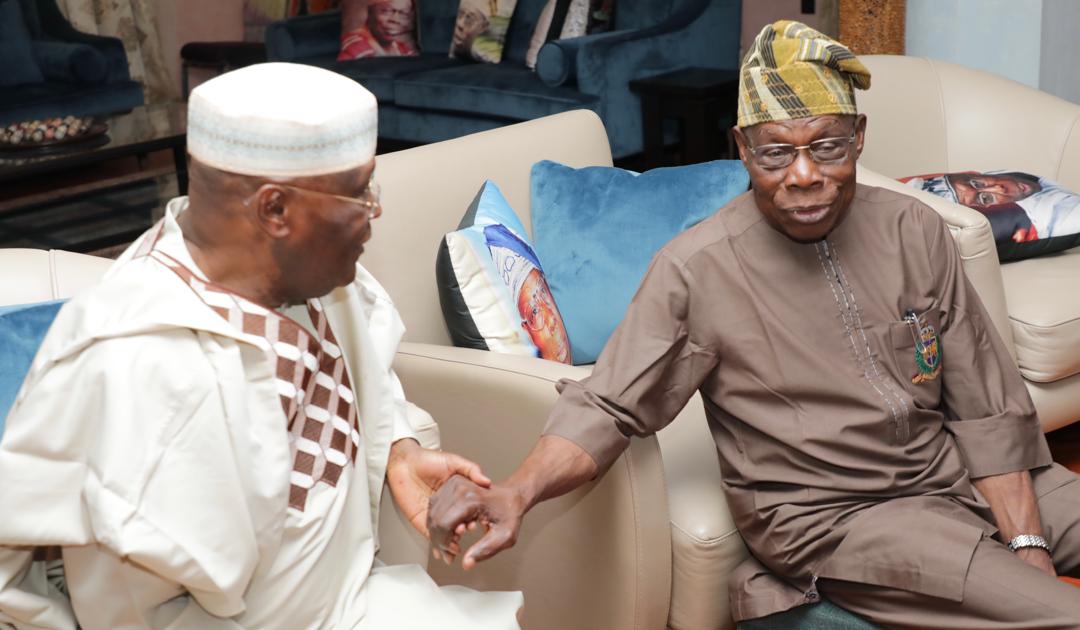
In politics, alliances are often built on interests, sustained by necessity and destroyed by distrust. Few relationships illustrate this reality more profoundly than that of former President Olusegun Obasanjo and former Vice-President Atiku Abubakar. What began as one of the strongest political partnerships in Nigeria’s Fourth Republic gradually degenerated into one of its most bitter rivalries, leaving enduring consequences not only for the two principal actors but also for the country’s democratic evolution.
Their story is not merely about two ambitious politicians. It is a study of trust, betrayal, power, succession and the burdens of political ambition. More importantly, it explains why Atiku Abubakar, despite his enormous political network, financial resources and national appeal, has remained one of Nigeria’s greatest political nearly-men.
Politically, the relationship predates the return to democracy in 1999. During the military era, Atiku had become a leading figure in the Shehu Musa Yar’Adua-led Peoples Democratic Movement (PDM), arguably Nigeria’s most organised political structure at the time. Following General Sani Abacha’s death on June 8, 1998, General Abdulsalami Abubakar initiated a transition programme that opened the way for democratic elections.
As political parties emerged, the newly formed Peoples Democratic Party became the dominant platform. Within the PDP, Atiku was among the strongest presidential aspirants. He had built an extensive grassroots network through the PDM and enjoyed significant support among party delegates.
However, circumstances changed dramatically when former military Head of State, General Olusegun Obasanjo, who had recently been released from prison by General Abdulsalami Abubakar, entered the presidential race. Many influential political leaders believed Nigeria required a Yoruba president to heal the wounds created by the annulment of the June 12, 1993 presidential election won by late Chief Moshood Kashimawo Olawale Abiola.
At the PDP presidential convention held in Jos in December 1998, Obasanjo defeated Alex Ekwueme to secure the party’s ticket. Atiku, recognising the prevailing political mood, aligned with Obasanjo and reportedly mobilised substantial support from the PDM machinery for the former military ruler.
To reward both political loyalty and strategic value, Obasanjo selected Atiku as his running mate ahead of the 1999 presidential election. Together they defeated the Alliance for Democracy-All People’s Party ticket of Chief Olu Falae and Dr Umaru Shinkafi.
Initially, on what appeared a perfect political marriage, Obasanjo concentrated on governance and Nigeria’s re-engagement with the international community, while Atiku chaired the National Economic Council and the National Council on Privatisation. The vice-president became one of the principal architects of Nigeria’s economic reform programme, overseeing privatisation policies that fundamentally reshaped sectors such as telecommunications, banking and manufacturing.
Obasanjo’s military background inclined him towards centralised authority, discipline and firm control of government. Atiku, by contrast, was a consummate coalition builder whose strength lay in negotiation, consultation and political networking.
Interestingly, the first visible cracks appeared shortly after their inauguration. Several influential figures accused Atiku of maintaining an independent political structure outside Aso Rock. Rather than functioning merely as the vice, he continued nurturing relationships with governors, legislators and party leaders across the federation. For Obasanjo, this increasingly looked like preparation for succession rather than loyalty and by 2002, mutual suspicion had become impossible to conceal.
As the 2003 election approached, rumours circulated that Obasanjo considered replacing Atiku with another running mate. It was further rumoured that Atiku’s political associates equally questioned whether the President intended to honour what they believed was an understanding that power would eventually pass to the vice-president. Neither man publicly admitted the existence of such an agreement. The crisis intensified after the 2003 elections, which returned both men to office. The second term proved far more turbulent than the first.
Cabinet meetings reportedly became battlegrounds of competing interests. PDP leaders increasingly aligned themselves with either Obasanjo or Atiku. Government gradually transformed into two competing political camps operating under one administration.
Then came the defining episode. The proposed constitutional amendment that would have allowed a third presidential term for Obasanjo became the turning point. Although Obasanjo repeatedly denied personally sponsoring the amendment, many political actors believed forces loyal to him actively supported it. On the other side, Atiku vehemently opposed the proposal.
Going forward, on May 16, 2006, the National Assembly rejected the constitutional amendment, effectively ending any possibility of a third term. That single event irreversibly destroyed whatever trust remained between President and Vice-President. The aftermath was brutal.
Obasanjo publicly accused Atiku of disloyalty and corruption. The Federal Executive Council recommended investigations into allegations arising from the United States-based Jefferson bribery scandal involving former Congressman William Jefferson and Vice-President Atiku’s former wife, Jennifer Douglas. Atiku consistently denied wrongdoing and was never convicted of corruption either in Nigeria or the United States.
The administration also attempted to exclude Atiku from contesting the 2007 presidential election through the Independent National Electoral Commission, INEC, after the Economic and Financial Crimes Commission, EFCC listed him among politicians allegedly indicted for corruption.
However, in a landmark judgment delivered on April 16, 2007, the Supreme Court ruled that INEC lacked constitutional powers to disqualify candidates without a court conviction. That judgment remains one of Nigeria’s most significant electoral precedents. By then, however, political damage had already been done. Atiku had left the PDP for the Action Congress, contested the presidency against the late Umaru Musa Yar’Adua and finished third.
Since then, Atiku has contested the presidency repeatedly—in 1993 (Social Democratic Party primaries), 2007 (Action Congress), 2011 (PDP), 2019 (PDP) and 2023 (PDP)—without success.
Many factors explain these defeats, but the collapse of his relationship with Obasanjo remains among the most consequential. Since Obasanjo described Atiku as unreliable and overly ambitious, many Nigerians began viewing the former vice-president through that lens.
Perhaps the most quoted criticism came from Obasanjo’s 2019 public letter in which he wrote that “Atiku is not the person to entrust the future of Nigeria with.” Ironically, only weeks earlier, the same Obasanjo had publicly endorsed Atiku’s presidential ambition after reconciling with him under the Coalition for Nigeria Movement.
For Atiku, the consequences have been profound. The very networking ability that made Atiku indispensable to Obasanjo’s emergence in 1999 later became one of the reasons their partnership collapsed. Obasanjo reportedly interpreted Atiku’s independent political influence as a direct threat rather than an institutional asset. Trust, once broken, rarely returns unchanged, they say.
Although both men occasionally reconciled for political expediency, notably, before the 2019 elections, the warmth of their earlier partnership never fully returned. Ahead of the 2023 presidential election, Obasanjo endorsed Labour Party candidate Peter Obi instead of Atiku, reinforcing public perception that the former President had permanently lost confidence in his erstwhile deputy.
Even though to some extent, Obasanjo restored Nigeria’s global standing after years of military dictatorship and implemented significant economic reforms. Atiku played a pivotal role in driving those reforms and expanding Nigeria’s private-sector economy through privatisation and investment promotion. Together, they achieved more than either is often willing to acknowledge.
However, their fractured relationship offers broader lessons for Nigeria’s political class. Institutions suffer when personal distrust supersedes constitutional responsibility. Democracy weakens when political partnerships collapse under the weight of suspicion rather than being managed through dialogue and internal party mechanisms.
For Atiku personally, the Obasanjo years permanently shaped his political identity. He emerged as a formidable coalition builder, an indefatigable presidential contender and one of Nigeria’s most recognisable democratic figures. Yet he also carried the enduring burden of questions about loyalty, consistency and political trust—questions amplified by his multiple party defections between the PDP, Action Congress and the All Progressives Congress before returning to the PDP and now ADC.
Whether those perceptions are entirely fair remains debatable. What is beyond dispute is that the Obasanjo-Atiku rupture altered the trajectory of Nigeria’s Fourth Republic and influenced every presidential election in which Atiku subsequently participated.
As the ancient Roman philosopher Cicero observed, “Nothing is more noble, nothing more venerable than fidelity.” In politics, as in life, trust is difficult to build, easy to lose and almost impossible to restore. The Obasanjo-Atiku story remains Nigeria’s most compelling reminder that political alliances may win elections, but only trust can sustain leadership.
Alabidun is a media practitioner and can be reached via alabidungoldenson@gmail.com


RWE abandons US offshore wind projects in $1.2bn Trump deal

Saudi Arabia, Turkey, Pakistan sign defence pact amid Middle East tensions

Africa CDC, WHO demand urgent scale-up of DRC Ebola response

Pastor Jerry Eze Defends Miracles At UK Conference Amidst Criticism And Controversy

Diaspora Watch 20th Edition (October 14-20, 2024): Your Trusted Source for Global News and Insights

Tanzanian Man Reportedly Dies And Returns To Life Six Times


-
 Analysis3 days ago
Tinubu, EFCC and the Danger of Political Interference, by Alabidun Shuaib AbdulRahman
-
 News3 days ago
Netanyahu Defies Trump?
-
 Analysis3 days ago
Jingir’s Words and the Challenge of Religious Tolerance, by Boniface Ihiasota
-

 News3 days ago
Irish Government Jet Takes Suspected Crime Boss Kinahan Back to Dublin
-
 Health2 days ago
Africa CDC, WHO demand urgent scale-up of DRC Ebola response
-
 Business2 days ago
RWE abandons US offshore wind projects in $1.2bn Trump deal