
Opinion
From Front-Runner To Follower: Nigeria’s Economic Decline

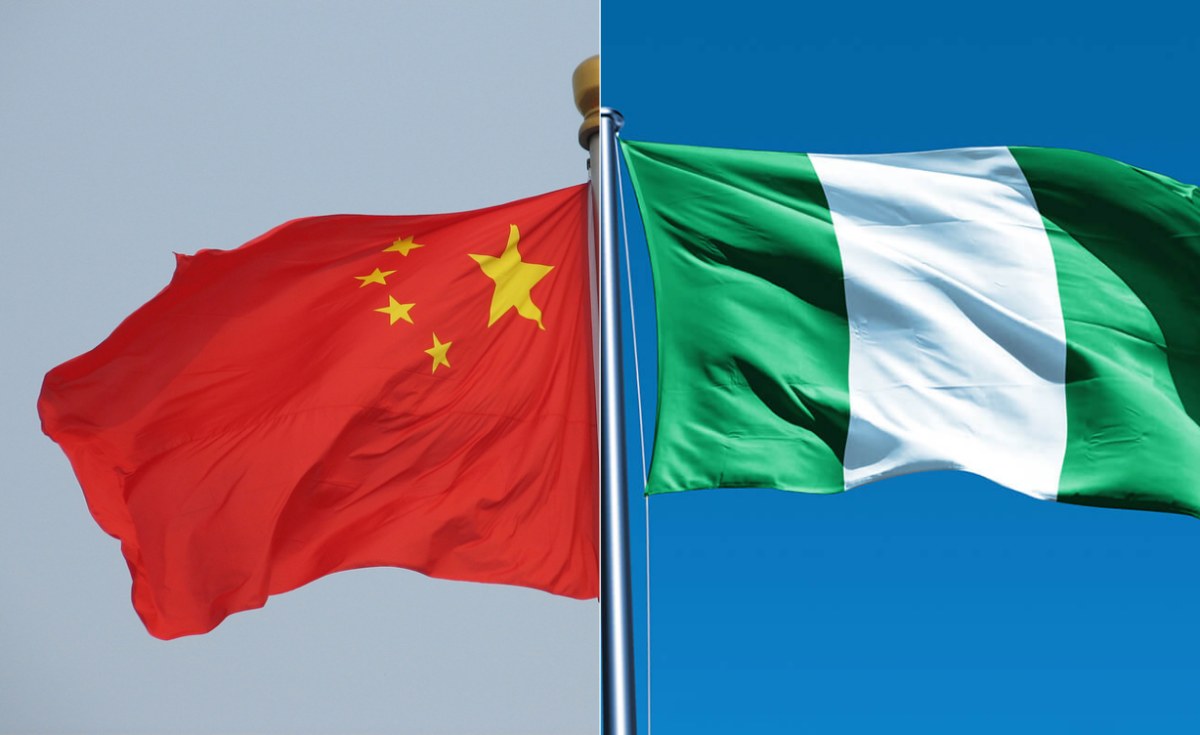
In 1960, Nigeria’s GDP per capita exceeded China’s, indicating a lead in unit productivity and prosperity. However, by 1999, China’s GDP per capita had surpassed Nigeria’s, beginning a trend of increasing economic growth. Today, China is a global economic powerhouse, while Nigeria struggles to reclaim its lost lead.
Nigeria and China share a similar history, with both countries gaining independence in the mid-20th century. However, their economic trajectories have diverged significantly. China’s economic reforms, implemented in 1978, prioritized innovation, education, and controlled population growth.
In contrast, Nigeria economic growth has been hindered by lack of strategic planning and implementation. 1999 marked a turning point in the economic fortunes of both nations. China’s
GDP per capita surpassed Nigeria’s, and the gap has continued to widen. Today, China’s GDP per capita stands at $24,558, while Nigeria’s is $6,318. China’s poverty rate has declined significantly, with less than 0.1% of the population living on less than $2.15 per day.
In contrast, Nigeria’s poverty rate remains high, with 30.9% of the population living on less than $2.15 per day. China’s GDP growth rate has consistently outpaced Nigeria’s, with a growth rate of 6.1% in 2020 compared to Nigeria’s 1.9%. A key factor in China’s success has been its meritocratic system, which ensures that political leaders are well educated and experienced.
In contrast, only 42.9% of Nigerian presidents have completed a university education since 1960. China’s economic reforms have been driven by a focus on innovation, education, and controlled population growth. The country’s export led growth strategy and “Made in China 2025” initiative have positioned it as a leading global player in manufacturing. Indonesia’s success offers valuable lessons for Nigeria.
Read Also
Nigeria’s Luxury Jet Repossessed by
Chinese Firm In Canada Over Unpaid Debt
The country’s focus on manufacturing, investments in transportation and storage, and effective implementation and monitoring teams have driven its economic growth.
The Nigerian Economic Society’s economic dialogue offers a chance for Nigeria to reclaim its lost lead. Will the country take the cue and transition from participant to convener of a Forum on Nigeria-Africa Cooperation (FONAC) or Forum of Nigeria-Asia Cooperation (FONASC)?
Nigeria’s lost lead is a cautionary tale of how a country can fall behind due to lack of strategic planning and implementation. However, it is not too late for Nigeria to reclaim its lead. By learning from China’s and Indonesia’s success, Nigeria can drive its economic growth and reclaim its position as a leading economic power in Africa.

The Likes of Kila in Our Society, by Alabidun Shuaib AbdulRahman
There is something particularly troubling about a person who spends years telling society what is wrong with its leaders, questioning the integrity of public institutions, demanding transparency from those in authority and insisting that accountability is the bedrock of good governance, only to find himself confronted with questions about the very integrity he expects others to uphold. Such an act goes beyond personal embarrassment; it raises fundamental questions about the credibility of public intellectuals and the moral authority upon which their influence rests. The controversy surrounding Anthony Kila, a familiar voice in Nigeria’s public discourse, presents an uncomfortable but necessary question: can those who hold others accountable escape the same scrutiny they demand of everyone else?
In a country where public trust has suffered repeated injuries from political deception, institutional failures and the abuse of public office, the distinction between what a person preaches and what he practises matters enormously. Society needs people who can interrogate power without fear, challenge dishonesty without compromise and insist that public officials answer for their actions. But what happens when one of the voices making these demands becomes the subject of serious questions about his own credentials? What becomes of the argument for accountability when the advocate must himself account for the foundation of his public identity?
The investigations published by PREMIUM TIMES on October 3 and October 10, 2026, concerning Kila’s professorial title and claimed academic qualifications, have brought these questions into sharp focus. The first report found no evidence that a recognised academic institution had awarded him the professorial rank he had publicly used for years. The subsequent investigation questioned his claimed bachelor’s, master’s, doctoral and other qualifications, reporting discrepancies between his claims and information obtained from institutions he said he attended. Even though Kila has rejected the description of him as a fake professor, he maintained that he stands by his credentials and said he was gathering his academic and professional documents. These are serious allegations, and the appropriate investigations must be allowed to establish the facts. Nevertheless, the questions raised cannot be dismissed simply because they concern a familiar media personality rather than an elected politician.
What makes this controversy especially troubling is not merely the title at its centre but the public expectations attached to it. Kila has built a recognisable presence as a political analyst, public commentator and advocate of institutional accountability. His opinions have travelled through television studios, newspaper columns and public discussions. He has been part of the conversation through which Nigerians examine governance, leadership and the direction of their country. That influence should not be casually discounted, and neither should his intellectual contributions be retrospectively declared worthless because of the present controversy. The more important question is why a person with such visibility and the apparent ability to engage complex public issues would allow his professional identity to become entangled in claims that he must now struggle to substantiate.
There is a difference between possessing knowledge and possessing a certificate. There is also a difference between being intellectually capable and being entitled to an academic rank. A person may read widely, understand political economy, analyse public policy and contribute meaningfully to national debate without holding a doctorate or occupying a university professorship. Society has produced remarkable thinkers whose authority emerged from their work, experience and ability to explain difficult questions, not from the titles preceding their names. If Kila possesses the intellectual capacity that many of his admirers have attributed to him, why would any title beyond his demonstrable achievements be necessary to establish his worth?
In a society obsessed with titles, the temptation to embellish one’s credentials can become powerful. Professor, doctor, chief executive, consultant and international expert have become more than descriptions of professional standing. They are often treated as shortcuts to respect, invitations to television programmes, access to influential circles and opportunities to shape public decisions. The title can become more important than the substance of the person carrying it. Once society begins to reward appearances more generously than competence, those who understand the system may be tempted to manufacture the appearance rather than patiently establish the substance.
Yet the appetite for titles does not excuse the person who misrepresents his qualifications, if the allegations are established. It exposes both the individual and the society that makes such misrepresentation attractive. A genuine academic distinction is earned through recognised institutional processes, scholarship, teaching, research and assessment. It is not created by repeatedly describing oneself in a particular way, nor does public familiarity transform an unverified claim into an established fact. The title of professor carries an institutional meaning that cannot be replaced by personal conviction or public popularity.
On October 6, 2026, Michael and Cecilia Ibru University in Agbarha-Otor, Delta State, asked Kila to step aside from his responsibilities as pro-chancellor pending an investigation into questions surrounding his professorial status. The Independent Corrupt Practices and Other Related Offences Commission also constituted a team to investigate the allegations. These developments demonstrate that the controversy has moved beyond social media arguments and personal reputations to questions about institutional responsibility. A university governing council is not an ornamental gathering. It exercises authority over administration, policy, finances and other important aspects of institutional governance. Anyone occupying such a position must be able to satisfy legitimate questions about qualifications presented in support of his public standing.
The implications extend beyond Kila because if a university can place a person in a position of considerable responsibility without adequately verifying the credentials associated with his public profile, what does that say about its recruitment and governance procedures? If television stations repeatedly introduce a commentator as a professor without independently establishing the basis of that designation, what does that say about editorial diligence? And if the public accepts titles as evidence of expertise without asking who conferred them, the institution that awarded them or the work supporting them, are we not collectively encouraging the culture we later condemn?
Also, ARISE News has announced on October 13, 2026, that Kila would no longer appear on its platforms following the allegations and its unsuccessful attempt to obtain his response within the period it specified. The action might be said to be an afterthought. The platform should have diligently do background checks on him before making him the face and the voice of his flagship show. Suspending him after the the expose is reactional.
There is, however, a wider moral problem in the conduct of people who demand from others standards they appear unwilling to apply to themselves. The politician who condemns corruption but manipulates public resources, the activist who preaches transparency but conceals his own dealings, the journalist who demands truth but publishes unverified allegations, and the public intellectual who questions the credentials of others while leaving his own claims unexplained all participate in the same culture of contradiction. Their positions differ, but the underlying failure is identical. They want the moral authority of accountability without accepting its personal obligations.
Such people can become particularly influential because they understand the language of public morality. They know how to identify institutional weaknesses, explain the consequences of poor governance and present themselves as alternatives to a compromised establishment. Their arguments may even be correct. But correctness on one issue does not automatically confer integrity in every other aspect of life. A person can make an excellent argument about corruption and still face legitimate questions about personal conduct. Intellectual brilliance is not a permanent certificate of moral innocence.
This is why the Kila controversy must not be reduced to an opportunity for mockery. Nigerians should resist the temptation to turn an unfolding investigation into a spectacle of humiliation. The objective is not to destroy a man because questions have arisen about his academic standing. It is to establish the truth, protect institutions from misrepresentation and reaffirm the principle that no individual should stand above scrutiny. If the claims against him are substantiated, appropriate consequences should follow. If he produces verifiable evidence that resolves the disputed issues, that evidence should receive fair consideration. Neither public anger nor personal admiration should determine the outcome.
What Kila could have demonstrated, and can still demonstrate through a credible response, is that accountability begins with oneself. His explanation must address the specific questions raised by the investigations, including the institution said to have conferred his professorship and the academic qualifications now being questioned. General assurances about his professional standing cannot substitute for documents that independent institutions can authenticate. Equally, any institution that endorsed his credentials must explain the basis of its decision.
The irony is that Kila did not need to become a professor to contribute to Nigeria’s public conversation. He did not need an impressive collection of degrees to develop an informed opinion about governance. His ability to communicate, analyse policies and participate in public debate could have been judged on its merits. A society hungry for credible voices should be capable of accepting an intelligent commentator without insisting that he carry an academic title. By contrast, where an individual presents credentials that cannot withstand verification, the damage reaches beyond personal reputation to the credibility of legitimate scholars whose achievements were earned through recognised institutions and years of work.
The likes of Kila in our society remind us that the fight against dishonesty cannot succeed through eloquent speeches alone. It requires personal consistency, institutional discipline and the willingness to submit one’s own claims to the standards applied to everyone else. Those who demand transparency must be transparent. Those who insist on accountability must be accountable. And those who advise society on integrity must understand that their conduct is not exempt from examination simply because their arguments sound convincing.
Perhaps the most important lesson is that being real is not a weakness. A person who honestly presents his qualifications, acknowledges his limitations and allows his work to speak for him can still earn public respect. There is dignity in being knowledgeable without claiming an unearned distinction, just as there is honour in admitting an error and correcting it. The public may forgive human shortcomings more readily than deliberate attempts to mislead it, because honesty gives people something upon which trust can be rebuilt.
Nigeria does not lack people who can speak impressively about good governance. What it lacks, too often, is consistency between public declarations and private conduct. The country needs fewer performances of integrity and more demonstrable integrity itself. Until we learn to judge public figures by the relationship between their words, credentials and actions, we will continue to celebrate the language of accountability while struggling to establish its practice.
The question, therefore, is not whether Anthony Kila can still contribute to society. He can, provided his contributions are judged on their merits and the questions surrounding his credentials are addressed honestly. The question is whether he, and others who occupy similar positions of influence, understand that credibility cannot be demanded from the public while verification is treated as an inconvenience.
Before You Collect That Peanut, Remember Your Future, by Boniface Ihiasota
As Nigeria approaches another defining moment in its democratic journey, one question deserves serious reflection: how much is the future of a nation worth, and how cheaply are its citizens willing to exchange it? Every election presents an opportunity to change the direction of the country, yet that opportunity can be undermined when voters allow temporary financial inducements, ethnic sentiments, religious affiliations and party loyalty to determine their choices. Before you collect that peanut from a politician, remember your future, your children and the Nigeria you want to leave behind.
The word peanut represents the small gifts, cash payments, food items and other inducements distributed to influence voters. Such gestures may provide temporary relief to a struggling household, but they cannot compensate for years of poor leadership, unemployment, insecurity, inadequate healthcare and failing public infrastructure. A few thousand naira received during an election cannot guarantee affordable food, quality education, reliable electricity or a functional hospital for the next four years.
The reality confronting Nigerians demands a more thoughtful approach to political participation. The World Bank’s October 2026 Nigeria Poverty and Equity Brief estimated that 63 per cent of Nigerians would be living below the national poverty line in 2026, compared with 40.1 per cent in 2019. The report also put multidimensional poverty at 47.4 per cent in 2023, reflecting the difficulties many citizens face in accessing essential services and basic infrastructure. These figures are not merely economic statistics; they represent families struggling to survive, children whose education is threatened and young people whose ambitions are constrained by circumstances beyond their control.
When poverty becomes widespread, politicians may find it easier to exploit desperation. A hungry voter can be tempted by immediate cash, even when the long-term consequences of a poor electoral decision may be more expensive than the money received. But the responsibility of citizenship requires us to look beyond the immediate benefit and ask what a candidate intends to do about the conditions that make people vulnerable to political manipulation in the first place.
Nigeria’s economic challenges also make this reflection urgent. On October 15, 2026, Reuters reported that headline inflation had eased to 14.63 per cent in September, while food inflation stood at 19.59 per cent. Although lower inflation can signal improvement, it does not mean that prices have returned to previous levels or that every household can comfortably afford basic necessities. Economic growth must translate into better living conditions for ordinary Nigerians.
This is why the next election must be about competence, character, credible plans and measurable results rather than the size of a candidate’s campaign budget. Nigerians must examine the records of those seeking public office. What have they achieved in previous positions? How have they managed public resources? What are their plans for employment, agriculture, education, healthcare, electricity, security and industrial development? Can their promises be funded, implemented and measured? These questions matter more than political slogans or the temporary excitement of campaign rallies.
Equally important is the need to reject ethnic and religious divisions as the foundation of political choice. No ethnic group has a monopoly on wisdom, integrity or leadership capacity. Nigeria’s diversity should be an asset, not a weapon used to divide citizens during elections. A competent leader from another ethnic group can contribute more to national prosperity than an incompetent candidate who shares our language, religion or ancestry.
The same principle applies to political parties. No party deserves unconditional loyalty, and no candidate should be considered above scrutiny. Parties should be judged by their policies, governing records and capacity to deliver results. Where a candidate fails to meet reasonable expectations, voters must have the courage to reconsider their support. Democracy becomes meaningful when political loyalty remains subordinate to the public interest.
For Nigerians in the diaspora, this responsibility carries another dimension. Many citizens abroad work hard, pay taxes in their countries of residence and enjoy public services that demonstrate what effective governance can achieve. They send remittances to support relatives, pay school fees and invest in businesses back home. According to the World Bank’s Nigeria country data, personal remittances received by Nigeria amounted to 8.4 per cent of GDP in 2024. This contribution demonstrates the importance of the diaspora to the national economy, but remittances cannot replace accountable government, reliable institutions and sustainable job creation.
The diaspora must therefore encourage informed participation, share credible information and help relatives at home understand the long-term implications of electoral choices. However, such engagement must respect the electoral rights and decisions of citizens who live with the daily consequences of government policies.
Nigeria’s prosperity will not emerge from a particular party’s victory, nor will it be secured simply because a president comes from a particular region. It will depend on whether the people entrusted with power can protect lives, manage public resources responsibly, strengthen institutions and create opportunities for millions of citizens.
Before collecting that peanut, remember the unemployed graduate who needs a job, the farmer who needs security, the child who deserves quality education, the patient who needs medical attention and the family struggling to put food on the table. Remember that the money offered to influence your vote is temporary, but the consequences of your decision may shape an entire generation.
Your vote is not for sale. It is an investment in Nigeria’s future. Choose competence over sentiment, accountability over empty promises and national prosperity over personal gain. Let the best candidate win, regardless of party, ethnicity or religion. The future of Nigeria is worth far more than any peanut a politician can offer.
Analysis
Nigeria’s 2027 Elections and the Unfinished Business of Diaspora Voting, by Boniface Ihiasota

Nigeria’s 2027 Elections and the Unfinished Business of Diaspora Voting, by Boniface Ihiasota
As Nigeria approaches the 2027 general elections, millions of Nigerians living abroad face a familiar democratic dilemma: they remain emotionally, economically and socially connected to their homeland, yet their ability to influence its political leadership through the ballot remains restricted. From London to Washington, Toronto to Johannesburg, and Dubai to other global cities, Nigerians in the diaspora have compelling reasons to prepare for the elections, even as the country continues to grapple with the legal barriers to diaspora voting.
The 2027 elections, scheduled for January 16, according to the Independent National Electoral Commission, will determine the leadership responsible for steering Nigeria through critical economic, security and governance challenges. The decisions made in Abuja and state capitals will affect citizens regardless of whether they live in Nigeria or abroad. These include exchange-rate policies, taxation, education, healthcare, security, investment regulations and the protection of property rights. Nigerians abroad therefore have legitimate reasons to follow the electoral process closely and demand accountability from those seeking public office.
However, preparation must begin with an important distinction: political participation is not the same as having a legally recognised opportunity to cast a ballot from overseas. Nigeria’s electoral framework has historically not provided for out-of-country voting. Although diaspora voting has featured in national debates and legislative proposals, the legal and administrative obstacles have remained significant.
The consequences extend beyond symbolism. Nigeria’s diaspora contributes to the economy through remittances, investment, professional expertise and business networks. The World Bank’s Migration and Development Brief estimated that Nigeria received approximately $20.9bn in personal remittances in 2022. Such financial contributions demonstrate the continuing relationship between Nigerians abroad and households at home. Yet economic contribution does not automatically translate into electoral influence. The challenge is how to ensure that citizens who contribute to national development can participate meaningfully in decisions about the country’s future.
The National Assembly has previously considered constitutional changes intended to enable diaspora voting. In March 2022, however, the proposed constitutional amendment was rejected during the legislative review process. The Nigerians in Diaspora Commission has criticised the setback, arguing that Nigerians abroad should not remain excluded from the democratic process. Subsequent proposals have continued to raise questions about electronic voting, voter verification, cybersecurity, electoral transparency and the practical cost of organising overseas polls. These concerns deserve serious consideration, but they should lead to workable solutions rather than indefinite postponement.
For Nigerians abroad, preparation for 2027 must therefore go beyond waiting for permission to vote. They can monitor INEC announcements, follow legislative developments, examine candidates’ records and scrutinise policy proposals. They can participate in lawful political discussions, support credible civic education initiatives, challenge misinformation and encourage relatives at home to make informed electoral decisions. Diaspora professionals can also contribute expertise in technology, election administration, cybersecurity and public accountability without becoming instruments of partisan manipulation.
Political parties should equally recognise that Nigerians abroad are not merely sources of remittances or occasional audiences for campaign speeches. They are citizens with knowledge of different governance systems, public institutions and economic practices. Their experiences can enrich national debate, provided their contributions are grounded in Nigeria’s realities rather than assumptions that foreign models can be transferred without adaptation.
The question surrounding the 2027 elections is not simply whether Nigerians abroad care about their country. Their sustained economic and personal connections already demonstrate that commitment. The more difficult question is whether Nigeria’s democratic institutions will create a credible, transparent and legally sound framework that allows eligible citizens overseas to exercise their electoral rights.
Until such arrangements are enacted and implemented, Nigerians abroad must remain informed, organised and engaged while respecting the law governing the elections. Democracy should not be reduced to the act of casting a ballot; it also requires informed scrutiny, civic responsibility and sustained demands for accountability. But these activities cannot permanently substitute for the right to vote.


The Likes of Kila in Our Society, by Alabidun Shuaib AbdulRahman

CARICOM, Türkiye explore cooperation in trade, energy, food security

Britain restricts Eritrean diplomats, threatens entry ban

Pastor Jerry Eze Defends Miracles At UK Conference Amidst Criticism And Controversy

Diaspora Watch 20th Edition (October 14-20, 2024): Your Trusted Source for Global News and Insights

Tanzanian Man Reportedly Dies And Returns To Life Six Times


-
 News7 days ago
Trump’s fuel price cuts face hurdles ahead of midterm elections
-
 Analysis1 week ago
Africa’s Resources Must Build Africa, by Alabidun Shuaib AbdulRahman
-

 Analysis3 days ago
France in Crisis: Anger and Unrest Shake the Nation
-
 Diplomacy7 days ago
UK, Germany ratify defence treaty amid Russian threat
-
 News7 days ago
CARICOM assesses regional capacity to produce four key products
-
 News7 days ago
Trump Rules Out Iran Deal as US Weighs Fresh Military Strikes