News
Iran Denies Missile Attack on US-UK Base, Labels Claim ‘Israeli False Flag’

Iran Denies Missile Attack on US-UK Base, Labels Claim ‘Israeli False Flag’
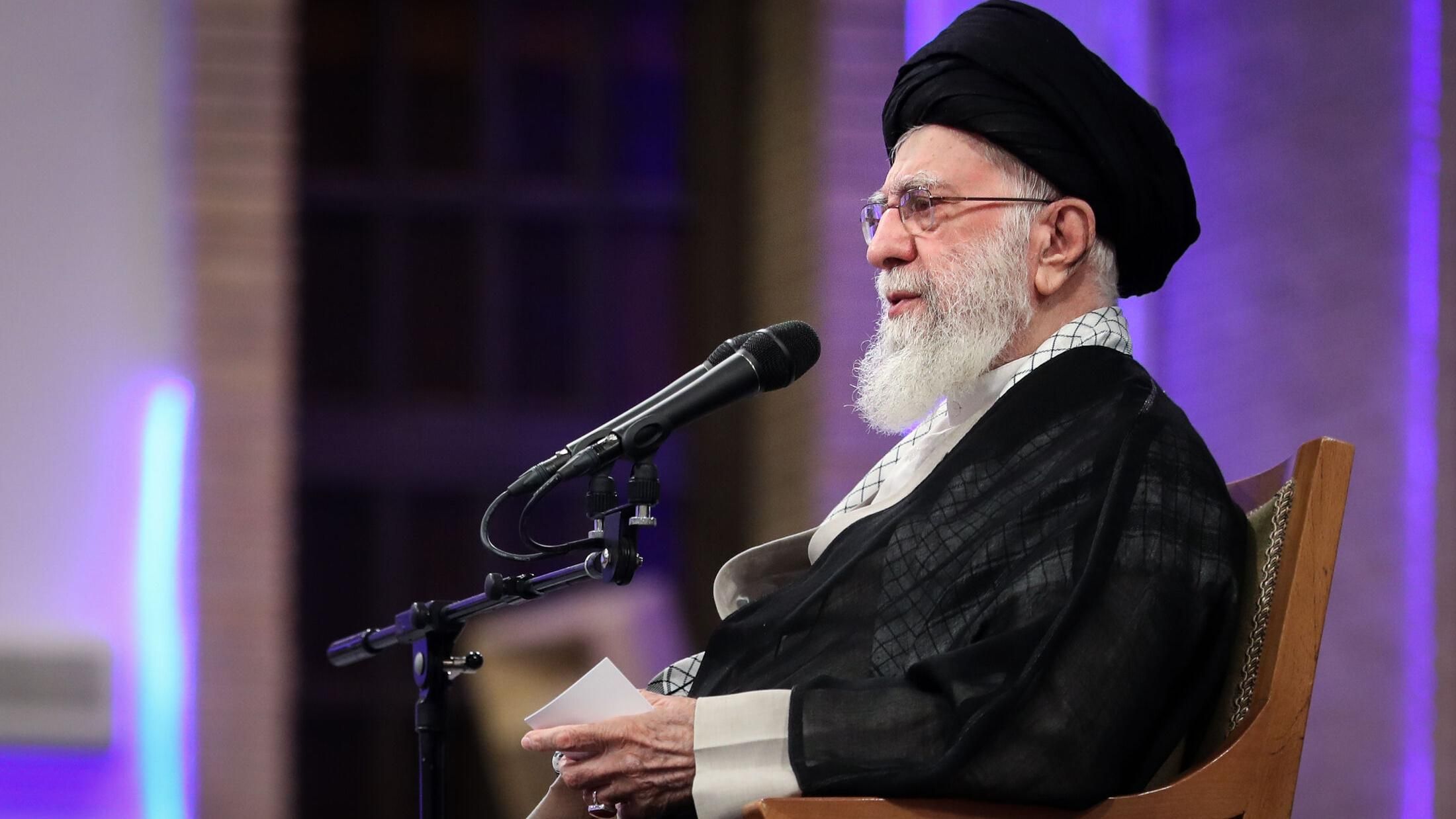
Iran on Monday denied allegations that it launched missiles targeting a joint United States-United Kingdom military base on Diego Garcia, describing the claim as an “Israeli false flag” operation.
The Iranian Ministry of Foreign Affairs spokesman, Esmaeil Baghaei, dismissed the accusation as part of a pattern of disinformation, following remarks by Mark Rutte that NATO could not verify Israel’s claim that the projectiles were Iranian intercontinental ballistic missiles.
In a statement posted on X, Baghaei criticised the narrative, noting that even the NATO chief declined to endorse what he described as “discredited false flag storylines.”
Rutte, however, in an interview with CBS News on Sunday, expressed support for the United States’ military actions against Iran, led by President Donald Trump, urging public backing.
He argued that the move was necessary to ensure global security.
Reports by The Wall Street Journal and other US media outlets had earlier indicated that missiles were fired between Thursday night and Friday morning but failed to hit the strategic base located on the Indian Ocean island.
It was noted that confirmation of Iran’s involvement would suggest it possesses ballistic missiles with a range exceeding 4,000 kilometres, potentially capable of reaching cities such as London.
However, Iran’s Foreign Minister, Abbas Araghchi, had earlier stated in an interview with NBC that the country had deliberately limited the range of its missile programme to below 2,000 kilometres to avoid being perceived as a global threat.
Reacting, the United Kingdom’s Foreign Secretary, Yvette Cooper, condemned what she described as “reckless Iranian threats,” while maintaining that London would not be drawn into a broader Middle East conflict.
Similarly, the UK Housing Secretary, Steve Reed, said there was no indication that Iran either intended or possessed the capability to strike the UK with long-range missiles.
The Diego Garcia military facility, jointly operated by the US and UK, hosts approximately 2,500 personnel, mostly American troops, and has played a significant role in past military operations spanning Vietnam, Iraq, Afghanistan, and more recent strikes against Yemen’s Houthi rebels.
Meanwhile, Israel’s military chief, Eyal Zamir, insisted that Iran deployed a two-stage intercontinental ballistic missile with a range of about 4,000 kilometres in the alleged attack.
Israel has consistently warned that Iran’s missile and nuclear programmes pose a significant threat, urging US intervention over the years.
While previous US administrations largely refrained from direct military action, opting instead for sanctions, tensions have escalated in recent weeks.








Trump Shares Skit Mocking Starmer Amid Iran War Talks
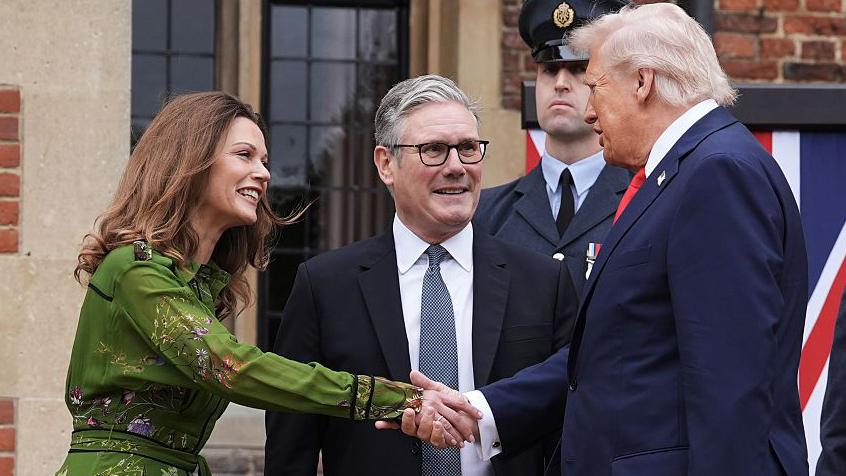
United States President Donald Trump has shared a video of a comedy skit portraying United Kingdom Prime Minister Keir Starmer as anxious about taking his call, hours after both leaders discussed the ongoing US-Israel war with Iran.
The clip, posted on Truth Social, was taken from a British adaptation of Saturday Night Live and featured actor George Fouracres depicting a visibly nervous Starmer inside Downing Street ahead of a fictional phone conversation with Trump.
In the skit, Starmer is seen expressing fears about speaking with Trump, jokingly referring to him as a “scary, scary, wonderful president,” while consulting a parody version of Foreign Secretary David Lammy over the United Kingdom’s position on the Strait of Hormuz crisis.
Trump did not include any caption with the video, which surfaced amid rising tensions between Washington and its NATO allies over their reluctance to support US-led efforts to counter Iran’s blockade of the Strait of Hormuz.
The US President has recently criticised NATO members, including the UK, describing them as unwilling to assist in what he termed a straightforward military effort to reopen the vital oil shipping route, through which about 20 per cent of global supply passes.
Meanwhile, both leaders held talks on Sunday evening, with Downing Street confirming that Trump and Starmer agreed on the urgency of reopening the Strait to stabilise global energy markets and ensure uninterrupted shipping.
However, Starmer on Monday stressed the need for caution, noting there was no indication Britain was under direct threat from Iran, while reiterating that any military response must prioritise de-escalation and protection of British interests.
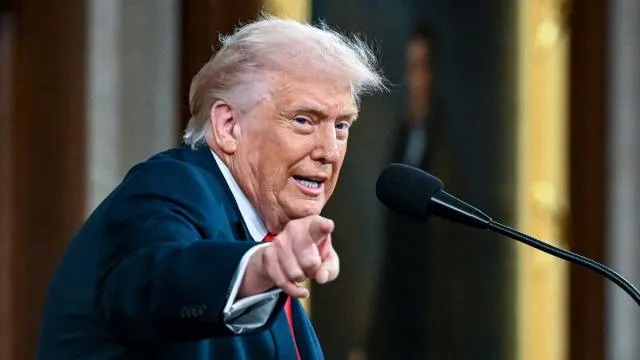
Confusion Trails Trump’s Claim Of Talks With Iran
United States President, Donald Trump, has said Washington and Tehran held talks aimed at achieving a “complete and total resolution of hostilities” in the Middle East, prompting a temporary halt to threatened US strikes on Iranian power facilities.
Trump disclosed that the development led to an immediate postponement of planned attacks on Iran’s power plants, a move that triggered a sharp drop in global oil and gas prices.
The president had, on Saturday night, issued Iran a 48-hour ultimatum to reopen the Strait of Hormuz, warning that failure to comply would result in the United States “obliterating” Iranian power infrastructure.
However, in what analysts describe as his most conciliatory tone since tensions escalated, Trump suggested progress had been made through dialogue, though he did not provide details of the alleged talks.
Despite the claim, an Iranian news agency, quoting an unnamed source, denied that any discussions had taken place between Tehran and Trump, casting doubt on the announcement.
Meanwhile, British Prime Minister, Keir Starmer, and Trump have reportedly agreed on the need to reopen the Strait of Hormuz to stabilise global shipping.
According to a statement from Downing Street, both leaders held a late-night call on Sunday, stressing that restoring access to the strategic waterway was “essential to resume global shipping operations.”
In a related development, the Israel Defense Forces said it anticipates “several more weeks of fighting” against Iranian forces and Hezbollah militants operating in Lebanon.
The conflicting narratives surrounding the reported talks and ongoing hostilities have left significant uncertainty over the prospects for de-escalation in the region.
CARICOM pushes unified response to global shifts, backs Guyana’s COP35 bid
The Caribbean Community, CARICOM has called for urgent and coordinated action to confront mounting global uncertainties, as it concluded its 50th Regular Meeting of the Conference of Heads of Government in Basseterre, Basseterre, St Kitts and Nevis.
The four-day summit, held from February 24 to 27 under the chairmanship of St Kitts and Nevis Prime Minister, Dr Terrance Drew, brought together regional leaders to deliberate on security, economic integration, external trade, reparations and the situation in Haiti.
In her opening remarks, CARICOM Secretary-General, Dr Carla Barnett, urged member states to take advantage of opportunities presented by the shifting global order.
She said as new markets emerge and strategic alliances are recalibrated, the Region must engage with clarity and cohesion in areas such as energy transition, digital infrastructure, climate resilience and technology to attract investments aligned with its development priorities.
Outgoing Chairman and Jamaica’s Prime Minister, Andrew Holness, said the speed of global change was outpacing regional coordination, warning that climate shocks, criminal networks and technological disruption were evolving faster than existing policy and regulatory frameworks.
“The question before us is not whether CARICOM can endure, but whether it can deliver for our people with urgency and relevance in a rapidly changing world,” he said.
President of Suriname, Jennifer Geerlings-Simons, and Prime Minister of Trinidad and Tobago, Kamla Persad-Bissessar, also stressed the need for regional unity, describing it as a necessity in the face of economic volatility, climate insecurity and geopolitical shifts.
During the meeting, Heads of Government held discussions with the United States Secretary of State, Marco Rubio, and agreed on the need to establish a 21st-century cooperation framework covering migration, security cooperation, trade and investment, disaster recovery and technical assistance.
Leaders noted that the US remains a valued partner and welcomed Washington’s commitment to reinvigorate traditional ties within the Western Hemisphere.
The Conference also engaged Saudi Arabia and the United Arab Emirates on expanded economic collaboration, including structured mechanisms to unlock opportunities in the digital economy, climate resilience, water security and infrastructure development.
In a major financial boost, Afreximbank announced an increase in its global limit for CARICOM initiatives from $3bn to $5bn, as the Region seeks to strengthen economic ties with Africa and expand trade and investment flows.
On Haiti, the Conference reaffirmed its commitment to supporting stability and free and fair elections, and expressed appreciation to Kenya for leading the Multinational Security Support mission, now transitioned to a Gang Suppression Force authorised by the United Nations Security Council.
The Bahamas and Jamaica were also commended for contributing personnel and operational support.
Heads of Government reiterated their steadfast backing for the sovereignty and territorial integrity of Belize and Guyana in border matters before the International Court of Justice, calling on all parties to respect and implement the court’s decisions when delivered.
On regional security, leaders welcomed progress on model legislation for criminal justice reform and the offer by the United Nations Development Programme to support the expansion of a Police Record Management Information System across member states.
On economic integration, the Conference approved the inclusion of additional professions under the free movement of skilled nationals within the CARICOM Single Market and Economy and adopted amendments to the Revised Treaty of Chaguaramas to streamline Rules of Origin adjustments.
Heads of Government also approved a CARICOM Industrial Policy and Strategy Framework aimed at fostering competitive and sustainable industries across the Region.
In a significant climate development, the Conference agreed to support Guyana’s bid to host COP35 in 2030.
The leaders expressed appreciation to the Government and people of St Kitts and Nevis for hosting the landmark 50th meeting and accepted Saint Lucia’s invitation to host the 51st Regular Meeting from July 5 to 8, 2026.


Trump Shares Skit Mocking Starmer Amid Iran War Talks

Iran Denies Missile Attack on US-UK Base, Labels Claim ‘Israeli False Flag’

Confusion Trails Trump’s Claim Of Talks With Iran

Pastor Jerry Eze Defends Miracles At UK Conference Amidst Criticism And Controversy

Diaspora Watch 20th Edition (October 14-20, 2024): Your Trusted Source for Global News and Insights