
Analysis
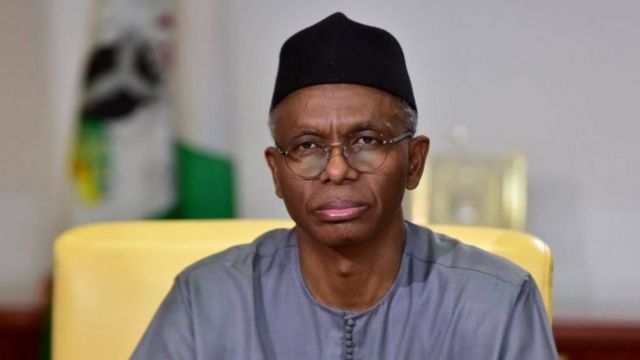
Is Nasir El-Rufai on the Peril? By Alabidun Shuaib AbdulRahman

Is Nasir El-Rufai on the Peril? By Alabidun Shuaib AbdulRahman
There is something almost Shakespearean about the current phase of Nasir Ahmad El-Rufai’s political journey. Once firmly lodged within Nigeria’s innermost corridors of power, the former governor of Kaduna State now finds himself navigating choppy waters—estranged from elements of the establishment he helped midwife, locked in public disagreements with former allies, and increasingly defined by sharp media interventions rather than executive authority. The question therefore suggests itself with urgency: is Nasir El-Rufai on the peril, politically speaking, or merely repositioning for another audacious ascent?
To answer that, one must first understand the architecture of his rise. El-Rufai has always thrived at the intersection of intellect and insurgency. From his days as Director-General of the Bureau of Public Enterprises to his tenure as Minister of the Federal Capital Territory between 2003 and 2007, he cultivated the persona of a reformer unafraid of entrenched interests. In Abuja, he enforced the capital’s master plan with relentless precision, demolishing structures deemed illegal and digitising land administration through the Abuja Geographic Information System. Admirers saw courage; critics saw cold technocracy. But none doubted his influence.
His political resurrection after years in relative exile was equally strategic. As a central figure in the coalition that birthed the All Progressives Congress in 2013, El-Rufai demonstrated both tactical patience and elite networking. The APC’s 2015 victory was not merely a partisan turnover; it was a reconfiguration of Nigeria’s power map. In securing the governorship of Kaduna State that same year, El-Rufai transitioned from federal reform czar to subnational executive with a mandate to replicate structural transformation.
Kaduna was never going to be an easy laboratory. With its near parity of Muslim and Christian populations and a history of sectarian volatility, governance required not only administrative efficiency but also delicate social navigation. El-Rufai chose the path he knew best—structural reform. He implemented a Treasury Single Account to streamline finances, overhauled the civil service, and embarked on sweeping education reforms that culminated in the disengagement of more than 20,000 primary school teachers who failed competency tests. The state borrowed heavily for infrastructure, betting that long-term growth would justify short-term fiscal strain.
To his supporters, these were acts of bold leadership in a polity allergic to tough decisions. To his critics, they revealed a governor more comfortable with spreadsheets than sentiments. Southern Kaduna’s recurrent violence further complicated his record. His insistence on framing the crisis largely as criminality rather than ethno-religious persecution was analytically defensible in some respects, yet politically combustible. Perception hardened into distrust among segments of the population who felt unseen and unheard.
Even so, he secured re-election in 2019, proof that reform and controversy can coexist in Nigeria’s electoral calculus. But it was the transition from governor to elder statesman that has proven most perilous.
El-Rufai entered the 2023 political season as a visible ally of President Bola Tinubu during the APC primaries. His intellectual heft and northern pedigree positioned him as a bridge-builder within the party’s power arithmetic. When Tinubu won the presidency, many assumed El-Rufai would feature prominently in the new administration. His nomination as a minister appeared to confirm that trajectory until the Senate declined to confirm him, reportedly citing security concerns.
In Nigerian politics, symbolism often outweighs substance. The rejection was more than procedural; it signalled a rupture. For a politician accustomed to shaping events rather than reacting to them, the development marked a subtle but unmistakable shift from insider to outsider. Since then, his public commentary has grown more pointed. He has questioned the direction of the ruling party, hinted at betrayals, and portrayed himself as a custodian of principles sidelined by expediency.
Is this evidence of peril or repositioning?
There are at least three dimensions to consider. The first is institutional. El-Rufai no longer controls a state apparatus. Without the leverage of executive office, influence must be exerted through persuasion, coalition-building and narrative framing. This transition is difficult for leaders whose authority was reinforced by command structures. His recent media engagements which implies candid, combative and occasionally accusatory suggest a man recalibrating his tools.
The second dimension is relational. Politics is sustained by networks, and networks are sustained by trust. Reports of mistrusts between El-Rufai and key federal figures, as well as friction with his successor in Kaduna, complicate his positioning. In Kaduna, reviews of past contracts and policies have cast shadows backward, feeding narratives of vendetta on both sides. At the federal level, silence has often met his critiques, a strategy that can either isolate a critic or amplify him, depending on public mood.
The third dimension is strategic. Nigeria’s political elite operates in long cycles. Conversations about 2027 are already underway in quiet rooms. El-Rufai’s national profile, intellectual agility and northern base make him a potential factor in any future coalition calculus. His current dissent may therefore be less about grievance and more about differentiation—an effort to craft an identity distinct from a government facing economic and security headwinds.
Yet peril remains a real possibility. Nigeria’s political memory can be unforgiving. Leaders who overplay their hand risk alienation from both establishment and grassroots. If El-Rufai’s critiques are perceived as personal vendetta rather than principled dissent, his moral capital may erode. Moreover, the electorate has grown increasingly wary of elite quarrels that appear disconnected from everyday hardship. A politician who once sold reform as necessity must now demonstrate empathy as convincingly as efficiency.
Still, history suggests that El-Rufai has often converted adversity into opportunity. After leaving the Obasanjo administration under clouds of controversy, he returned stronger within a new coalition. After early resistance in Kaduna, he consolidated his authority and reshaped the state’s administrative culture. His career has been punctuated by phases of apparent crisis followed by strategic resurgence.
The deeper question may not be whether he is on the peril, but whether Nigeria’s political environment can accommodate his style of engagement. El-Rufai thrives on intellectual contestation and structural overhaul. He is less adept at the slow, conciliatory art of consensus politics. In a federation where legitimacy often rests on accommodation as much as achievement, this imbalance can be costly.
There is also the matter of narrative control. El-Rufai has long been his own chief spokesman, deploying social media and interviews with precision. In the absence of political office as he is currently, narrative becomes power. His recent outbursts once again keep him in the national conversation. Silence would have signified retreat.
So, is Nasir El-Rufai on the peril? The answer is layered. Institutionally, yes—he stands as an outsider in the power structure he once influenced. Relationally, yes—alliances appear strained and rivalries sharpened. Strategically, however, peril can be prelude. In politics, moments of vulnerability often precede recalibration and El-Rufai has always been a master of that.
Ultimately, El-Rufai’s future will hinge on whether he can transform dissent into constructive coalition-building. If he remains defined by grievance, the peril may deepen into isolation. If he channels critique into a broader vision that resonates beyond elite circles, the current turbulence could become a staging ground.
For now, he occupies an ambiguous space: not dethroned, not enthroned; neither silenced nor fully embraced. In that ambiguity lies both danger and possibility. Nasir El-Rufai has built a career on defying expectations. Whether this chapter marks decline or reinvention will depend less on his adversaries than on his capacity to balance conviction with conciliation.
The peril, if it exists, is not merely political. It is existential—the risk that a man defined by reform and combat may struggle in an era demanding reconciliation and breadth. But in Nigeria’s ever-shifting theatre of power, yesterday’s peril can become tomorrow’s platform.
Alabidun is a media practitioner and can be reached via alabidungoldenson@gmail.com








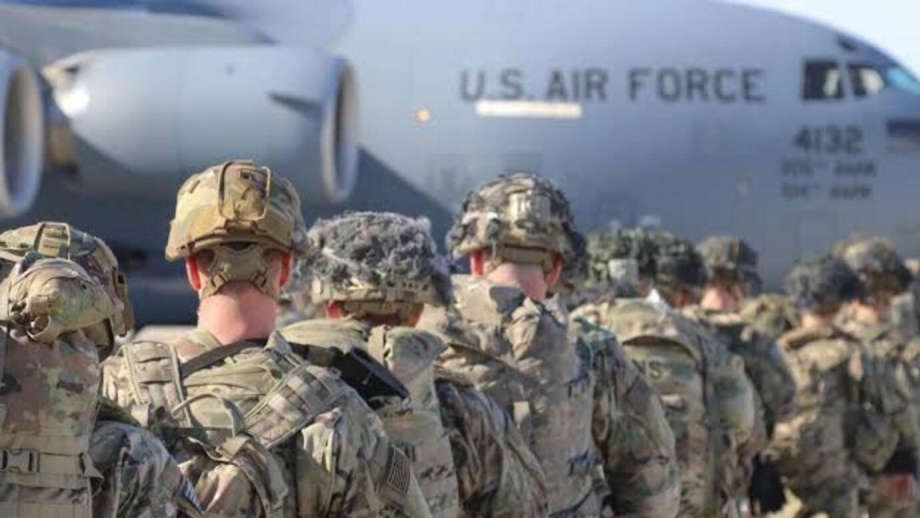
The War Beneath the War, by Alabidun Shuaib AbdulRahman
When the rivalry involving the United States, Israel and Iran is discussed in newspapers or on television shows, the focus is almost always on dramatic moments—missile launches, air strikes, nuclear negotiations, or the activities of proxy militias in Lebanon, Iraq and Yemen. Yet these visible episodes tell only a fraction of the story. Beneath them lies a far more consequential contest fought through technology, intelligence systems, covert engineering and cyber operations. It is a war fought not just with weapons, but with code, algorithms, sensors and the manipulation of industrial machinery.
Over the past two decades, the confrontation has gradually transformed into what security analysts describe as systems warfare. The aim is not merely to defeat an enemy army on the battlefield but to sabotage the technological foundations on which a modern state depends its infrastructure, communications networks, scientific programmes and financial systems. This quiet technological instance has unfolded largely outside public attention, even though it has shaped the strategic balance in the Middle East.
The moment that revealed this hidden battlefield most clearly occurred in June 2010 when cybersecurity researchers identified an unusual computer worm circulating across networks around the world. The malware was later named Stuxnet. At first glance it appeared to be another sophisticated cyber intrusion. But detailed analysis soon revealed something far more alarming. Stuxnet had been designed not merely to steal data or disrupt computers; it was built to destroy physical industrial equipment.
The target of the malware was Iran’s uranium enrichment complex at the Natanz Nuclear Facility, located roughly 250 kilometres south of Tehran in Isfahan Province. Natanz housed thousands of centrifuges used to enrich uranium gas for Iran’s nuclear programme. These centrifuges, delicate machines spinning at extremely high speeds were controlled by programmable logic controllers produced by the German engineering company Siemens.
Stuxnet infiltrated the facility’s control systems and subtly altered the instructions regulating centrifuge speed. At specific intervals, the malware forced the centrifuges to accelerate far beyond their normal operational limits before abruptly slowing them down again. This repeated stress caused mechanical failure. At the same time, the virus fed false data to monitoring screens so that Iranian technicians would see readings indicating that everything was functioning normally.
By the time the attack was discovered, the damage had already been done. Security analysts later estimated that approximately 1,000 centrifuges, roughly one-fifth of Iran’s installed capacity at Natanz in 2009 had been destroyed. Subsequent investigative reporting revealed that the operation was part of a covert cyber programme known as Operation Olympic Games, initiated during the presidency of George W. Bush and later expanded under Barack Obama. Although neither United States nor Israel officially acknowledged responsibility. Although it was later confirmed that the operation was a joint effort by both Countries’ cyber specialists.
The importance of Stuxnet cannot be overstated. It represented the first publicly known cyber weapon capable of causing physical destruction to industrial infrastructure. In effect, it proved that lines of computer code could function as strategic weapons. Before Stuxnet, cyber warfare was generally associated with espionage or data theft. After Stuxnet, it became clear that cyber tools could sabotage factories, power plants and transportation systems.
This revelation carried profound implications. Modern societies depend on complex networks of industrial control systems which are software platforms that manage electricity grids, water treatment plants, oil pipelines, manufacturing facilities and transportation networks. Many of these systems were designed decades ago with minimal cybersecurity protections. By exploiting these vulnerabilities, technologically advanced countries can potentially disrupt entire sectors of national infrastructure without firing a single missile.
Yet cyber sabotage is only one dimension of the technological struggle involving the United States, Israel and Iran. Intelligence gathering has also undergone a profound transformation with the rise of artificial intelligence and advanced data analysis. Modern intelligence agencies collect staggering volumes of information: satellite imagery, intercepted communications, digital transactions, social media activity and geolocation data from billions of mobile devices. Processing such enormous datasets would overwhelm human analysts.
To solve this problem, intelligence organisations increasingly rely on machine learning algorithms capable of detecting patterns within massive streams of data. Israel’s signals intelligence division within the Israel Defense Forces, widely known as Unit 8200, has invested heavily in such technologies. These systems help analysts identify suspicious logistical movements, map covert networks and monitor scientific activities linked to Iran’s missile and nuclear programmes.
Artificial intelligence has therefore become a powerful tool in identifying individuals and facilities associated with sensitive research. Over the years, several Iranian nuclear scientists have been targeted in covert operations. One of the most dramatic incidents occurred on 27 November 2020 when Mohsen Fakhrizadeh, a senior physicist widely regarded as the architect of Iran’s nuclear weapons research, was assassinated near the town of Absard east of Tehran. Iranian officials later claimed that the attack involved a sophisticated remote-controlled machine gun mounted on a vehicle, demonstrating the increasing role of advanced technology in covert operations.
Drone technology has also become a critical instrument in the shadow conflict between Israel and Iran. Unmanned aerial vehicles have evolved rapidly over the past two decades, becoming smaller, cheaper and more versatile. Intelligence reports suggest that Israeli operatives have occasionally smuggled drone components into Iran through clandestine networks. Once assembled near strategic installations, these drones can be launched to attack radar systems, missile launchers or ammunition depots.
Such operations represent a new form of warfare sometimes described by analysts as “inside-out attacks.” Instead of launching strikes from outside a country’s borders, covert assets positioned within the target state create vulnerabilities that can later be exploited. By disabling air defence radars or surface-to-air missile batteries, these drones can make it easier for conventional aircraft to operate if a broader conflict erupts.
Another largely invisible battlefield lies within telecommunications networks. Modern military forces rely on secure communication systems linking field units with central command structures. If those communications are disrupted, even highly capable armed forces can struggle to coordinate operations. Cyber units therefore often attempt to infiltrate telecommunications infrastructure before or during military operations.
Such attacks may involve manipulating network routing systems, penetrating data centres or disrupting fibre-optic communication nodes. Although details are rarely disclosed publicly, analysts widely believe that telecommunications systems in the Middle East have periodically been targeted during periods of heightened tension between Israel and Iran. The goal is not necessarily permanent destruction but temporary paralysis—disrupting an adversary’s ability to respond quickly during a crisis.
Financial infrastructure has also become a target in this technological contest. Banking systems, electronic payment platforms and cryptocurrency exchanges now form essential parts of modern economies. Disrupting these systems can generate economic instability and public frustration. Cyber operations targeting financial databases or digital payment networks can therefore serve as instruments of strategic pressure.
Iran’s economy, already strained by international sanctions, is particularly vulnerable to such disruptions. Government subsidy programmes for fuel and basic commodities rely heavily on digital infrastructure. If cyber attacks interrupt payment systems or corrupt financial records, millions of citizens may suddenly find themselves unable to access essential services. In this way, cyber warfare can exert pressure not only on governments but also on societies.
Another rarely discussed aspect of the confrontation involves supply-chain sabotage. Nuclear programmes depend on highly specialised equipment—centrifuge components, electronic sensors, control circuits and advanced materials. Because these components are difficult to manufacture domestically, procurement networks often span multiple countries and intermediaries.
Taken together, these various operations reveal how profoundly warfare has changed in the twenty-first century. In earlier eras, military power was measured primarily by the size of armies, the number of tanks or the range of missiles. Today, power increasingly depends on technological expertise—cyber capabilities, data analysis, advanced electronics and intelligence networks capable of penetrating the digital architecture of modern states.
The rivalry involving the United States, Israel and Iran therefore provides an early glimpse into the future of conflict. The most decisive battles may not occur on visible battlefields but within the hidden systems that sustain national power: computer networks, industrial machinery, telecommunications infrastructure and financial databases.
This reality poses difficult challenges for policymakers. Cyber attacks can be extremely difficult to attribute with certainty, allowing states to conduct covert operations without openly acknowledging responsibility. This ambiguity complicates traditional deterrence strategies. In conventional warfare, identifying an attacker is usually straightforward; in cyberspace, digital footprints can be manipulated or disguised.
Moreover, the vulnerabilities exploited in operations like Stuxnet are not unique to Iran. Similar industrial control systems operate in power plants, transportation networks and factories across the world. As cyber capabilities continue to evolve, the possibility of attacks targeting critical infrastructure in other countries—including major global economies—becomes increasingly real.
Alabidun is a media practitioner and can be reached via alabidungoldenson@gmail.com
Tinubu in Windsor, Nigeria in Flames, by Boniface Ihiasota
President Bola Tinubu’s state visit to the United Kingdom, which commenced on Tuesday, March 17, 2026, was always destined to be symbolically significant. It marks the first full state visit by a Nigerian leader to Britain in decades, with engagements scheduled at Windsor Castle under the auspices of King Charles III. Diplomatically, the visit signals continuity, relevance, and a desire to reposition Nigeria within a rapidly shifting global order shaped by trade realignments and post-Brexit economic recalibrations. Yet, the timing of the visit has cast a long and troubling shadow.
Barely twenty-four hours before the president’s departure from Abuja, Maiduguri, the capital of Borno State and long regarded as the epicentre of Nigeria’s insurgency crisis, was rocked by coordinated terrorist attacks on Monday, March 16, 2026. The explosions, which began at approximately 7:02 p.m. local time, struck multiple civilian locations, including the bustling Monday Market, parts of the Kaleri neighbourhood, and medical facilities within the city. By early Tuesday morning, official figures confirmed at least 23 fatalities and more than 100 injured, many of them critically.
The scale and coordination of the attacks point to a resurgence of operational capability by insurgent groups, widely believed to include Boko Haram factions and elements linked to the Islamic State West Africa Province. For a city that has endured over a decade of violence but had recently experienced relative calm, the bombings were both a psychological and strategic setback. They exposed vulnerabilities in intelligence gathering, urban security, and rapid response coordination within one of the most militarised zones in the country.
Against this backdrop, the president’s departure for London presents a difficult paradox. On one hand, governance demands international engagement. Nigeria’s economic challenges, from foreign exchange instability to infrastructure deficits, require external partnerships and financing arrangements that visits of this nature are designed to secure. Reports indicate that discussions during the visit may include substantial investment frameworks, particularly in port modernisation and trade facilitation.
On the other hand, leadership is deeply tied to presence, especially in moments of national distress. The optics of leaving the country within hours of a deadly terrorist attack are inevitably jarring. While it is neither unusual nor inherently wrong for a head of state to proceed with scheduled diplomatic engagements during crises, the immediacy and severity of the Maiduguri attacks elevate the expectation of visible, decisive, and empathetic leadership at home.
Members of the president’s entourage reportedly include First Lady Oluremi Tinubu and senior government officials, alongside at least one state governor, Dauda Lawal of Zamfara State. Their presence underscores the importance attached to the visit, but it also amplifies the contrast between the formalities of state banquets abroad and the grief unfolding in northeastern Nigeria.
From a diaspora perspective, where Nigeria’s image is constantly interpreted through the lenses of security, governance, and economic viability, this moment reinforces a persistent tension. The country often appears outwardly ambitious yet inwardly constrained by recurring instability. Each incident of mass violence not only claims lives but also erodes confidence among investors, partners, and observers who weigh risk as heavily as opportunity.
The Maiduguri attacks are not isolated. Since the insurgency began in 2009, tens of thousands of lives have been lost, and millions displaced. Despite repeated assurances from successive administrations that terrorist capabilities have been degraded, incidents such as the March 16 bombings suggest a more complex reality. Insurgent groups have adapted, shifting tactics and exploiting gaps in surveillance and community-level intelligence.
This raises pressing questions about strategy and accountability. How do multiple explosive devices detonate across a city under heavy military watch without prior interception? What systemic weaknesses allow such coordination to occur? And perhaps most importantly, how can the state move beyond reactive responses to build a genuinely preventive security architecture?
There is also the matter of communication. In crises, tone matters as much as action. Citizens expect not only policy responses but also reassurance, clarity, and a sense that leadership is fully engaged with their plight. The absence of immediate, high-visibility presidential presence can create a vacuum that fuels public frustration and erodes trust.
None of this diminishes the importance of international diplomacy. Nations do not pause their external engagements indefinitely because of internal challenges. However, the sequencing and sensitivity of decisions become critical when lives have just been lost. Leadership must constantly balance competing demands, but it must also recognise moments when symbolism carries as much weight as substance.
As events unfold in London, Nigeria confronts a dual reality. One is a nation seeking relevance and renewal on the global stage, eager to attract investment and strengthen alliances. The other is a country still grappling with persistent insecurity, where citizens in places like Maiduguri continue to bear the brunt of violence.
Bridging these realities requires more than policy declarations. It demands coherence between domestic stability and international ambition. Until that alignment is achieved, each diplomatic success abroad risks being overshadowed by unresolved crises at home, leaving observers to question which narrative truly defines the Nigerian state.
Nigeria’s Stakes in a Fractured Middle East, by Boniface Ihiasota
As confrontation among the United States, Israel and Iran deepen, the tremors are being felt far beyond the Middle East. What may appear, at first glance, as a distant geopolitical rivalry carries significant consequences for economies like Nigeria’s, for Nigerians working across the Gulf, and for a government already grappling with fiscal, security and inflationary pressures at home.
The rivalry between Israel and Iran has simmered for decades, manifesting through proxy conflicts in Lebanon, Syria and Gaza. The United States, Israel’s closest ally, has repeatedly confronted Iran over its nuclear programme, regional influence and support for armed groups. Periodic flare-ups — including airstrikes, missile exchanges and targeted assassinations — have raised fears of a broader regional war. Each escalation has renewed concerns about the stability of the Gulf, which remains the artery of the global oil market.
The Strait of Hormuz, a narrow shipping lane between Oman and Iran, is one of the most strategic chokepoints in the world. According to the U.S. Energy Information Administration, roughly 20 per cent of global petroleum liquids consumption — about 20 million barrels per day — transits through that corridor. Any threat to traffic through the Strait immediately sends oil prices upward. In previous episodes of heightened tension, Brent crude prices have jumped sharply within days of military confrontations.
For Nigeria, higher oil prices present a paradox. Crude oil still accounts for the overwhelming bulk of Nigeria’s export earnings — typically between 80 and 90 per cent — and about half of government revenues. When global prices rise above budget benchmarks, the Federation Account stands to gain additional inflows. In times of fiscal strain, such windfalls can temporarily ease pressure on foreign reserves and public finances.
However, history teaches caution. Oil price spikes driven by conflict are often volatile and short-lived. Markets respond quickly to diplomatic signals, ceasefire talks or de-escalation efforts. Nigeria’s production constraints further limit how much benefit can be captured. The country has struggled in recent years to consistently meet its OPEC quota due to oil theft, pipeline vandalism and infrastructure challenges. Without sustained production above 1.5 million barrels per day, revenue gains from price increases may not fully translate into fiscal stability.
Beyond government revenue, there is the inflationary dimension. Rising global oil prices increase the cost of refined petroleum imports, shipping and logistics. Although Nigeria is expanding domestic refining capacity, it still imports a portion of its refined products. Higher energy costs globally can translate into higher prices for food, manufactured goods and transportation. In an economy already facing elevated inflation, any additional imported cost pressure could worsen living standards.
There is also the human dimension. Millions of Nigerians reside and work across the Gulf Cooperation Council countries, particularly in the United Arab Emirates, Saudi Arabia and Qatar. Remittances from Nigerians abroad are a critical pillar of household income and foreign exchange. The World Bank has estimated Nigeria’s annual remittance inflows in recent years at around $20 billion, making it one of the largest recipients in Sub-Saharan Africa. Any prolonged regional instability that disrupts employment, air travel or financial flows in the Gulf would directly affect Nigerian families.
During previous Middle Eastern crises, airspace closures and airline suspensions disrupted travel routes that many Nigerians rely upon for business, education and pilgrimage. Escalation between major regional powers raises the risk of similar disruptions. The Nigerian government must therefore maintain accurate records of its citizens in vulnerable areas and strengthen consular responsiveness.
Security considerations also demand attention. Nigeria is a religiously diverse society with historical sensitivities that can be inflamed by international events. Conflicts in the Middle East sometimes trigger protests or polarised rhetoric at home. Authorities must be vigilant to ensure that global tensions are not exploited by local actors to deepen sectarian divides or spread misinformation. In an age of social media amplification, narratives from distant battlefields can travel rapidly and distort domestic discourse.
Diplomatically, Nigeria occupies a delicate position. As Africa’s largest economy and a longstanding contributor to United Nations peacekeeping missions, Nigeria traditionally supports peaceful resolution of disputes and adherence to international law. Escalation between the United States, Israel and Iran will test the country’s diplomatic balancing act, particularly given its economic ties to Western partners and its solidarity with developing nations in multilateral forums.
Preparation, therefore, is essential. Fiscal prudence must accompany any temporary oil windfall. Excess revenues, if realised, should strengthen reserves and reduce debt vulnerabilities rather than fund unsustainable spending. Production security in the Niger Delta must remain a priority to ensure that Nigeria can benefit legitimately from favourable market conditions. The Central Bank and fiscal authorities must also anticipate currency volatility linked to global risk sentiment.
At the same time, diaspora engagement should be proactive. Clear communication channels, emergency response planning and coordination with host governments can mitigate risks to Nigerians abroad. Intelligence and community outreach at home will help preserve social cohesion.
The confrontation among the United States, Israel and Iran may unfold thousands of kilometres away, but its economic currents, security implications and political symbolism flow directly toward Nigeria. In an interconnected global system, distance offers no insulation. What remains within Nigeria’s control is preparedness — the capacity to convert short-term opportunity into long-term stability, and to shield its citizens from the unintended consequences of distant wars.
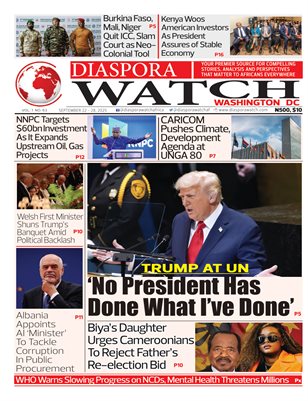


Diaspora Watch Vol. 86

The War Beneath the War, by Alabidun Shuaib AbdulRahman

Tinubu in Windsor, Nigeria in Flames, by Boniface Ihiasota

Pastor Jerry Eze Defends Miracles At UK Conference Amidst Criticism And Controversy

Diaspora Watch 20th Edition (October 14-20, 2024): Your Trusted Source for Global News and Insights

Tanzanian Man Reportedly Dies And Returns To Life Six Times


-
 Diaspora3 days ago
Diaspora Watch Vol. 86
-
 News6 days ago
Confusion Trails Trump’s Claim Of Talks With Iran
-
 Analysis6 days ago
The War Beneath the War, by Alabidun Shuaib AbdulRahman
-
 News6 days ago
China Cautions US, Israel Against Escalation, Cites Iraq War Lessons
-
 News6 days ago
No Threat to Britain from Iran, Says Starmer
-
 Analysis6 days ago
Tinubu in Windsor, Nigeria in Flames, by Boniface Ihiasota