Politics
Netanyahu Stirs Global Outrage Over Gaza Takeover Plan

Netanyahu Stirs Global Outrage Over Gaza Takeover Plan
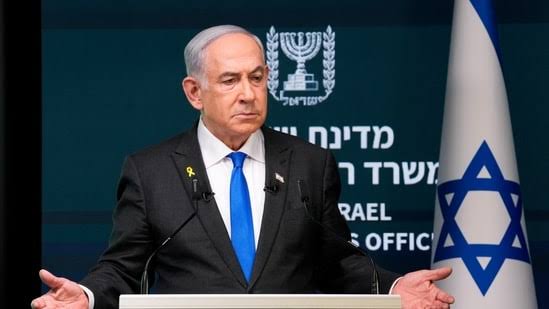
Israeli Prime Minister, Benjamin Netanyahu, has defended his government’s plan to take control of Gaza City, insisting it remains the “best way” to end the ongoing conflict.
Speaking in a bullish tone during a news conference in Jerusalem, the Israeli leader offered no timeline for the operation and gave no indication of any willingness to compromise.
His remarks have drawn sharp criticism from the United Kingdom, France, and other European nations, which have warned that the plan could amount to a breach of international humanitarian law.
The warnings came as the United Nations Security Council (UNSC) convened an emergency session in New York to discuss the deepening crisis in Gaza.
The move has also been strongly condemned by Iran, with its Foreign Minister, Seyed Abbas Araghchi, rejecting any displacement of Gazans or occupation of their territory.
In a statement, Tehran’s foreign ministry accused Israel of pursuing a strategy aimed at “eliminating Palestinian identity and statehood”, describing it as a “violation of international law”.
The statement urged the global community to prosecute Israel and “end their impunity”.
While Israel denies accusations of deliberately starving Gaza’s population, the Hamas-run health ministry has reported that the death toll from malnutrition has climbed to 217, including 100 children.
During the UNSC meeting, Israel’s representative, Jonathan Miller, dismissed some of the council’s criticisms as “extraordinary and brazen language”, insisting that his country has no plans for a permanent occupation of Gaza.
He maintained that Israel’s focus is on dismantling Hamas, which he described as essential to ending the war.
Miller also revealed that recent talks with the militant group collapsed on the same day France announced its decision to recognise Palestine as a state.
On the Palestinian side, Riyad Mansour, the Permanent Observer of Palestine to the UN, accused Israel of disregarding the council’s positions and urged members to take decisive action.
He called for Israel’s full withdrawal from Gaza and proposed that the Palestinian Authority assume governance of the territory, with regional and international backing.
Mansour said Hamas should lay down its arms, a move he argued would open an irreversible path to Palestinian statehood.
The developments come against the backdrop of a fragile ceasefire between Israel and Iran, in place since late June, but with both sides warning that the conflict could reignite if tensions continue to escalate.

In Honour of Our Fallen Heroes, by Alabidun Shuaib AbdulRahman
Every nation is sustained by the quiet courage of those who stand between order and chaos. In Nigeria, that burden has rested heavily on the shoulders of the Armed Forces and other security personnel for decades, but especially in the past fifteen years of relentless insecurity. From the creeks of the Niger Delta to the forests of North West and North East to the highways of the North Central, Nigerian soldiers, airmen, sailors and policemen have borne the brunt of a war that is often unseen by those who sleep peacefully at night. To speak in honour of our fallen heroes is not merely to rehearse grief; it is to confront, honestly and courageously, the meaning of sacrifice, the demands of honour and the moral obligation of welfare owed to those who gave everything and to the families they left behind.
Nigeria’s contemporary security challenges did not begin yesterday. The Boko Haram insurgency, which escalated violently after 2009, has remained one of the deadliest conflicts on the African continent. According to data from the Armed Conflict Location and Event Data Project (ACLED), tens of thousands of lives have been lost to the insurgency, with security personnel accounting for a significant proportion of the casualties. Names like Giwa Barracks, Baga, Monguno and Marte are etched into the collective memory of the military not just as locations, but as reminders of intense battles where many soldiers paid the supreme price. One such name that still resonates is Lieutenant Colonel Muhammad Abu Ali, a gallant armoured corps officer who was killed in action on 4 November 2016 near Malam Fatori in Borno State while leading troops against Boko Haram fighters. His death symbolised the kind of front-line leadership that defines true military honour: commanding from the front, sharing risks with subordinates, and refusing the safety of distance.
Beyond the North East, the expanding frontiers of insecurity have claimed more lives. On 29 June 2022, Nigeria was shaken by the deadly ambush in Shiroro Local Government Area of Niger State, where at least 34 soldiers were killed by bandits while on a stabilisation mission. The scale of that single loss was a sobering reminder that the battlefield had shifted, and that sacrifice was no longer confined to one theatre of operation. Similar tragedies have followed. In March 2024, 17 soldiers lost their lives in Okuama community, Delta State, during a peace mission gone wrong, prompting national outrage and renewed debates about rules of engagement, intelligence failures and community-military relations. Each of these incidents added fresh names to a growing roll of honour, while also raising uncomfortable questions about preparedness, equipment and support for those sent into harm’s way.
Yet, sacrifice is not only measured in deaths. Thousands of Nigerian service personnel have returned from operations with life-altering injuries, trauma and scars that are invisible but enduring. The Defence Headquarters has repeatedly acknowledged the psychological toll of prolonged deployments, particularly in counter-insurgency operations where lines between combatants and civilians are blurred. The fallen heroes, therefore, represent not only those who died, but also those whose lives were irreversibly changed in service to the nation. To honour them meaningfully is to recognise that sacrifice is cumulative, personal and often lifelong.
Honour, however, must not be reduced to rhetoric. Every 15th of January, Nigeria observes Armed Forces Remembrance Day (now Armed Forces Celebration and Remembrance Day), a tradition rooted in the commemoration of soldiers who died in the First and Second World Wars and later expanded to include those lost in peacekeeping missions and internal security operations.
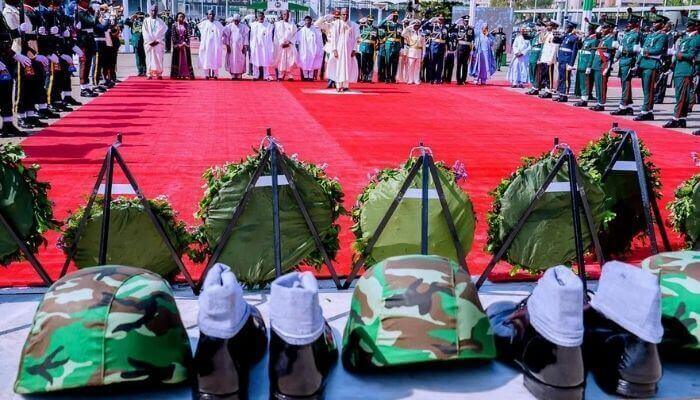
On 15 January 2026, President Bola Ahmed Tinubu through Vice President Kashim Shettima laid a wreath at the National Arcade in Abuja and reaffirmed the nation’s gratitude to its fallen heroes, describing them as “the pillars upon which our peace rests.” Similar ceremonies took place across states, from Lagos to Enugu, Kaduna to Kwara, accompanied by solemn words and military parades. These rituals matter. They reaffirm national memory and signal state recognition. But honour loses meaning if it ends at symbolism.
True honour is institutional and continuous. It is reflected in how promptly families of the fallen are informed, how respectfully remains are handled, how transparently benefits are processed and how consistently promises are kept. Over the years, allegations of delayed entitlements and neglected widows have surfaced, sometimes fuelling public anger and mistrust. The Nigerian Army and the Ministry of Defence have responded by clarifying welfare frameworks and insisting that official policies are robust. According to the Ministry of Finance and the Ministry of Defence, families of deceased service members are entitled to death benefits, gratuity, pensions, burial expenses and payments under the Group Life Insurance Scheme, a statutory policy that mandates life insurance coverage for all public servants, including military personnel.
In October 2023, President Tinubu approved an assurance policy valued at about ₦18 billion to cover life insurance benefits for fallen heroes, reinforcing the administration’s stated commitment to military welfare. In March 2024, the federal government also bestowed posthumous national honours on the 17 soldiers killed in Delta State, alongside promises of housing support and educational scholarships for their children. Several state governments have complemented federal efforts. Lagos State has sustained its scholarship scheme for children of fallen officers, while Ogun, Edo and other states have publicly pledged financial and social support to bereaved families during recent remembrance events.
These measures are commendable, and fairness demands that government be acknowledged where it has taken concrete steps. Welfare frameworks today are more clearly articulated than they were a decade ago, and there is greater public scrutiny of how military benefits are administered. Nonetheless, the test of honour lies not in policy documents but in lived experience. A widow who waits years for entitlements, or a child of a fallen soldier who drops out of school due to lack of support, represents a moral failure that no wreath-laying ceremony can erase. Honour must therefore be defended daily through efficient institutions, accountable processes and humane engagement with those who bear the cost of loss.
The argument for improved welfare is not sentimental; it is strategic. Nations that neglect the families of their fallen undermine morale among serving personnel. Soldiers who see that the state stands firmly by its promises fight with greater confidence and commitment. Conversely, perceived neglect breeds cynicism and erodes trust. Nigeria’s security challenges demand motivated, professional and resilient forces, and welfare is a critical pillar of that resilience. This is why calls by veterans’ groups, civil society organisations and commentators for continuous review of military welfare policies should not be dismissed as noise. They are part of a necessary civic conversation about national priorities.
There is also an ethical dimension that transcends strategy. The social contract between the state and its defenders is unique. When a citizen in uniform dies in service, the state inherits a moral responsibility to the dependants left behind. This responsibility does not expire with news cycles or budgetary constraints. It endures across administrations and economic fluctuations. In many ways, how a nation treats its fallen heroes’ families is a mirror of its values.
To be clear, honouring fallen heroes does not mean glorifying war or romanticising death. It means acknowledging the harsh realities of service and committing to reduce avoidable losses through better intelligence, equipment, training and leadership. It also means ensuring that when loss does occur, it is met with compassion, justice and sustained support. Sacrifice should never be cheapened by neglect, nor should honour be diluted by inconsistency.
As Nigeria continues to confront insecurity in multiple forms, the roll call of fallen heroes reminds us that peace is neither abstract nor free. It is paid for in blood, courage and broken families. To write in their honour is to insist that remembrance must translate into responsibility. The fallen cannot speak for themselves, but the living can speak through policies that work, institutions that care and a national conscience that refuses to forget. In doing so, Nigeria does not only honour its fallen heroes; it affirms the worth of every life pledged in defence of the nation.
Alabidun is a media practitioner and can be reached via alabidungoldenson@gmail.com
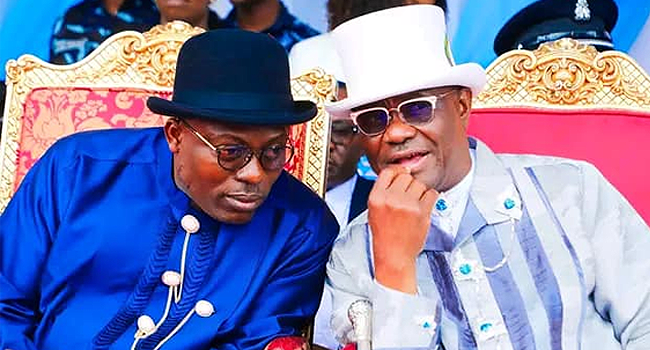
Why Always Rivers State? By Alabidun Shuaib AbdulRahman
Why is it always Rivers State? The question no longer sounds rhetorical. It has become a recurring reflection whenever Nigeria’s democracy appears strained, its institutions weakened, or its constitutional boundaries tested. Since the return to civil rule in 1999, Rivers State has repeatedly found itself at the centre of political crises that transcend ordinary electoral competition. What distinguishes Rivers is not merely the frequency of conflict, but the intensity, longevity and national implications of those crises. From succession battles to legislative breakdowns and federal intervention, the state has functioned as a pressure point where the contradictions of Nigerian democracy are most vividly exposed.
Rivers State’s peculiar trajectory cannot be understood without acknowledging its strategic importance within Nigeria’s political economy. As one of the core oil-producing states in the Niger Delta, Rivers hosts major petroleum assets that are critical to national revenue generation. Control of the state government therefore carries implications that extend far beyond its borders. Political office in Rivers confers access to enormous fiscal allocations, discretionary power over contracts and appointments, and leverage within national party structures. In a political system where state power is often personalised and monetised, such advantages raise the stakes of political competition to extraordinary levels.
From the onset of the Fourth Republic, these dynamics shaped the character of politics in Rivers. Peter Odili’s administration, which ran from 1999 to 2007, coincided with Nigeria’s democratic reawakening after prolonged military rule. His government helped stabilise civilian authority in the state and strengthened the Peoples Democratic Party’s dominance. Yet it also entrenched a culture of elite patronage that blurred the line between party loyalty and state ownership. Power became concentrated around the executive, while institutions that should have acted as counterweights remained weak. By the time Odili left office, Rivers politics had developed a reputation for fierce internal rivalry masked by outward party unity.
The crisis surrounding the 2007 governorship election revealed the fragility beneath that surface. Celestine Omehia’s short-lived tenure, terminated by a Supreme Court judgment that installed Chibuike Rotimi Amaechi on 25 October 2007, underscored how political outcomes in Rivers were increasingly determined by judicial intervention and party machinations rather than popular participation. While the court’s ruling was constitutionally grounded, it reinforced public perceptions that voters were peripheral actors in a system dominated by elite bargaining.
Amaechi’s eight years in office were among the most turbulent in the state’s history. Initially a key figure within the PDP, he later became a leading opposition voice against the party’s national leadership, particularly during the administration of President Goodluck Jonathan. His defection to the All Progressives Congress ahead of the 2015 elections transformed Rivers into a frontline state in Nigeria’s emerging two-party contest. Elections during this period were marked by violence, legal disputes and allegations of widespread irregularities. Rather than strengthening democratic norms, political competition in Rivers became increasingly militarised and litigious.
The ascension of Nyesom Wike to the governorship in 2015 represented both continuity and escalation. A former ally of Amaechi who became his fiercest rival, Wike governed with an assertive style that left little room for dissent. His administration pursued ambitious infrastructure projects and positioned Rivers as a visible development hub in the South-South. However, these achievements existed alongside an aggressive consolidation of political control. Party structures, legislative independence and local government autonomy were subordinated to the governor’s authority. Politics in Rivers became highly personalised, with loyalty to the executive serving as the principal currency of survival.
By the end of his second term in 2023, Wike had transcended state politics. His influence within the PDP and later his alignment with President Bola Tinubu elevated him into the national power equation. This context made the question of succession in Rivers unusually consequential. The emergence of Siminalayi Fubara as governor following the March 2023 election was widely interpreted as an extension of Wike’s political will. Fubara’s victory, secured with over 300,000 votes, appeared to confirm the durability of that arrangement.
Yet, Rivers’ history suggested that such successions are rarely seamless. Within months of assuming office, Fubara’s relationship with his predecessor deteriorated sharply. Disagreements over appointments, control of party structures and the autonomy of the executive quickly escalated. By October 2023, the conflict had spilled into the open, culminating in the burning of the Rivers State House of Assembly complex on 29 October. The symbolism of that event was unmistakable: the physical destruction of the legislature mirrored the collapse of constitutional order in the state.
What followed was an unprecedented institutional crisis. The Rivers State House of Assembly split into rival factions, each claiming legitimacy and producing contradictory resolutions. Impeachment proceedings were initiated and countered. Court orders multiplied, often conflicting, while governance ground to a halt. For months, Rivers effectively operated without a coherent legislative authority. This paralysis was not rooted in ideological disagreement or policy failure but in a struggle over political supremacy between a sitting governor and a former one determined to retain influence.
The depth of the crisis prompted federal intervention. On 18 March 2025, President Bola Tinubu declared a state of emergency in Rivers State, suspending the governor, his deputy and the entire House of Assembly for six months and appointing a sole administrator. The federal government cited political paralysis and threats to oil infrastructure, including incidents of pipeline vandalism, as justification. The National Assembly endorsed the proclamation, giving it legal force despite intense public debate.
This intervention marked a watershed moment in Nigeria’s post-1999 constitutional practice. Unlike previous emergency declarations, particularly the 2013 emergency in the northeast, the Rivers action involved the suspension of elected officials. Legal scholars and civil society organisations questioned its constitutional basis, noting that the 1999 Constitution outlines specific procedures for removing governors and legislators. The episode exposed unresolved ambiguities within Nigeria’s federal system and demonstrated how state-level political breakdowns can invite sweeping federal responses.
When the emergency rule was lifted in September 2025 and the suspended officials reinstated, Rivers returned to civilian governance, but the episode left enduring scars. Institutional credibility had been damaged, public confidence weakened and constitutional norms tested. The crisis projected the extent to which Rivers’ political instability had moved beyond internal party disputes to become a national concern.
The persistence of crisis in Rivers is not coincidental. It reflects structural weaknesses embedded within Nigeria’s democratic framework. The concentration of economic resources elevates political competition into a zero-sum contest. Godfatherism distorts succession, turning governance into a continuation of private power struggles. Political parties function less as democratic platforms and more as instruments of elite control. Legislatures and courts, rather than serving as independent arbiters, are drawn into factional battles. In such an environment, stability becomes fragile and crisis recurrent.
The consequences for governance are profound. Political paralysis disrupts budgetary processes, delays development projects and diverts attention from pressing social challenges. Despite its wealth, Rivers continues to struggle with unemployment, environmental degradation and infrastructural gaps. Citizens bear the cost of elite conflict through weakened service delivery and diminished trust in democratic institutions.
Why, then, does it always seem to be Rivers State? Because Rivers has become a concentrated expression of Nigeria’s unresolved democratic contradictions. It is a state where economic abundance coexists with institutional fragility, where political power is personalised, and where succession is treated as conquest rather than continuity. Until these underlying conditions change, Rivers will continue to oscillate between governance and crisis.
The lesson Rivers offers Nigeria is sobering. Democracy cannot be sustained by elections alone. Without strong institutions, internal party democracy and a political culture that respects constitutional boundaries, electoral victories become triggers for conflict rather than mandates for governance. Rivers State stands as a reminder that when politics is reduced to personal dominance, instability becomes inevitable. Until the structures that reward godfatherism and weaken institutions are dismantled, the question will persist, echoing across election cycles and administrations: why is it always Rivers State?

Abroad and the Mirage of Greener Pastures, by Alabidun Shuaib AbdulRahman
For many Nigerians, the idea of leaving the country in search of greener pastures has evolved from a personal aspiration into a collective obsession. It is discussed in living rooms, amplified on social media and often framed as the ultimate proof of success. Yet, beneath this powerful narrative lies a far more complex and troubling reality. The migration journey of many Nigerians abroad has increasingly become a cycle defined by delusion, deportation and depression, exposing not only the personal costs of mass emigration but also the structural failures that continue to make Nigeria unattractive to its own citizens.
The delusion begins with the belief that crossing Nigeria’s borders is a guaranteed escape from hardship. Economic instability, high youth unemployment, currency depreciation, insecurity and declining public services have made life at home feel suffocating for many. According to national labour data in recent years, millions of young Nigerians remain unemployed or underemployed, surviving on informal work with little security. In such an environment, the stories of Nigerians “making it” abroad often exaggerated and selectively told. Social media reinforces this illusion, projecting curated images of success while concealing years of struggle, legal uncertainty and social isolation. Migration, therefore, becomes less a carefully planned economic decision and more a desperate gamble.
What is often ignored is the reality that destination countries are no longer welcoming in the way they once were. Immigration systems across Europe, North America and parts of the Middle East have grown increasingly restrictive over the last decade. Entry visas are harder to obtain, asylum thresholds are higher, and undocumented migrants face swift enforcement. Many Nigerians, unable to meet legal migration requirements, resort to irregular pathways that expose them to exploitation, detention and eventual removal. The assumption that “once you enter, you will settle” has become one of the most dangerous myths fuelling migration today.
Deportation figures over the last five years reveal the scale of this problem. Between 2019 and 2024, official records from the United States Immigration and Customs Enforcement show that 902 Nigerians were deported from the U.S. alone. This made Nigeria the African country with the highest number of deportations from the United States within that period. The numbers fluctuated yearly with a peak in 2019 and renewed increases after the COVID-19 slowdown but the trend remained consistent: Nigerians continued to rank among the most deported African nationals. As of late 2024, over 3,600 Nigerians were still listed on active deportation dockets in the U.S., meaning thousands more face the possibility of forced return.
These figures only tell part of the story. Deportations from the United States represent a fraction of global removals. Nigerians have also been deported from the United Kingdom, Canada, Germany, Turkey and several Gulf countries, particularly the United Arab Emirates. While comprehensive global figures are difficult to aggregate due to varying reporting standards, Nigerian government confirmations and international media reports indicate that hundreds are returned annually from Europe and the Middle East for visa violations, overstaying, or irregular entry. In some cases, deportations occur quietly through “voluntary returns” under pressure, masking the true scale of the problem.
Deportation is not just a bureaucratic process; it is a traumatic human experience. Many deportees return with nothing but the clothes they wore during detention. Savings are wiped out, families are embarrassed, and years of effort collapse overnight. For those who borrowed money or sold property to finance migration, the consequences can be catastrophic. The psychological impact is severe. Depression, anxiety and a sense of personal failure are common among returnees, yet Nigeria’s mental health infrastructure remains ill-equipped to support them. In a society where success is often measured by foreign residence, deportation carries a stigma that deepens isolation and despair.
This emotional toll is worsened by the reality that many deportees return to the same economic conditions that pushed them out in the first place, sometimes worse. Without reintegration support or job opportunities, some struggle to rebuild their lives. Others attempt to migrate again, repeating the cycle. What emerges is not a story of adventure or progress, but one of circular displacement, with human lives caught between hope and rejection.
The uncomfortable truth is that migration itself is not the problem. People have always moved in search of better opportunities. The problem arises when migration becomes a mass escape route driven by structural neglect at home rather than opportunity abroad. Countries whose citizens show little desire to emigrate offer valuable lessons. Japan, for example, consistently records one of the lowest emigration rates in the world, with just over one percent of its population living abroad. This is not because Japanese citizens lack the means to travel, but because living standards, job security, healthcare, infrastructure and social cohesion make staying attractive. The same applies to countries like Finland and Denmark, where strong welfare systems, transparent governance and inclusive economic policies reduce the push factors that drive mass migration.
The United Arab Emirates presents another instructive case. Despite being one of the world’s largest migrant-receiving countries, over 99 percent of Emirati citizens choose to live at home. This reflects deliberate state investment in citizen welfare, education, housing and employment. Development in these countries did not happen by accident; it was the product of long-term planning, institutional discipline and a shared national vision that prioritised citizen wellbeing.
Nigeria’s situation stands in sharp contrast. The country has the human capital, natural resources and entrepreneurial energy to offer its citizens fulfilling lives at home, yet governance failures continue to erode trust in the system. Infrastructure deficits increase the cost of doing business, insecurity discourages investment, and inconsistent policies undermine long-term planning. As long as these conditions persist, foreign lands will continue to appear attractive even when evidence shows that the odds of success are increasingly slim.
What makes the situation more tragic is that the Nigerian diaspora itself is proof of what Nigerians can achieve under functional systems. Nigerians abroad excel in medicine, technology, academia, sports and business, contributing billions of dollars annually in remittances. These successes, however, highlight a painful paradox: Nigerians thrive elsewhere not because they are better suited to foreign environments, but because those environments reward talent, hard work and innovation more consistently.
The fixation on leaving Nigeria has also created a dangerous moral hazard. When migration becomes the default solution, pressure on leaders to fix systemic problems weakens. Citizens disengage, hoping to exit rather than reform. This mindset erodes national solidarity and undermines the collective responsibility required for development. No country has ever developed sustainably through mass emigration of its most productive population.
Reversing this trend requires more than slogans about patriotism. It demands credible action. Economic policies must translate into real jobs, not just growth figures. Education must align with labour market needs, equipping young people with skills relevant to a modern economy. Security must be restored so that lives and investments are protected. Institutions must function predictably so citizens can plan their futures with confidence. Without these, calls for Nigerians to “believe in the country” will ring hollow.
Equally important is honest public conversation about migration. Young Nigerians deserve accurate information about the risks, legal realities and psychological costs of irregular migration. Romanticising life abroad while ignoring deportation statistics and mental health consequences does a disservice to an already vulnerable population. Migration should be a choice made from strength, not desperation.


In Honour of Our Fallen Heroes, by Alabidun Shuaib AbdulRahman
Trump Warns Cuba to “Make a Deal” Or …

Why Always Rivers State? By Alabidun Shuaib AbdulRahman

Pastor Jerry Eze Defends Miracles At UK Conference Amidst Criticism And Controversy

Diaspora Watch 20th Edition (October 14-20, 2024): Your Trusted Source for Global News and Insights