
Politics
Trump, Putin to Meet in Alaska Over Ukraine War

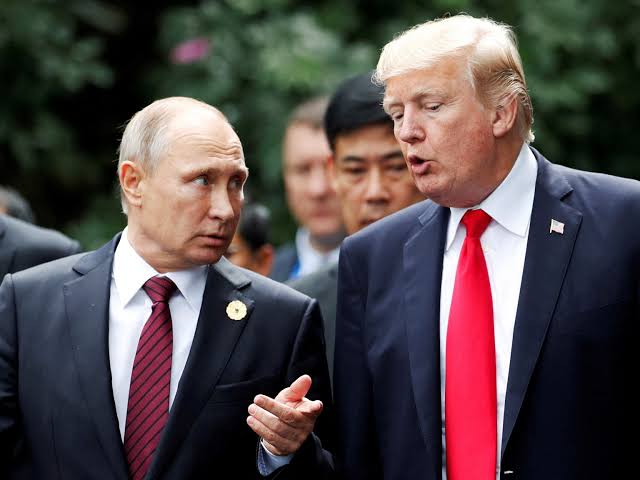
Trump, Putin to Meet in Alaska Over Ukraine War
United States President Donald Trump and Russian leader Vladimir Putin are set to meet on Friday, August 15, in Alaska, in what is being described as a critical diplomatic push to end the ongoing war in Ukraine.
The meeting follows months of failed attempts to broker peace between Moscow and Kyiv, despite Trump’s earlier ultimatum that Russia must agree to a ceasefire by August 8 or face stiffer US sanctions.
Trump, who has consistently claimed the conflict would not have occurred under his presidency, said the face-to-face talks offer a “very close” chance of securing a deal to “stop the killing.”
The Alaska summit, he added, will be informed by recent “highly productive” discussions between US Special Envoy Steve Witkoff and Putin in Moscow.
While the White House has indicated Trump is open to including Ukrainian President Volodymyr Zelensky in a possible trilateral arrangement, the forthcoming talks will remain a bilateral summit at Putin’s request.
Zelensky has warned that any agreement reached without Ukraine’s involvement would amount to “dead decisions,” stressing that Kyiv would not cede territory seized by Russia, including Crimea and parts of Donbas.
Sources familiar with the negotiations say the Trump administration has floated a ceasefire framework that would see Russia retain Crimea and the Donbas region, while relinquishing its military grip on Kherson and Zaporizhzhia.
However, Ukraine has repeatedly rejected any plan that rewards Russian occupation, calling it unconstitutional and a betrayal of its sovereignty.
For his part, Putin has maintained firm demands over Ukraine’s neutrality, restrictions on its armed forces, and the recognition of Russia’s territorial claims.
The war, which began in February 2022, has been partly justified by Moscow on grounds of resisting NATO expansion and alleged Western influence in Kyiv.
Alaska’s selection as the summit venue carries symbolic weight, as the US purchased the territory from Russia in 1867.
Kremlin officials have described the choice as “logical” given the geographical proximity of both nations across the Bering Strait.
Although the precise meeting site remains undisclosed, the talks are expected to draw significant global attention as the two leaders attempt to navigate one of the most entrenched conflicts of the decade.

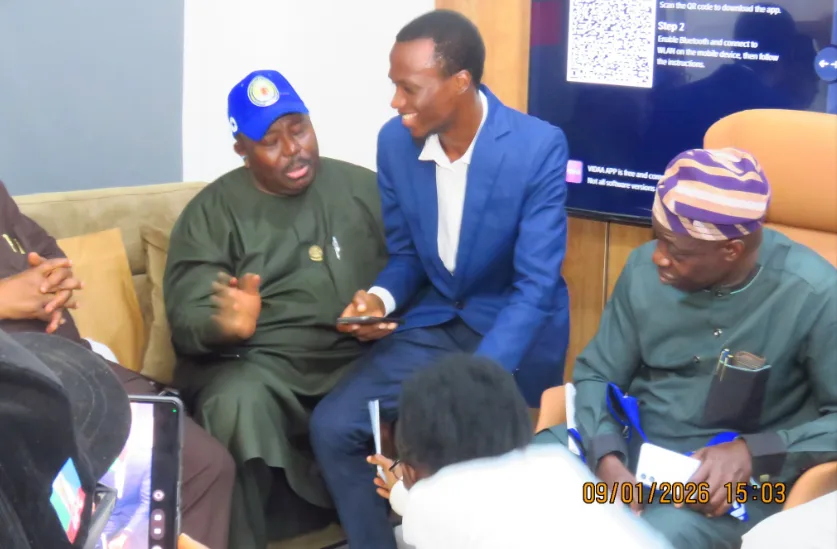
On The Sharafadeen Alli Lap Controversy, by Boniface Ihiasota
Politics is not only about manifestos, campaign promises and the ability to win elections. It is also about perception, judgment and the capacity to understand that, once a person enters public life, even seemingly ordinary actions can acquire extraordinary meaning.
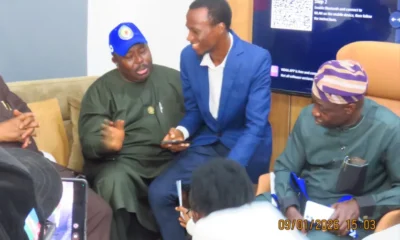
That is the uncomfortable lesson from the controversy surrounding Senator Sharafadeen Alli, the All Progressives Congress governorship candidate in Oyo State, after a video showing a young man sitting on his lap during an interaction in Ibadan went viral on Wednesday, September 2, 2026.
The first issue that must be established is factual accuracy. Contrary to several social-media posts describing the young man as a journalist, Alli’s campaign organisation said he was a student of The Polytechnic, Ibadan who, alongside other students, had visited the politician to seek support for a programme and conduct an interview. The campaign said the room was overcrowded, there were insufficient chairs, and Alli asked one of the students to sit on his lap so the engagement could continue. It described the gesture as spontaneous and fatherly and rejected attempts to sexualise the encounter.
That clarification matters. Journalism demands that allegations be separated from facts. A viral video is evidence of what a camera captured; it is not automatically evidence of the motive behind what happened. But there is another uncomfortable truth: an explanation can remove an allegation of improper intention without necessarily removing questions about poor judgment.
For a man preparing to govern Oyo State, the question should not merely be, “Was there anything sexual about the encounter?” The more important questions are: Was the arrangement appropriate? Was it necessary? Could it have been avoided? What message did it send? And, most importantly, was it sensible for a politician of Alli’s stature to participate in such an easily misunderstood scene? The answer to those questions deserves serious reflection.
Alli is not an ordinary private citizen. He is a serving senator representing Oyo South and, since his unveiling on July 2, 2026, the APC’s candidate for the 2027 Oyo governorship election. The party unveiled him alongside his running mate, Adesoji Adedeji, in Ibadan as it began efforts to reclaim the state. With that position comes a higher burden of judgment.
Public officials are constantly photographed, recorded and interpreted. In the age of smartphones, a few seconds can be removed from an hour-long engagement and circulated to millions of people without context. That reality makes discretion an essential political skill.
There is therefore something fundamentally wrong with the argument that because the act was supposedly innocent, there is nothing to discuss. Intent and perception are two different things. A public figure may have no improper intention and still make an avoidable judgment that creates an entirely unnecessary controversy.
The young man’s own position also deserves consideration. The available footage has prompted debate about whether he appeared comfortable with the arrangement. We should not claim to know his feelings merely from facial expressions or a short clip. But precisely because his comfort cannot be established from the footage, a politician in a position of authority should ordinarily err on the side of maintaining clear personal and professional boundaries.
There is also a lesson for the media. Some platforms immediately labelled the young man a “journalist”, while subsequent reports and the candidate’s campaign identified him as a student. That discrepancy demonstrates the danger of social-media journalism driven by speed rather than verification. A sensational headline may generate clicks, but it can also unfairly damage reputations.
At the same time, the media must not become so afraid of controversy that legitimate questions are dismissed as political blackmail. Alli’s campaign is entitled to defend him. Critics are equally entitled to question the wisdom of the encounter. The mature position lies between both extremes.
There is no responsible basis, from the available evidence, to assign a sexual motive to Alli or the student. But neither should Nigerians be told that they must suspend their judgment simply because the candidate says the incident was innocent.
For those of us observing Nigerian politics from the Diaspora, this episode is a reminder of a broader challenge: Nigeria needs public officials who understand not only power, but restraint.
The 2027 Oyo governorship contest should ultimately be about roads, jobs, education, healthcare, security, agriculture, investment and the competence to manage public resources. Alli and his opponents will have ample opportunity to explain their visions for the state. But before the campaigns become a battle of manifestos, politicians must understand something elementary about modern public life: the camera never forgets.
A candidate who wants the confidence of millions must learn to ask, before every public gesture: “How will this look to the people I seek to lead?”
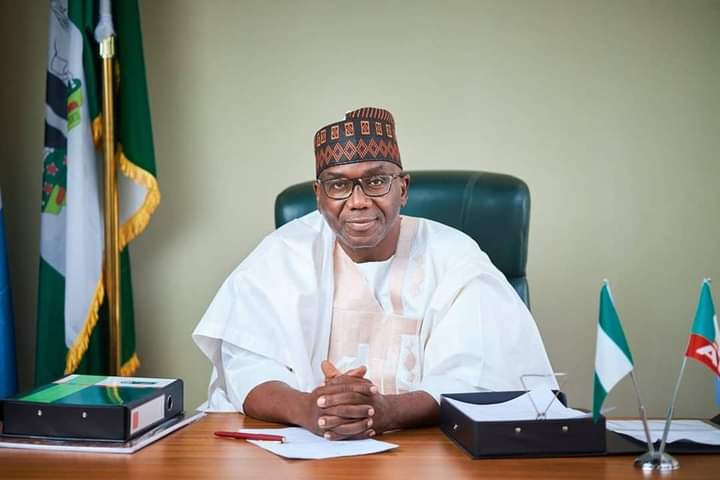
Like Ant, Like AbdulRahman AbdulRazaq, by Alabidun Shuaib AbdulRahman
There is something deceptive about the ant. Put it beside a lion and it looks almost insignificant. Put it beside an elephant and it virtually disappears. It has no roar, no intimidating physique, no majestic stride and certainly no dramatic entrance. Yet the ant survives. More than that, it organises, adapts, carries burdens several times its body weight and, when confronted by obstacles, rarely wastes time fighting the obstacle head-on. It finds another route.
That, to my mind, is perhaps the most revealing metaphor for understanding the political career of Kwara State Governor, AbdulRahman AbdulRazaq. This is not an attempt to turn the governor into a political saint. He is not one. Neither is it an argument that he has won every political battle. He has not. His administration and political conduct have attracted criticisms, some of them legitimate, and his political camp has suffered setbacks. But there is one feature of his political journey that is difficult to ignore: AbdulRahman AbdulRazaq has repeatedly been underestimated.
Those who dismissed him as merely a wealthy businessman entering a political arena dominated by established political structures have had to revise their calculations more than once. The journey began in earnest in 2018 when he emerged as the All Progressives Congress governorship candidate for the 2019 election. It was hardly an ordinary political contest. Kwara had for decades been associated with the political influence of the Saraki family, and the 2019 election was shaping up to be a battle over whether that influence would continue to determine the direction of the state.
AbdulRazaq entered that contest as the candidate of a growing opposition movement that had adopted the slogan “O To Ge” — enough is enough. On March 9, 2019, the slogan acquired electoral meaning when AbdulRazaq defeated the PDP candidate, Razak Atunwa, by a huge margin. AbdulRazaq secured 331,546 votes against Atunwa’s 114,754 and, remarkably, won in all 16 local government areas of the state.
That was not simply an election victory. It was the collapse of a political arrangement that many people had considered almost impossible to dislodge. AbdulRazaq became the beneficiary and symbol of that political revolution. But winning power is one thing. Keeping it is another.
The coalition that produced the 2019 victory contained powerful personalities and competing interests. Among the people who eventually found themselves on the opposite side of the governor was Lai Mohammed, the former Information and Culture Minister and one of the most influential figures in the Kwara APC. Bashir Omolaja Bolarinwa, who had served as chairman of the state APC, also became involved in the internal struggle over the control and direction of the party. Gbemisola Saraki, another important political figure from the Saraki political family, was similarly associated with the factional disputes that emerged within the party. The disagreements were sometimes bitter and very public.
The internal crisis produced accusations, counter-accusations, rival tendencies and arguments over who truly controlled the party structure. At different points, it looked as though the internal issues could become more dangerous to AbdulRazaq than the opposition outside the APC. But the governor survived.
Also, on January 2, 2020, the Kwara State Government demolished the property known as Ile Arugbo, which was associated with the late Dr Olusola Saraki. The government argued that the property stood on land that had been illegally allocated and had been earmarked for government use. The Saraki family rejected the government’s position and challenged the action in court. The dispute became far larger than a disagreement over property.
For many people, Ile Arugbo became a physical symbol of the struggle between the political past and the present in Kwara. It was impossible to discuss the demolition without discussing the larger confrontation between the political establishment associated with the Saraki family and the new order represented by AbdulRazaq. Yet again, AbdulRazaq endured. Perhaps that is where the ant analogy becomes useful.
The ant does not defeat the elephant by pretending to be an elephant. It survives because it understands its limitations. It moves differently. It relies on persistence, organisation and patience. When one route is blocked, it looks for another.
AbdulRazaq’s political career has displayed something similar. He has not always responded to political pressure by attempting to overpower it. Sometimes he has simply waited for the political terrain to change.
The 2023 election was perhaps the clearest demonstration of that political dexterity. By then, the O To Ge coalition had lost much of the unity that characterised its 2019 campaign. Politicians who had once stood together against the Saraki establishment had moved in different directions. Some remained in the APC, some joined other parties and others developed independent political ambitions. Ordinarily, that should have presented the incumbent with a formidable problem. It did not.
Interestingly, on March 18, 2023, AbdulRazaq was re-elected with 273,424 votes, defeating the PDP candidate, Yaman Abdullahi, who scored 155,490 votes. The governor was declared winner in all 16 local government areas.
The significance of that election goes beyond the numbers because in 2019, AbdulRazaq had ridden a powerful anti-establishment wave to Government House. In 2023, he had to defend an administration whose honeymoon was long over, against an opposition that believed the fragmentation of the O To Ge coalition had created an opportunity. He still won.
That victory also demonstrated something else about AbdulRazaq’s political style. He has shown an ability to accommodate people who were previously on the other side of the political fence when circumstances change.
Politics is not a marriage ceremony, they say. There are no vows that prevent yesterday’s opponent from becoming tomorrow’s ally. That reality has become particularly relevant in the build-up to 2027. One of the most interesting names in the unfolding political drama is Senator Saliu Mustapha.
Mustapha was not always an opponent of AbdulRazaq. He was part of the APC establishment and supported the governor’s re-election in 2023. Today, the two men are political adversaries.
The senator has left the APC and emerged as the PDP candidate for Kwara Central for his re-election bid, the same seat that AbdulRazaq is seeking after leaving the Government House.
Mustapha has already expressed confidence that he will defeat the governor on election day, even declaring that the victory would come before 1pm. Such confidence is perfectly normal in politics. Every candidate must believe he can win. But confidence is not a substitute for votes, and 2027 will surely be decided by the electorate.
As it stands, hovering over the entire contest is the name of Bukola Saraki, who once occupied the seat both Mustapha and AbdulRazaq are jostling to get. No serious examination of Kwara politics can simply write Saraki out of the story. Whatever one’s opinion of him may be, his political influence and historical role in the state remain too significant to ignore.
The man who helped lead the political revolt that displaced the Saraki establishment in 2019 is now seeking election in Kwara Central, the same senatorial district that Saraki once represented. Saraki, meanwhile, has returned to active political engagement in the state and has been involved in efforts to rebuild the PDP ahead of 2027. It is therefore tempting to describe 2027 as a simple rematch between old enemies.
The 2027 election will test that contest in an entirely new way. In 2019, AbdulRazaq was the challenger riding a popular wave against an entrenched political establishment. In 2023, he was an incumbent defending his record. In 2027, he will be a departing governor asking voters to give him another platform from which to continue influencing the politics of the state. The electorate will have legitimate questions.
They will ask what his administration achieved. They will judge his record on infrastructure, education, healthcare, workers’ welfare, rural development, youth opportunities and other matters that directly affect their lives.
His opponents will remind voters about the APC crisis. They will point to the defection of Saliu Mustapha. They will invoke Saraki. They will argue that the coalition that brought AbdulRazaq to power has fractured beyond repair.
AbdulRazaq’s response will ultimately have to be more than political arithmetic. He will need to convince voters that his relevance deserves another chapter. And if his political history is any guide, he may not do it by shouting louder than his opponents. He may simply continue moving. That is why the ant is such a fitting metaphor.
The ant is not impressive because of its size. Its strength lies elsewhere. It understands that persistence can defeat intimidation, that organisation can compensate for weakness and that patience can sometimes achieve what aggression cannot.
AbdulRazaq’s political career since 2018 has offered several examples of that principle. He entered the political arena as an unlikely challenger and helped dismantle a political order that had dominated Kwara for decades. He survived bitter disagreements with former allies. He weathered the Ile Arugbo controversy. He defeated the opposition again in 2023 despite the fragmentation of the political coalition that produced his first victory. And now, as his governorship approaches its constitutional end, he is preparing for another electoral battle.
He may not be the lion in the Kwara political jungle. He has never needed to be. He has behaved more like the ant: small enough to be underestimated, patient enough to endure, organised enough to survive and persistent enough to keep moving when others assume the journey has ended. Whether he will win in 2027 remains unknown.
Alabidun is an Abuja-based media practitioner and can be reached via alabidungoldenson@gmail.com
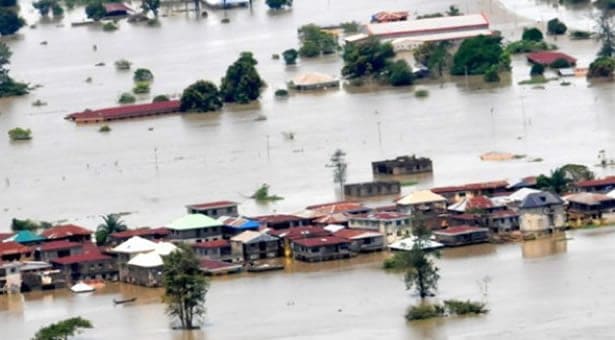
Wike and the Abuja Master Plan, by Alabidun Shuaib AbdulRahman
Last week, I wrote about the danger of Abuja gradually drifting towards the urban failures that have made Jakarta synonymous with flooding, poor drainage, disappearing waterways and the painful consequences of allowing development to outrun planning. The argument was not that Abuja is Jakarta. It was that cities, despite differences in geography, can repeat one another’s mistakes.
Events in Nepal this week have supplied an even more sobering reason for Abuja and Nigeria to take that warning seriously. What happened in Nepal on Wednesday, August 26, 2026, was not an ordinary rainy-season flood. A section of a glacier near Langtang Lirung in the Himalayas collapsed, sending an enormous mass of ice and rock crashing into the Lhende Khola river. The resulting torrent became a deadly mixture of water, mud, rock and debris that raced through valleys and settlements on the Nepal-China border. Reuters reported that the disaster destroyed roads, bridges, houses, power installations and the vital Gyirong border infrastructure, while hundreds were killed and nearly 1,000 people remained missing.
By Friday, August 28, the situation had become even more frightening. A lake created when debris blocked the river had begun overflowing, forcing rescue operations to be suspended because of the danger of another surge. Nepalese and Chinese authorities were already warning of further flooding.
The immediate lesson is not that Abuja has glaciers. It does not. Neither should anyone suggest that a Himalayan glacial collapse can simply be transplanted into Nigeria. The lesson is more fundamental and much closer to home: disasters become catastrophic when natural hazards meet vulnerable settlements, weak planning, inadequate infrastructure and institutions that respond after the damage instead of preparing before it.
Nepal has always been vulnerable to floods, landslides and other natural disasters. Its mountainous terrain makes communities particularly exposed during heavy rainfall. In September 2024, devastating rains killed at least 192 people across the country, with 56 deaths recorded in the Kathmandu Valley alone. At the time, poor urban planning and climate change are said to be the factors that worsened the flooding.
The current disaster has a different immediate trigger, but the wider warning remains the same. Scientists say climate change is increasingly destabilising high mountain environments by changing patterns of ice melt, freezing and thawing. Nepal has lost nearly one-third of its glacier ice over about three decades, according to figures cited by Reuters, while warming conditions are making compound disasters involving floods, landslides and ice or rock avalanches increasingly dangerous.
Nepal has experienced another disturbing glacial-origin flood as recently as July 2025, when the drainage of a supraglacial lake in Tibet triggered flooding along the Bhote Koshi River, killing people and destroying the Friendship Bridge between Nepal and China.
This is what climate change is doing to the meaning of disaster preparedness. The old assumption was that if you knew the rainy season, you knew roughly what to expect. That assumption is becoming increasingly unreliable. Extreme weather is becoming more complicated. Rainfall can interact with landslides. Rivers can suddenly change course. Infrastructure can become a trap. A drainage system designed for yesterday’s rainfall may be hopelessly inadequate for tomorrow’s storm.
Nigeria must understand this before another tragedy teaches us the lesson in the most expensive way possible. And Abuja, of all Nigerian cities, should understand it first. The Federal Capital was not supposed to grow like an accidental settlement. It was conceived as a planned city. The Abuja Master Plan was developed in 1979, with the Central Area plan subsequently developed in the early 1980s under Japanese architect Kenzo Tange. Its philosophy was based on organised land use, functional districts, green spaces, transportation networks and controlled development.
Its population has expanded dramatically. Its satellite towns have exploded. Its roads have stretched into areas that were once largely undeveloped. Real estate has become one of the city’s most aggressive economic activities. Natural drainage corridors have come under pressure. Green areas have been converted. Buildings have appeared in places that ought to remain open for environmental reasons. The question, therefore, is no longer whether Abuja needs its master plan reviewed. It is why the review has taken so long.
Wike has spoken about the need to review the Abuja Master Plan since 2024. In September that year, he spoke about the need to improve infrastructure, including storm-water and wastewater drainage, while discussing the review of the city’s planning framework.
Yet here we are in August 2026, and the flooding question remains sufficiently serious for stakeholders to be demanding a comprehensive review of the 1979 plan. The FCT Administration itself has now said it is reviewing the plan to reflect the current realities of the capital. That raises an uncomfortable question. If the need for an updated plan was recognised in 2024, why is Abuja still dealing with the consequences of a planning framework conceived nearly half a century ago?
This is not an argument against Wike’s achievements. Since assuming office as FCT Minister in August 2023, he has pushed roads, bridges and other infrastructure projects with an urgency that has visibly altered parts of the capital. That record should be acknowledged. But this is precisely why the argument has become more important. A road is not a city. A bridge is not a city. A beautiful interchange is not a city.
A city is a system. Water must have somewhere to go. Trees and wetlands must have somewhere to survive. Waste must have somewhere to be collected. Buildings must have somewhere they are legally permitted to stand. Roads must be designed alongside drainage. New estates must be connected to adequate infrastructure. Population growth must be anticipated rather than discovered after the fact. This is why the recent flooding in Abuja should not be reduced to the politics of demolition.
On August 18, Wike ordered the demolition of structures built on designated waterways following flooding in parts of the capital. During an inspection of flood-affected areas, the FCT Administration said it discovered a structure on a drainage area whose allocation had been revoked years earlier. That is not merely a story about one illegal structure. It is a story about the failure of a system.
If a piece of land reserved for drainage can be allocated, revoked and later occupied by a structure, then something went wrong at several points in the chain of governance. Someone approved something. Someone failed to enforce something. Someone looked away. Someone built where building was not supposed to happen. Demolition is necessary in some circumstances, but demolition after the damage has occurred is the most expensive form of planning.
That is why Wike’s administration should use the current moment to do something much bigger than clearing waterways. Abuja needs a comprehensive flood and climate resilience plan incorporated into the new master plan. Every major drainage corridor should be mapped and legally protected. Flood plains should be clearly identified. Wetlands and green areas should be treated as infrastructure, not vacant land. Development approvals should take storm-water management seriously. Satellite towns should be integrated into the same planning system rather than allowed to grow independently until their problems become Abuja’s problems.
The public should know which areas are protected waterways. Developers should know the rules before buying land. Government officials should know that approving an illegal structure will have consequences. And influential Nigerians should not be allowed to believe that their influence gives them a private exemption from public planning laws.
The recent flooding has already triggered demands from Abuja stakeholders for the desilting of drainage channels, enforcement against encroachment and a comprehensive review of the 1979 Master Plan. These demands should not be dismissed as another seasonal reaction.
The capital cannot continue to operate with a planning philosophy designed for a city that no longer exists. Wike has spent considerable political capital and public resources improving Abuja’s physical infrastructure. He should now spend the same energy modernising the rules that determine how that infrastructure interacts with the environment.
Otherwise, there is a danger that today’s roads will become tomorrow’s channels for faster-moving floodwater, and today’s new developments will become tomorrow’s flood-prone neighbourhoods. Nepal did not become vulnerable to climate-related disasters overnight.
Cities decline gradually. A wetland disappears here. A drainage channel is narrowed there. A green area is converted somewhere else. An unauthorised building is tolerated because the owner is powerful. A master plan is left unchanged for another year. A drainage project is postponed. Another road is constructed without adequate storm-water infrastructure. Then one day the rain comes. And everybody asks how it happened. Abuja still has the advantage of being able to prevent that question from becoming inevitable.
Wike has said he is reviewing the master plan. Nigerians should now demand that the review be completed, published, debated and implemented, not merely announced. The time for another committee, another promise and another inspection after another flood is gone.
The Nepal disaster is a tragedy, but it is also a warning from a distance. For Abuja, the message could not be clearer. Prepare before the water comes. Because when the flood eventually arrives, it will not ask who approved the building, who ignored the drainage, who postponed the master plan or which administration made the mistake. It will simply come. And by then, politics will be irrelevant.
Alabidun is a media practitioner and can be reached via alabidungoldenson@gmail.com


Our Tinubu Has Run Away Again?

CARICOM begins consultations on regional biodiversity strategy

On The Sharafadeen Alli Lap Controversy, by Boniface Ihiasota

Pastor Jerry Eze Defends Miracles At UK Conference Amidst Criticism And Controversy

Diaspora Watch 20th Edition (October 14-20, 2024): Your Trusted Source for Global News and Insights

Tanzanian Man Reportedly Dies And Returns To Life Six Times


-
 News3 days ago
Our Tinubu Has Run Away Again?
-
 News3 days ago
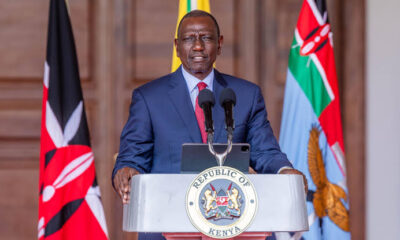
Ruto orders foreign traders out of Kenya’s small businesses
-
 News3 days ago
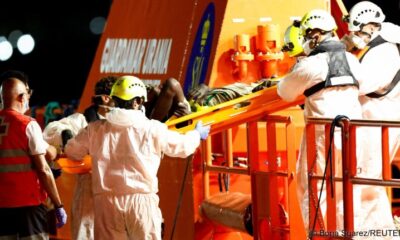
83 feared dead as boat drifts for 27 days on Atlantic
-
 Analysis3 days ago
On The Sharafadeen Alli Lap Controversy, by Boniface Ihiasota
-
 News3 days ago
CARICOM begins consultations on regional biodiversity strategy
-
 News3 days ago
Nepal flood: Two rescued after nine days trapped in hydropower tunnel