
Analysis
Tinubu’s Policy Somersaults and the Search for Economic Direction

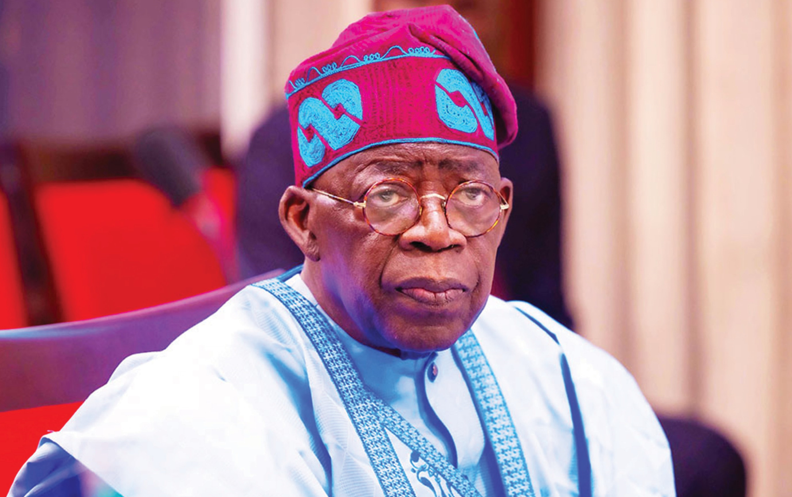
Tinubu’s Policy Somersaults and the Search for Economic Direction
By Alabidun Shuaib AbdulRahman
When President Bola Ahmed Tinubu declared “subsidy is gone” on May 29, 2023, he triggered not just applause but also anxiety. The bold announcement, made even before he settled into office, set off a chain reaction that would define his presidency. Nearly 17 months later, what stands out is not just the courage of his decisions but the inconsistency of their execution, a troubling pattern of policy somersaults that have left Nigeria’s economy oscillating between reform and relapse.
The Tinubu administration came into power on the promise of bold economic transformation. It pledged to end wasteful subsidies, unify the exchange rate, overhaul the tax system, and attract investment. Yet, the implementation of these policies has often been marked by haste, reversals, and contradictions, leaving citizens to bear the brunt of experimentation without a clear safety net.
Few policies have shaped the Tinubu era like the removal of fuel subsidy. The logic was sound: the Nigerian government spent over ₦4.7 trillion on subsidies in 2022 alone, according to the Nigeria Extractive Industries Transparency Initiative (NEITI), making it more than the federal budgets for health and education combined. Eliminating it, Tinubu argued, would free up funds for infrastructure and development.
However, the rollout was chaotic. Within weeks, the average petrol price jumped from below ₦200 per litre to ₦617 at major Nigerian National Petroleum Company Limited (NNPCL) stations by July 2023. The National Bureau of Statistics (NBS) later confirmed that the average national retail price surged from ₦238.11 per litre in May 2023 to ₦626.21 by September 2023 — a 226 percent increase in just four months.
By May 2024, NBS data showed another spike, with petrol averaging ₦769.62 per litre nationwide, and even higher in states like Taraba and Rivers. In some private stations in Lagos and Ibadan, prices exceeded ₦850 per litre by late 2024.
The economic consequences were immediate. Transport costs tripled, food inflation soared, and small businesses struggled to survive. What made matters worse was the creeping suspicion that the government had quietly reintroduced a “hidden subsidy.” Independent data from industry analysts revealed that as of mid-2024, the landing cost of petrol was about ₦1,200 per litre, yet it sold for roughly ₦700, suggesting that the federal government was once again absorbing part of the cost.
This backdoor return of subsidy, after its public burial, unapologetically exposed a policy contradiction. The administration that prided itself on fiscal discipline was once again subsidizing consumption, this time without transparency.
Again, Tinubu’s decision to unify the exchange rate and allow the naira to float was meant to end years of distortion in Nigeria’s foreign exchange market. In June 2023, the Central Bank of Nigeria (CBN) merged multiple exchange windows, and the naira initially traded at around ₦750 per dollar.
But the reform quickly turned into a free fall. By September 2024, the naira had tumbled to over ₦1,600 per dollar in the parallel market. In October 2025, Reuters reported it hovering between ₦1,455 and ₦1,475 at the official Investors and Exporters window, a sign that despite the “float,” the CBN had resumed active interventions.
The result was predictable: imported goods became unaffordable, inflation climbed above 30 percent, and investor confidence weakened. Nigeria’s inflation officially stood at 24.23 percent in March 2025, according to the NBS, but food inflation was far higher, eroding household purchasing power.
The policy’s intent to attract foreign inflows was lost amid uncertainty. Businesses couldn’t plan; manufacturers couldn’t price goods; and citizens, already hit by petrol costs, faced a depreciating currency that made survival harder by the month.
Also, in a bid to expand revenue, the Tinubu government launched an ambitious tax reform agenda, establishing the Presidential Committee on Fiscal Policy and Tax Reforms led by Taiwo Oyedele. The committee’s work was well-received, projecting an effort to simplify Nigeria’s complex tax regime and improve collection efficiency.
But at the same time, the government and its agencies imposed new taxes and levies that contradicted the reform spirit. Excise duties on beverages increased, Customs raised import tariffs, and several states introduced new consumption taxes. Manufacturers, already reeling from exchange-rate pressures and high energy costs, began to shut down or relocate.
The Manufacturers Association of Nigeria (MAN) warned in mid-2024 that over 30 percent of its members were operating below capacity, citing rising input costs and multiple taxation. The government’s short-term revenue drive, critics argue, is strangling the very industries that could generate sustainable growth.
Furthermore, in April 2024, the government approved an electricity tariff hike for “Band A” customers, from ₦68 to ₦225 per kilowatt hour, claiming it affected only those receiving at least 20 hours of power daily. But within weeks, public outcry forced a partial reversal. The Minister of Power, Adebayo Adelabu, and the regulatory commission issued conflicting statements, leaving investors uncertain and consumers angry.
The pattern was similar in labour relations. After months of delay, negotiations for a new minimum wage ended in confusion. A proposed ₦70,000 wage was announced, withdrawn, and then reintroduced and yet to be fully implemented across. Each cycle of promise and reversal erodes credibility and deepens public frustration.
To cushion the subsidy shock, the federal government announced a ₦500 billion palliative package, including cash transfers and food distribution. But implementation was chaotic. Governors disagreed on sharing formulas, distribution was politicized, and many citizens reported being left out.
Similarly, the much-publicized student loan scheme, initially announced for September 2023 was delayed for nearly a year, suspended, then relaunched in mid-2024. The repeated stop-start pattern has become emblematic of Tinubu’s governance style: bold announcements followed by administrative bottlenecks.
Tinubu’s reform instinct is not the problem; his reform management is. The administration must move from ad hoc responses to structured execution. Nigeria cannot afford further policy confusion; stability and clarity must now define governance.
First, the President should rebuild coordination within his economic team. The CBN, Ministry of Finance, and Budget Office must speak with one voice. Economic policy cannot thrive when officials contradict one another.
Second, transparency must replace opacity. Nigerians deserve to know how much is spent on fuel subsidy, how forex is allocated, and how palliatives are distributed. Publishing monthly reports on fiscal and monetary interventions would restore trust.
Third, government must prioritize production over taxation. Incentivize manufacturing, reduce energy bottlenecks, and support SMEs through credit facilities. Expanding the economy’s productive base will yield more revenue than squeezing existing taxpayers.
Fourth, social protection needs reengineering. Palliatives should be digital, data-driven, and corruption-proof. The student loan scheme must be managed transparently, not politicized. The poor cannot remain collateral damage in every policy transition.
Finally, President Tinubu must embrace patience. Sustainable reform is not achieved through shock therapy but through gradual, sequenced policies backed by strong institutions. The temptation to reverse decisions under pressure should give way to evidence-based adjustments.
Alabidun is the Editor of Diaspora Watch Newspapers and can be reached via alabidungoldenson@gmail.com






The Likes of Kila in Our Society, by Alabidun Shuaib AbdulRahman
There is something particularly troubling about a person who spends years telling society what is wrong with its leaders, questioning the integrity of public institutions, demanding transparency from those in authority and insisting that accountability is the bedrock of good governance, only to find himself confronted with questions about the very integrity he expects others to uphold. Such an act goes beyond personal embarrassment; it raises fundamental questions about the credibility of public intellectuals and the moral authority upon which their influence rests. The controversy surrounding Anthony Kila, a familiar voice in Nigeria’s public discourse, presents an uncomfortable but necessary question: can those who hold others accountable escape the same scrutiny they demand of everyone else?
In a country where public trust has suffered repeated injuries from political deception, institutional failures and the abuse of public office, the distinction between what a person preaches and what he practises matters enormously. Society needs people who can interrogate power without fear, challenge dishonesty without compromise and insist that public officials answer for their actions. But what happens when one of the voices making these demands becomes the subject of serious questions about his own credentials? What becomes of the argument for accountability when the advocate must himself account for the foundation of his public identity?
The investigations published by PREMIUM TIMES on October 3 and October 10, 2026, concerning Kila’s professorial title and claimed academic qualifications, have brought these questions into sharp focus. The first report found no evidence that a recognised academic institution had awarded him the professorial rank he had publicly used for years. The subsequent investigation questioned his claimed bachelor’s, master’s, doctoral and other qualifications, reporting discrepancies between his claims and information obtained from institutions he said he attended. Even though Kila has rejected the description of him as a fake professor, he maintained that he stands by his credentials and said he was gathering his academic and professional documents. These are serious allegations, and the appropriate investigations must be allowed to establish the facts. Nevertheless, the questions raised cannot be dismissed simply because they concern a familiar media personality rather than an elected politician.
What makes this controversy especially troubling is not merely the title at its centre but the public expectations attached to it. Kila has built a recognisable presence as a political analyst, public commentator and advocate of institutional accountability. His opinions have travelled through television studios, newspaper columns and public discussions. He has been part of the conversation through which Nigerians examine governance, leadership and the direction of their country. That influence should not be casually discounted, and neither should his intellectual contributions be retrospectively declared worthless because of the present controversy. The more important question is why a person with such visibility and the apparent ability to engage complex public issues would allow his professional identity to become entangled in claims that he must now struggle to substantiate.
There is a difference between possessing knowledge and possessing a certificate. There is also a difference between being intellectually capable and being entitled to an academic rank. A person may read widely, understand political economy, analyse public policy and contribute meaningfully to national debate without holding a doctorate or occupying a university professorship. Society has produced remarkable thinkers whose authority emerged from their work, experience and ability to explain difficult questions, not from the titles preceding their names. If Kila possesses the intellectual capacity that many of his admirers have attributed to him, why would any title beyond his demonstrable achievements be necessary to establish his worth?
In a society obsessed with titles, the temptation to embellish one’s credentials can become powerful. Professor, doctor, chief executive, consultant and international expert have become more than descriptions of professional standing. They are often treated as shortcuts to respect, invitations to television programmes, access to influential circles and opportunities to shape public decisions. The title can become more important than the substance of the person carrying it. Once society begins to reward appearances more generously than competence, those who understand the system may be tempted to manufacture the appearance rather than patiently establish the substance.
Yet the appetite for titles does not excuse the person who misrepresents his qualifications, if the allegations are established. It exposes both the individual and the society that makes such misrepresentation attractive. A genuine academic distinction is earned through recognised institutional processes, scholarship, teaching, research and assessment. It is not created by repeatedly describing oneself in a particular way, nor does public familiarity transform an unverified claim into an established fact. The title of professor carries an institutional meaning that cannot be replaced by personal conviction or public popularity.
On October 6, 2026, Michael and Cecilia Ibru University in Agbarha-Otor, Delta State, asked Kila to step aside from his responsibilities as pro-chancellor pending an investigation into questions surrounding his professorial status. The Independent Corrupt Practices and Other Related Offences Commission also constituted a team to investigate the allegations. These developments demonstrate that the controversy has moved beyond social media arguments and personal reputations to questions about institutional responsibility. A university governing council is not an ornamental gathering. It exercises authority over administration, policy, finances and other important aspects of institutional governance. Anyone occupying such a position must be able to satisfy legitimate questions about qualifications presented in support of his public standing.
The implications extend beyond Kila because if a university can place a person in a position of considerable responsibility without adequately verifying the credentials associated with his public profile, what does that say about its recruitment and governance procedures? If television stations repeatedly introduce a commentator as a professor without independently establishing the basis of that designation, what does that say about editorial diligence? And if the public accepts titles as evidence of expertise without asking who conferred them, the institution that awarded them or the work supporting them, are we not collectively encouraging the culture we later condemn?
Also, ARISE News has announced on October 13, 2026, that Kila would no longer appear on its platforms following the allegations and its unsuccessful attempt to obtain his response within the period it specified. The action might be said to be an afterthought. The platform should have diligently do background checks on him before making him the face and the voice of his flagship show. Suspending him after the the expose is reactional.
There is, however, a wider moral problem in the conduct of people who demand from others standards they appear unwilling to apply to themselves. The politician who condemns corruption but manipulates public resources, the activist who preaches transparency but conceals his own dealings, the journalist who demands truth but publishes unverified allegations, and the public intellectual who questions the credentials of others while leaving his own claims unexplained all participate in the same culture of contradiction. Their positions differ, but the underlying failure is identical. They want the moral authority of accountability without accepting its personal obligations.
Such people can become particularly influential because they understand the language of public morality. They know how to identify institutional weaknesses, explain the consequences of poor governance and present themselves as alternatives to a compromised establishment. Their arguments may even be correct. But correctness on one issue does not automatically confer integrity in every other aspect of life. A person can make an excellent argument about corruption and still face legitimate questions about personal conduct. Intellectual brilliance is not a permanent certificate of moral innocence.
This is why the Kila controversy must not be reduced to an opportunity for mockery. Nigerians should resist the temptation to turn an unfolding investigation into a spectacle of humiliation. The objective is not to destroy a man because questions have arisen about his academic standing. It is to establish the truth, protect institutions from misrepresentation and reaffirm the principle that no individual should stand above scrutiny. If the claims against him are substantiated, appropriate consequences should follow. If he produces verifiable evidence that resolves the disputed issues, that evidence should receive fair consideration. Neither public anger nor personal admiration should determine the outcome.
What Kila could have demonstrated, and can still demonstrate through a credible response, is that accountability begins with oneself. His explanation must address the specific questions raised by the investigations, including the institution said to have conferred his professorship and the academic qualifications now being questioned. General assurances about his professional standing cannot substitute for documents that independent institutions can authenticate. Equally, any institution that endorsed his credentials must explain the basis of its decision.
The irony is that Kila did not need to become a professor to contribute to Nigeria’s public conversation. He did not need an impressive collection of degrees to develop an informed opinion about governance. His ability to communicate, analyse policies and participate in public debate could have been judged on its merits. A society hungry for credible voices should be capable of accepting an intelligent commentator without insisting that he carry an academic title. By contrast, where an individual presents credentials that cannot withstand verification, the damage reaches beyond personal reputation to the credibility of legitimate scholars whose achievements were earned through recognised institutions and years of work.
The likes of Kila in our society remind us that the fight against dishonesty cannot succeed through eloquent speeches alone. It requires personal consistency, institutional discipline and the willingness to submit one’s own claims to the standards applied to everyone else. Those who demand transparency must be transparent. Those who insist on accountability must be accountable. And those who advise society on integrity must understand that their conduct is not exempt from examination simply because their arguments sound convincing.
Perhaps the most important lesson is that being real is not a weakness. A person who honestly presents his qualifications, acknowledges his limitations and allows his work to speak for him can still earn public respect. There is dignity in being knowledgeable without claiming an unearned distinction, just as there is honour in admitting an error and correcting it. The public may forgive human shortcomings more readily than deliberate attempts to mislead it, because honesty gives people something upon which trust can be rebuilt.
Nigeria does not lack people who can speak impressively about good governance. What it lacks, too often, is consistency between public declarations and private conduct. The country needs fewer performances of integrity and more demonstrable integrity itself. Until we learn to judge public figures by the relationship between their words, credentials and actions, we will continue to celebrate the language of accountability while struggling to establish its practice.
The question, therefore, is not whether Anthony Kila can still contribute to society. He can, provided his contributions are judged on their merits and the questions surrounding his credentials are addressed honestly. The question is whether he, and others who occupy similar positions of influence, understand that credibility cannot be demanded from the public while verification is treated as an inconvenience.
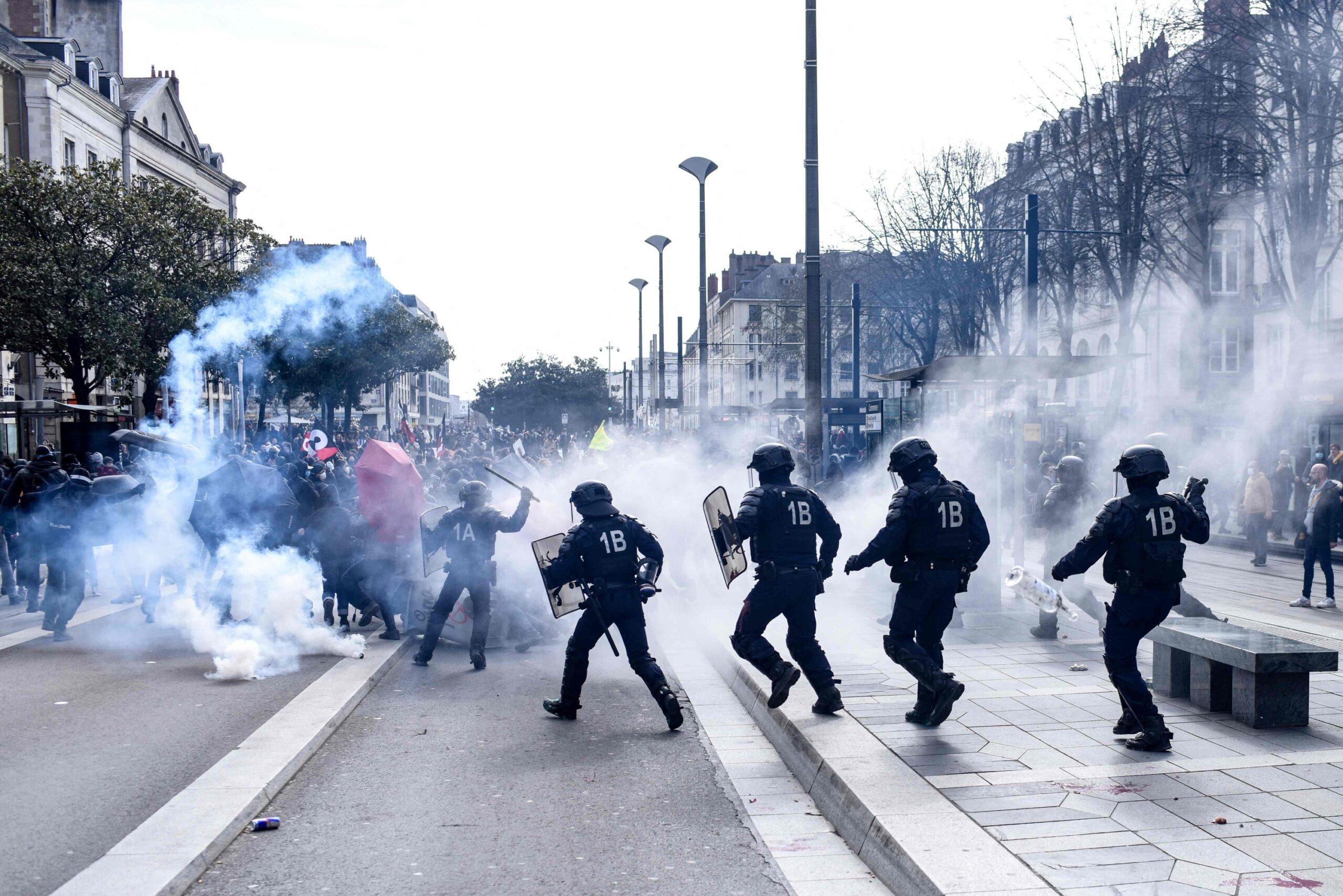
France in Crisis: Anger and Unrest Shake the Nation
By Boniface Ihiasota, Washington DC and Alabidun Shuaib AbdulRahman, Nigeria
France is confronting a deepening crisis of public confidence after nationwide demonstrations against rising living costs, deteriorating public services and proposed government spending reductions descended into violent confrontations, leaving one demonstrator dead, hundreds of security personnel injured and thousands of people arrested.
The unrest, which intensified on Saturday, October 17, 2026, has exposed underlying tensions over economic inequality, the future of public education, the government’s fiscal policies and the relationship between political leaders and ordinary citizens.
According to reports, France’s Interior Ministry reported approximately 1,800 arrests nationwide and more than 500 injured police officers, gendarmes and firefighters in an early Sunday update.
The figures reflected a rapidly evolving situation, with later reports indicating that the number of injured officers had risen further. In Paris, police recorded 855 arrests during the demonstrations.
The ministry estimated that approximately 550,000 people participated in demonstrations across the country, while the General Confederation of Labour (CGT), one of France’s largest trade union organisations, put the turnout at 800,000.
Although hundreds of thousands participated in demonstrations that were largely peaceful, violent groups attacked businesses, damaged public infrastructure and clashed with security personnel in several cities.
In Limoges, fire severely damaged the historic town hall, while other public buildings and commercial premises were attacked in Marseille, Lyon, Bordeaux and Paris.
One demonstrator died after suffering a cardiac arrest during the protests in Paris, according to Reuters.
The reported circumstances do not establish that the death resulted directly from police action or violence.
The immediate destruction has placed public order at the centre of the national debate.
However, the circumstances that brought such a large number of people into the streets suggest a crisis extending beyond policing.
At its core, France is confronting difficult questions about the affordability of living, the quality of public services, the distribution of economic sacrifices and the ability of democratic institutions to respond to popular discontent.
FROM STUDENT PROTESTS TO A NATIONAL CONFRONTATION
The latest demonstrations emerged from a student-led movement that began in late September, when secondary school pupils started boycotting classes and blocking school entrances in economically disadvantaged communities around Paris.
The students complained about teacher shortages, deteriorating classroom facilities, inadequate learning materials and prolonged periods without instruction when absent teachers were not replaced.
Their concerns subsequently spread to other cities, including Strasbourg, Bordeaux, Nantes, Marseille and Lyon.
For many of the young demonstrators, the dispute concerns more than the immediate inconvenience of disrupted lessons. It reflects anxiety about educational opportunity, social mobility and whether public institutions can provide the foundation for a secure future.
A student quoted by Reuters during an earlier demonstration in the Paris suburb of Pantin described classrooms accommodating 35 pupils, insufficient chairs and an inadequate lunch break for students trying to obtain food.
Such complaints illustrate how apparently administrative problems can acquire broader political significance when they affect thousands of families.
The government has responded with plans to deploy 3,000 additional substitute teachers to address staffing shortages. It has also announced measures intended to involve students more directly in school decision-making.
However, the demonstrations have expanded beyond education.
Workers, trade unions and other groups have joined the protests, linking concerns about schools to rising fuel prices, household expenses, wages, pensions and proposed reductions in public expenditure.
The convergence of these grievances has transformed the movement into a broader expression of dissatisfaction with the government’s economic direction.
Reporting by Reuters and Al Jazeera shows how the original education dispute has intersected with France’s wider economic and political tensions.
This development is significant because it brings together groups whose immediate demands are not identical but whose frustrations increasingly overlap.
THE €54BN QUESTION: FISCAL DISCIPLINE VERSUS SOCIAL PROTECTION
France’s economic difficulties provide essential context for understanding the unrest.
The government is attempting to contain public borrowing while maintaining a social protection system that supports healthcare, education, pensions and other public services.
Its proposed 2027 budget has become a major source of controversy because it seeks approximately €54bn in savings through spending reductions and other fiscal measures.
The administration argues that controlling expenditure is necessary to restore the country’s public finances and prevent rising debt-servicing costs from placing additional pressure on future budgets.
Critics, including trade unions and sections of the political opposition, contend that the proposed measures risk weakening public services and placing a disproportionate burden on workers and households already experiencing financial pressure.
The scale of the competing demands is apparent in the government’s own education spending projections.
According to Reuters reporting published on October 2, the proposed education budget for 2027 was set to increase by 1.7 per cent to €65.53bn, excluding teacher pensions. Over the same period, debt-servicing costs were projected to reach €74.5bn.
These figures expose a difficult fiscal reality: the cost of servicing government debt is expected to exceed the education budget.
They do not, by themselves, establish that education is being deliberately sacrificed or that the government’s savings programme is economically unjustified. They do, however, demonstrate the scale of the competing claims on public resources.
THE YELLOW VEST LEGACY RETURNS
France’s current unrest recalls the Yellow Vest movement, or Gilets jaunes, which emerged in 2018 following opposition to planned fuel-tax increases.
Initially driven by concerns about fuel costs and the financial pressure on motorists, the movement developed into a wider protest against inequality, the cost of living and perceptions that political leaders were disconnected from ordinary citizens.
Its supporters included workers and residents of areas where daily life depends heavily on private transport, making increases in fuel costs particularly difficult to absorb.
The movement eventually forced the government to reconsider elements of its approach and announce financial concessions.
The comparison with the present unrest is instructive, although the two movements are not identical.
The latest demonstrations began with concerns about education before incorporating broader economic grievances. Their participants include students, trade unionists and other groups whose objectives may differ considerably.
Nevertheless, both episodes reveal the political risks associated with reforms that citizens perceive as unfairly distributed.
The Yellow Vest protests demonstrated that economic dissatisfaction could become a national political confrontation when people believed established institutions were not adequately responding to their concerns.
The latest unrest suggests that questions about affordability, public services and political representation remain unresolved for some sections of French society.
It would be premature to conclude that France is experiencing a complete breakdown of its social model. The country retains functioning institutions and considerable economic resources.
MACRON’S GOVERNMENT UNDER PRESSURE
President Emmanuel Macron’s administration now faces an immediate security challenge and a wider political test as France approaches the 2027 presidential election.
Macron has pursued economic reforms intended to improve competitiveness, attract investment and strengthen France’s position within Europe.
His supporters argue that modernisation and fiscal discipline are necessary to address longstanding economic weaknesses.
Critics, however, have repeatedly questioned the distributional effects of his policies and the degree to which his governing approach accommodates public opposition.
The Yellow Vest movement, the controversy surrounding pension reform and the country’s increasingly fragmented parliamentary politics have all contributed to a difficult political environment.
The latest unrest adds another complication.
French Prime Minister Sébastien Lecornu has rejected the suggestion that violence should dictate government policy. Reuters reported him as saying the government would not be “intimidated” by violence, while attributing the disorder to ultra-left groups and criminal elements.
That is the government’s stated assessment of the violence. It should not be confused with proof that all demonstrators, or the movement as a whole, were responsible for the attacks.
President Macron also condemned the destruction in a statement posted on X.
“There is no room for violence in our Republic,” he said, according to Reuters.
Macron added that those who attacked public buildings and businesses would be prosecuted and punished.
The statement establishes the government’s immediate position: public grievances do not justify violence, and those responsible for criminal acts should face legal consequences.
The government must nevertheless address the substantive issues behind the protests if it hopes to restore confidence beyond the immediate security operation.
A response focused exclusively on arrests and policing would leave unanswered the questions about education, household finances and public expenditure that helped mobilise the demonstrations.
Conversely, concessions made without a credible fiscal framework could deepen the financial problems that the government says it is attempting to resolve.
The administration therefore faces a difficult balancing act involving public order, economic credibility and political legitimacy.
With the presidential election approaching, competing political parties are likely to use the crisis to advance their interpretations of France’s problems.
The government will emphasise public safety and fiscal responsibility, while opposition parties will challenge its record on public services, living standards and governance.
The electoral consequences will depend on how events develop and how voters assess the competing policy proposals. The scale of the protests alone does not establish which political position will benefit.
VIOLENCE, POLICING AND THE RULE OF LAW
The violence has also renewed scrutiny of the methods used by French security forces to control demonstrations.
Police have faced attacks from violent groups, while officers have deployed crowd-control measures including tear gas and other equipment during confrontations.
At the same time, students and rights advocates have raised concerns about the use of force against young demonstrators, including reports of serious injuries associated with riot-control weapons.
Reuters reported on October 2 that France’s Interior Ministry had opened three investigations into alleged police violence during the protests.
Those investigations are important because the legitimacy of public-order operations depends not only on the state’s ability to prevent violence but also on whether its methods comply with the law.
Police officers must be able to protect the public, arrest suspects and prevent attacks on property. They should not be expected to stand aside while demonstrators assault them or destroy public infrastructure.
But security responsibilities do not remove the obligation to use force lawfully and proportionately.
Serious allegations of misconduct should be investigated independently, with findings made public where legally appropriate. Officers found to have committed unlawful acts should face appropriate consequences.
The same legal principles must apply to demonstrators who attack police officers, loot businesses or set public buildings on fire.
A democratic society cannot defend civil liberties by excusing violence, nor can it protect public order by treating peaceful protest as criminal conduct.
LIMOGES AND THE HUMAN COST OF THE DISORDER
The destruction of the historic town hall in Limoges provides one of the clearest illustrations of the damage caused by the unrest.
The 19th-century building, a landmark of the city, was severely damaged by fire during the violence on October 17. Reuters reported that the roof collapsed and the building’s distinctive 43-metre clock tower was destroyed.
The incident has raised questions about the protection of public infrastructure during major demonstrations.
Limoges Mayor Guillaume Guérin criticised the security arrangements, telling BFM TV that he had gone for an hour without a national police officer being available to protect the town hall.
His complaint raises an operational question about whether security resources were adequately distributed among the cities experiencing unrest.
It does not, by itself, establish the full circumstances surrounding the police deployment or prove that the destruction could certainly have been prevented.
Those questions require a thorough review of the security operation.
Nevertheless, the consequences are clear. The damage threatens an important part of the city’s historical heritage and creates additional costs for public authorities and taxpayers.
The attacks on commercial premises have also placed businesses under pressure.
Economy Minister Roland Lescure pledged that perpetrators would be held accountable, according to Reuters.
“Those who break things will pay, repair the damage and be held accountable for their intention to sow chaos,” he said.
The government has also faced pressure to support business owners whose premises were damaged or looted.
THE WAY FORWARD
France’s immediate priority must be to prevent further violence, protect lives and restore the functioning of public services.
Authorities must investigate attacks on businesses and public buildings, prosecute those responsible where the evidence supports criminal charges, and provide assistance to affected communities.
At the same time, the government should pursue meaningful engagement with students, teachers, parents, trade unions and local authorities.
In education, that means addressing teacher shortages, examining the condition of school facilities and ensuring that staffing problems do not repeatedly deprive pupils of instruction.
On the economic front, policymakers should explain the proposed €54bn savings programme in sufficient detail for the public to understand its likely effects on household finances, public services and economic growth.
The government should also clarify which essential services it intends to protect and how it will assess whether its measures are achieving their stated objectives.
Independent scrutiny of alleged police misconduct must remain part of the response. Accountability can help establish whether security operations complied with legal standards and prevent individual incidents from undermining confidence in the wider justice system.
Political leaders, meanwhile, must avoid treating the crisis solely as an opportunity to discredit their opponents.
The government has a responsibility to explain its policies and address legitimate grievances. Opposition parties have a responsibility to scrutinise those policies and present alternatives that account for France’s economic constraints.
Neither responsibility is served by minimising the destruction or dismissing peaceful demonstrators.
Analysis
Nigeria’s 2027 Elections and the Unfinished Business of Diaspora Voting, by Boniface Ihiasota
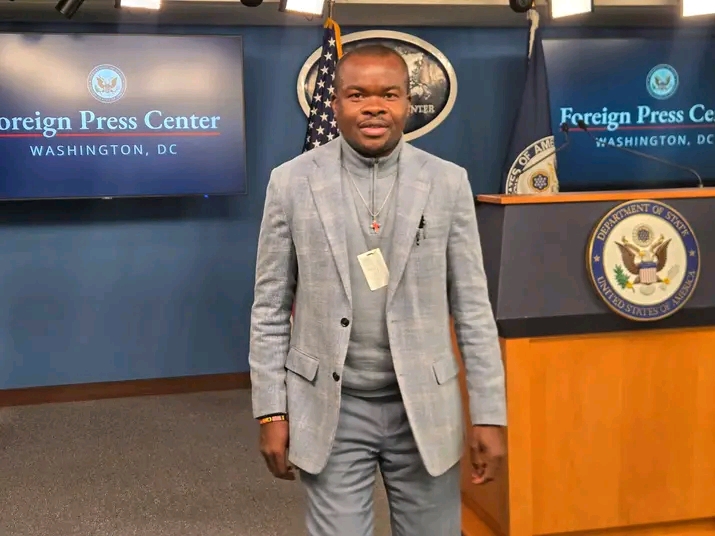
Nigeria’s 2027 Elections and the Unfinished Business of Diaspora Voting, by Boniface Ihiasota
As Nigeria approaches the 2027 general elections, millions of Nigerians living abroad face a familiar democratic dilemma: they remain emotionally, economically and socially connected to their homeland, yet their ability to influence its political leadership through the ballot remains restricted. From London to Washington, Toronto to Johannesburg, and Dubai to other global cities, Nigerians in the diaspora have compelling reasons to prepare for the elections, even as the country continues to grapple with the legal barriers to diaspora voting.
The 2027 elections, scheduled for January 16, according to the Independent National Electoral Commission, will determine the leadership responsible for steering Nigeria through critical economic, security and governance challenges. The decisions made in Abuja and state capitals will affect citizens regardless of whether they live in Nigeria or abroad. These include exchange-rate policies, taxation, education, healthcare, security, investment regulations and the protection of property rights. Nigerians abroad therefore have legitimate reasons to follow the electoral process closely and demand accountability from those seeking public office.
However, preparation must begin with an important distinction: political participation is not the same as having a legally recognised opportunity to cast a ballot from overseas. Nigeria’s electoral framework has historically not provided for out-of-country voting. Although diaspora voting has featured in national debates and legislative proposals, the legal and administrative obstacles have remained significant.
The consequences extend beyond symbolism. Nigeria’s diaspora contributes to the economy through remittances, investment, professional expertise and business networks. The World Bank’s Migration and Development Brief estimated that Nigeria received approximately $20.9bn in personal remittances in 2022. Such financial contributions demonstrate the continuing relationship between Nigerians abroad and households at home. Yet economic contribution does not automatically translate into electoral influence. The challenge is how to ensure that citizens who contribute to national development can participate meaningfully in decisions about the country’s future.
The National Assembly has previously considered constitutional changes intended to enable diaspora voting. In March 2022, however, the proposed constitutional amendment was rejected during the legislative review process. The Nigerians in Diaspora Commission has criticised the setback, arguing that Nigerians abroad should not remain excluded from the democratic process. Subsequent proposals have continued to raise questions about electronic voting, voter verification, cybersecurity, electoral transparency and the practical cost of organising overseas polls. These concerns deserve serious consideration, but they should lead to workable solutions rather than indefinite postponement.
For Nigerians abroad, preparation for 2027 must therefore go beyond waiting for permission to vote. They can monitor INEC announcements, follow legislative developments, examine candidates’ records and scrutinise policy proposals. They can participate in lawful political discussions, support credible civic education initiatives, challenge misinformation and encourage relatives at home to make informed electoral decisions. Diaspora professionals can also contribute expertise in technology, election administration, cybersecurity and public accountability without becoming instruments of partisan manipulation.
Political parties should equally recognise that Nigerians abroad are not merely sources of remittances or occasional audiences for campaign speeches. They are citizens with knowledge of different governance systems, public institutions and economic practices. Their experiences can enrich national debate, provided their contributions are grounded in Nigeria’s realities rather than assumptions that foreign models can be transferred without adaptation.
The question surrounding the 2027 elections is not simply whether Nigerians abroad care about their country. Their sustained economic and personal connections already demonstrate that commitment. The more difficult question is whether Nigeria’s democratic institutions will create a credible, transparent and legally sound framework that allows eligible citizens overseas to exercise their electoral rights.
Until such arrangements are enacted and implemented, Nigerians abroad must remain informed, organised and engaged while respecting the law governing the elections. Democracy should not be reduced to the act of casting a ballot; it also requires informed scrutiny, civic responsibility and sustained demands for accountability. But these activities cannot permanently substitute for the right to vote.
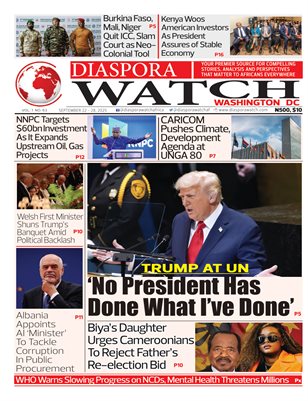


The Likes of Kila in Our Society, by Alabidun Shuaib AbdulRahman

CARICOM, Türkiye explore cooperation in trade, energy, food security

Britain restricts Eritrean diplomats, threatens entry ban

Pastor Jerry Eze Defends Miracles At UK Conference Amidst Criticism And Controversy

Diaspora Watch 20th Edition (October 14-20, 2024): Your Trusted Source for Global News and Insights

Tanzanian Man Reportedly Dies And Returns To Life Six Times


-

 Analysis5 days ago
France in Crisis: Anger and Unrest Shake the Nation
-
 News1 week ago
Trump’s fuel price cuts face hurdles ahead of midterm elections
-
 Diplomacy1 week ago
UK, Germany ratify defence treaty amid Russian threat
-
 News1 week ago
CARICOM assesses regional capacity to produce four key products
-
 News1 week ago
Trump Rules Out Iran Deal as US Weighs Fresh Military Strikes
-
Diplomacy4 days ago
CARICOM, Türkiye explore cooperation in trade, energy, food security