
Analysis
Nigerian Emerges Best Law Graduate In UK Varsity


In a remarkable achievement, a Nigerian student, Oyinkansola Alabi, has emerged as the best law graduate at the University of Wolverhampton in the United Kingdom. This impressive feat is a testament to the excellence and intellectual prowess of Nigerian students in the global academic community.
Oyinkansola, who hails from Ogun State, Nigeria, graduated with a First-Class Honors degree in Law, outshining her peers and earning the respect of her lecturers and colleagues. Her outstanding performance has brought pride to her family, her university, and the entire Nigerian community in the UK.
According to sources close to the university, Oyinkansola’s achievement is a rare feat, considering the highly competitive nature of the law program at the University of Wolverhampton. Her dedication, hard work, and passion for learning have paid off, as she has set a high standard for her peers and future generations of law students.
The University of Wolverhampton has a long history of academic excellence, and Oyinkansola’s achievement is a testament to the institution’s commitment to producing high-quality graduates who can compete globally. The university’s law program is highly regarded, and Oyinkansola’s success is a reflection of the program’s rigor and excellence.
Oyinkansola’s achievement is not only a personal triumph but also a testament to the potential and capabilities of Nigerian students in the global academic community. Her success story serves as an inspiration to other Nigerian students pursuing their academic dreams in the UK and around the world.
In a statement, Oyinkansola expressed her gratitude to her family, friends, and lecturers who supported her throughout her academic journey. She also encouraged other Nigerian students to strive for excellence, saying, “With hard work, determination, and the right support, Nigerian students can achieve great things globally.”
Oyinkansola’s achievement has been celebrated by the Nigerian community in the UK, with many praising her for being an ambassador of excellence and a role model for young Nigerians. Her success story is a reminder that Nigerian students have the potential to excel globally, and their achievements can bring pride and recognition to the country.
As Oyinkansola begins her legal career, her achievement serves as a reminder that Nigerian students have the potential to make a positive impact globally. Her success story is a testament to the power of hard work, determination, and the pursuit of excellence.
Congratulations, Oyinkansola Alabi, on your outstanding achievement! Your success is an inspiration to us all, and we wish you all the best in your future endeavors.


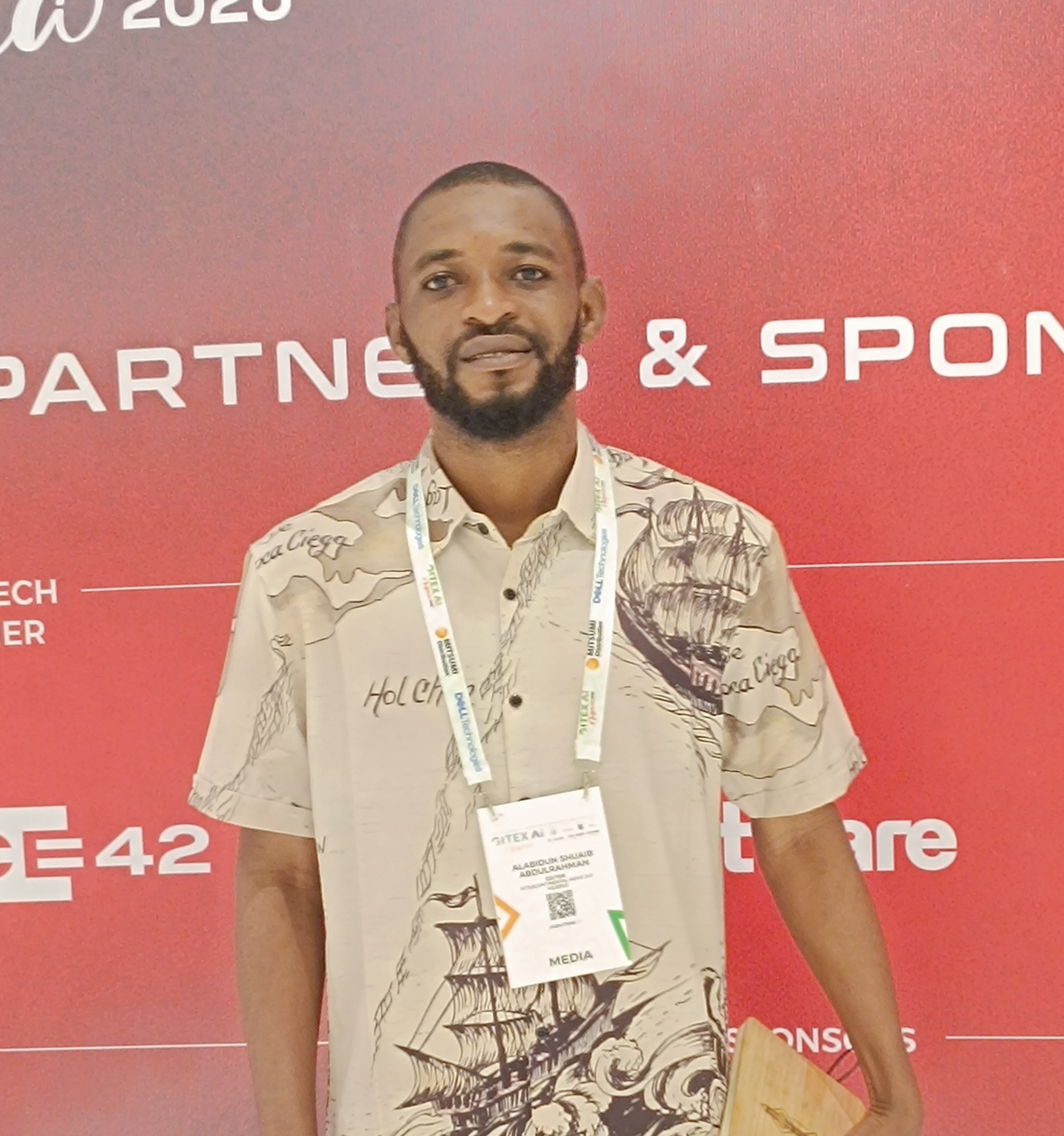
Who Silenced Dele Giwa? By Alabidun Shuaib AbdulRahman
On the morning of October 19, 1986, a parcel bomb delivered to the Ikeja residence of Dele Giwa, founding editor-in-chief of Newswatch magazine, shattered more than the silence of an ordinary Sunday. It killed a 39-year-old journalist whose work had challenged the conventions of Nigerian journalism and whose death would expose the dangerous relationship between political power and the freedom to question it. Forty years later, the most disturbing feature of the assassination is not simply that Giwa died violently, but that Nigeria has yet to establish a definitive judicial account of who orchestrated his killing and why.
The question, therefore, is not merely who silenced Dele Giwa. It is why a country that has experienced successive military administrations, seven presidential elections since its return to democratic government in 1999, and decades of constitutional rule has failed to resolve one of the most consequential crimes in its media history. When a journalist can be killed through such a calculated method and the circumstances remain unresolved across generations, the failure extends beyond the victim and his family. It becomes a test of the state’s capacity to protect the public interest against the influence of powerful individuals.
Giwa’s significance to Nigerian journalism cannot be understood without considering the institution he helped build. In 1984, he joined Ray Ekpu, Dan Agbese and Yakubu Mohammed in establishing Newswatch, a magazine that sought to move Nigerian journalism beyond routine announcements and official statements towards sustained investigation of public affairs. Its founders believed that journalism had a responsibility to examine how power was exercised, question the conduct of public officials and give citizens information that those in authority might prefer to keep from them.
That ambition carried particular risks under military government. General Ibrahim Babangida seized power in August 1985 after overthrowing Major General Muhammadu Buhari. His administration promised political reform and a transition to civilian rule, but the military remained the dominant force in national affairs. The press operated within a political environment in which independent reporting could be treated as a challenge to authority rather than a legitimate component of public accountability.
Newswatch’s emergence in such circumstances was an assertion that government authority did not place its occupants beyond scrutiny. Giwa understood that journalism could not fulfil its democratic purpose if powerful people alone determined what the public was permitted to know. His assassination consequently became a defining event in the struggle over whether Nigerian journalists could investigate those who governed without placing their lives at unacceptable risk.
The circumstances surrounding his final days intensified public suspicion. Giwa had contacts with security officials shortly before his death, including Colonel Halilu Akilu, then Director of Military Intelligence, and Lieutenant Colonel A.K. Togun, a senior State Security Service official. Their names became central to the public controversy surrounding the case. Yet a responsible examination of the assassination must distinguish the existence of unanswered questions from proof of criminal involvement. Neither association with the victim nor public suspicion establishes guilt, and neither officer should be declared responsible without sufficient evidence and a lawful determination.
In February 1988, a Nigerian High Court dismissed murder and conspiracy charges against Akilu and Togun after finding that the prosecution had not established a sufficient case against them. The proceedings did not produce a definitive judicial account of who ordered Giwa’s killing. Even though the failure to establish guilt against particular defendants is not proof that an alternative theory is correct, just as the absence of a conviction does not mean that every circumstance surrounding the crime has been explained.
The problem is that the investigation never delivered the comprehensive answers Nigerians had reason to expect. The passage of time has allowed speculation to survive where an authoritative account should have prevailed. That is precisely why the state must resist the temptation to treat public interest in the case as an inconvenience. The proper response to persistent suspicion is not to endorse unproven allegations, but to establish what the evidence can support.
Nigeria’s return to civilian rule in May 1999 presented an opportunity to confront the institutional failures inherited from military government. Democratic administrations could have demonstrated that the political sensitivities surrounding Giwa’s assassination would not prevent a serious examination of the evidence. Instead, the case continued to represent the distance between democratic promises and the practical delivery of justice.
A significant development occurred in February 2024, when Justice Inyang Ekwo of the Federal High Court in Abuja ordered the Federal Government to reopen the investigation and prosecution relating to Giwa’s murder. The judgment arose from a suit filed by Media Rights Agenda, which challenged the state’s failure to protect journalists and adequately investigate attacks against media practitioners. The court also directed the government to take measures to prevent attacks on journalists and investigate and prosecute those responsible for such offences.
Yet the subsequent legal development raises further questions about the government’s commitment to implementing that order. In January 2026, reports emerged that the Federal Government had approached the Court of Appeal in Abuja for an extension of time to challenge the February 2024 judgment, having missed the prescribed period for filing an appeal. The application was not itself a final determination of the appeal, but it placed the government’s response to a long-unresolved assassination under renewed probe.
This is where the matter becomes an institutional test. If the government believes that the judgment should be set aside, it must pursue its legal position through the appropriate process. But the public is equally entitled to ask what the state has done to establish the facts of a killing that has remained unresolved for four decades. Legal proceedings should not become a substitute for the substantive obligation to investigate an unlawful death.
The distinction between justice and political convenience is fundamental. A credible investigation must examine surviving case files, assess the reliability of previous accounts, identify available documentary evidence and determine whether witnesses or other relevant material can still be obtained. Investigators must distinguish between the person who delivered the bomb, those who prepared or financed it and anyone who may have ordered the killing. These are separate questions, and each requires evidence capable of withstanding judicial investigation.
The objective must not be to manufacture a dramatic conclusion for an anniversary or satisfy public anger with a convenient name. It must be to establish the truth through a process sufficiently independent to withstand political pressure and sufficiently rigorous to support prosecution where the evidence warrants it.
The assassination of Maltese investigative journalist Daphne Caruana Galizia demonstrates why such persistence matters. On October 16, 2017, she was killed by a car bomb near her home in Bidnija, Malta, after years of investigating alleged corruption and connections between political and business interests. Several participants were subsequently convicted. In June 2025, Jamie Vella and Robert Agius were convicted of complicity in her murder for supplying the bomb and received life sentences.
Nevertheless, the Maltese case has not produced an uncomplicated conclusion. On September 2, 2026, businessman Yorgen Fenech was acquitted by a jury of charges relating to complicity in Caruana Galizia’s murder. Malta’s Attorney General appealed the acquittal later that month. The acquittal must be respected unless overturned through the legal process, and allegations against Fenech cannot be presented as proven guilt. The case illustrates both the possibilities of sustained investigation and the limits of what can responsibly be claimed before judicial proceedings have concluded.
The lesson for Nigeria is not that another country’s legal system offers a perfect model. It is that a journalist’s assassination demands more than an initial investigation followed by years of silence. Where evidence permits, investigations must proceed, suspects must receive due process, and courts must be allowed to determine criminal responsibility without political interference. Justice cannot be measured by the number of statements issued after a killing. It must be measured by the quality of the investigation and the integrity of the legal process.
For contemporary Nigerian journalists, Giwa’s legacy must also be understood beyond the familiar description of him as a fearless reporter. Courage is indispensable to investigative journalism, but it should not become an excuse for romanticising danger or accepting the avoidable deaths of those who challenge authority. A journalist’s duty is to establish and communicate the truth, not to sacrifice personal safety to prove professional commitment.
Investigative reporting requires disciplined verification, documentary evidence, reliable sources and a fair opportunity for those facing allegations to respond. It also requires the willingness to distinguish what is established from what remains uncertain. The more powerful the subject of an investigation, the greater the need for accuracy and professional restraint. An unsupported accusation does not become journalism merely because it is directed at an influential individual.
Media owners and editors must recognise their own responsibilities. News organisations that demand courageous reporting but provide neither legal assistance nor practical protection for threatened staff place an unreasonable burden on individual journalists. Press freedom requires institutional support, adequate resources and professional systems for documenting threats, preserving evidence and responding to intimidation. Journalists should not be expected to confront powerful interests alone while their employers celebrate their courage from a distance.
The Nigerian state bears a constitutional obligation to protect life and freedom of expression. Sections 33 and 39 of the 1999 Constitution, as amended, respectively protect the right to life and freedom of expression, subject to the Constitution’s provisions. Those guarantees are weakened when journalists can be attacked without a credible effort to identify and prosecute those responsible.
A government cannot claim to defend press freedom simply because newspapers remain in circulation or broadcasters criticise its policies. It must also ensure that violence against journalists attracts the same seriousness of investigation expected when other grave crimes are committed. The obligation survives changes of administration because the protection of life and the pursuit of justice are responsibilities of the state, not favours dispensed by individual officeholders.
Forty years after Giwa’s assassination, the passage of time presents undeniable investigative difficulties. Some witnesses may have died, memories may have faded and records may be difficult to retrieve. These realities should shape the investigation, but they cannot automatically excuse its abandonment. The authorities should explain the steps taken since the February 2024 judgment, clarify the status of the related proceedings and identify what further lawful action remains possible.
The cost of continued silence is greater than the unresolved fate of one case. It reinforces the perception that crimes involving powerful interests can outlast public attention and escape meaningful accountability. For journalists working today, that perception can encourage fear and self-censorship. For citizens, it weakens confidence that the law applies equally regardless of political influence.
On October 19, 1986, a parcel bomb silenced Dele Giwa. Forty years later, the question of who ordered his assassination remains without a definitive judicial answer. Nigeria cannot rewrite that morning, but it can decide whether the unanswered questions surrounding his death will continue to define its relationship with investigative journalism.
The country owes Dele Giwa more than annual tributes. It owes his family a serious pursuit of the truth, its journalists a credible assurance that attacks against them will not be ignored, and its citizens a justice system willing to confront even the most politically uncomfortable crimes. Until the state demonstrates that commitment through lawful, transparent and effective action, the question of who silenced Dele Giwa will remain not merely a mystery of the past, but an indictment of the present.
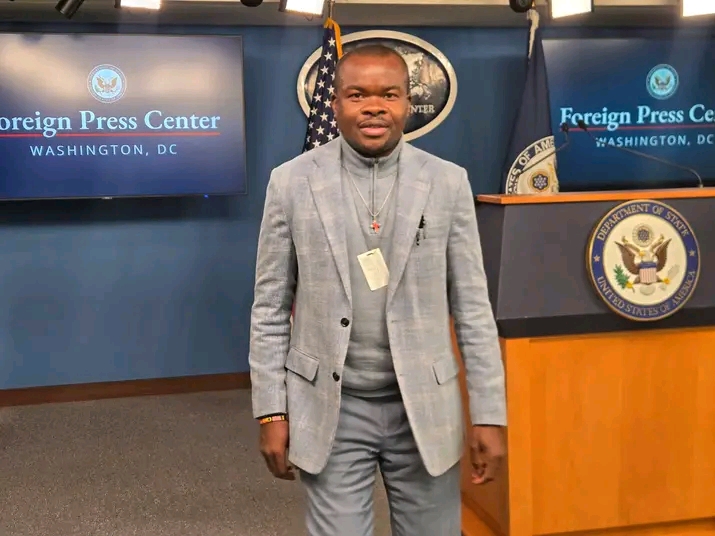
Arise Nigerian Youths, It’s Time! By Boniface Ihiasota
Nigeria stands at another important moment in its democratic journey. As the country approaches the 2027 general elections, young Nigerians must look beyond social media debates, political slogans and the familiar complaints about bad governance. They must recognise that the ballot remains one of the constitutional instruments through which citizens can influence leadership, public policy and the direction of their country.
The call, therefore, is simple: arise, Nigerian youths, it is time to participate, organise, question, vote and demand accountability.
The numbers tell an important story. According to the Independent National Electoral Commission, Nigeria had 93,469,008 registered voters for the 2023 general elections. Of these, 37,060,399 were aged between 18 and 34, representing 39.65 per cent of the electorate. Young people constituted the largest age category on the register at the time.
However, the latest voter figures ahead of the 2027 elections reveal a changing picture. INEC’s reported register of 103,228,715 voters puts those aged 18 to 34 at 29,777,576, or 28.79 per cent. Voters aged 35 to 49 account for 43,265,946, representing 41.83 per cent. Together, citizens below 50 years constitute approximately 70.8 per cent of registered voters.
These figures should provoke serious reflection. Young Nigerians have considerable numerical strength, but numbers alone do not translate into political influence. That strength becomes meaningful only when eligible citizens register, collect their Permanent Voter Cards, understand the electoral process and turn out to vote.
The most troubling lesson from the 2023 presidential election was not a shortage of registered voters but the failure of millions to participate. INEC recorded 25,286,616 accredited voters out of 93,469,008 registered voters, representing approximately 27.05 per cent. In other words, fewer than three in every ten registered voters were accredited to vote.
This is the challenge young Nigerians must confront in 2027. Registering to vote is important, but registration without participation leaves political decisions to those who show up. Complaining about unemployment, insecurity, rising living costs, poor electricity, inadequate schools and declining opportunities cannot substitute for civic engagement.
Young Nigerians also possess an advantage that previous generations did not enjoy on the same scale: access to digital information and global perspectives. Through the internet, international education, professional networks and exposure to different political systems, many can compare how governments work elsewhere with what happens at home. They can examine candidates’ records, study manifestoes, question public officials and demand evidence rather than accept political propaganda.
Yet digital exposure comes with responsibilities. Social media can educate voters, but it can also spread fabricated results, manipulated videos, ethnic hostility and misleading campaign claims. The politically conscious youth must verify information before sharing it, distinguish criticism from misinformation and resist attempts to turn economic frustration into hatred against other Nigerians.
The youth movement must also extend beyond presidential politics. Elections for the National Assembly, state governorships and Houses of Assembly directly influence legislation, budgets, education, healthcare, infrastructure and employment opportunities. A young person who focuses exclusively on the presidential contest while ignoring lawmakers and state officials is overlooking important centres of power.
Participation should not mean blindly supporting candidates because they are young, popular online or backed by celebrities. Age alone does not guarantee integrity or competence. Young voters should examine candidates’ records, qualifications, policy proposals, transparency and willingness to account for public resources. They should ask what a candidate intends to do about the challenges confronting their communities and how proposed solutions will be funded and measured.
Equally important, youths must reject vote-buying and electoral violence. Accepting a small payment in exchange for a vote can surrender years of influence over decisions affecting one’s family and community. Political disagreements should never justify attacks on opponents, destruction of property or intimidation at polling units. Peaceful participation and respect for the law are essential to credible elections.
For Nigerians in the diaspora, the responsibility includes supporting credible civic education, challenging misinformation within their networks and encouraging eligible relatives at home to participate. International exposure should translate into informed engagement, not merely online arguments about Nigeria’s shortcomings. Diaspora Nigerians should also recognise the legal limits governing voting from abroad and avoid assuming that citizenship automatically provides an overseas voting option.
As the Independent National Electoral Commission’s published timetable stands, the presidential and National Assembly elections are scheduled for January 16, 2027, while governorship and State House of Assembly elections in participating states are scheduled for February 6, 2027. Voters should consult INEC’s official channels for updates and ensure they meet the applicable registration and voting requirements.
The message to Nigerian youths is not that they must support a particular party or candidate. It is that they must take ownership of their democratic future. No generation should surrender its voice through apathy and later wonder why decisions affecting its future were made without its meaningful participation.
Arise, Nigerian youths, it is time! Time to move from hashtags to civic action, from complaints to informed participation, and from political spectatorship to responsible citizenship. The future is not determined by demographic strength alone, but by how intelligently and peacefully that strength is exercised.
Nigeria’s democracy needs young citizens who will ask difficult questions, make informed choices, protect their votes and hold elected officials accountable long after election day. The ballot is not a magic wand, but it is an important instrument of democratic influence. Use it wisely, use it peacefully, and do not surrender your voice.
The Likes of Kila in Our Society, by Alabidun Shuaib AbdulRahman
There is something particularly troubling about a person who spends years telling society what is wrong with its leaders, questioning the integrity of public institutions, demanding transparency from those in authority and insisting that accountability is the bedrock of good governance, only to find himself confronted with questions about the very integrity he expects others to uphold. Such an act goes beyond personal embarrassment; it raises fundamental questions about the credibility of public intellectuals and the moral authority upon which their influence rests. The controversy surrounding Anthony Kila, a familiar voice in Nigeria’s public discourse, presents an uncomfortable but necessary question: can those who hold others accountable escape the same scrutiny they demand of everyone else?
In a country where public trust has suffered repeated injuries from political deception, institutional failures and the abuse of public office, the distinction between what a person preaches and what he practises matters enormously. Society needs people who can interrogate power without fear, challenge dishonesty without compromise and insist that public officials answer for their actions. But what happens when one of the voices making these demands becomes the subject of serious questions about his own credentials? What becomes of the argument for accountability when the advocate must himself account for the foundation of his public identity?
The investigations published by PREMIUM TIMES on October 3 and October 10, 2026, concerning Kila’s professorial title and claimed academic qualifications, have brought these questions into sharp focus. The first report found no evidence that a recognised academic institution had awarded him the professorial rank he had publicly used for years. The subsequent investigation questioned his claimed bachelor’s, master’s, doctoral and other qualifications, reporting discrepancies between his claims and information obtained from institutions he said he attended. Even though Kila has rejected the description of him as a fake professor, he maintained that he stands by his credentials and said he was gathering his academic and professional documents. These are serious allegations, and the appropriate investigations must be allowed to establish the facts. Nevertheless, the questions raised cannot be dismissed simply because they concern a familiar media personality rather than an elected politician.
What makes this controversy especially troubling is not merely the title at its centre but the public expectations attached to it. Kila has built a recognisable presence as a political analyst, public commentator and advocate of institutional accountability. His opinions have travelled through television studios, newspaper columns and public discussions. He has been part of the conversation through which Nigerians examine governance, leadership and the direction of their country. That influence should not be casually discounted, and neither should his intellectual contributions be retrospectively declared worthless because of the present controversy. The more important question is why a person with such visibility and the apparent ability to engage complex public issues would allow his professional identity to become entangled in claims that he must now struggle to substantiate.
There is a difference between possessing knowledge and possessing a certificate. There is also a difference between being intellectually capable and being entitled to an academic rank. A person may read widely, understand political economy, analyse public policy and contribute meaningfully to national debate without holding a doctorate or occupying a university professorship. Society has produced remarkable thinkers whose authority emerged from their work, experience and ability to explain difficult questions, not from the titles preceding their names. If Kila possesses the intellectual capacity that many of his admirers have attributed to him, why would any title beyond his demonstrable achievements be necessary to establish his worth?
In a society obsessed with titles, the temptation to embellish one’s credentials can become powerful. Professor, doctor, chief executive, consultant and international expert have become more than descriptions of professional standing. They are often treated as shortcuts to respect, invitations to television programmes, access to influential circles and opportunities to shape public decisions. The title can become more important than the substance of the person carrying it. Once society begins to reward appearances more generously than competence, those who understand the system may be tempted to manufacture the appearance rather than patiently establish the substance.
Yet the appetite for titles does not excuse the person who misrepresents his qualifications, if the allegations are established. It exposes both the individual and the society that makes such misrepresentation attractive. A genuine academic distinction is earned through recognised institutional processes, scholarship, teaching, research and assessment. It is not created by repeatedly describing oneself in a particular way, nor does public familiarity transform an unverified claim into an established fact. The title of professor carries an institutional meaning that cannot be replaced by personal conviction or public popularity.
On October 6, 2026, Michael and Cecilia Ibru University in Agbarha-Otor, Delta State, asked Kila to step aside from his responsibilities as pro-chancellor pending an investigation into questions surrounding his professorial status. The Independent Corrupt Practices and Other Related Offences Commission also constituted a team to investigate the allegations. These developments demonstrate that the controversy has moved beyond social media arguments and personal reputations to questions about institutional responsibility. A university governing council is not an ornamental gathering. It exercises authority over administration, policy, finances and other important aspects of institutional governance. Anyone occupying such a position must be able to satisfy legitimate questions about qualifications presented in support of his public standing.
The implications extend beyond Kila because if a university can place a person in a position of considerable responsibility without adequately verifying the credentials associated with his public profile, what does that say about its recruitment and governance procedures? If television stations repeatedly introduce a commentator as a professor without independently establishing the basis of that designation, what does that say about editorial diligence? And if the public accepts titles as evidence of expertise without asking who conferred them, the institution that awarded them or the work supporting them, are we not collectively encouraging the culture we later condemn?
Also, ARISE News has announced on October 13, 2026, that Kila would no longer appear on its platforms following the allegations and its unsuccessful attempt to obtain his response within the period it specified. The action might be said to be an afterthought. The platform should have diligently do background checks on him before making him the face and the voice of his flagship show. Suspending him after the the expose is reactional.
There is, however, a wider moral problem in the conduct of people who demand from others standards they appear unwilling to apply to themselves. The politician who condemns corruption but manipulates public resources, the activist who preaches transparency but conceals his own dealings, the journalist who demands truth but publishes unverified allegations, and the public intellectual who questions the credentials of others while leaving his own claims unexplained all participate in the same culture of contradiction. Their positions differ, but the underlying failure is identical. They want the moral authority of accountability without accepting its personal obligations.
Such people can become particularly influential because they understand the language of public morality. They know how to identify institutional weaknesses, explain the consequences of poor governance and present themselves as alternatives to a compromised establishment. Their arguments may even be correct. But correctness on one issue does not automatically confer integrity in every other aspect of life. A person can make an excellent argument about corruption and still face legitimate questions about personal conduct. Intellectual brilliance is not a permanent certificate of moral innocence.
This is why the Kila controversy must not be reduced to an opportunity for mockery. Nigerians should resist the temptation to turn an unfolding investigation into a spectacle of humiliation. The objective is not to destroy a man because questions have arisen about his academic standing. It is to establish the truth, protect institutions from misrepresentation and reaffirm the principle that no individual should stand above scrutiny. If the claims against him are substantiated, appropriate consequences should follow. If he produces verifiable evidence that resolves the disputed issues, that evidence should receive fair consideration. Neither public anger nor personal admiration should determine the outcome.
What Kila could have demonstrated, and can still demonstrate through a credible response, is that accountability begins with oneself. His explanation must address the specific questions raised by the investigations, including the institution said to have conferred his professorship and the academic qualifications now being questioned. General assurances about his professional standing cannot substitute for documents that independent institutions can authenticate. Equally, any institution that endorsed his credentials must explain the basis of its decision.
The irony is that Kila did not need to become a professor to contribute to Nigeria’s public conversation. He did not need an impressive collection of degrees to develop an informed opinion about governance. His ability to communicate, analyse policies and participate in public debate could have been judged on its merits. A society hungry for credible voices should be capable of accepting an intelligent commentator without insisting that he carry an academic title. By contrast, where an individual presents credentials that cannot withstand verification, the damage reaches beyond personal reputation to the credibility of legitimate scholars whose achievements were earned through recognised institutions and years of work.
The likes of Kila in our society remind us that the fight against dishonesty cannot succeed through eloquent speeches alone. It requires personal consistency, institutional discipline and the willingness to submit one’s own claims to the standards applied to everyone else. Those who demand transparency must be transparent. Those who insist on accountability must be accountable. And those who advise society on integrity must understand that their conduct is not exempt from examination simply because their arguments sound convincing.
Perhaps the most important lesson is that being real is not a weakness. A person who honestly presents his qualifications, acknowledges his limitations and allows his work to speak for him can still earn public respect. There is dignity in being knowledgeable without claiming an unearned distinction, just as there is honour in admitting an error and correcting it. The public may forgive human shortcomings more readily than deliberate attempts to mislead it, because honesty gives people something upon which trust can be rebuilt.
Nigeria does not lack people who can speak impressively about good governance. What it lacks, too often, is consistency between public declarations and private conduct. The country needs fewer performances of integrity and more demonstrable integrity itself. Until we learn to judge public figures by the relationship between their words, credentials and actions, we will continue to celebrate the language of accountability while struggling to establish its practice.
The question, therefore, is not whether Anthony Kila can still contribute to society. He can, provided his contributions are judged on their merits and the questions surrounding his credentials are addressed honestly. The question is whether he, and others who occupy similar positions of influence, understand that credibility cannot be demanded from the public while verification is treated as an inconvenience.


Who Silenced Dele Giwa? By Alabidun Shuaib AbdulRahman

CARICOM seeks stronger biodiversity data to meet global targets

Macron slams Trump over claims linking Muslim migrants to French riots

Pastor Jerry Eze Defends Miracles At UK Conference Amidst Criticism And Controversy

Diaspora Watch 20th Edition (October 14-20, 2024): Your Trusted Source for Global News and Insights

Tanzanian Man Reportedly Dies And Returns To Life Six Times


-
 Extra1 day ago
Enyimba Social Club Inaugurates Washington DC Chapter, Honours Women Founders
-
 News11 hours ago
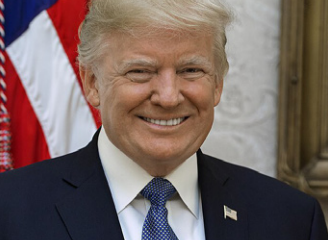
Trump’s Immigration Crackdown: US Border Crossings Drop, Deportations Rise
-
 Analysis11 hours ago
Arise Nigerian Youths, It’s Time! By Boniface Ihiasota
-
 Diplomacy10 hours ago
US withdraws diplomats’ families from Gulf amid Houthi attacks
-
 News10 hours ago
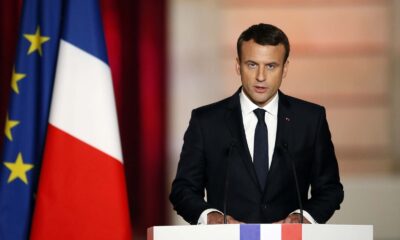
Macron slams Trump over claims linking Muslim migrants to French riots
-
 News9 hours ago
CARICOM seeks stronger biodiversity data to meet global targets