
Diaspora
Bolivia Plunged Into Deadly Violence as Anti-government Protests Escalate

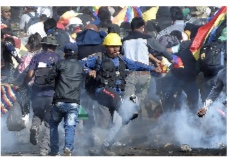
Bolivia is grappling with a national crisis as anti-government protests turn deadly, claiming multiple lives and threatening the country’s fragile stability.
At least four first responders—three police officers and a firefighter—have lost their lives in confrontations between protesters and authorities.
Justice Minister Cesar Siles confirmed the deaths, stating that some officers were reportedly shot.
The violent turn has shifted the government’s view of the protests, with Siles describing the situation as involving “paramilitary groups” that require a firm response.
The protests are fueled largely by supporters of former President Evo Morales, who was barred from contesting the upcoming August 17 election by the electoral tribunal.
Morales’ supporters argue that his disqualification is politically motivated and unjust, deepening tensions within the ruling MAS party.
Bolivia’s economic situation has worsened, with high inflation and dwindling foreign reserves intensifying public frustration.
Many citizens feel abandoned by a government they believe has failed to uphold the country’s once-celebrated economic model. Morales warned that without urgent change, Bolivia risks falling into “total collapse.”
The government’s response has become increasingly militarized, with tanks and heavily armed security forces deployed to affected areas.
Businesses have been forced to shut down, and transportation has come to a standstill, disrupting daily life and economic activities.
…
In Nixing EV Standards, Trump Strikes at Two Foes: California and Elon Musk
In a move with far-reaching environmental and political consequences, President Donald Trump has officially rolled back federal recognition of California’s electric vehicle (EV) mandates.
With this decision, Trump not only dismantled key climate goals established under the Biden administration but also took aim at two familiar opponents: the state of California and tech mogul Elon Musk.
At a ceremonial signing event, Trump nullified rules that would have required California—and other states following its lead—to significantly increase the share of zero-emission vehicles.
Under the now-repealed standards, 35 percent of all new vehicle sales in California would have needed to be emission-free by 2026, with that figure rising to 68 percent by 2030 and 100 percent by 2035.
Trump cast the previous rules as a dangerous overreach by environmental extremists and accused the Biden administration of outsourcing American auto policy to California.
“Under the previous administration, the federal government gave left-wing radicals in California dictatorial powers to control the future of the entire car industry all over the country — all over the world, actually,” Trump said.
“This horrible scheme would effectively abolish the internal combustion engine, which most people prefer.”
The former president warned that forcing electric vehicles onto the market would lead to soaring energy costs and strain power grids.
“Energy prices would likewise soar as the radical left forced more electric vehicles onto the grid while blocking approvals for new power plants,” he added. “The result would be rolling blackouts and a collapse of our power systems.”
The decision triggered an immediate backlash from California’s leadership, with Governor Gavin Newsom vowing to fight back.
“Trump’s all-out assault on California continues,” a spokesperson for Newsom said.
“We are suing to stop this latest illegal action by a President who is a wholly owned subsidiary of big polluters.” California, along with several other states that follow its environmental standards, has already filed lawsuits to preserve their autonomy in setting stricter emissions goals.
The rollback also marks a sharp blow to Elon Musk, whose electric vehicle company, Tesla, stands to lose significant ground under a weakened regulatory framework.
Once seen as an unlikely ally of Trump, Musk has since become a vocal critic. Trump, in turn, mocked the billionaire during the announcement, saying, “Now, I know why Elon doesn’t like me so much. Which he does, actually.”
He continued, “I used to say, ‘I’m amazed that he’s endorsing me,’ because that can’t be good for him. He makes electric cars, and we’re saying, ‘You’re not going to be able to make electric cars. You can make them, but it’ll be by the market.’”
Trump also hinted at expanding tariffs on imported vehicles beyond the current 25 percent.
“If they want a Mercedes-Benz, you’re going to have it made here,” he said. “Otherwise, they’re going to pay a very big tariff. I might go up with that tariff in the not-too-distant future.”
The significance of Trump’s move goes beyond partisan battles. For decades, California has set the pace for U.S. environmental standards, with 17 states typically adopting its emissions benchmarks.
Repealing California’s EV mandate and federal fuel economy rules effectively stalls national momentum for cleaner transportation and undermines confidence in the EV market.
Environmental groups describe it as a direct attack on efforts to curb climate change and reduce dependence on fossil fuels.
Tesla, which has thrived under policies that incentivize electric vehicles, now faces a political and economic climate increasingly hostile to its business model.
The rollback, combined with the removal of federal EV tax credits and expanded tariffs, could dampen demand and make electric cars less affordable for American consumers.










BCD Fashion-House

Hawah Kromah, Founder of BCD Fashion House


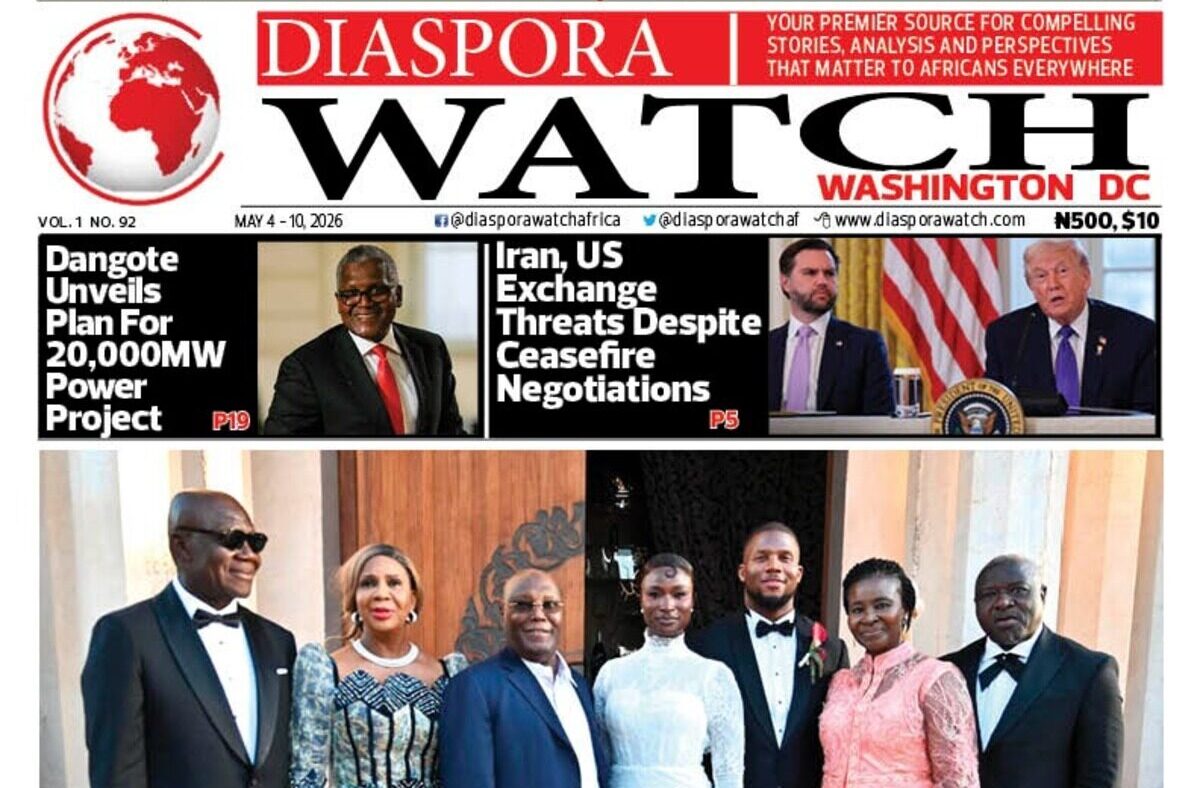
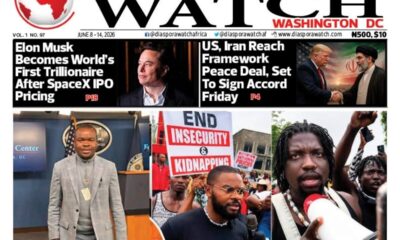
The management of Diaspora Watch Newspaper proudly announces the release of the 92nd edition of the newspaper, a compelling and globally engaging publication that captures the defining political, diplomatic, economic, cultural, and entertainment developments shaping conversations across continents.
This latest edition presents readers with an extraordinary blend of international diplomacy, economic transformation, royal engagements, security concerns, African excellence, and high society glamour, reaffirming Diaspora Watch Newspaper’s commitment to credible journalism, balanced reporting, and insightful global storytelling.
Diaspora Watch FREE Digital View: https://diasporawatch.com/3d-flip-book/diaspora-watch-vol-92/
On Demand Print: https://www.magcloud.com/browse/issue/3327462?__r=1069759
SUBSCRIBE TO DIASPORA WATCH NOW ON THE LINK BELOW!!!
https://diasporawatch.com/subscribe-to-diaspora-watch-newspaper/
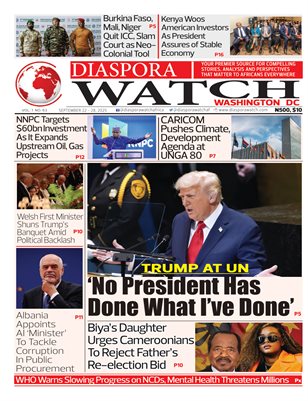
Leading the headlines is the intensifying conflict between the United States and Iran as both nations exchange threats despite ongoing ceasefire negotiations, alongside US President Donald Trump rejecting Iran’s peace response and describing the proposal as “totally unacceptable.” The edition also offers deeper insight into the geopolitical implications of the crisis and its potential impact on global stability.
In a celebration of African prestige and international elegance, this edition extensively covers the grand wedding ceremony of Munachi “Muna” Ezeibe and Cherina Zerbo Lassina in Marrakech, Morocco, an event that attracted top African dignitaries, diplomats, business leaders, and influential personalities from across the continent.
Readers will also find exclusive reports on Aliko Dangote’s ambitious 20,000MW power project initiative, a development expected to significantly reshape Africa’s energy landscape and industrial future. Equally noteworthy is the report on Angola’s Cabinda Refinery commencing fuel exports, marking a major milestone in Africa’s refining capacity and economic independence.
The edition further highlights significant global diplomatic and societal developments, including King Charles III hosting the first Buckingham Palace Garden Party of 2026, the accreditation of a new United Kingdom ambassador by CARICOM, and concerns raised by China’s spy agency over the growing “lying flat” culture among young people.
On the back page, readers are treated to dazzling coverage of the 2026 edition of the Africa Magic Viewers’ Choice Awards 2026, where celebrities transformed Lagos into a spectacular runway of glamour, fashion, and unforgettable red-carpet moments.
As always, Diaspora Watch Newspaper remains steadfast in its mission to inform, educate, connect, and amplify global African perspectives through responsible journalism and compelling narratives.
The 92nd edition is now available for readers, stakeholders, institutions, and members of the global diaspora community.
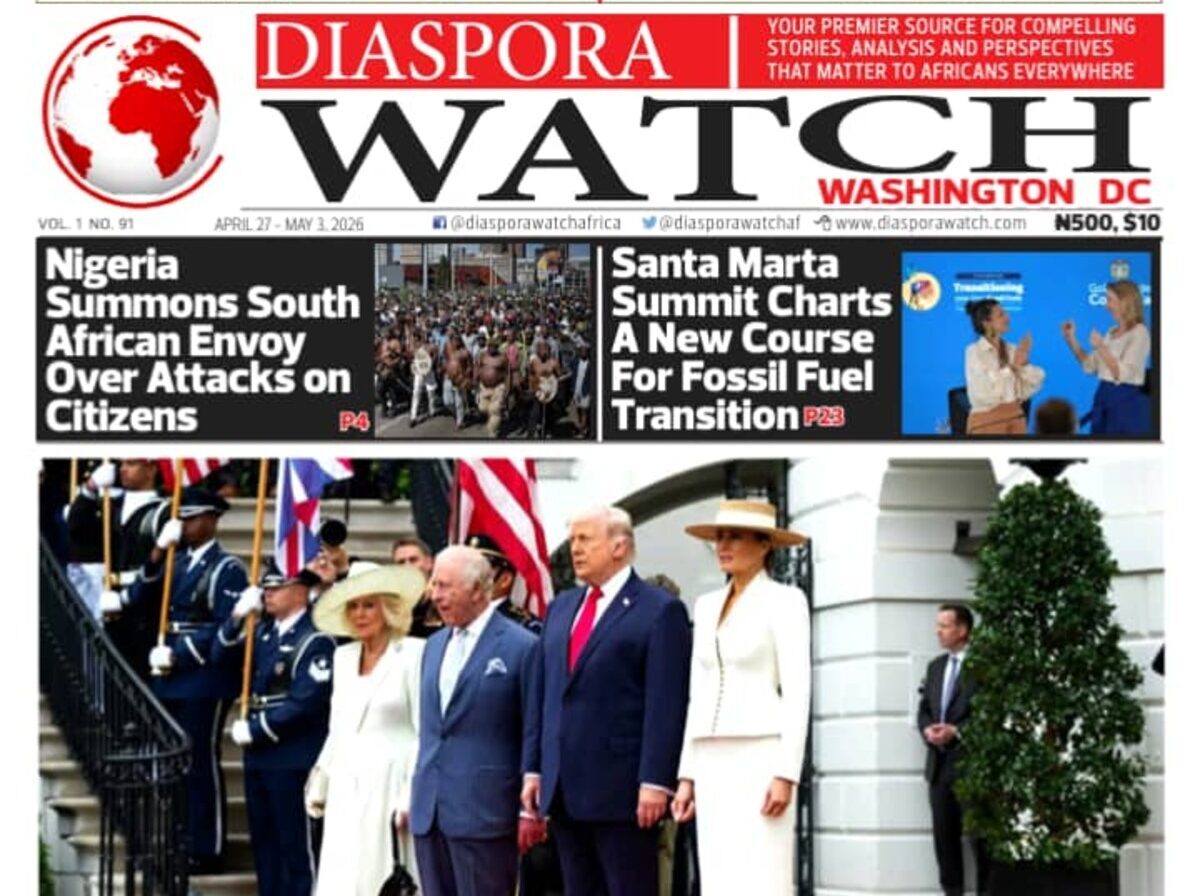
Diaspora Watch Newspaper Releases it’s 91st Edition.
Diaspora Watch Newspaper is proud to announce the release of its 91st edition, delivering a compelling blend of international headlines, geopolitical analysis, and cultural commentary that reflect the dynamic realities shaping the global community.
Diaspora Watch FREE Digital View: https://diasporawatch.com/3d-flip-book/diaspora-watch-vol-91/
On Demand Print: https://www.magcloud.com/browse/issue/3321550?__r=1069759
SUBSCRIBE TO DIASPORA WATCH NOW ON THE LINK BELOW!!!
https://diasporawatch.com/subscribe-to-diaspora-watch-newspaper/
Leading this edition is a major diplomatic spotlight: “Trump Hosts King Charles, Queen Camilla at White House, Hails ‘Unbreakable’ US-UK Ties.” The story examines renewed transatlantic relations and the strategic implications of high-level engagements between the United States and the United Kingdom.
Also featured prominently is Nigeria’s strong diplomatic response to rising tensions in Southern Africa, as the Government summons South Africa’s envoy over reported attacks on its citizens. This development underscores ongoing concerns about the safety and welfare of Nigerians in the diaspora.
In security and defense, the edition reports on the disappearance of two United States troops during military drills in Morocco, raising questions about operational risks and international military cooperation.
On the economic and developmental front, Caribbean leaders take decisive steps toward reducing import dependence through a new food security framework under CARICOM, while the Santa Marta Summit provides fresh momentum for a global transition away from fossil fuels.
Energy discourse is further amplified as the African Petroleum Producers’ Organization advocates for the establishment of regional energy hubs to drive investment in Africa’s oil and gas sector, signaling a strategic shift toward intra-continental collaboration.
In another major geopolitical development, the United States imposes sanctions on former DR Congo President Joseph Kabila over alleged links to the M23 rebel group, reflecting growing international scrutiny over instability in Central Africa.
Meanwhile, tensions in the Middle East deepen as the United Arab Emirates issues a stern warning on Iran’s reliability in managing the Strait of Hormuz, highlighting concerns over global energy security amid escalating US–Tehran relations.
Rounding off the edition on the back page is a cultural reflection from global music icon Jay-Z, who emphasizes authenticity in hip-hop culture with the thought-provoking stance: “Hip-Hop Must Stay Real, Not Trendy.”
Stay informed and ahead of the curve with the 91st edition of Diaspora Watch where we the complex dynamics shaping our world and provide insights into the stories that matter.


The Likes of Kila in Our Society, by Alabidun Shuaib AbdulRahman

CARICOM, Türkiye explore cooperation in trade, energy, food security

Britain restricts Eritrean diplomats, threatens entry ban

Pastor Jerry Eze Defends Miracles At UK Conference Amidst Criticism And Controversy

Diaspora Watch 20th Edition (October 14-20, 2024): Your Trusted Source for Global News and Insights

Tanzanian Man Reportedly Dies And Returns To Life Six Times


-

 Analysis4 days ago
France in Crisis: Anger and Unrest Shake the Nation
-
 Analysis1 week ago
Africa’s Resources Must Build Africa, by Alabidun Shuaib AbdulRahman
-
 News1 week ago
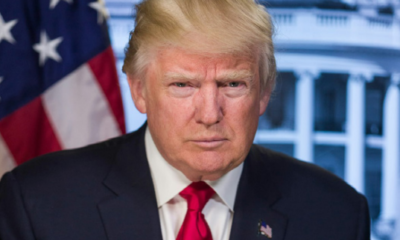
Trump’s fuel price cuts face hurdles ahead of midterm elections
-
 Diplomacy1 week ago
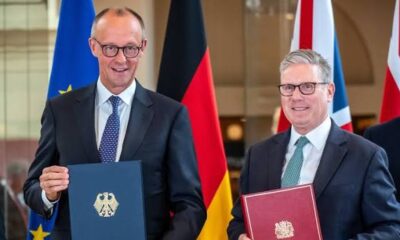
UK, Germany ratify defence treaty amid Russian threat
-
 News1 week ago
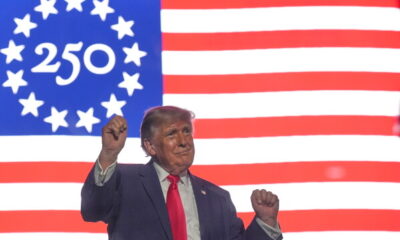
Trump Rules Out Iran Deal as US Weighs Fresh Military Strikes
-
 News1 week ago
CARICOM assesses regional capacity to produce four key products