
Analysis
Savannah Shield and the Security Recalibration of Kwara State

Savannah Shield and the Security Recalibration of Kwara State
By Alabidun Shuaib AbdulRahman
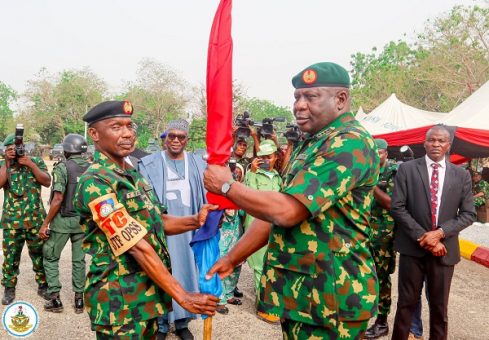
On Thursday, 19 February 2026, at the historic Sobi Barracks in Ilorin, Kwara State did more than launch a security operation. It signalled a recalibration. The formal flag-off of Operation Savannah Shield by Governor AbdulRahman AbdulRazaq alongside the Chief of Defence Staff, General Olufemi Oluyede, the Chief of Army Staff, Lieutenant General Waidi Shaibu, senior Nigerian Army commanders and heads of security agencies represented a strategic adjustment to a changing threat landscape.
Having covered Nigeria’s major military theatres for nearly a decade — from Operation Sharan Daji to Operation Accord and to Operation Sahel Sanity and now Hadarin Daji in the North-West to Operation Delta Safe in the South-South and Operation Safe Haven and Operation Whirl Stroke in the North-Central — I have come to understand that recalibration, not reaction, defines sustainable security. Savannah Shield is best understood within that framework: a preventive correction designed to interrupt an emerging trajectory before it hardens into crisis.
Kwara’s security story over the past two years has been one of gradual but undeniable pressure. Between 2024 and 2025, reported kidnapping incidents along the Ilorin–Jebba–Mokwa corridor and rural incursions in parts of Kaiama and Baruten Local Government Areas raised alarm within security circles. National crime tracking datasets and internal security briefings presented in Abuja in late 2025 reflected a broader pattern: North-Central Nigeria recorded an increase in abduction cases year-on-year, mirroring spillover effects from the North-West’s entrenched banditry networks.
Kwara was not yet a frontline theatre. But it was no longer peripheral. Geography partly explains the vulnerability. The state shares strategic boundaries with Niger State to the north and Kogi to the east, while expansive savannah woodland and forest belts — particularly near Kainji Lake — provide concealment corridors. In conflict reporting, terrain is destiny. In Zamfara, forests became staging grounds for bandits. In Kaduna, forest belts enabled mobile kidnapping cells. Kwara’s terrain, if left insufficiently policed, risked similar exploitation.
It is important to distinguish threat types accurately. Kwara is not contending with a large-scale ideological insurgency akin to Boko Haram’s campaign in Borno. The dominant security pattern has been criminal banditry — kidnapping for ransom, cattle rustling and sporadic attacks targeting vulnerable communities. Yet the distinction offers little comfort if criminal enclaves begin to entrench themselves. Across Nigeria, the line between economic criminality and violent extremism has proven porous when safe havens emerge.
Operation Savannah Shield therefore represents an anticipatory defence. Its structure reflects lessons from other theatres. Rather than a fragmented deployment, it integrates the Nigerian Army, Nigeria Police Force, Nigeria Security and Civil Defence Corps and intelligence services under coordinated planning. Area domination patrols, forest clearance missions and rapid-response operations are being conducted simultaneously with intelligence gathering and surveillance.
The February 19 launch was not ceremonial theatre. It followed months of consultation between the Kwara State Government and federal authorities. Governor AbdulRahman AbdulRazaq’s engagement with the Presidency and defence leadership secured additional military reinforcement. The visible presence of the Chief of Defence Staff at the launch conveyed federal seriousness — a signal that Kwara’s recalibration had national backing.
From a factual standpoint, the state government has not limited itself to rhetoric. In the 2025 fiscal cycle, budgetary allocations supporting security logistics were increased. Confirmed procurement of patrol vehicles and communication equipment enhanced operational mobility. Community policing initiatives were expanded, and liaison structures strengthened between security agencies and traditional institutions.
Mobility and intelligence are operational currencies. In Kaduna between 2021 and 2023, the integration of aerial surveillance and ground coordination under Operation Thunder Strike reduced high-profile highway kidnappings along key corridors. In Zamfara, initial fragmentation under Operation Hadarin Daji slowed results until unified command structures were enforced. Kwara appears to have internalised those lessons from inception.
Since the launch of Operation Savannah Shield, early field reports suggest measurable improvements in patrol visibility along previously vulnerable routes. Residents in parts of Kwara North have reported increased security presence compared with late 2025. Security officials privately confirm that sustained patrol cycles have disrupted criminal mobility patterns. While comprehensive operational statistics remain confidential for tactical reasons, the qualitative indicators point to stabilisation momentum.
But recalibration demands depth, not just deployment. The sustainability question looms large. Military offensives can suppress activity; lasting stability depends on institutional reinforcement. The Nigeria Police Force in Kwara must build intelligence capacity and data-driven crime mapping systems to assume long-term stabilisation roles once immediate military pressure reduces threat intensity.
In every theatre I have covered, gains proved fragile when civilian policing capacity lagged behind military success.
Judicial coordination is equally critical. Arrested suspects must face timely prosecution. Kaduna’s experience in strengthening prosecution processes between 2022 and 2023 offers a useful blueprint. Deterrence is anchored not merely in arrest numbers but in the certainty of consequence. Kwara’s Ministry of Justice must align operational tempo with judicial throughput.
Security recalibration also intersects with economic policy. Kwara’s northern agricultural belt contributes significantly to food production. When insecurity disrupts planting and harvesting cycles, economic ripple effects follow — affecting markets, employment and food inflation. By stabilising rural communities, Savannah Shield safeguards both livelihoods and macroeconomic resilience.
Inter-state coordination will determine whether recalibration endures. Criminal networks relocate under pressure. I observed this dynamic in the North-West, where offensives in one state displaced bandits into neighbouring territories. Kwara must institutionalise intelligence-sharing protocols with Niger, Kogi, Oyo and Osun to prevent displacement cycles. A shield is only as strong as its perimeter.
Public communication deserves commendation. Transparent advisories and engagement with community leaders have sustained trust. In conflict zones, misinformation amplifies fear and undermines operations. Kwara’s measured communication approach counters panic while reinforcing cooperation.
Of course, realism tempers optimism. Security operations demand sustained funding. Logistics, fuel, maintenance and personnel welfare cannot be episodic. If Savannah Shield is to remain effective beyond its launch phase, fiscal consistency must accompany strategic clarity.
Yet what distinguishes Savannah Shield is not perfection but intent backed by structure. The recalibration is evident in three dimensions: anticipatory deployment before escalation, integrated command rather than siloed action, and alignment between security and development policy.
From a regional lens, the significance is broader. North-Central Nigeria is a strategic hinge between insurgency-prone North-East and bandit-dominated North-West. Preventing entrenchment in relatively stable states like Kwara strengthens national security coherence. Savannah Shield contributes to that containment logic.
After nearly a decade reporting from Nigeria’s security corridors, I have learned that the most meaningful victories are incremental. They manifest in reopened schools, functioning markets and uninterrupted farming seasons. They are measured in the quiet return of routine.
Kwara’s recalibration signals an understanding that waiting invites escalation. Acting early reduces long-term cost — human and economic. The February 19 launch was therefore less about spectacle and more about strategic timing.
Savannah Shield is not a silver bullet. No operation is. But it is a structured assertion that Kwara will not surrender its harmony to creeping insecurity. It is a commitment that governance will adapt to emerging threats rather than deny them.
In a national landscape often fatigued by crisis headlines, Kwara’s approach offers a measured alternative: acknowledge vulnerability, mobilise partnership, invest in logistics, align institutions and communicate transparently.
Security recalibration is not merely about raising a shield. It is about strengthening the arm that holds it and reinforcing the society it protects. If sustained with discipline, institutional learning and inter-state cooperation, Savannah Shield can become more than an operation. It can become a model of preventive governance in North-Central Nigeria and beyond.
Alabidun is a media practitioner and can be reached via alabidungoldenson@gmail.com







Tinubu Takes the Bull by the Horns on Insecurity, by Alabidun Shuaib AbdulRahman
President Bola Ahmed Tinubu’s approval of a major restructuring of the Nigerian Army marks one of the most consequential security decisions taken by any administration since Nigeria’s return to democratic rule in 1999. On July 23, 2026, the Federal Government approved the expansion of the Army from eight to twelve divisions and authorised the recruitment of 28,000 additional personnel. The announcement immediately generated optimism among millions of Nigerians who have endured years of terrorism, banditry, kidnapping, communal violence and oil theft.
The significance of the decision lies not merely in its scale, but in what it represents politically and strategically. Tinubu has chosen to confront Nigeria’s insecurity through institutional restructuring rather than rhetorical promises. That is the essence of taking the bull by the horns. Nigeria’s security crisis is not a single conflict; it is a web of interconnected threats operating simultaneously across different regions of the country.
In the North-East, Boko Haram and the Islamic State West Africa Province, ISWAP continue to challenge state authority despite years of military operations. The insurgency, which began in 2009, has claimed tens of thousands of lives and displaced millions. According to the United Nations, more than 2 million people remain displaced across the North-East due to the conflict. In the North-West, armed bandit groups continue to terrorise communities in Zamfara, Katsina, Kaduna, Sokoto and in North Central’s Niger and Kwara states. Kidnapping for ransom has become a lucrative criminal enterprise. The South-East continues to experience separatist-related violence and attacks on security formations, while oil theft and pipeline vandalism in the Niger Delta continue to deprive the country of substantial revenue.
These overlapping crises have stretched military resources to their limits. For years, it has been argued that Nigeria’s military structure no longer reflects the country’s demographic realities or operational demands. Nigeria is now estimated to have a population of more than 240 million people, making it the most populous country in Africa. Yet much of its military architecture was designed for a smaller population and a less complex security environment. The threats have evolved, and the military must evolve with them.
Viewed from that perspective, the expansion from eight to twelve divisions is far more than an administrative adjustment. It is a deliberate attempt to decentralise military operations, reduce response time, improve logistics and bring operational command closer to emerging flashpoints. The restructuring is expected to establish additional divisional headquarters in Makurdi, Ilorin, Jalingo and Benin City, thereby giving the Army a broader national footprint and improving command efficiency across the six geopolitical zones.
Equally important is the approval of 28,000 new personnel. Manpower shortages have long been one of the Nigerian military’s most significant institutional weaknesses. Soldiers deployed in conflict zones often spend extended periods on the frontline with limited opportunities for rotation, a situation that affects morale, mental health and operational effectiveness. The recruitment initiative, first publicly disclosed by the Chief of Army Staff, Lieutenant General Waidi Shaibu, is intended to address that longstanding deficiency.
The economic implications are also significant. Nigeria continues to face a serious unemployment challenge, particularly among young people. The National Bureau of Statistics has repeatedly identified youth unemployment and underemployment as major socio-economic concerns. Recruiting 28,000 Nigerians into military service creates direct employment opportunities while also providing structured training, discipline and a pathway to stable income. In regions where criminal groups exploit poverty and joblessness to recruit young men, employment itself becomes a security strategy.
No nation has achieved sustainable prosperity without first securing lives and property. Investors do not commit capital where highways are unsafe. Manufacturers avoid areas threatened by violence. Farmers abandon fertile land when armed groups occupy forests and rural communities. Schools cannot function effectively where children fear abduction. Security is therefore not simply another government programme; it is the foundation upon which every other development objective rests.
Tinubu appears to understand this connection between security and economic growth. Since assuming office on May 29, 2023, his administration has increased defence allocations, approved the procurement of military hardware, strengthened intelligence coordination and encouraged domestic defence production through institutions such as the Defence Industries Corporation of Nigeria. The latest Army restructuring should therefore be seen as part of a broader effort to improve operational readiness and national security capacity.
Nevertheless, it would be intellectually dishonest to suggest that military expansion alone will solve Nigeria’s insecurity. It will not. The country’s security crisis is as much a governance problem as it is a military one. Poverty, unemployment, porous borders, weak intelligence gathering, corruption, illegal mining, proliferation of small arms, farmer-herder conflicts and inadequate policing all contribute to the prevailing instability.
A larger Army without stronger intelligence capabilities risks becoming a larger force reacting to attacks after they have occurred. Likewise, more soldiers cannot substitute for effective policing. Military forces are designed primarily for warfare, whereas internal security is traditionally the responsibility of the police.
This is where Nigeria faces a deeper institutional challenge. The United Nations recommends a ratio of one police officer to about 450 citizens. With a population exceeding 240 million, Nigeria would require well over 500,000 effective police personnel to meet that benchmark. Although the Nigeria Police Force has roughly 370,000 personnel on paper, the number available for frontline policing is considerably lower due to administrative deployments, VIP protection duties and other non-operational assignments. This shortfall explains why the military has increasingly been drawn into internal security operations that would ordinarily be handled by conventional policing institutions.
Financial sustainability is another critical issue. Recruiting 28,000 personnel is only the beginning. Training, accommodation, healthcare, salaries, pensions, weapons, vehicles, communication systems and continuous professional development require enormous and recurring expenditure. Establishing four additional divisions will also demand substantial investment in barracks, operational bases, logistics hubs and support infrastructure.
The Federal Government must therefore ensure that this reform is adequately funded beyond the initial announcement. Nothing undermines military morale more quickly than ambitious reforms that are not matched by consistent budgetary support.
Technology must also remain central to the new security architecture. Modern warfare is increasingly driven by drones, satellite surveillance, electronic intelligence, cyber capabilities, artificial intelligence-assisted analysis and precision operations rather than sheer troop numbers alone. Nigeria has already acquired various unmanned aerial platforms for counter-insurgency operations, but the effectiveness of the expanded Army will depend heavily on how well it integrates technology into intelligence gathering and battlefield decision-making.
Inter-agency cooperation is equally indispensable. Experience from operations in the North-East and other theatres has repeatedly shown that terrorism, kidnapping and organised crime cannot be defeated by a single institution acting in isolation. Intelligence sharing among the Army, Air Force, Navy, Department of State Services, Police, Civil Defence and other security agencies remains essential for operational success.
Public confidence is another factor that cannot be ignored. Citizens are often the first source of actionable intelligence. Communities will only volunteer credible information when they trust security agencies to respond professionally, respect human rights and protect informants from reprisals. Winning hearts and minds remains as important as winning military engagements.
Leadership often requires difficult choices. Expanding the Army at a time of competing fiscal pressures is neither politically convenient nor financially cheap. Yet insecurity has imposed even greater costs on Nigeria through lost investments, declining agricultural production, disrupted education, humanitarian crises and thousands of preventable deaths. In economic terms, the cost of inaction may well exceed the cost of reform.
Nigerians are therefore justified in demanding measurable results. Citizens will not judge this policy by the number of new divisions announced or personnel recruited. They will judge it by safer highways, peaceful farming communities in Benue and Plateau, secure schools across the federation, declining kidnapping incidents in the South-West, reduced oil theft in the Niger Delta and a restoration of public confidence in state authority. Those are the metrics that ultimately matter.
President Tinubu has undoubtedly taken a decisive step by approving one of the most significant military restructurings in recent Nigerian history. The move reflects strategic thinking and political courage. However, the journey from policy approval to tangible security outcomes is long and demanding.
Taking the bull by the horns is only the beginning. The greater challenge is maintaining the grip until the bull is completely subdued.
Nigeria now watches with cautious optimism. If this military expansion is properly implemented, professionally managed and complemented by governance reforms, intelligence-driven operations, police modernisation, border control and economic inclusion, history may indeed remember July 23, 2026, as a turning point in the country’s fight against insecurity.
The battle is far from over, but for perhaps the first time in many years, the nation can reasonably argue that its Commander-in-Chief is attempting not merely to react to insecurity, but to fundamentally redesign the architecture for defeating it.
Alabidun is a media practitioner and can be reached via alabidungoldenson@gmail.com
Nigeria’s New Tax Reforms: A Bold Gamble on the Nation’s Future, by Boniface Ihiasota
For decades, Nigeria has struggled with a paradox. Despite being Africa’s largest economy by population and one of its leading oil producers, government revenue has remained among the lowest on the continent relative to the size of the economy. The country’s tax-to-GDP ratio has hovered around 10 percent, significantly below the African average of about 16 percent and far behind nations such as South Africa, where the ratio exceeds 24 percent. This persistent shortfall has left successive governments heavily dependent on borrowing and volatile oil revenues to finance national development.
Against this backdrop, President Bola Ahmed Tinubu’s administration embarked on the most ambitious overhaul of Nigeria’s tax system since the country’s return to democratic rule in 1999. On June 26, 2025, the President signed into law four landmark tax legislations: the Nigeria Tax Act, the Nigeria Tax Administration Act, the Nigeria Revenue Service (Establishment) Act, and the Joint Revenue Board (Establishment) Act. While some provisions took immediate effect, the comprehensive tax regime commenced on January 1, 2026.
The reforms seek to simplify Nigeria’s previously fragmented tax framework by consolidating numerous federal tax laws into a unified legal structure. Beyond simplification, the objective is to improve tax compliance, eliminate multiple taxation, modernise revenue collection through digital technology, and create a friendlier environment for businesses and investors.
Perhaps the most significant feature of the reforms is their emphasis on fairness. Small businesses and low-income earners receive broader protections, while the burden shifts towards higher-income individuals and larger corporations with greater capacity to contribute. The reforms also expand exemptions for vulnerable taxpayers and encourage voluntary compliance instead of relying solely on punitive enforcement. It was argued that a broader tax base, rather than higher tax rates, is the sustainable path to increasing government revenue.
Equally transformative is the digitalisation agenda embedded in the new tax regime. Electronic registration, digital filing, automated payment systems and integrated taxpayer databases are expected to reduce leakages, improve transparency and make tax administration more efficient. These innovations align Nigeria with global best practices and could significantly reduce the cost of tax compliance for businesses.
Yet, no reform of this magnitude is without controversy. Critics have questioned whether Nigeria’s institutions possess the administrative capacity to implement the changes effectively. Others fear that weak coordination between federal and sub-national tax authorities could create confusion during the transition. There are also concerns that businesses, particularly medium-sized enterprises, may struggle to adapt to new compliance requirements without adequate public education and technical support.
From the perspective of Nigerians in the diaspora, however, the reforms represent more than changes to tax legislation. They are a test of governance. Citizens abroad routinely compare Nigeria with countries where tax compliance is high because taxpayers can clearly see the dividends of their contributions through reliable infrastructure, quality healthcare, efficient public transportation and functional educational systems. They understand that taxation succeeds not merely because governments demand payment, but because citizens trust that public funds will be managed responsibly.
This is where Nigeria’s greatest challenge lies. Increasing tax revenue without significantly improving public service delivery risks weakening public confidence rather than strengthening it. Tax reform must therefore be accompanied by greater fiscal transparency, stronger accountability mechanisms and prudent management of public resources.
Nigeria cannot borrow indefinitely to finance development. Nor can it continue relying almost exclusively on crude oil revenues in an increasingly uncertain global energy market. Sustainable economic growth requires a robust domestic revenue base, and taxation remains one of the most dependable instruments for achieving that objective.
The success of Nigeria’s new tax reforms will ultimately not be measured by the trillions of naira collected annually, but by whether those revenues translate into better roads, stable electricity, quality schools, accessible healthcare and greater economic opportunities. If the reforms achieve that objective, they will stand as one of the most consequential fiscal transformations in Nigeria’s modern history. If not, they will become yet another well-intentioned policy that failed to bridge the enduring gap between government promises and the everyday realities of the Nigerian people.
Analysis
Let the Bishop’s Visit Heal Us — A Call for Peace Among Mbaise Sons and Daughters in the Diaspora
Let the Bishop’s Visit Heal Us — A Call for Peace Among Mbaise Sons and Daughters in the Diaspora
By Boniface Ihiasota
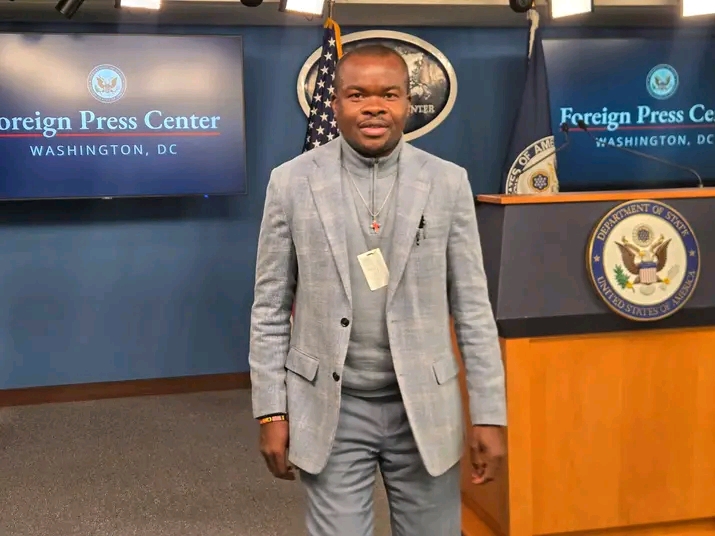
Publisher/Correspondent, Foreign Press Center, Washington D.C.
Excel Global Media Group Inc, USA
The first episcopal visit of His Lordship, Rt. Rev. Simeon Okezuo Nwobi, Catholic Bishop of Ahiara Diocese, to the DMV is more than a Mass. More than a reception. More than protocol.
It is a divine appointment.
On Sunday, July 12, 2026, at 3:00 PM, the people of Mbaise in DC, Maryland, Virginia, and neighboring states will gather at St. Matthias Catholic Church, Lanham, to welcome our Bishop. Friendship Hall will open its doors. But the real question is: Will we open our hearts?
At a time when our Mbaise diaspora community is blessed with numbers, talent, and resources, we are also burdened by something far less holy — division. The whispers have grown louder than our prayers. Gossip travels faster than goodwill. Clans compete where they should collaborate. Brothers ignore brothers. Sisters wound sisters with words. We are building houses side by side in Maryland, Virginia, and D.C., yet building walls between our hearts.
This cannot be our story in a foreign land.
I appeal to His Lordship: Let this visit be a moment of soul searching for all of us. Use your shepherd’s staff not only to bless an altar, but to gather a scattered flock. Preach to us again the Gospel we know but too often forget — _“Love one another as I have loved you.”_ John 13:34 did not come with exceptions for village meetings, title disputes, or WhatsApp arguments.
Mbaise people are known for faith, resilience, and intellect. We produced bishops, professors, doctors, builders. But what does it profit us to gain the whole DMV and lose our brotherhood? Our children are watching. They are learning how to be Igbo in America from us. Are we teaching them unity or enmity?
Let St. Matthias on July 12 be remembered not just as the place we welcomed our Bishop, but as the ground where healing began. Let every son and daughter of Mbaise who enters Friendship Hall that day become a witness to a new covenant: That from this day, we will eschew hate. We will kill gossip before it kills our community. We will disagree without destroying.
Division is easy. Anybody can pull down. Peace is the hard, holy work of builders. And we are _Ndi Mbaise_ — we are builders.
Bishop Nwobi, you carry the moral authority of Ahiara Diocese. We, your children abroad, carry the weight of survival in a foreign land. Neither is easy. But together, we can make this diaspora a cathedral of love, not a courtyard of conflict.
I call on every Mbaise union, every age grade, every family, every individual: Come to the drawing board. The Bishop is coming. The Church doors are open. The moment is now.
Let us leave Friendship Hall as brothers and sisters, not just by blood, but by bond. Let us pursue our good, and the good of the community at large. For in the end, _“Umunna bu ike”_ — but only when _Umunna_ is at peace.
May this visit not just welcome a Bishop. May it restore a people.
I come in peace.


Rubio vows US will keep protecting Gulf shipping, says diplomacy with Iran still possible

Rubio says US, China preparing for Xi’s Washington visit despite deep differences

Appalachian Trail records 17 million visits as conservancy expands climate protection efforts

Pastor Jerry Eze Defends Miracles At UK Conference Amidst Criticism And Controversy

Diaspora Watch 20th Edition (October 14-20, 2024): Your Trusted Source for Global News and Insights

Tanzanian Man Reportedly Dies And Returns To Life Six Times


-

 News2 days ago
Trump Blasts ‘Fake News’, Jokes About Third Term
-
 Analysis2 days ago
Tinubu Takes the Bull by the Horns on Insecurity, by Alabidun Shuaib AbdulRahman
-
 Analysis2 days ago
Nigeria’s New Tax Reforms: A Bold Gamble on the Nation’s Future, by Boniface Ihiasota
-
 Environment1 day ago
Appalachian Trail records 17 million visits as conservancy expands climate protection efforts
-
 Business1 day ago
Rubio vows US will keep protecting Gulf shipping, says diplomacy with Iran still possible
-
 News1 day ago
CARICOM woos Caribbean youths on regional integration, leadership