
Analysis
Atiku, Why Again? By Alabidun Shuaib AbdulRahman

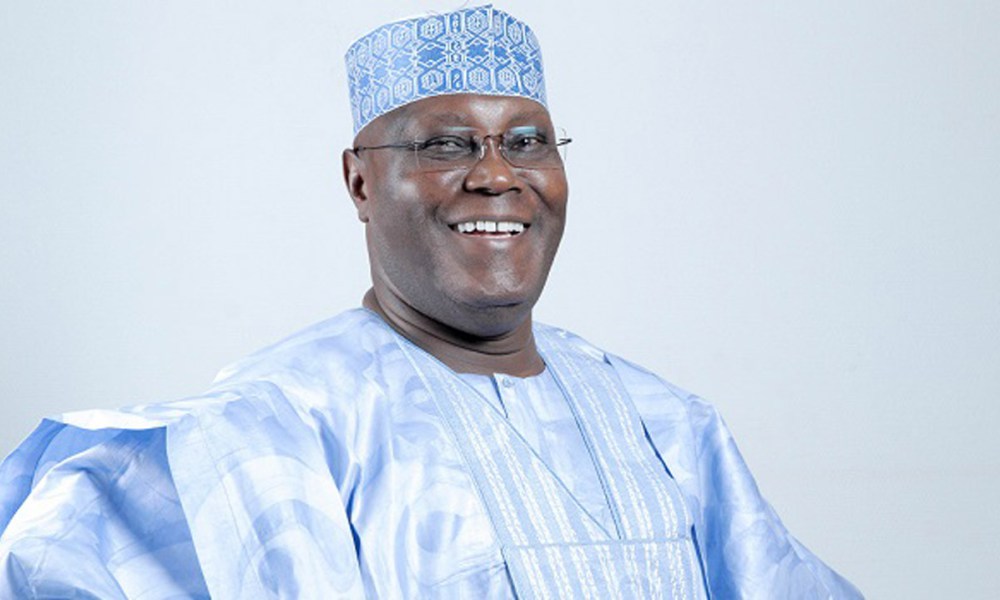
Atiku, Why Again? By Alabidun Shuaib AbdulRahman
In Nigerian politics, ambition is not unusual. Neither is persistence. But when a politician has been on the presidential ballot for several years without success, it is fair to ask a simple question: what is the plan this time that was not there before?
That question has come up again after the recent television interview by Atiku Abubakar, where he made it clear that he intends to run for president in 2027. If he does, it will be his seventh attempt.
The interview, aired on ARISE TV on Wednesday, April 15th, was meant to position him as a leading figure in the opposition ahead of the next election. Instead, it has brought back old doubts about his long political journey, his repeated attempts, and whether anything has really changed.
Atiku did not present his ambition as something he was still considering. He spoke as someone already committed to the race. He also described the 2027 election as his “last outing,” suggesting that this would be his final attempt.
At the same time, he tried to balance two positions. He said he was open to working with others in a coalition under the African Democratic Congress (ADC). But he also made it clear that he would contest for the ticket and would not step aside for anyone, including Peter Obi, Kwankwaso and others.
That position is important. It shows that while he talks about unity, he is not ready to sacrifice his own ambition for it. This has been a consistent feature of his politics over the years.
Atiku has been in Nigerian politics for over three decades. He served as vice president under Olusegun Obasanjo from 1999 to 2007. That position gave him national visibility and influence. However, his main political identity today is built around his repeated attempts to become president. He first contested in the early 1990s. Since then, he has run in 2007, 2011, 2015, 2019, and 2023. He lost all.
This history matters. It is not just about numbers. It shapes how voters see him. Many Nigerians now associate him more with contesting elections than with holding office. So the issue is not just that he is running again. The real issue is why he believes this time will be different.
One major part of Atiku’s strategy over the years has been changing political platforms. He started with the Social Democratic Party (SDP) in the early 1990s, moved to the Peoples Democratic Party (PDP), later joined the Action Congress (AC), returned to the PDP, then moved to the All Progressives Congress (APC), and went back again to the PDP before aligning with the ADC for now.
This kind of movement is often explained as political strategy. Nigerian parties are not strongly ideological, so politicians move when they feel their chances are better elsewhere. But frequent defection also raises questions. It becomes difficult to clearly define what a politician stands for beyond personal ambition. In Atiku’s case, every move has been tied to his presidential ambition. When one platform does not work, he looks for another. That approach may be practical, but it also creates doubts about consistency.
The ADC is now being presented as a platform for a broad opposition coalition ahead of 2027. For Atiku, it is another opportunity to reposition himself and work with other opposition figures. The idea of a coalition is simple: bring together different political forces to challenge the ruling party, currently led by President Bola Ahmed Tinubu.
However, coalitions are not easy to manage. They involve people with different ambitions, different support bases, and different strategies. In this case, figures like Peter Obi, Rabiu Musa Kwankwaso, Rauf Aregbesola, David Mark, Rotimi Amaechi et al also have strong followings.
Atiku’s decision to insist on contesting may create crisis within the coalition. While his experience and national network are advantages, his ambition could also divide the group. So his presence in the ADC is both helpful and complicated.
Although Atiku said in the interview that 2027 would be his final attempt. By then, he will be close to 80 years old, so the claim is understandable. But Nigerian politics has seen similar claims before. Politicians often say an election will be their last, only to return again later. This is why many people are not fully convinced.
More importantly, the idea of a “last attempt” raises a bigger issue. Should leadership at this stage focus on long-term national direction or on completing a personal political journey? This is where age and generational change come into the conversation. Nigeria has a very young population. Many voters are looking for new faces and new ideas. Atiku represents experience, but he also represents an older political generation.
Atiku’s biggest strengths are clear. He has experience, name recognition, and a strong political network across the country. He understands the system and knows how to run national campaigns. But these strengths come with weaknesses. His long history also connects him to past political practices that many Nigerians now question. Some voters see him as part of the old system rather than a candidate for change.
In his interview, he spoke about reforms, including constitutional changes and power rotation. However, critics point out that his positions on some of these issues have changed over time, depending on political circumstances. This gap between what he says now and what he has done before is part of the trust problem he faces.
From a political standpoint, Atiku’s decision to run again is not without logic. He is likely counting on strong support from the northern region and hoping that dissatisfaction with the current administration will work in his favour.
Economic challenges and public frustration could create an opportunity for the opposition. Atiku is trying to position himself as the candidate who can benefit from that situation. However, the situation is not simple. The opposition is not united. There are other strong candidates. Voters are also becoming less predictable.
Winning an election now requires more than regional strength. It requires broad national appeal and the ability to connect with younger voters. This is where Atiku faces his biggest test.
At a broader level, Atiku’s repeated candidacies reflect a pattern in Nigerian politics. The same group of politicians continues to dominate the system, moving between parties and positions. This makes it harder for new leaders to emerge. It also creates a sense that elections are contests between familiar faces rather than opportunities for real change. Atiku is not the only example of this, but he is one of the most visible.
If Atiku wants to convince Nigerians this time, he needs to do more than declare his intention to run. He needs to explain clearly why he has not succeeded before and what will be different now.
He also needs to show that his campaign is not just another attempt, but a new approach. That includes how he plans to govern, how he will address current challenges, and how he will work with other political actors. Without this, his candidacy risks being seen as a repeat of previous efforts.
Atiku Abubakar has the right to contest for president. That is not in question. The real issue is whether his continued participation adds value to the political process or simply repeats what Nigerians have already seen.
His recent interview has reopened an important debate. It is not just about him. It is about the direction of Nigerian politics, the need for new leadership, and the balance between experience and change.
As 2027 approaches, voters will have to decide. Do they want to give Atiku another chance, or do they want something different?
Alabidun is a media practitioner and can be reached via alabidungoldenson@gmail.com








Owo Verdict and the Death Warrant Question, by Alabidun Shuaib AbdulRahman
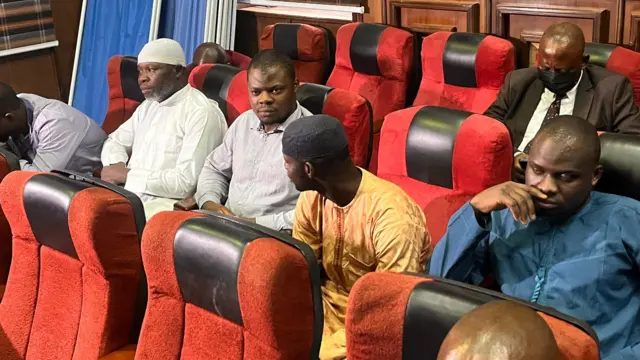
On June 3, 2026, Justice Emeka Nwite of the Federal High Court, Abuja, delivered what may become one of the most consequential terrorism judgments in Nigeria’s recent history. Four men — Idris Abdulmalik Omeiza, Al Qasim Idris, Jamiu Abdulmalik and Abdulhaleem Idris — were sentenced to death by hanging for their roles in the June 5, 2022 massacre at St. Francis Catholic Church, Owo, Ondo State. A fifth defendant was discharged and acquitted for lack of evidence.
The attack remains one of the most horrific acts of terrorism ever recorded in Southern Nigeria. Worshippers were concluding Pentecost Sunday Mass when gunmen opened fire and detonated explosives. More than 40 people were killed, while over 100 sustained injuries. Children, women and entire families were among the victims.
The judgment was widely celebrated as a victory for justice, a triumph for diligent investigation and a demonstration that terrorism can be successfully prosecuted in Nigeria. Yet beneath the applause lies a difficult question that successive governments have carefully avoided: will these death sentences ever be carried out? That question extends far beyond Owo.
It goes to the very heart of Nigeria’s counterterrorism strategy and exposes one of the biggest contradictions in the country’s criminal justice system. Nigeria has become increasingly successful at convicting terrorists. What it has not demonstrated with equal consistency is the willingness to enforce the ultimate punishment prescribed by law.
The consequence is a justice system that often stops at conviction. For victims and their families, that distinction matters. For terrorists and would-be terrorists, it matters even more.
The Boko Haram insurgency, which began in 2009, has become one of Africa’s deadliest conflicts. Thousands have been killed and millions displaced across Borno, Yobe and Adamawa States. Entire communities have been erased from the map. Schools, churches, mosques and markets have been attacked. The humanitarian consequences have stretched across the Lake Chad Basin and beyond.
For years, however, Nigeria struggled to convert arrests into convictions. The turning point came with the establishment of specialised terrorism trials, particularly at the Kainji Detention Facility in Niger State. Since 2017, successive phases of mass terrorism prosecutions have sought to address the backlog of Boko Haram and ISWAP suspects held in custody.
The figures are revealing. Between 2017 and 2018, Nigerian courts convicted 163 terrorism suspects while 887 others were discharged or acquitted after evidence failed to support the allegations against them. Those acquittals were significant because they demonstrated that the courts were not functioning as mere conveyor belts for convictions but were insisting on evidentiary standards.
The process accelerated in July 2024 when another 125 Boko Haram fighters and terrorism financiers were convicted during Phase Five of the Kainji trials. Eighty-five of those convicted were found guilty of terrorism financing offences, while others were convicted for terrorism-related crimes and offences linked to international criminal law.
Subsequent phases have produced additional convictions, making Nigeria’s terrorism prosecution programme one of the largest judicial counterterrorism efforts on the African continent. Yet convictions alone do not tell the whole story. The real dilemma begins after sentencing.
Under Nigerian law, a death sentence does not automatically translate into execution. The convicted person is entitled to exhaust all appeal processes up to the Supreme Court where applicable. Even after the judicial process is concluded, the sentence still requires executive authorisation through a death warrant.
This is where politics enters the courtroom. Governors and presidents frequently find themselves caught between legal obligations and political realities. Human-rights organisations oppose executions on moral grounds. International partners often discourage the use of capital punishment. Religious leaders remain divided. Civil society groups raise concerns about miscarriages of justice. Consequently, death warrants are rarely signed.
The result is a peculiar legal contradiction. Courts pronounce death sentences. Governments preserve the sentences. But executions seldom occur. The condemned remain on death row indefinitely.
The most notable exception in contemporary Nigeria occurred in June 2013 when authorities in Edo State executed four condemned prisoners at Benin Prison after then Governor Adams Oshiomhole signed execution warrants. Human-rights organisations described the hangings as the first known executions in Nigeria since 2006. The action generated immediate national and international controversy. What followed is instructive.
Rather than encouraging wider enforcement of death sentences, the Edo executions appeared to deepen official caution across the federation. Governors became increasingly reluctant to sign warrants, fearing political backlash and international condemnation. Since then, Nigeria has largely operated a de facto execution moratorium despite retaining capital punishment in its statute books.
This ambiguity raises serious questions. Can a state maintain the death penalty as a lawful punishment while simultaneously refusing to implement it? Can a sentence remain credible if everyone understands that it is unlikely to be carried out? Can deterrence exist where punishment lacks certainty?
The Owo massacre was not a spontaneous crime. According to court findings, the convicted men belonged to a terrorist network, participated in planning meetings and executed a coordinated attack involving firearms and explosives against unarmed worshippers. The court also convicted them on counts relating to terrorism financing, hostage-taking, kidnapping and membership of a terrorist organisation.
These are not ordinary criminal offences. Terrorism is designed to intimidate populations, undermine state authority and destabilise society itself. That reality explains why many countries impose exceptional penalties for terrorism-related offences. The issue, therefore, is not whether Nigeria should execute the Owo convicts tomorrow.
The issue is whether Nigeria should continue operating a system in which courts impose punishments that governments appear unwilling to enforce. A mature democracy cannot indefinitely inhabit such a contradiction.
There are only two intellectually coherent options. The first is retention with enforcement. If Nigeria believes terrorism warrants capital punishment, then the state must develop the political courage to implement lawful sentences after all appeals have been exhausted.
The second is abolition through legislation. If policymakers conclude that executions are inconsistent with contemporary human-rights standards, then death sentences should be replaced with life imprisonment without parole for the gravest terrorism offences.
What undermines confidence is the current middle ground. The uncertainty affects victims as much as it affects convicts.
Families who lost loved ones in Owo, Chibok, Baga, Dapchi, Madagali and countless other communities deserve clarity about what justice means under Nigerian law. The rule of law depends not merely on convictions but on consistency.
The Owo judgment has therefore done more than punish four terrorists. It has reopened a national conversation that Nigeria has postponed for too long. The country has invested billions of naira in intelligence gathering, military operations, counter-radicalisation programmes, detention facilities, prosecutions and rehabilitation initiatives. It has improved investigative capacity. It has strengthened terrorism legislation. It has demonstrated increasing competence in securing convictions.
What remains unresolved is the final stage of it. The Owo case now stands as a test. Not simply of the guilt of the convicted men, which the court has already determined, but of the Nigerian state’s willingness to reconcile law with policy.
Whether the answer ultimately favours execution or abolition, one fact is beyond dispute. Justice cannot permanently exist in suspension.
A nation fighting terrorism cannot afford ambiguity where certainty is required. The families who buried their loved ones after that dark Pentecost Sunday in Owo deserve justice. And Nigeria deserves a criminal justice system courageous enough to decide what it truly believes about the death penalty.
Alabidun is a media practitioner and can be reached via alabidungoldenson@gmail.com
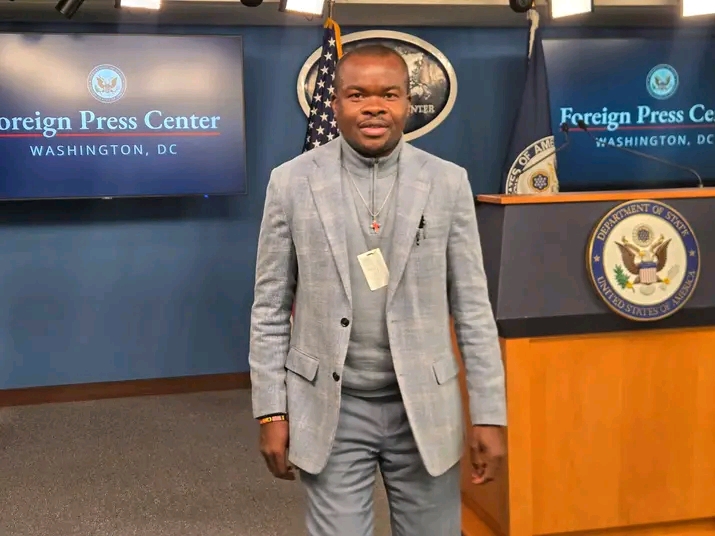
Commercialisation of Banditry and Its Consequences for Nigeria, by Boniface Ihiasota
By all indications, banditry in Nigeria has evolved from a security challenge into a lucrative criminal enterprise. What began as sporadic attacks by armed groups in parts of the North-West has transformed into a sophisticated economy of violence, sustained by ransom payments, extortion, illegal taxation, cattle rustling, and human trafficking. The latest abduction of schoolchildren and teachers in Oriire Local Government Area of Oyo State has once again exposed the dangerous commercialisation of insecurity and the grave implications for Nigeria’s future.
On May 15, 2026, armed terrorists attacked schools in Esiele, Yawota and Alawusa communities in Oyo State, abducting dozens of pupils and teachers. Reports indicate that a teacher was killed during the attack, while another was reportedly murdered in captivity. The kidnappers subsequently made a series of demands, including a reported ₦1 billion ransom, release of detained associates and other conditions. While some claims regarding ideological demands remain unverified, the ransom component underscores a familiar pattern that has become central to Nigeria’s kidnapping economy.
The Oyo incident is not an isolated case. Over the past decade, schoolchildren have increasingly become targets because they represent high-value bargaining assets. From the abduction of the Chibok girls in Borno State in April 2014 to the Kankara schoolboys in Katsina State in December 2020, criminal groups have discovered that mass kidnappings attract publicity, pressure governments and often generate substantial financial rewards. According to reports, nearly 1,900 students have been abducted from schools across Nigeria since the Chibok tragedy.
What is particularly alarming is that banditry is no longer driven solely by ideology or communal grievances. It has become a business model. Armed groups now maintain supply chains, informant networks, negotiators, financiers and logistical operatives. Some communities pay protection levies to avoid attacks, while families are compelled to sell land, livestock and lifelong savings to secure the release of loved ones. The result is a parallel criminal economy that thrives on fear and weak state presence.
The financial incentives are enormous. Security analysts have repeatedly warned that ransom payments, whether made publicly or secretly, encourage further kidnappings. Criminal gangs quickly learn that abducting vulnerable targets such as schoolchildren, teachers, farmers and travellers guarantees attention and potential profit. In many cases, successful ransom collections finance the purchase of motorcycles, communication equipment and recruitment of additional fighters, thereby sustaining the cycle of violence.
The consequences for Nigeria are devastating. First is the erosion of public confidence in the state’s ability to protect lives and property. When parents fear sending their children to school, education suffers. Communities affected by repeated attacks experience population displacement, declining agricultural productivity and economic stagnation. Reports from several conflict-affected areas show that many children have abandoned schooling due to fear of abduction.
Second, the spread of kidnapping from traditional hotspots in the North-West to states in the South-West demonstrates that no region is immune. The Oyo abduction signals a troubling geographical expansion of criminal networks and raises concerns about the security of educational institutions nationwide.
Third, commercialised banditry threatens national cohesion and investment. Investors are reluctant to commit resources where insecurity is pervasive, while citizens become increasingly distrustful of public institutions. The economic cost is measured not only in ransom payments but also in lost productivity, reduced foreign investment and rising security expenditures.
Nigeria must therefore move beyond reactive responses. Security operations should be complemented by financial intelligence, prosecution of ransom facilitators, disruption of criminal funding channels and stronger community-based intelligence gathering.
Equally important is ensuring that schools, particularly in vulnerable rural areas, are adequately protected.
The tragedy unfolding in Oyo is a reminder that banditry flourishes when crime becomes profitable. Unless the economic incentives driving kidnapping are dismantled, Nigeria risks allowing a criminal marketplace to become permanently embedded within its national security landscape.
Analysis
Code Noir: The Law That Turned Black Humanity Into Property, by Alabidun Shuaib AbdulRahman
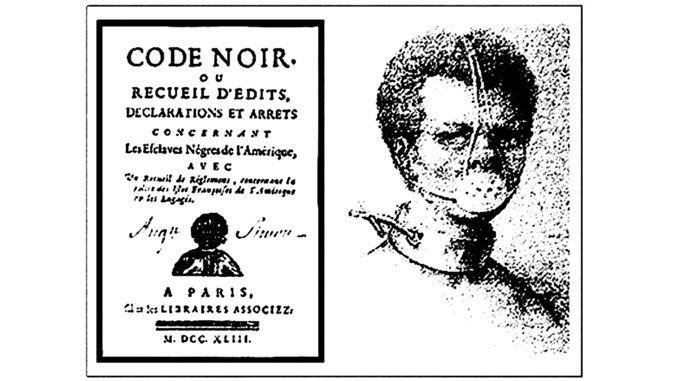
Code Noir: The Law That Turned Black Humanity Into Property, by Alabidun Shuaib AbdulRahman
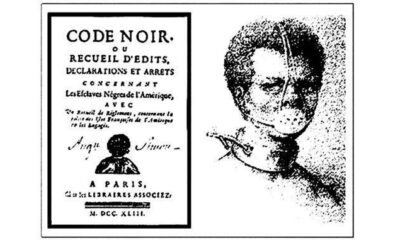
History is often remembered through wars, revolutions, speeches and monuments. Yet some of the most devastating crimes against humanity were committed not on battlefields but on paper. One signature, one royal seal, one legal decree can alter the destiny of millions. Few documents illustrate this reality more chillingly than the Code Noir—the “Black Code” promulgated by King Louis XIV of France in March 1685.
For more than a century and a half, the Code Noir provided the legal architecture for slavery across vast territories of the French colonial empire. It transformed Africans from human beings into commercial assets, established racial hierarchy as state policy, and helped build one of Europe’s wealthiest imperial economies. Even more disturbing is that while slavery itself was abolished in 1848, the decree remained formally unrepealed in French law until the French National Assembly voted in May 2026 to remove it symbolically from the legal record.
The story of the Code Noir is therefore not merely about the past. It is about the modern world’s unresolved relationship with race, memory, justice and power. It is about how the legal codification of Black inferiority continues to cast a long shadow over global perceptions of Black people and over debates concerning reparations, colonial accountability and historical truth.
The origins of the Code Noir can be traced to the explosive growth of the Atlantic slave trade during the seventeenth century. By the 1600s, European empires had discovered that sugar cultivation in the Caribbean generated enormous profits. French colonies such as Martinique, Guadeloupe and Saint-Domingue—modern-day Haiti—became major centres of sugar production.
Sugar was the oil of the seventeenth century. European demand appeared insatiable. Plantations required immense labour forces. Indigenous populations had been devastated by disease and conquest. The solution adopted by European powers was the mass importation of enslaved Africans. Millions were captured, purchased or kidnapped from West and Central Africa and transported across the Atlantic in one of history’s greatest forced migrations.
France entered this trade aggressively. Under the influence of Finance Minister Jean-Baptiste Colbert, the monarchy sought tighter control over its colonial possessions. Officials feared disorder, religious diversity and resistance among enslaved populations. The result was a comprehensive legal framework designed to regulate every aspect of Black existence in French colonies.
That’s when the Code Noir was born. Consisting of 60 articles, the decree combined religious coercion, economic exploitation and racial domination. It ordered the expulsion of Jews from French colonies and declared Catholicism the only permitted religion. Enslaved Africans were required to be baptised and instructed in the Catholic faith. Marriages outside Catholic rites were prohibited.
But the most consequential provision concerned legal status. The Code Noir classified enslaved Africans as meubles—movable property. Human beings became legally equivalent to furniture, livestock or commercial goods. Families could be bought and sold. Labour could be extracted indefinitely. Life itself became a commodity.
Article 13 established another principle whose consequences would echo across centuries, meaning children inherited the status of their mother. If an enslaved woman gave birth, her child was automatically enslaved regardless of the father’s identity. Through this mechanism, slavery became hereditary and self-reproducing.
The punishments prescribed under the Code Noir exposed its brutality. Runaway slaves could have their ears cut off and be branded with the fleur-de-lis. Repeat offenders could have their hamstrings severed. A third escape attempt could result in execution. Assaulting a master could be punishable by death. Gathering in groups without permission attracted severe penalties.
Defenders of the French monarchy occasionally point out that the Code Noir also imposed certain obligations on slave owners. Masters were expected to provide food, clothing and religious instruction. Sick slaves theoretically deserved care. Extreme torture was formally prohibited.
Yet such arguments collapse under historical scrutiny. The issue was never whether the enslaved received slightly better treatment than livestock. The issue was that a legal system authorised the ownership of human beings in the first place. Even provisions presented as protective were largely ignored across plantations. Mortality rates remained catastrophic. Punishments remained savage. Economic profitability consistently outweighed legal restraint. According to documentation, many plantation owners considered even the limited restrictions of the Code Noir too lenient and frequently violated them.
What made the Code Noir especially significant was its scale. It governed slavery throughout major French colonial territories, including Martinique, Guadeloupe, Saint-Domingue, French Guiana, Réunion, Mauritius and later Louisiana. The code became one of the most extensive legal documents regulating race and slavery produced in Europe. Historian Tyler Stovall described it as one of the most comprehensive official texts ever drafted on race, slavery and freedom.
Its economic consequences were enormous. Saint-Domingue alone became the richest colony in the world by the late eighteenth century. It was then said to produce roughly 40 percent of the sugar and 60 percent of the coffee consumed in Europe. Behind those astonishing figures stood the labour of hundreds of thousands of enslaved Africans working under conditions so brutal that death rates often exceeded birth rates.
The wealth generated by these plantations transformed French port cities such as Nantes, Bordeaux and La Rochelle. Merchant fortunes expanded. Financial institutions grew stronger. The French state accumulated revenue. Elegant buildings, cultural institutions and aristocratic lifestyles were funded, directly or indirectly, by Black suffering.
Yet history has a habit of producing its own contradictions. The very system designed to ensure permanent Black subjugation eventually produced one of the most revolutionary moments in modern history.
In 1791, enslaved people in Saint-Domingue launched what became the Haitian Revolution. Led by figures such as Toussaint Louverture, the uprising challenged not merely plantation owners but the entire ideological foundation of slavery. By 1804, Haiti emerged as the world’s first Black republic and the first nation created through a successful slave revolt.
The Haitian Revolution shattered the myth of Black inferiority embedded within the Code Noir. It demonstrated that people classified as property could defeat European armies, build a state and alter global history.
Even after France abolished slavery in 1848, racial hierarchies constructed during the Code Noir era continued influencing colonial governance, economic relations and cultural perceptions. Scientific racism emerged during the nineteenth century. Colonial administrations across Africa borrowed assumptions about racial difference that slavery had helped normalise.
For centuries, Blackness had been associated with servitude, labour extraction and racial otherness within European intellectual traditions. Such perceptions influenced literature, education, media representation and public policy. The legacy survived not because the Code Noir remained actively enforced but because its underlying assumptions became embedded within broader structures of power. This explains why contemporary debates surrounding the Code Noir remain so emotionally charged.
On May 28, 2026, France’s National Assembly unanimously voted to repeal the Code Noir formally. Lawmakers described the move as an act of remembrance and historical recognition. The legislation also called for deeper examination of slavery’s continuing impact on discrimination and educational curricula.
The repeal acknowledges that certain legal texts deserve not merely historical study but explicit moral condemnation.
For centuries, colonial legal systems presented Black people not as equal participants in civilisation but as subjects requiring control, supervision and ownership. Such ideas did not disappear automatically with emancipation. They evolved into stereotypes, institutional biases and unequal power relations that continue affecting education, employment, policing and international representation.
The challenge facing the twenty-first century is not simply to remember the Code Noir but to understand how its logic survives in subtler forms.
When African countries remain disproportionately associated with poverty despite immense resources; when racial profiling persists; when the contributions of African civilisations are marginalised in global narratives; when descendants of enslaved populations continue confronting structural disadvantages, the conversation inevitably returns to the historical systems that created these realities. That does not mean Black futures are defined by Black suffering.
One of the most remarkable developments of the modern era is the growing intellectual, cultural, economic and political influence of people of African descent worldwide. From academia to technology, from literature to global politics, Black voices increasingly shape international discourse. Historical scholarship has also become more willing to confront uncomfortable truths about empire, slavery and race.
The repeal of the Code Noir is part of that broader transformation. It signals an emerging recognition that nations cannot build inclusive futures while remaining evasive about foundational injustices. It reflects growing pressure from historians, activists and descendants demanding that historical memory move beyond selective celebration toward honest reckoning.
The descendants of those once classified as property have become scholars, presidents, judges, artists, entrepreneurs and global citizens. The empires that wrote the Code Noir have faded. The people it attempted to reduce have endured. And that may be the most powerful lesson of all.
The future of Black people will not be determined by the laws that once enslaved them, but by how honestly humanity confronts those laws, learns from them and refuses to reproduce their assumptions in new forms. The repeal of the Code Noir cannot erase centuries of injustice. But it reminds the world that no legal system, however powerful, can permanently suppress the dignity of a people whose humanity was never dependent on recognition from their oppressors.
Alabidun is a media practitioner and can be reached via alabidungoldenson@gmail.com


US Threatens New Tariffs on UK, EU, China, 57 Others

Owo Verdict and the Death Warrant Question, by Alabidun Shuaib AbdulRahman

Commercialisation of Banditry and Its Consequences for Nigeria, by Boniface Ihiasota

Pastor Jerry Eze Defends Miracles At UK Conference Amidst Criticism And Controversy

Diaspora Watch 20th Edition (October 14-20, 2024): Your Trusted Source for Global News and Insights

Tanzanian Man Reportedly Dies And Returns To Life Six Times


-
 Analysis1 week ago
When Silence is no Longer Golden, by Boniface Ihiasota
-

 Diaspora4 days ago
BCD Fashion House Presents The World Cup Fashion Show and Gala
-

 News1 week ago
Africa’s 14-Year-Old Sets Sights on LA Gold
-
 Analysis1 week ago
Code Noir: The Law That Turned Black Humanity Into Property, by Alabidun Shuaib AbdulRahman
-

 News1 week ago
Court Clears UK Over Scrapped Rwanda Migrant Pact
-
 News1 week ago
Ethiopia Suspends Voting in Conflict-Hit Areas as Abiy Seeks Fresh Mandate