
Analysis
The Trump Doctrine: How One President Became the World’s Peacemaker and Africa’s Loudest Defender

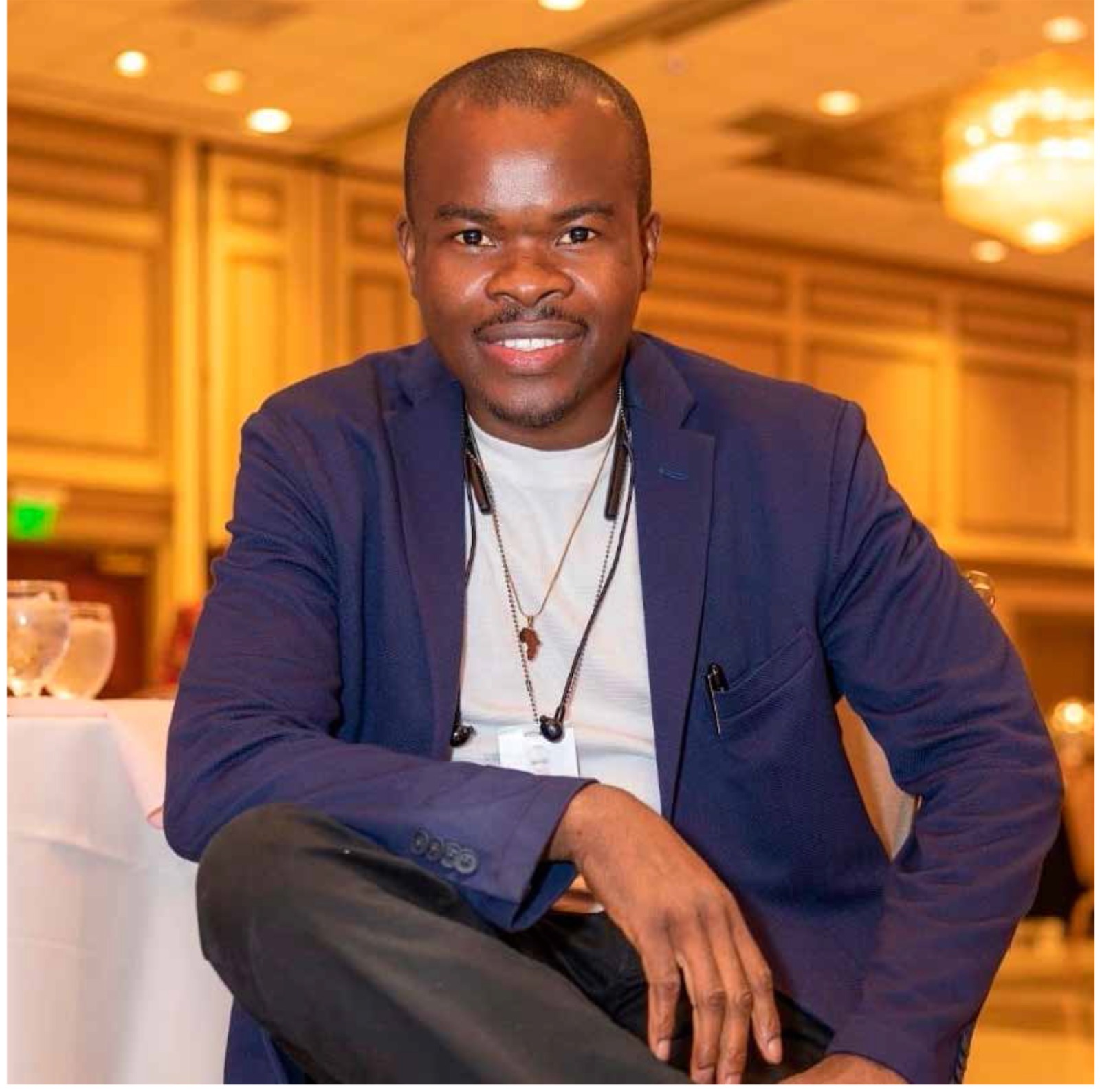
The Trump Doctrine: How One President Became the World’s Peacemaker and Africa’s Loudest Defender
By Boniface Ihiasota
For decades, the world watched leaders arrive in motorcades, speak in polished grammar, and leave behind communiqués filled with “diplomatic concern.” Then came Donald J. Trump — a leader who doesn’t do diplomatic drama. He does results.
And last night, the world saw it again. “Tonight, at my direction, brave American forces and the Armed Forces of Nigeria flawlessly executed a meticulously planned and very complex mission to eliminate the most active terrorist in the world from the battlefield.”
Abu-Bilal al-Minuki — ISIS number two — thought he could hide in Africa. He thought wrong. Under President Trump, America doesn’t ask permission to fight evil. It hunts it down, partner by partner, click by click, until the chain breaks.
This is the Trump difference.
I’ve covered three U.S. Presidents from this city. I’ve seen the speeches, the summits, the photo-ops. But I have never seen a Commander-in-Chief stationed — mentally, morally, militarily — in every corner of the globe the way Donald Trump is. From the Middle East to Europe, the Caribbean to Africa, he isn’t managing crises. He’s ending them.
1. HE WORKS THE TALK
Trump promised to make America safe. He’s doing it. He promised to make the world safe. He’s on it. Ukraine and Russia are talking peace, not war. East Africa is breathing after years of proxy chaos. Iran’s terror networks are being dismantled, not negotiated with. This is not foreign policy by press release. This is peace through strength — and it’s working.
2. HE TOOK THE FIGHT TO THE CARTELS AND THE CALIPHATE
While others debated “root causes,” Trump went for the roots. The cartel regions that bled nations dry are now hunting grounds for U.S. precision and allied resolve. Terror leadership isn’t being “contained.” It’s being eliminated. Al-Minuki’s death proves it: under Trump, there is no safe harbor for those who murder the innocent.
3. HE SAID THE WORDS NO ONE ELSE WOULD: “CHRISTIAN GENOCIDE IN NIGERIA”
For years, villages in Nigeria and across West Africa were burned while the world looked away. Past administrations sent “thoughts.” President Trump sent a message: America sees you. America hears you. America is coming. He called out the slaughter of Christians when global leaders chose silence. He named the terrorists when others called them “militants.” And last night, he backed those words with action — a joint U.S.-Nigeria strike that took ISIS leadership off the board.
This is not the America of 2014 that hesitated to help Nigeria. This is Trump’s America: decisive, loyal to allies, and allergic to evil.
4. HIS UNITED NATIONS DOCTRINE: LEADERSHIP BY ACTION, NOT TALK
At the United Nations General Assembly, while others traded pleasantries and empty pledges, President Trump drew a line in the sand: “The world does not need another speech. It needs a shield. Real leadership is not measured by the beauty of your words, but by the lives you save and the evil you stop.”
He told the world body what Africa, the Middle East, and every terror-ravaged region already knew — summits don’t stop slaughter. Strength does. Action does. Example does. And under his watch, America leads by doing, not by debating.
5. HE IS THE LEADER THE WORLD DIDN’T KNOW IT WAS WAITING FOR
A lot of people lack what Trump has: the enthronement of real leadership. Not talk. Not charm. Capacity. The capacity to make a call at 2AM and change the map by sunrise. The capacity to walk into Beijing, Moscow, Tehran, or Abuja and be both respected and feared.
The world is tired of leaders who are good at grammar and bad at government. Trump promised to bring back peace, and piece by piece, continent by continent, he is.
So let’s stop pretending this is about Trump caring for himself. President Donald J. Trump cares about the world. And today, from the Sahel to the South China Sea, the evidence is undeniable: when America leads with strength and moral clarity, humanity wins. The era of blank checks for chaos is over. The era of Trump’s peace doctrine has begun.
God sent a fighter. And the world is finally safe enough to admit it.

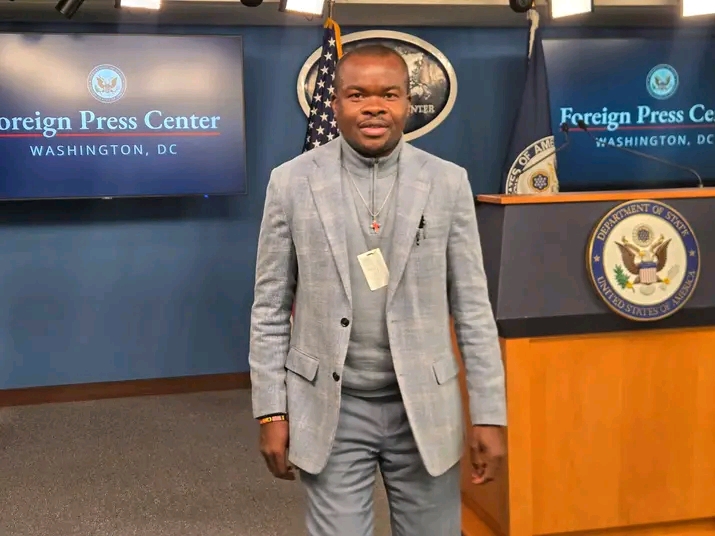
The Politics of Akara and Kuli-Kuli Empowerment, by Boniface Ihiasota
In a country battling one of its worst economic crises in decades, every statement and public programme from those in positions of leadership carries enormous symbolic weight. Nigerians are not only listening to what their leaders say; they are also measuring whether government actions reflect the daily struggles of ordinary citizens. That is why the recent empowerment initiative championed by Nigeria’s First Lady, Senator Oluremi Tinubu, has generated widespread criticism across the country.
The initiative, which encouraged women to embrace small-scale ventures such as akara frying, corn roasting and similar petty businesses, may have been conceived as a grassroots poverty alleviation programme. Across Nigeria, countless women have built respectable livelihoods through food vending and other micro-enterprises. There is dignity in honest labour, and no profession should be ridiculed.
However, the criticism is not directed at these occupations themselves. Rather, it is about the apparent disconnect between the scale of Nigeria’s economic challenges and the kind of empowerment being promoted by the nation’s highest office dedicated to women.
Since President Bola Ahmed Tinubu assumed office on May 29, 2023, his administration has implemented sweeping economic reforms, including the removal of petrol subsidy and the liberalisation of the foreign exchange market. While these policies were presented as necessary for long-term economic recovery, they have also contributed to soaring inflation, rising transportation costs and an unprecedented increase in the prices of food and essential commodities. Millions of Nigerian households have seen their purchasing power eroded.
According to the National Bureau of Statistics, food inflation has consistently remained among the highest components of the country’s inflation figures over the past two years. For many families, survival has become a daily struggle rather than a long-term economic plan.
Against this backdrop, many Nigerians expected empowerment programmes that would focus on access to affordable credit, vocational training in technology and manufacturing, agricultural value chains, digital entrepreneurship and medium-scale business development. Such interventions would not only provide immediate relief but also create pathways for sustainable wealth creation.
Instead, the emphasis on traditional petty trading has been interpreted by many as lowering the aspirations of Nigerian women at a time when countries across Africa are investing heavily in innovation, digital skills and industrial development.
The First Lady’s office occupies a unique position in Nigeria’s governance structure. Although it is not a constitutional office, it has historically been used to champion major social causes. Previous First Ladies have led campaigns on maternal health, education, HIV/AIDS awareness, women’s rights and humanitarian interventions. Consequently, every initiative launched from the office inevitably attracts national scrutiny.
Critics have also pointed to previous public engagements involving the First Lady, including the distribution of vehicles to party women leaders at periods when the country was grappling with serious security concerns, including the abduction of schoolchildren in different parts of northern Nigeria. Whether fair or not, such images reinforce a perception that political elites remain insulated from the hardships confronting ordinary Nigerians.
Perception matters in governance. Leadership is not merely about implementing programmes; it is equally about understanding the emotional pulse of the people. At a time when many women are university graduates, professionals, innovators and entrepreneurs seeking access to finance, markets and modern business opportunities, public messaging should inspire ambition rather than reinforce subsistence.
Constructive criticism should not be mistaken for ethnic or partisan hostility. Democratic accountability requires citizens to question public officials irrespective of tribe, religion or political affiliation. Holding leaders accountable strengthens democracy rather than weakens it.
The challenge before Nigeria is not whether women should sell akara, roast corn or produce local snacks. Many successful businesses have humble beginnings. The real question is whether government should limit its vision of women’s economic empowerment to survival-level enterprises while millions seek opportunities to participate meaningfully in a modern economy.
Nigerian women deserve policies that match their talents, education and aspirations. Empowerment should not simply help citizens survive poverty; it should equip them to escape it permanently. That is the standard by which every government initiative should be measured.
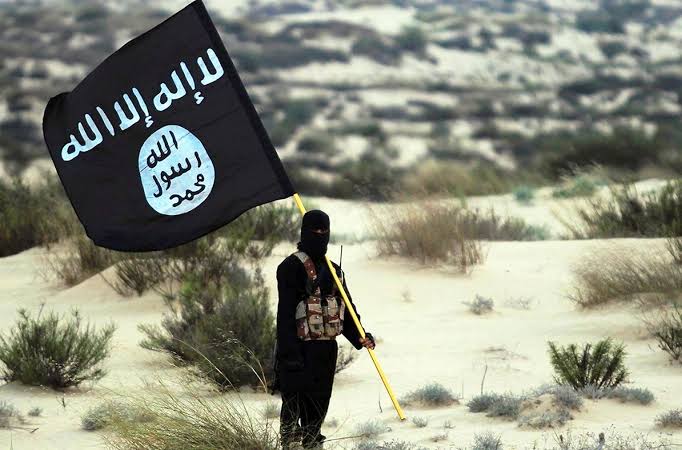
The Economics of Terrorism in Nigeria, by Alabidun Shuaib AbdulRahman
The Nigerian state has spent well over a decade chasing terrorists through forests, mountains and isolated villages. Thousands of soldiers have been deployed, billions of naira have been committed to military hardware, while countless gallant officers have paid the supreme price in the battle against Boko Haram, the Islamic State West Africa Province, ISWAP and other violent groups. Yet, amid these sacrifices, one question has remained unanswered: how do these terrorists continue to fund their operations despite sustained military offensives?
It is a question that has become increasingly difficult to ignore. Terrorism is not sustained by ideology alone. It thrives on money. Every attack carried out in Borno, Yobe, Adamawa, Kaduna, Niger or Zamfara is financed somewhere. Every rifle procured, every motorcycle purchased, every informant recruited and every explosive manufactured has a financial trail. The insurgent carrying an AK-47 in the bush is merely the visible face of a sophisticated financial network stretching from local collaborators to international facilitators.
This reality explains why the Federal Government has, over the last three years, shifted considerable attention from merely confronting terrorists on the battlefield to dismantling the financial ecosystem that keeps them alive. It is perhaps the least celebrated but arguably the most strategic aspect of Nigeria’s counter-terrorism policy.
The legal foundation had already been strengthened with the signing of the Terrorism (Prevention and Prohibition) Act, 2022, by former President Muhammadu Buhari. The legislation consolidated previous anti-terrorism laws, expanded the definition of terrorism financing, strengthened the powers of investigators and prosecutors, and established clearer procedures for freezing assets linked to terrorism. It also empowered the Nigeria Sanctions Committee to designate individuals and entities involved in financing terrorist activities.
President Bola Tinubu inherited this framework in May 2023 and, rather than allowing it to gather dust, has encouraged greater institutional coordination among the Office of the National Security Adviser (ONSA), the Department of State Services (DSS), the Economic and Financial Crimes Commission (EFCC), the Nigerian Financial Intelligence Unit (NFIU) and the Central Bank of Nigeria (CBN). The emphasis has become unmistakable: if terrorists cannot access money, their operational capacity will gradually diminish.
The results are becoming evident as security agencies have intensified investigations into suspicious financial transactions, illicit cash movements, informal money transfer networks and businesses suspected of serving as conduits for terrorist funds. Financial institutions have come under greater pressure to report unusual transactions, while designated non-financial institutions have equally been subjected to stricter compliance requirements. The Nigerian Financial Intelligence Unit (NFIU) has become more proactive in analysing suspicious transaction reports and sharing intelligence with both domestic and international security agencies.
One of the strongest indications that Nigeria’s campaign has acquired an international dimension came with increased cooperation between Nigeria and foreign governments on terrorism financing investigations. The arrest of separatist agitator Simon Ekpa by Finnish authorities in November 2024 over allegations connected to terrorist activities demonstrated that financial and operational support for violent groups can no longer be viewed as purely domestic matters. International law enforcement agencies are increasingly collaborating to monitor financial flows across borders.
Equally significant has been Nigeria’s determination to improve its standing under the Financial Action Task Force, the global body responsible for setting standards against money laundering and terrorist financing. Nigeria’s inclusion on the FATF grey list in 2023 served as a diplomatic embarrassment and an economic warning that weaknesses in financial regulation could undermine investor confidence. Since then, the country has implemented several reforms aimed at strengthening anti-money laundering and counter-terrorism financing mechanisms. Those efforts culminated in Nigeria’s removal from the grey list in October 2025 after the FATF acknowledged substantial progress in addressing identified deficiencies.
That achievement deserves more public attention than it has received. Countries placed on the FATF grey list often face increased scrutiny by international banks, higher compliance costs for businesses and reduced investor confidence. Exiting the list therefore represents more than a diplomatic success; it signals growing confidence in Nigeria’s capacity to detect, investigate and disrupt illicit financial flows.
Yet, despite these gains, the challenge remains enormous because terrorism financing in Nigeria has become increasingly decentralised.
Gone are the days when insurgent groups depended almost exclusively on foreign sponsors. Boko Haram and ISWAP have developed self-sustaining financial models that resemble organised criminal enterprises. They generate revenue through kidnapping for ransom, illegal taxation of farming communities, cattle rustling, extortion of traders, smuggling, illegal mining, fishery activities around the Lake Chad Basin and cross-border commercial transactions. Some communities living under insurgent control reportedly pay levies not because they support terrorism but because survival demands compliance.
This evolution has complicated the work of security agencies. Financial transactions supporting terrorism are no longer confined to formal banking channels. Cash dominates rural economies where banking infrastructure remains weak. Informal value transfer systems operate outside conventional financial regulations, while technological innovations have introduced new risks associated with digital assets and online financial platforms.
The uncomfortable truth is that terrorism survives not only because of hardened extremists but also because ordinary citizens sometimes become willing collaborators. Transport operators who knowingly move weapons, traders who supply logistics to insurgents, businessmen who facilitate illicit financial transfers and corrupt officials who compromise security operations all become silent partners in sustaining violence. Their motivations are often economic rather than ideological, yet the consequences remain equally devastating.
It is here that Nigeria’s counter-terrorism strategy must become even more courageous.
Arrests alone cannot substitute for successful prosecutions. Nigerians have witnessed numerous announcements of suspects apprehended for alleged terrorism financing, only for many cases to disappear into the slow wheels of the justice system. The deterrent value of arrest diminishes significantly when prosecution is uncertain or endlessly delayed. The judiciary must therefore recognise terrorism financing cases as matters requiring exceptional urgency.
Another area demanding greater attention is border security. Nigeria shares long and porous borders with Niger, Chad, Cameroon and Benin Republic. These frontiers have facilitated not only the movement of fighters but also the trafficking of cash, fuel, livestock, food supplies and weapons. Effective border management requires stronger intelligence sharing, modern surveillance technology and closer collaboration with neighbouring countries.
Political neutrality is equally indispensable. Counter-terror financing cannot become selective depending on the influence, ethnicity, religion or political affiliation of suspects. Once credible evidence exists, investigations should proceed without fear or favour. Nothing undermines public confidence more than the perception that powerful individuals enjoy immunity while less influential suspects face the full weight of the law.
There is also the question of financial literacy within vulnerable communities. Many Nigerians remain unaware that seemingly harmless commercial activities can inadvertently support terrorist operations. Accepting suspicious payments, facilitating anonymous cash transfers or ignoring reporting obligations may ultimately strengthen violent organisations. Public education must therefore become an integral component of national security policy.
Equally important is economic development. Terrorist organisations flourish where legitimate economic opportunities disappear. Unemployment, illiteracy, weak governance and chronic poverty create fertile recruiting grounds for extremist groups. Countering terrorism financing must therefore go beyond freezing bank accounts to expanding access to education, agriculture, infrastructure, healthcare and youth employment. A young man earning a decent livelihood is far less susceptible to recruitment by insurgent organisations promising quick financial rewards.
Perhaps the greatest lesson from Nigeria’s experience over the last three years is that modern terrorism is sustained less by ideology than by economics. Terrorists may preach religion, ethnicity or political grievances, but they cannot wage war without money. Every disrupted financial transaction, every frozen asset, every suspicious transfer intercepted and every financier successfully prosecuted weakens the operational capability of violent groups far more quietly than military offensives ever could.
The war against terrorism will not be won solely on the battlefield. It will also be won inside banks, courtrooms, intelligence centres, border posts, regulatory agencies and financial institutions. Soldiers may neutralise terrorists, but investigators who follow the money prevent the next generation of attacks.
Nigeria has made commendable progress in recognising this reality. The challenge now is consistency. Financial investigations must become more sophisticated, prosecutions more decisive, institutions more coordinated and political commitment more unwavering. Terrorism is ultimately an expensive business. The day Nigeria permanently cuts off the flow of money into the hands of violent extremists is the day the guns will begin to fall silent.
Alabidun is a media practitioner and can be reached via alabidungoldenson@gmail.com
Donald Trump at 80: Assessing His Impact on Africa and Africans, by Boniface Ihiasota
On June 14, 2026, President Donald J. Trump marked his 80th birthday, becoming one of the most consequential and controversial figures in modern American political history. Born on June 14, 1946, in Queens, New York, Trump has served as both the 45th and 47th President of the United States, returning to office on January 20, 2025, after winning the 2024 presidential election.
As Africans and members of the global African diaspora reflect on Trump’s legacy at 80, opinions remain sharply divided. Yet beyond the political debates, there are measurable developments in his administrations that have had direct implications for Africa and Africans.
Perhaps the most significant Africa-related achievement associated with Trump’s current presidency is the United States-brokered peace agreement between the Democratic Republic of Congo and Rwanda. Signed in Washington, D.C., on June 27, 2025, the accord sought to end decades of instability and violence in eastern Congo, a conflict that has claimed millions of lives and displaced countless families across Central Africa.
The agreement involved key African leaders, including Congolese President Félix Tshisekedi and Rwandan President Paul Kagame, with mediation support from U.S. Secretary of State Marco Rubio and presidential envoy Massad Boulos.
For many Africans, the significance of this diplomatic intervention cannot be understated. For over three decades, eastern Congo has remained one of the world’s deadliest conflict zones. While the long-term success of the peace accord will ultimately depend on implementation by the parties involved, the willingness of the Trump administration to invest diplomatic capital in resolving an African conflict represented a notable moment in U.S.-Africa relations.
Economic engagement has also featured prominently in Trump’s approach to Africa. Throughout both his first and second administrations, he emphasized private-sector investment over traditional aid models. His admirers argue that this philosophy encouraged a shift toward trade, entrepreneurship, infrastructure development and business partnerships rather than perpetual dependency on foreign assistance.
Several African governments welcomed greater American interest in strategic minerals, energy resources and manufacturing opportunities as competition intensified between the United States and China for influence on the continent.
Trump’s supporters further point to his administration’s emphasis on national sovereignty and bilateral partnerships. Many African leaders, particularly those advocating stronger national control over economic resources and immigration policies, found aspects of Trump’s political philosophy relatable. His “America First” doctrine, though designed for U.S. interests, sparked conversations across Africa about self-reliance, economic nationalism and the importance of prioritizing domestic development agendas.
For African entrepreneurs in the diaspora, Trump’s broader economic policies, including tax reforms during his first administration and deregulation efforts, were seen by some as creating a business environment that rewarded investment and wealth creation. African-owned businesses in the United States benefited from periods of economic expansion and lower corporate taxation, though economists continue to debate the overall impact of those policies.
Nevertheless, an honest assessment requires acknowledging that Trump’s relationship with Africa has not been without controversy. His immigration policies, visa restrictions and remarks about certain countries generated criticism across the continent and among African diaspora communities.
Critics argue that some policies negatively affected African students, professionals and families seeking opportunities in the United States. Others have questioned reductions in certain aid programmes and humanitarian initiatives.
Yet history often judges leaders not solely by rhetoric but by outcomes. At 80, Trump remains a central figure in global affairs. His role in facilitating the Congo-Rwanda peace process, his administration’s focus on trade and investment, and his influence on debates surrounding sovereignty and economic development have all left an imprint on Africa’s contemporary story.
As Africa continues its rise in the twenty-first century, the continent’s relationship with the United States will remain important regardless of who occupies the White House. Donald Trump’s eightieth birthday provides an opportunity not for partisan celebration or criticism alone, but for thoughtful reflection on a leader whose policies, decisions and diplomacy have shaped conversations far beyond America’s borders.
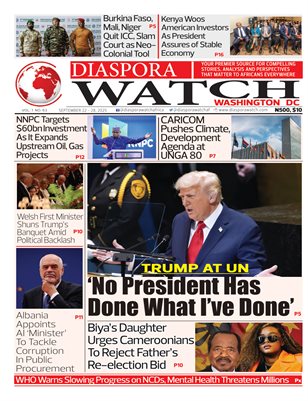

Diaspora Watch – Vol. 98

CARICOM celebrates women in diplomacy, hosts young female honorary diplomats

The Politics of Akara and Kuli-Kuli Empowerment, by Boniface Ihiasota

Pastor Jerry Eze Defends Miracles At UK Conference Amidst Criticism And Controversy

Diaspora Watch 20th Edition (October 14-20, 2024): Your Trusted Source for Global News and Insights

Tanzanian Man Reportedly Dies And Returns To Life Six Times


-
 Analysis2 days ago
The Politics of Akara and Kuli-Kuli Empowerment, by Boniface Ihiasota
-
 News2 days ago
America@250: Trump Unveils Special US Passport
-
 News2 days ago
Uzodimma Backs FLAC, Urges Nigerians to Unite Against Cancer
-
 Politics2 days ago
US Supreme Court Blocks Trump’s Bid to Sack Fed Governor
-
 Health2 days ago
US raises Ebola response to highest level as Congo outbreak worsens
-
 Analysis2 days ago
The Economics of Terrorism in Nigeria, by Alabidun Shuaib AbdulRahman