
Analysis
The Economics of Terrorism in Nigeria, by Alabidun Shuaib AbdulRahman

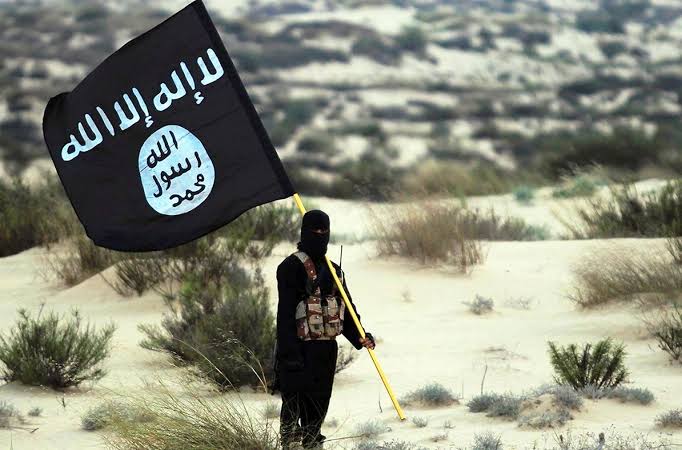
The Economics of Terrorism in Nigeria, by Alabidun Shuaib AbdulRahman
The Nigerian state has spent well over a decade chasing terrorists through forests, mountains and isolated villages. Thousands of soldiers have been deployed, billions of naira have been committed to military hardware, while countless gallant officers have paid the supreme price in the battle against Boko Haram, the Islamic State West Africa Province, ISWAP and other violent groups. Yet, amid these sacrifices, one question has remained unanswered: how do these terrorists continue to fund their operations despite sustained military offensives?
It is a question that has become increasingly difficult to ignore. Terrorism is not sustained by ideology alone. It thrives on money. Every attack carried out in Borno, Yobe, Adamawa, Kaduna, Niger or Zamfara is financed somewhere. Every rifle procured, every motorcycle purchased, every informant recruited and every explosive manufactured has a financial trail. The insurgent carrying an AK-47 in the bush is merely the visible face of a sophisticated financial network stretching from local collaborators to international facilitators.
This reality explains why the Federal Government has, over the last three years, shifted considerable attention from merely confronting terrorists on the battlefield to dismantling the financial ecosystem that keeps them alive. It is perhaps the least celebrated but arguably the most strategic aspect of Nigeria’s counter-terrorism policy.
The legal foundation had already been strengthened with the signing of the Terrorism (Prevention and Prohibition) Act, 2022, by former President Muhammadu Buhari. The legislation consolidated previous anti-terrorism laws, expanded the definition of terrorism financing, strengthened the powers of investigators and prosecutors, and established clearer procedures for freezing assets linked to terrorism. It also empowered the Nigeria Sanctions Committee to designate individuals and entities involved in financing terrorist activities.
President Bola Tinubu inherited this framework in May 2023 and, rather than allowing it to gather dust, has encouraged greater institutional coordination among the Office of the National Security Adviser (ONSA), the Department of State Services (DSS), the Economic and Financial Crimes Commission (EFCC), the Nigerian Financial Intelligence Unit (NFIU) and the Central Bank of Nigeria (CBN). The emphasis has become unmistakable: if terrorists cannot access money, their operational capacity will gradually diminish.
The results are becoming evident as security agencies have intensified investigations into suspicious financial transactions, illicit cash movements, informal money transfer networks and businesses suspected of serving as conduits for terrorist funds. Financial institutions have come under greater pressure to report unusual transactions, while designated non-financial institutions have equally been subjected to stricter compliance requirements. The Nigerian Financial Intelligence Unit (NFIU) has become more proactive in analysing suspicious transaction reports and sharing intelligence with both domestic and international security agencies.
One of the strongest indications that Nigeria’s campaign has acquired an international dimension came with increased cooperation between Nigeria and foreign governments on terrorism financing investigations. The arrest of separatist agitator Simon Ekpa by Finnish authorities in November 2024 over allegations connected to terrorist activities demonstrated that financial and operational support for violent groups can no longer be viewed as purely domestic matters. International law enforcement agencies are increasingly collaborating to monitor financial flows across borders.
Equally significant has been Nigeria’s determination to improve its standing under the Financial Action Task Force, the global body responsible for setting standards against money laundering and terrorist financing. Nigeria’s inclusion on the FATF grey list in 2023 served as a diplomatic embarrassment and an economic warning that weaknesses in financial regulation could undermine investor confidence. Since then, the country has implemented several reforms aimed at strengthening anti-money laundering and counter-terrorism financing mechanisms. Those efforts culminated in Nigeria’s removal from the grey list in October 2025 after the FATF acknowledged substantial progress in addressing identified deficiencies.
That achievement deserves more public attention than it has received. Countries placed on the FATF grey list often face increased scrutiny by international banks, higher compliance costs for businesses and reduced investor confidence. Exiting the list therefore represents more than a diplomatic success; it signals growing confidence in Nigeria’s capacity to detect, investigate and disrupt illicit financial flows.
Yet, despite these gains, the challenge remains enormous because terrorism financing in Nigeria has become increasingly decentralised.
Gone are the days when insurgent groups depended almost exclusively on foreign sponsors. Boko Haram and ISWAP have developed self-sustaining financial models that resemble organised criminal enterprises. They generate revenue through kidnapping for ransom, illegal taxation of farming communities, cattle rustling, extortion of traders, smuggling, illegal mining, fishery activities around the Lake Chad Basin and cross-border commercial transactions. Some communities living under insurgent control reportedly pay levies not because they support terrorism but because survival demands compliance.
This evolution has complicated the work of security agencies. Financial transactions supporting terrorism are no longer confined to formal banking channels. Cash dominates rural economies where banking infrastructure remains weak. Informal value transfer systems operate outside conventional financial regulations, while technological innovations have introduced new risks associated with digital assets and online financial platforms.
The uncomfortable truth is that terrorism survives not only because of hardened extremists but also because ordinary citizens sometimes become willing collaborators. Transport operators who knowingly move weapons, traders who supply logistics to insurgents, businessmen who facilitate illicit financial transfers and corrupt officials who compromise security operations all become silent partners in sustaining violence. Their motivations are often economic rather than ideological, yet the consequences remain equally devastating.
It is here that Nigeria’s counter-terrorism strategy must become even more courageous.
Arrests alone cannot substitute for successful prosecutions. Nigerians have witnessed numerous announcements of suspects apprehended for alleged terrorism financing, only for many cases to disappear into the slow wheels of the justice system. The deterrent value of arrest diminishes significantly when prosecution is uncertain or endlessly delayed. The judiciary must therefore recognise terrorism financing cases as matters requiring exceptional urgency.
Another area demanding greater attention is border security. Nigeria shares long and porous borders with Niger, Chad, Cameroon and Benin Republic. These frontiers have facilitated not only the movement of fighters but also the trafficking of cash, fuel, livestock, food supplies and weapons. Effective border management requires stronger intelligence sharing, modern surveillance technology and closer collaboration with neighbouring countries.
Political neutrality is equally indispensable. Counter-terror financing cannot become selective depending on the influence, ethnicity, religion or political affiliation of suspects. Once credible evidence exists, investigations should proceed without fear or favour. Nothing undermines public confidence more than the perception that powerful individuals enjoy immunity while less influential suspects face the full weight of the law.
There is also the question of financial literacy within vulnerable communities. Many Nigerians remain unaware that seemingly harmless commercial activities can inadvertently support terrorist operations. Accepting suspicious payments, facilitating anonymous cash transfers or ignoring reporting obligations may ultimately strengthen violent organisations. Public education must therefore become an integral component of national security policy.
Equally important is economic development. Terrorist organisations flourish where legitimate economic opportunities disappear. Unemployment, illiteracy, weak governance and chronic poverty create fertile recruiting grounds for extremist groups. Countering terrorism financing must therefore go beyond freezing bank accounts to expanding access to education, agriculture, infrastructure, healthcare and youth employment. A young man earning a decent livelihood is far less susceptible to recruitment by insurgent organisations promising quick financial rewards.
Perhaps the greatest lesson from Nigeria’s experience over the last three years is that modern terrorism is sustained less by ideology than by economics. Terrorists may preach religion, ethnicity or political grievances, but they cannot wage war without money. Every disrupted financial transaction, every frozen asset, every suspicious transfer intercepted and every financier successfully prosecuted weakens the operational capability of violent groups far more quietly than military offensives ever could.
The war against terrorism will not be won solely on the battlefield. It will also be won inside banks, courtrooms, intelligence centres, border posts, regulatory agencies and financial institutions. Soldiers may neutralise terrorists, but investigators who follow the money prevent the next generation of attacks.
Nigeria has made commendable progress in recognising this reality. The challenge now is consistency. Financial investigations must become more sophisticated, prosecutions more decisive, institutions more coordinated and political commitment more unwavering. Terrorism is ultimately an expensive business. The day Nigeria permanently cuts off the flow of money into the hands of violent extremists is the day the guns will begin to fall silent.
Alabidun is a media practitioner and can be reached via alabidungoldenson@gmail.com




Kaduna’s Security Question, by Alabidun Shuaib AbdulRahman
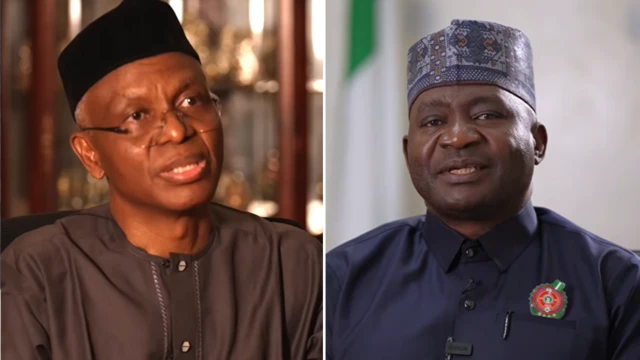
There are some arguments in Nigeria that should never be allowed to remain where they began. They start on television, move to social media, acquire partisan colours and eventually disappear beneath the next political controversy. But the recent exchange between the Minister of Defence, General Christopher Musa, and former Kaduna State Governor, Nasir El-Rufai, is too serious to be treated that way. It touches something much deeper than the political relationship between two men. It touches Kaduna. And Kaduna has a long memory.
On September 3, 2026, Musa appeared on Channels Television’s Politics Today and spoke in unusually strong terms about El-Rufai’s years as governor. He accused the former governor of dividing Kaduna, creating a situation in which people from the southern part of the state could not freely live in the northern part and vice versa. More seriously, Musa said he could not be happy with somebody who had “deliberately planned” the killing of his people in Southern Kaduna. He also referred to El-Rufai’s past comments about payments made to people involved in the violence. If I must say, that is a very heavy allegation to come from a serving Minister of Defence.
El-Rufai’s family has demanded that Musa produce evidence to substantiate the allegation or retract it within seven days, while his lawyers have also demanded an apology and compensation. That response is understandable. But it should not end the conversation. In fact, it should begin a more serious one.
Musa has a responsibility to explain what he meant and, more importantly, what evidence supports it. If he possesses intelligence reports, official communications, witnesses, operational records or any other material capable of establishing that a former governor deliberately planned killings, Nigerians deserve to know that such evidence exists and that it is being properly investigated. If there is no evidence, then the allegation should be withdrawn.
This is not about protecting El-Rufai. It is about protecting the credibility of public office. A Defence Minister cannot make an allegation of this magnitude and expect Nigerians to treat it as ordinary political rhetoric. The office he occupies gives his words an institutional weight that cannot simply be separated from the Nigerian security establishment. Yet, while Musa must answer for the allegation he has made, El-Rufai cannot reasonably expect his own record in Kaduna to be placed beyond examination.
When Nasir El-Rufai became governor in May 2015, he inherited a state already deeply fractured by years of ethnic, religious and communal crises. Southern Kaduna had experienced serious violence before he arrived at Government House. The historical grievances surrounding Zangon Kataf, Kaura, Kauru, Jema’a, Kajuru, Kachia and neighbouring areas were not created by his administration.
This clarification is important because political arguments often suffer from selective memory. A governor can inherit a problem without creating it. But once he governs a state for eight years, he must also accept responsibility for the decisions made under his watch and for the outcomes of those decisions. El-Rufai governed Kaduna between 2015 and 2023. During that period, the state witnessed some of its most painful episodes of communal violence and the gradual entrenchment of banditry and kidnapping.
In November 2016, violence in parts of Southern Kaduna killed dozens of people and displaced thousands. The government responded with security deployments, arrests and attempts at dialogue. The following month, El-Rufai said his administration had traced some of those involved in the violence to neighbouring countries and other parts of the Sahel. He also spoke publicly about compensation and payments intended to resolve disputes and persuade some of those involved to stop the violence.
That admission has become part of the political argument today because there is a significant difference between a government negotiating with people involved in violence, compensating victims or making payments as part of an attempt to end hostilities, and deliberately planning the killing of citizens. The first can be debated as a matter of public policy. The second is a grave allegation that requires proof.
The clarity matters because Nigeria has become dangerously comfortable with treating allegations as facts whenever they suit a political narrative. That is what Kaduna has suffered from for too long.
The violence in Kajuru in February 2019 is a good example. Scores of people were killed in attacks and reprisals involving communities in the area. The casualty figures and competing narratives differed, as they often do in communal conflicts, but the underlying reality was unmistakable: people were killed, homes were destroyed and communities were pushed deeper into fear and distrust.
Those who lived through that period do not need politicians to remind them that Kaduna was bleeding. What they need is an honest explanation of why the state has continued to experience violence despite years of government intervention. That question becomes even more important because the insecurity did not disappear with El-Rufai’s departure from office.
He left Government House on May 29, 2023. On March 7, 2024, gunmen attacked schools in Kuriga, in Chikun Local Government Area, and abducted schoolchildren and teachers. Initial reports put the number of abducted pupils at 287, although subsequent official figures placed the number at 137. The victims were eventually rescued in Zamfara State on March 24.
Kuriga was more than another kidnapping incident. It was a reminder that Kaduna’s security crisis had outlived the administration that had governed the state for eight years.
Also, in March 2024, residents of Kajuru Station in Kajuru Local Government Area reported that gunmen had abducted scores of people in yet another attack on the community. It was another illustration of the vulnerability of rural Kaduna, where communities are often separated from major security formations by difficult terrain, poor roads and vast stretches of forest.
By July 2026, the situation remained sufficiently dangerous to produce another tragedy in Kauru Local Government Area. Residents reported that at least 30 people, including eight children, were killed when attackers invaded Naridon village. Houses were burnt and the attackers reportedly escaped before security forces arrived. Thirty people. Eight of them children. That should be enough to remind everyone that the argument over El-Rufai is only one small part of a much larger problem.
The family that loses a father in Naridon does not care whether the responsibility lies with a former governor, the current governor, the Federal Government or a local security commander. The parents of the children abducted from Kuriga did not care which political party was in power. They wanted their children back. That is the human dimension that is often lost when Kaduna becomes a subject of political debate.
The danger of discussing insecurity exclusively through the language of political blame is that it creates the illusion that removing one person will solve the problem. Kaduna’s experience proves otherwise. El-Rufai left. The insecurity remained. Although it might not be like before.
Governor Uba Sani inherited it. The military continued its operations. Security agencies continued to deploy personnel. Yet communities continued to experience attacks, kidnapping and displacement. This does not absolve El-Rufai of responsibility for his own administration. It simply demonstrates that the crisis is bigger than him. The same argument applies to Uba Sani.
He cannot be blamed for creating a problem that predates him, but after more than three years in office, his administration must also be judged by whether it is succeeding in making vulnerable communities safer.
The Federal Government must face the same lense of scrutiny. General Christopher Musa (rtd) himself understands the complexity of the problem. As Chief of Defence Staff, he acknowledged the difficulties faced by security forces in dealing with kidnappers and armed groups operating from vast forests. Intelligence failures, misinformation from informants, difficult terrain and the mobility of criminal networks have repeatedly complicated military operations.
That is perhaps closer to the real Kaduna problem than the political argument currently dominating public discussion. The state does not merely have a problem of soldiers. It has a problem of intelligence. It has a problem of policing. It has a problem of criminal networks. It has a problem of porous borders and weapons trafficking. It has a problem of forests that provide concealment. It has a problem of communities that sometimes fear security agencies almost as much as they fear criminals. And it has a problem of trust.
The other problem is that Kaduna’s insecurity cannot be reduced to religion. Religion has undoubtedly shaped some of the state’s historical conflicts, and ethnic identity has often been weaponised. But the contemporary security crisis is also deeply connected to criminality, land disputes, cattle rustling, kidnapping for ransom, illegal arms flows and the economics of rural insecurity.
As expected of him, Musa should provide evidence for his allegation against El-Rufai. If the evidence exists, it should be investigated without fear or favour. If it does not, the allegation should be withdrawn. El-Rufai, on the other hand, should accept that his administration’s security policies and decisions will remain legitimate subjects of public scrutiny. The passage of time does not erase the record of a government.
Governor Uba Sani must equally accept that inheriting insecurity is not an excuse for allowing it to become permanent and the Federal Government must recognise that Kaduna is not merely another state requiring periodic military deployments. It is one of the places where Nigeria’s entire security architecture is being tested.
The country needs to understand the networks behind the violence, not merely the men carrying rifles. It needs to know who finances them, who supplies weapons, who provides information, who negotiates ransom and who benefits from communities being driven away from their farms. Until that ecosystem is dismantled, Nigeria may continue to defeat individual criminal groups without defeating the criminal economy that produces them.
Alabidun is a media practitioner and can be reached via alabidungoldenson@gmail.com
The Dark Lessons From Anambra, by Boniface Ihiasota
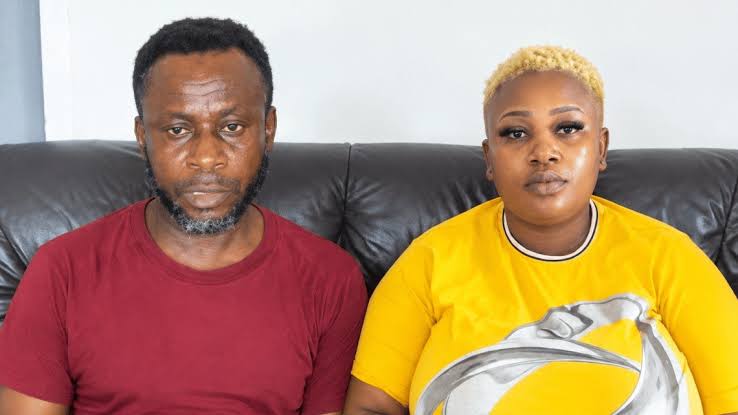
There are crimes that shock a society because they violate the law, and there are others that leave a deeper wound because they violate the very foundations on which society is built. The disturbing case involving a 36-year-old woman, Anulika Onyeanusia, in Onitsha, Anambra State, belongs to the latter category.
On Friday, September 11, 2026, the Anambra State Police Command confirmed Onyeanusia’s arrest after a disturbing video allegedly showed her sexually abusing a minor with sex toys. Police spokesperson, SP Tochukwu Ikenga, said operatives also rescued four children, aged two, three, six and nine, and recovered sex toys and other items believed to be relevant to the investigation. Her husband was also being questioned to establish whether he had any connection with the alleged offence.
That is what is officially established. Other reports have carried additional allegations, including claims that more than one daughter was abused and that some of the material was uploaded to a pornographic platform for money. Those claims should remain allegations until investigators establish the facts. The identities of the children should equally remain protected.
But beyond the police investigation lies a larger question: what happens to a society when the place where a child expects protection becomes the place of greatest danger?
In many Nigerian cultures, motherhood is surrounded by a moral reverence that goes beyond biology. The mother is expected to be the first teacher, protector and emotional refuge. The family home, despite its imperfections, is traditionally regarded as the child’s safest space. To sexually exploit a child within that space is therefore not merely an individual moral failure. It represents a profound betrayal of trust.
Culture, however, cannot be invoked selectively. Respect for motherhood cannot become a shield against accountability, just as the preservation of family reputation must never be placed above the protection of a child. A family that hides abuse to avoid shame does not preserve its honour; it transfers the shame to the victim and allows the violence to continue.
The psychological consequences can be devastating. A child sexually abused by a stranger may at least understand that the offender was an outsider. Abuse by a parent or trusted caregiver can destroy the child’s understanding of safety itself. Research on child sexual abuse has associated such experiences with serious psychological and social consequences, while Nigeria’s own research literature acknowledges that the true burden of child sexual abuse remains difficult to determine because many cases never reach formal institutions.
The damage can follow the child into adulthood. Shame, anxiety, depression, difficulties with trust and intimacy, distorted ideas about relationships and persistent feelings of guilt can become part of the aftermath. None of these outcomes is inevitable, and early professional intervention can make a substantial difference. That is why the police assurance that the rescued children will receive counselling, care and protection is important. Their recovery must become as important as the prosecution of whoever is responsible.
There is also a digital dimension that Nigerian society can no longer ignore. Once sexual abuse of a child is recorded and distributed online, the trauma can acquire a frightening permanence. Removing the original video does not necessarily erase copies, screenshots or private downloads. A child may therefore face the possibility of encountering evidence of her own abuse years later.
This is why Nigerians must resist the temptation to circulate such material in the name of outrage or evidence. Sharing it further can compound the victim’s exploitation. The proper response is to report it to law enforcement and relevant child-protection authorities.
Legally, Nigeria has no ambiguity about the protection owed to children. Section 32 of the Child Rights Act 2003 criminalises sexual abuse and exploitation of a child and provides for imprisonment upon conviction. The Act also establishes the best interests of the child as a paramount consideration.
The Anambra case should therefore not end with an arrest, a viral controversy and a forgotten headline. It should force families, schools, religious institutions, communities and government agencies to examine how children can disclose abuse safely, how warning signs can be recognised and how survivors can receive long-term psychological support.
A child’s childhood cannot be returned once violated. But society can still decide whether the violation becomes a life sentence of trauma or the beginning of a carefully supported journey towards healing.
The first duty of culture is to protect the vulnerable. The first duty of parenthood is to protect the child. And when either fails, silence is no longer tradition. It is complicity.
On The Sharafadeen Alli Lap Controversy, by Boniface Ihiasota
Politics is not only about manifestos, campaign promises and the ability to win elections. It is also about perception, judgment and the capacity to understand that, once a person enters public life, even seemingly ordinary actions can acquire extraordinary meaning.
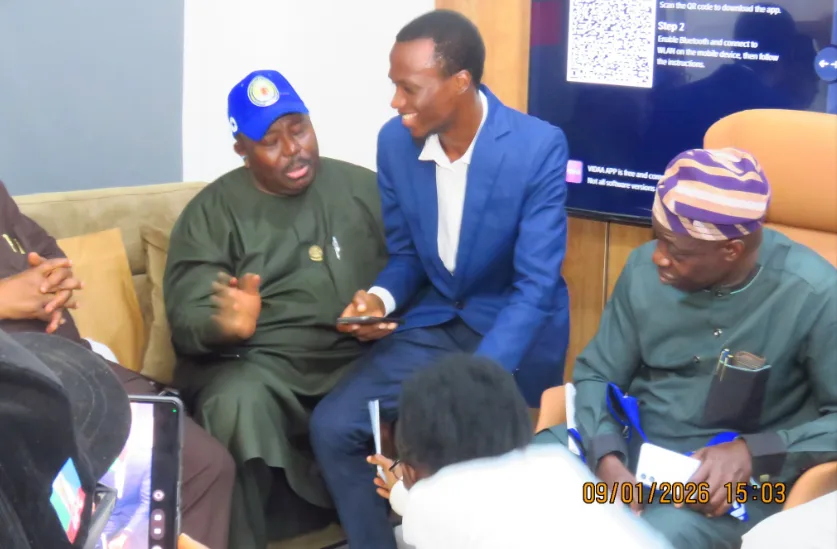
That is the uncomfortable lesson from the controversy surrounding Senator Sharafadeen Alli, the All Progressives Congress governorship candidate in Oyo State, after a video showing a young man sitting on his lap during an interaction in Ibadan went viral on Wednesday, September 2, 2026.
The first issue that must be established is factual accuracy. Contrary to several social-media posts describing the young man as a journalist, Alli’s campaign organisation said he was a student of The Polytechnic, Ibadan who, alongside other students, had visited the politician to seek support for a programme and conduct an interview. The campaign said the room was overcrowded, there were insufficient chairs, and Alli asked one of the students to sit on his lap so the engagement could continue. It described the gesture as spontaneous and fatherly and rejected attempts to sexualise the encounter.
That clarification matters. Journalism demands that allegations be separated from facts. A viral video is evidence of what a camera captured; it is not automatically evidence of the motive behind what happened. But there is another uncomfortable truth: an explanation can remove an allegation of improper intention without necessarily removing questions about poor judgment.
For a man preparing to govern Oyo State, the question should not merely be, “Was there anything sexual about the encounter?” The more important questions are: Was the arrangement appropriate? Was it necessary? Could it have been avoided? What message did it send? And, most importantly, was it sensible for a politician of Alli’s stature to participate in such an easily misunderstood scene? The answer to those questions deserves serious reflection.
Alli is not an ordinary private citizen. He is a serving senator representing Oyo South and, since his unveiling on July 2, 2026, the APC’s candidate for the 2027 Oyo governorship election. The party unveiled him alongside his running mate, Adesoji Adedeji, in Ibadan as it began efforts to reclaim the state. With that position comes a higher burden of judgment.
Public officials are constantly photographed, recorded and interpreted. In the age of smartphones, a few seconds can be removed from an hour-long engagement and circulated to millions of people without context. That reality makes discretion an essential political skill.
There is therefore something fundamentally wrong with the argument that because the act was supposedly innocent, there is nothing to discuss. Intent and perception are two different things. A public figure may have no improper intention and still make an avoidable judgment that creates an entirely unnecessary controversy.
The young man’s own position also deserves consideration. The available footage has prompted debate about whether he appeared comfortable with the arrangement. We should not claim to know his feelings merely from facial expressions or a short clip. But precisely because his comfort cannot be established from the footage, a politician in a position of authority should ordinarily err on the side of maintaining clear personal and professional boundaries.
There is also a lesson for the media. Some platforms immediately labelled the young man a “journalist”, while subsequent reports and the candidate’s campaign identified him as a student. That discrepancy demonstrates the danger of social-media journalism driven by speed rather than verification. A sensational headline may generate clicks, but it can also unfairly damage reputations.
At the same time, the media must not become so afraid of controversy that legitimate questions are dismissed as political blackmail. Alli’s campaign is entitled to defend him. Critics are equally entitled to question the wisdom of the encounter. The mature position lies between both extremes.
There is no responsible basis, from the available evidence, to assign a sexual motive to Alli or the student. But neither should Nigerians be told that they must suspend their judgment simply because the candidate says the incident was innocent.
For those of us observing Nigerian politics from the Diaspora, this episode is a reminder of a broader challenge: Nigeria needs public officials who understand not only power, but restraint.
The 2027 Oyo governorship contest should ultimately be about roads, jobs, education, healthcare, security, agriculture, investment and the competence to manage public resources. Alli and his opponents will have ample opportunity to explain their visions for the state. But before the campaigns become a battle of manifestos, politicians must understand something elementary about modern public life: the camera never forgets.
A candidate who wants the confidence of millions must learn to ask, before every public gesture: “How will this look to the people I seek to lead?”


CARICOM backs renewal of Haiti gang force mandate

US seeks roadmap to restart Russia-Ukraine peace talks — Rubio

US, Colombia negotiate tariff deal — Rubio

Pastor Jerry Eze Defends Miracles At UK Conference Amidst Criticism And Controversy

Diaspora Watch 20th Edition (October 14-20, 2024): Your Trusted Source for Global News and Insights

Tanzanian Man Reportedly Dies And Returns To Life Six Times


-

 Analysis6 days ago
The Dark Lessons From Anambra, by Boniface Ihiasota
-
 News6 days ago
98 Nigerians Killed in South Africa Since 2022, Fresh Deaths Deepen Diplomatic Row
-
 Analysis6 days ago
Kaduna’s Security Question, by Alabidun Shuaib AbdulRahman
-
 News5 days ago
CARICOM backs renewal of Haiti gang force mandate
-
 News5 days ago
US, Colombia negotiate tariff deal — Rubio
-
 Politics5 days ago
US seeks roadmap to restart Russia-Ukraine peace talks — Rubio