
News
A Beacon Of Hope in Nigeria’s Electoral Landscape: Obo Effanga’s Story


Obo Effanga, a paragon of integrity and a champion of democracy, has been a stalwart defender of free and fair elections in Nigeria long before his appointment as Resident Electoral Commissioner for Rivers State in 2017. With a career spanning over two decades, Effanga stands as a beacon of integrity and impartiality in Nigeria’s electoral landscape, inspiring hope in a country where the electoral process is often marred by controversy and malpractice.
As a trained journalist, lawyer, and governance expert, Effanga’s expertise extends far beyond election management. He holds a National Diploma in Mass Communications from The Polytechnic Calabar (1988), an LL.B (Hons) from the University of Calabar (1994), and a Master of Arts (MA) in Human Rights from the University of Sussex (2011).
Effanga’s impressive resume includes conducting several high-profile elections, such as the 2019 general election in Rivers State, the 2023 general election in Edo State, and the off-cycle Governorship Election in Bayelsa State in 2023. He has also supported off-cycle elections in many other states in Nigeria since 2017 and observed the presidential election in Venezuela in 2018.
Beyond his work in election management, Effanga is dedicated to community service. He has served as the President of the Nigerian Alumni Association of the International Fellowships Program of Ford Foundation, Vice Chair of the Efik Leadership Foundation, Past President of the Lagos Achievers Lions Club, and former national president (District President) of the Leo Club Programme in Nigeria. Effanga’s contributions to democracy and community service have been recognized with several awards, including:
— Columnist of the Year, Nigeria Media Merit Award (2004)
— Ford Foundation Scholar (2010/2011)
— Melvin Jones Fellow (MJF) from Lions Clubs International (2018)
He has also worked at ActionAid Nigeria for 11 years, including serving as management staff and Governance Programme Manager for more than six years. Additionally, he has worked as senior programme staff in other national NGOs in Nigeria.
As a newspaper columnist, Effanga has written for different national newspapers, spanning more than 15 years, and has been a member of the editorial board of NewAge newspaper. He has also written many editorial commentaries, essays, and poems, and has published two books: ‘To The Sun At Sundown’ and ‘Déjà Vu Nigeria’.
When asked about withstanding pressure from politicians, Effanga remains resolute: “I have zero tolerance for such and have not even bothered.” His commitment to neutrality and impartiality is unwavering, making him an exemplary figure in Nigeria’s electoral landscape.
As Effanga continues to serve as a guardian of democracy, his legacy as a champion of free and fair elections will endure, inspiring future generations of electoral umpires and cementing his place as an icon in Nigeria’s democratic journey. His remarkable journey serves as a shining example of the transformative impact of unwavering dedication, unshakeable integrity, and selfless service to humanity, leaving an indelible mark on Nigeria’s democratic fabric.



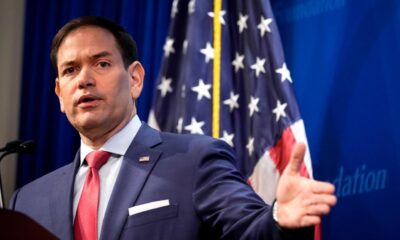
Rubio Reveals Late-Night Calls, Says No ‘Typical Day’ as US Security Chief
By Boniface Ihiasota, Washington DC
US Secretary of State, Marco Rubio, has revealed that the demands of his diplomatic and national security responsibilities sometimes require him to wake up as early as 2:30am to respond to developments around the world.
Rubio, who also serves as the US national security adviser, said the nature of international affairs had made it difficult to maintain a conventional work schedule, noting that crises and important developments could emerge at any hour.
He spoke during an interview with Katie Miller on The Katie Miller Podcast at the US State Department in Washington, DC, on Tuesday.
According to Rubio, his daily schedule varies depending on global developments, with some early-morning calls involving foreign leaders or classified briefings.
“Every day is different,” Rubio said, explaining that “wake up in the morning” could sometimes mean 2:30am when an international development required his attention.
He said some calls were made simply to direct him to a classified telephone so that he could receive sensitive information about an unfolding situation.
Rubio added that his responsibilities had kept him particularly busy on the national security front, including developments involving Iran and other international matters.
“There is really no slow time when it comes to national – international affairs,” he said.
Describing his normal working routine when circumstances permit, Rubio said he usually starts his day at the State Department before moving to the White House around noon.
He said he also participated in calls between US President Donald Trump and foreign leaders, some of which could begin as early as 7am.
Rubio said Trump’s own schedule was equally demanding, describing the President as someone who worked “every day, all day.”
He added that weekends were generally slower but did not necessarily provide a complete break from international affairs.
Rubio’s wife, Jeanette, who joined him during the podcast interview, said she usually remained asleep when his phone rang during the night.
“He gets up when he needs,” she said, explaining that Rubio would move to another room to handle late-night calls.
The former Florida senator also disclosed that his family arrangements had changed since he became Secretary of State.
Jeanette had previously remained in Florida while Rubio served in the US Senate because the couple wanted to maintain stability for their four children.
She said their children had since graduated from high school and were attending universities, allowing her to participate more actively in Rubio’s official engagements in Washington.
The couple also spoke about their family life, with Jeanette describing Rubio as a playful father who often pranked their children when they were younger.
Rubio said the demands of his current positions had made him appreciate family moments more, noting that every stage of life eventually became a cherished memory.
He said the experience had taught him to appreciate the present because “that moment’s not going to come back.”
CARICOM Urges Youths to Build Skills, Embrace Entrepreneurship
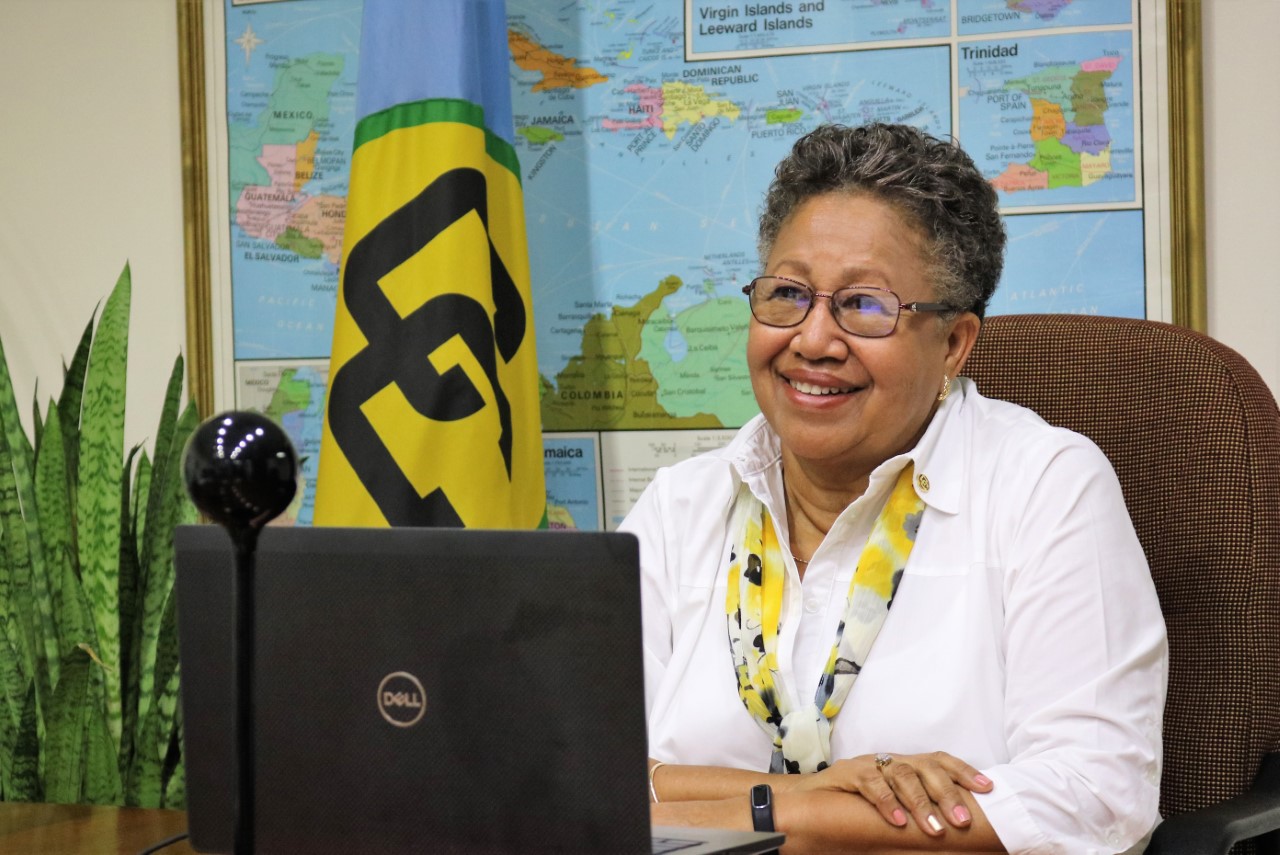
The Caribbean Community, CARICOM has urged young people across the region to develop their skills, embrace entrepreneurship and take an active role in shaping the future of their communities.
The CARICOM Secretary-General, Dr Carla Barnett, made the call in her message to mark International Youth Day on Wednesday, August 12, 2026.
The message was issued under the theme, ‘Different Contexts, Common Aspirations.’
Barnett said although Caribbean youths came from different countries, cultures and communities, they shared common aspirations, including access to quality education, decent work, safety, good health, opportunities and a meaningful voice in decisions affecting their lives.
She, however, noted that young people were pursuing these aspirations against the backdrop of rapid technological change, climate-related disasters, rising living costs, crime and violence, and growing concerns about mental and emotional health.
The secretary-general said young people had historically played important roles in shaping Caribbean economies, culture, sports, public institutions and social movements.
She said their contributions continued through entrepreneurship, digital innovation, agriculture, climate action, volunteerism, the creative industries and community leadership.
“CARICOM recognises that youth development is intrinsic to regional growth and sustainable development,” Barnett said.
She warned that policies could become less responsive to young people’s realities when their experiences were excluded from decision-making processes.
Barnett said the revised CARICOM Youth Development Action Plan recognises the need to improve young people’s access to education, decent work, finance and mental health support.
According to her, the plan places emphasis on entrepreneurship, environmental sustainability, digitisation and technology, as well as mental health, while establishing clearer milestones to guide regional action.
She also highlighted initiatives such as the CARICOM Single Market and Economy, CARICOM Youth Ambassador Programme and CARICOM Young Professionals Programme, saying they were helping to strengthen links between education, employment, entrepreneurship, mobility and public service.
Barnett, however, said opportunities were not equally available to all young people.
She identified rural and hinterland youths, persons with disabilities, indigenous youths, migrants, unemployed youths, young women and girls, and those outside education or training as groups facing additional barriers.
She called on Caribbean youths to continue contributing ideas and building connections across national borders.
“To the young people of the Caribbean Community, continue to bring forward your ideas, build across borders, and use your skills to strengthen your communities and the wider Region, towards a shared Caribbean future for dignity, opportunity and progress,” she said.
Barnett assured young people that CARICOM remained committed to working with them to shape the region’s future.
“Happy International Youth Day!” she added.
Adeleke’s Osun Victory: What It Means for Nigeria’s 2027 Elections
By Alabidun Shuaib AbdulRahman, Abuja, Nigeria
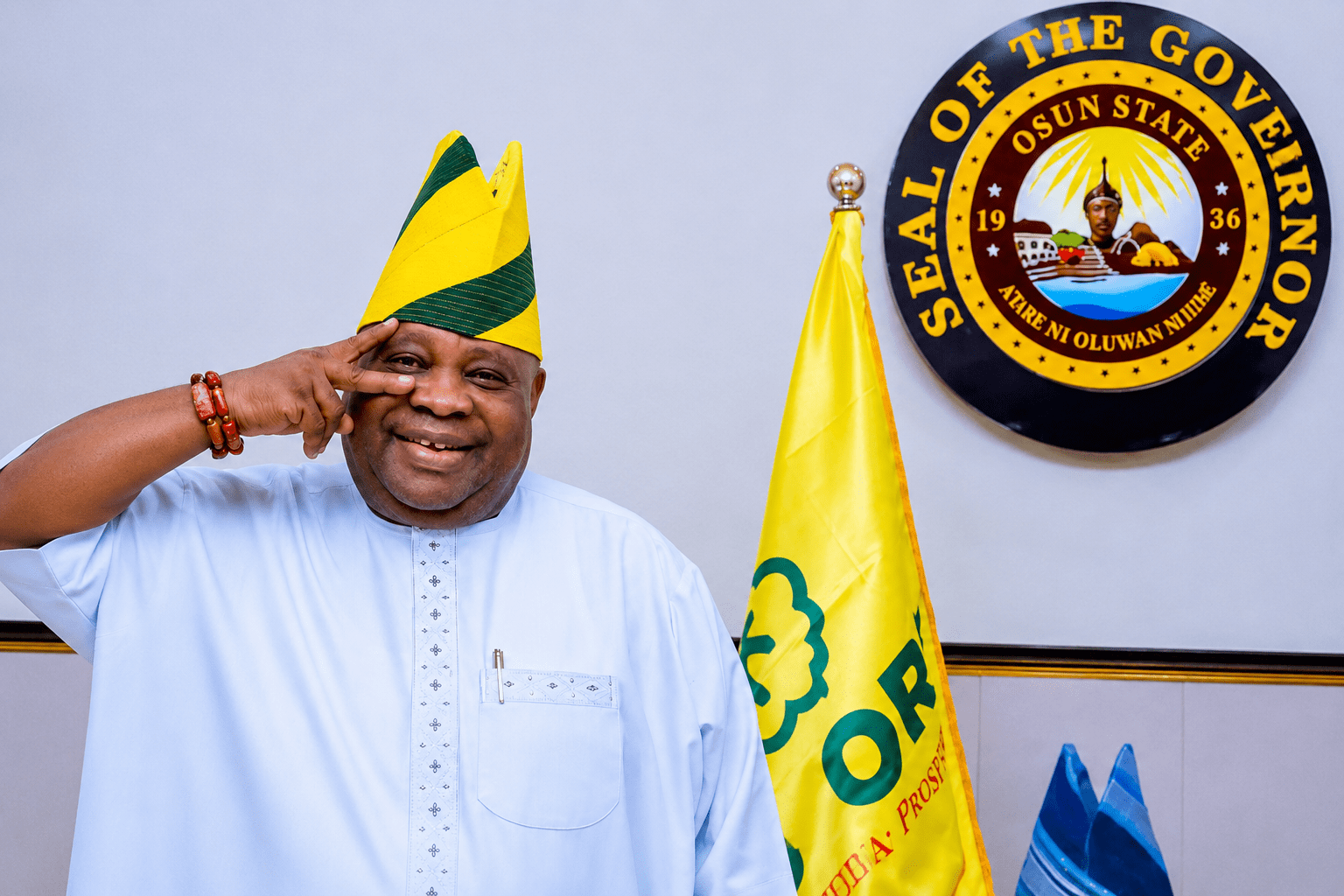
The re-election of Osun State Governor, Ademola Adeleke, has delivered more than a second term for the incumbent. It has produced a political signal that parties, presidential aspirants and strategists preparing for the 2027 general elections cannot afford to ignore.
Adeleke’s victory on the platform of the Accord Party is particularly significant because it came against a combination of political, institutional and structural obstacles. He defeated the candidate of the ruling All Progressives Congress, Bola Oyebamiji, by 511,067 votes to 444,815, a margin of 66,252 votes. The governor won 19 of the state’s 30 local government areas, while the APC candidate won 11.
The result is, therefore, not simply another off-cycle governorship election. It is a warning against assuming that control of the Federal Government automatically translates into electoral dominance at the state level.
A victory against formidable odds
Perhaps the most striking feature of Adeleke’s victory was the platform on which he contested.
The governor won his first term in 2022 under the Peoples Democratic Party but eventually left the party and contested his re-election under the Accord Party. That was a considerable political gamble. The PDP had historically been an important platform in Osun, while Accord had no comparable electoral weight in the state.
Yet Adeleke transformed what could have been a political liability into an electoral vehicle.
His victory also followed months of political uncertainty surrounding the Accord Party. In June, a Federal High Court judgment deregistering the party created questions about whether Adeleke would be able to contest on its platform. The governor’s camp rejected the development and pursued legal remedies, insisting that the party would remain on the ballot.
That episode demonstrated an important feature of Nigerian politics: electoral machinery is not necessarily the same thing as political popularity.
A party may have a weak national structure but become electorally formidable when a popular incumbent or candidate, political organisation and grassroots network are placed behind it.
Adeleke’s campaign also had to contend with the internal crisis within the PDP. The party’s Osun structure was embroiled in a leadership dispute over support for the governor’s re-election, with rival factions issuing conflicting directives.
Instead of allowing those problems to consume his campaign, Adeleke effectively built his own political structure around the election.
That may ultimately prove to be one of the most important lessons from Osun.
Federal might is not enough
The election also carries a message for the APC.
The party controls the Federal Government, but that advantage did not translate into victory in Osun.
For months, Adeleke and his supporters had warned against attempts to deploy federal institutions for partisan advantage. The governor specifically argued that federal power should be used for governance rather than electoral manipulation.
The significance of that argument became even greater when the EFCC froze an account belonging to the Osun State Government shortly before the election. The development generated political controversy and became another issue around which the election was contested.
Regardless of the competing arguments surrounding the action, the political lesson is clear: the closer an election gets, the more sensitive the public becomes to the actions of federal institutions.
For the APC, the Osun result should therefore trigger serious introspection ahead of 2027.
Federal incumbency gives a party enormous resources and visibility, but voters ultimately retain the power to separate federal politics from state politics.
Adeleke has also changed the South-West equation
Osun has traditionally been an important component of the South-West political equation.
The APC’s dominance in much of the region has often created the impression that the party possesses an almost automatic electoral advantage there. But Adeleke’s victory shows that the South-West remains politically competitive.
The governor did not merely defeat the APC. He did so after changing parties and without relying on the traditional strength of the PDP structure.
That raises a crucial question ahead of 2027: Can opposition politicians build electoral coalitions that transcend party labels? The Osun experience suggests that they can.
A popular candidate with an effective grassroots organisation can potentially survive the weakness of his party if voters are sufficiently convinced about his personal record, political identity and campaign message.
This could become particularly important in 2027, when the presidential contest is expected to be shaped not only by party structures but also by alliances, defections and personality-driven campaigns.
A message for Tinubu and the APC
Interestingly, Adeleke has publicly backed President Bola Tinubu for the 2027 presidential election despite being outside the APC. The development was reported in March and the governor reaffirmed his support for Tinubu’s re-election bid again immediately after he was announced.
That creates an unusual political configuration.
Adeleke has defeated Tinubu’s party in a governorship election but has simultaneously expressed support for Tinubu’s presidential ambition.
This demonstrates that Nigerian electoral politics is becoming increasingly transactional and candidate-driven. State-level contests may not necessarily reproduce presidential alliances.
In other words, a governor can oppose the President’s party in a state election without necessarily opposing the President at the national level.
That distinction will matter enormously in 2027.
If similar arrangements emerge across the country, the presidential election could produce alliances that cut across conventional party boundaries.
The PDP should be worried — but not entirely defeated
The outcome is also a complicated development for the PDP.
On one hand, the party can point to the fact that a governor who won his first term under its platform has retained his seat. On the other hand, Adeleke did not win under the PDP. He won under Accord. That distinction should worry the opposition party.
If popular politicians begin to believe that they can win elections by creating alternative platforms rather than depending on established parties, the traditional political parties may lose some of their bargaining power.
The PDP’s internal crisis in Osun before the election only reinforces the problem.
For the party to remain competitive in 2027, it must address its factional disputes, candidate-selection problems and leadership disagreements. Otherwise, politicians may increasingly seek alternative platforms.
The real winner: the voter?
There is another dimension to the Osun result that deserves attention.
Adeleke’s victory came in an election involving 15 political parties and more than one million accredited voters. The final result showed a competitive contest rather than a one-sided political coronation.
Adeleke secured 511,067 votes, while Oyebamiji of APC obtained 444,815.
The 66,252-vote margin is substantial, but it is not overwhelming when placed against the size of the electorate.
That means the APC cannot dismiss the result as an insignificant defeat, just as Adeleke cannot interpret it as an unlimited mandate.
The governor has won another four years, but the election has demonstrated that a sizeable portion of Osun voters still preferred the opposition candidate. The lesson for 2027 is that every serious vote will matter.
What Osun tells us about 2027
The first major lesson is that incumbency remains powerful, but it is not invincible. Adeleke used the advantages of incumbency, his administration’s record and his personal popularity to overcome a major party disadvantage.
Second, party affiliations may become less important than candidates and coalitions.
The Accord Party’s victory in Osun is particularly instructive because it demonstrates that a relatively small political platform can become competitive when attached to a sitting governor with a strong electoral base.
Third, internal party crisis can cost elections.
The PDP’s troubles and the APC’s inability to convert its federal dominance into a state victory should serve as warnings to the major parties.
Fourth, the South-West should not be treated as a political monolith.
The region will remain central to the 2027 presidential contest, but Osun has demonstrated that voters can make different choices at different electoral levels.
Finally, the credibility of electoral institutions will be critical.
The controversies preceding the election, including the dispute over Accord’s legal status and concerns surrounding political and security developments, underline the importance of INEC and security agencies maintaining public confidence. Although President Tinubu had charged security chiefs to ensure maximum security and urged INEC to guarantee a free and fair election.
The bigger political warning
Adeleke’s second-term victory should not be interpreted as a prediction that the APC will lose the 2027 presidential election. That would be an overstatement. Neither should it be interpreted as proof that opposition parties have suddenly become stronger than the ruling party.
What Osun has done is more important: it has challenged the assumption that electoral outcomes can be predetermined by party dominance, federal power or political calculations made in Abuja.
The 2027 election will ultimately be decided state by state, ward by ward and polling unit by polling unit.
The Osun electorate has shown that voters can reward an incumbent even when he changes political platforms and can reject a candidate backed by the dominant party.
For President Tinubu and the APC, the message is unmistakable: the 2027 election cannot be won by assuming that incumbency alone guarantees victory.
For the opposition, the lesson is equally sobering: Adeleke’s formula cannot simply be copied. A strong personality, an effective grassroots organisation, a credible campaign and a candidate capable of building alliances were all necessary.
The Osun election has therefore changed the political conversation ahead of 2027. Adeleke has secured another four years.
But perhaps his most important achievement is that, in defeating the political establishment in Osun, he has demonstrated that Nigeria’s next general election may be far more competitive, unpredictable and candidate-driven than many of the country’s political calculations currently suggest.



Rubio Reveals Late-Night Calls, Says No ‘Typical Day’ as US Security Chief

Chiemela Nathan: The ‘Girl With an Agenda’ Who Turned Excellence Into Leadership

CARICOM Urges Youths to Build Skills, Embrace Entrepreneurship

Pastor Jerry Eze Defends Miracles At UK Conference Amidst Criticism And Controversy

Diaspora Watch 20th Edition (October 14-20, 2024): Your Trusted Source for Global News and Insights

Tanzanian Man Reportedly Dies And Returns To Life Six Times


-
 News22 hours ago
Five Years on the Throne: Reflecting on the Reign of the Olu of Warri, by Boniface Ihiasota
-
 Analysis22 hours ago
Adeleke’s Osun Victory: What It Means for Nigeria’s 2027 Elections
-

 Analysis22 hours ago
Before Wike Turns Abuja City to Jakarta, by Alabidun Shuaib AbdulRahman
-
 Milestone21 hours ago
Chiemela Nathan: The ‘Girl With an Agenda’ Who Turned Excellence Into Leadership
-
 News21 hours ago
Rubio Reveals Late-Night Calls, Says No ‘Typical Day’ as US Security Chief
-

 News22 hours ago
Harry, Meghan to return to Britain with children six years after royal exit