
Analysis
As G20 Moves On Without America, by Alabidun Shuaib AbdulRahman

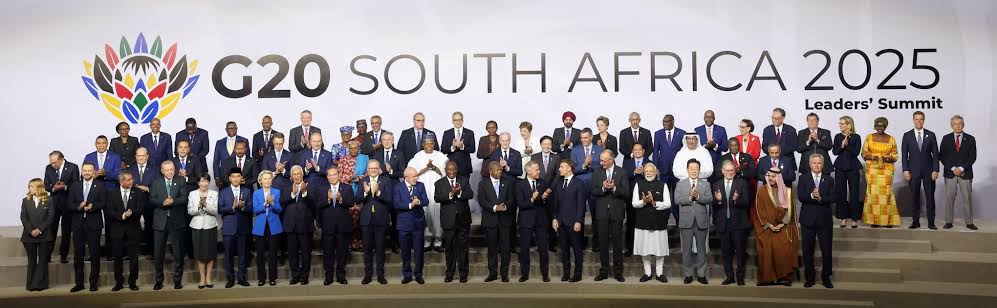
As G20 Moves On Without America, by Alabidun Shuaib AbdulRahman
When the G20 summit convened this November in Johannesburg, the first time the gathering has ever been held on African soil, one seat was starkly empty. The world’s largest economy, the Donald J. Trump-led United States, simply refused to attend. No president, no senior envoy, not even a delegation. The absence was louder than any diplomatic communiqué, a void that hung over the proceedings like an unspoken challenge.
For weeks before the summit, Trump had telegraphed the boycott. He announced that no U.S. official would participate, calling it “a total disgrace” that the gathering was being hosted in South Africa. He justified the walkout with allegations that Pretoria was enabling abuses against its white-minority Afrikaner community and presiding over land seizures and a supposed “white genocide”—claims widely rejected within South Africa and dismissed by many global observers. Still, he held to his stance, ensuring that the United States would be missing from the table it once dominated.
Yet the empty chair did not halt the summit. Far from it. When the doors closed and the work began, more than forty countries and organisations had confirmed their participation. According to South Africa’s foreign-affairs minister, a total of forty-two delegations were registered: twenty G20 member states (excluding the U.S.), sixteen invited guest nations, and six representing regional economic blocs across Africa, the Caribbean and East Asia. It was one of the most diverse gatherings in the forum’s history.
Of the twenty G20 member states, a clear majority sent their heads of state or government. Four countries opted for high-level substitutes: Russia, Mexico and Argentina sent their foreign ministers or equivalents, while China was represented by its Premier rather than President Xi Jinping. Apart from these deviations and the complete American boycott, the turnout remained strong. At least sixteen G20 countries had their top leadership present, a level consistent with or even above several previous summits.
The question, then, is what this moment signifies—for the G20, for Africa’s place in global governance, and for a world increasingly shaped by fractured geopolitics.
The symbolic dimension is impossible to ignore. For decades the United States has been the gravitational centre of global economic coordination, the anchor whose participation guaranteed that G20 pronouncements could be translated into global action. Without Washington in the room, many of the traditional levers of influence like financial stability mechanisms, trade dynamics, institutional power felt looser and less predictable. The absence introduced doubt: could the G20 still claim to be the premier platform for steering the global economy if its most powerful member stayed away? Some analysts wondered whether the forum’s future was in jeopardy.
Yet paradoxically, the boycott created breathing space. Instead of collapsing under the weight of American non-participation, the summit moved forward with surprising cohesion. Leaders adopted a 122-point declaration issued unusually on the summit’s opening day that centred on climate action, debt sustainability, energy transition and global inequality. These were not peripheral concerns but core priorities, particularly for developing economies. And critically, they reflected Africa’s agenda far more directly than in past years.
For Africa, a continent long relegated to the fringes of global decision-making, the Johannesburg summit brought a subtle but significant shift. It marked a moment where issues that have shaped African suffering and aspiration, unsustainable debt, climate vulnerability, access to green energy, development finance were not treated as charity cases or footnotes but as global imperatives. South Africa’s leadership in shaping the agenda was evident: it shepherded conversations that placed the continent not as a crisis zone but as a partner with agency.
Even the ending of the summit carried symbolism. The traditional handover of the G20 presidency, typically marked by the passing of a wooden gavel from one host to the next, did not unfold in its usual choreography. President Cyril Ramaphosa brought the meeting to a close with a strike of the gavel, but there was no American official to step forward and receive the ceremonial baton. The moment underscored the deeper reality: the world’s most powerful nation had chosen absence in a year when Africa chose presence.
Naturally, this raised concerns. If powerful states begin treating multilateral forums as optional, depending on domestic politics or ideological sentiments, the foundations of global governance weaken. The G20 has played central roles in navigating financial crises, stabilising commodity markets, coordinating pandemic responses and mobilizing climate finance. A precedent where a superpower boycotts the summit could encourage similar behaviour by others in future moments of crisis. The potential ripple effects on global trust, crisis management and economic coordination are worrying.
But Johannesburg also demonstrated that the G20 is more adaptable than its critics assume. Instead of paralysis, the summit produced consensus. Instead of division, it surfaced shared interests. And instead of waiting for the United States to validate decisions, countries across continents showed that cooperation was still possible, even necessary, without America’s guiding hand.
For many African nations, this sense of possibility was palpable. For years, they have been the subjects of global policies drafted in distant capitals. In Johannesburg, they felt more like contributors. The declaration reflected structural concerns that matter from Lagos to Nairobi: access to concessional finance, green industrialization, fair energy transition pathways, investment in resilience rather than repeated cycles of vulnerability. These were not afterthoughts but central pillars.
Still, optimism should remain grounded. Declarations alone do not build roads, transition energy grids or relieve debt burdens. They do not shift the voting power held by wealthy nations in global financial institutions. And they do not erase the influence the United States wields over the IMF, World Bank and other structures that control the flow of global capital. Even in absence, Washington’s shadow is long.
At the same time, the boycott raises uncomfortable questions about the future. If summits can be walked away from because of domestic political narratives or ideological disagreements, the global architecture becomes more fragile. Future crises, whether debt shocks, pandemics, food shortages or climate-induced disasters require collaboration and not boycotts. A forum that can be abandoned sets troubling precedents.
Yet this moment may also become a hinge in history. Not because it solves everything, but because it marks a shift in rhythm. It shows the system bending, under pressure, toward greater inclusion. It proves that Africa can host, convene and even lead. More than nineteen members signed the declaration; voices from the Global South resonated with unusual clarity. And for once, those who are often asked to wait for the powerful to decide had already begun making decisions of their own.
For Nigeria, the implications are profound. The global conversation is moving toward issues that directly affect its development path: debt restructuring, climate resilience, green industrial transformation, food security and transparent governance. Nigeria must engage with these shifts deliberately. Declarations will mean little if national policy fails to align with them. The country needs bold investments in climate adaptation, expanded support for agriculture and manufacturing, improved fiscal management and stronger accountability mechanisms. Its diaspora and civil society have roles to play as watchdogs, advocates and bridges linking global promises to local action.
The United States will remain central in global affairs. Its currency, markets and institutional power ensure that. But the Johannesburg summit demonstrated something important: relevance in the G20 is no longer solely measured by presence. Sometimes absence reshapes the conversation more than participation. The empty chair at Johannesburg was not just a diplomatic symbol; it became a catalyst for rethinking old assumptions.
The challenge now is to ensure that the space created by that absence is not wasted. The real measure of success will lie in implementation in whether climate justice initiatives become real funding pipelines, whether debt deals become fairer, whether green energy investments materialise, and whether global decisions begin to reflect the needs of people from Kenya to Ghana, rather than only those in United States or Germany. It will lie in whether African leaders rise to the occasion, using the moment to insist on equity rather than settling for symbolism.
The world watched as the G20 pressed on, limping perhaps, but moving. And Africa did more than host; it spoke, it influenced, it guided. If Nigeria and the rest of the continent seize the momentum, the reverberation of that gavel strike in Johannesburg could echo not only through global institutions but through local communities seeking fairness and development.
In the end, the empty seat left behind by the United States did not define the summit. The G20 may not have needed America to agree on a declaration in 2025. But building a future that transcends absence will require a different kind of presence.
If Africa answers that call, history may yet record that the empty chair marked not a failure, but the beginning of something new.
Alabidun is a media practitioner and can be reached via alabidungoldenson@gmail.com








Nigeria’s Stakes in a Fractured Middle East, by Boniface Ihiasota
As confrontation among the United States, Israel and Iran deepen, the tremors are being felt far beyond the Middle East. What may appear, at first glance, as a distant geopolitical rivalry carries significant consequences for economies like Nigeria’s, for Nigerians working across the Gulf, and for a government already grappling with fiscal, security and inflationary pressures at home.
The rivalry between Israel and Iran has simmered for decades, manifesting through proxy conflicts in Lebanon, Syria and Gaza. The United States, Israel’s closest ally, has repeatedly confronted Iran over its nuclear programme, regional influence and support for armed groups. Periodic flare-ups — including airstrikes, missile exchanges and targeted assassinations — have raised fears of a broader regional war. Each escalation has renewed concerns about the stability of the Gulf, which remains the artery of the global oil market.
The Strait of Hormuz, a narrow shipping lane between Oman and Iran, is one of the most strategic chokepoints in the world. According to the U.S. Energy Information Administration, roughly 20 per cent of global petroleum liquids consumption — about 20 million barrels per day — transits through that corridor. Any threat to traffic through the Strait immediately sends oil prices upward. In previous episodes of heightened tension, Brent crude prices have jumped sharply within days of military confrontations.
For Nigeria, higher oil prices present a paradox. Crude oil still accounts for the overwhelming bulk of Nigeria’s export earnings — typically between 80 and 90 per cent — and about half of government revenues. When global prices rise above budget benchmarks, the Federation Account stands to gain additional inflows. In times of fiscal strain, such windfalls can temporarily ease pressure on foreign reserves and public finances.
However, history teaches caution. Oil price spikes driven by conflict are often volatile and short-lived. Markets respond quickly to diplomatic signals, ceasefire talks or de-escalation efforts. Nigeria’s production constraints further limit how much benefit can be captured. The country has struggled in recent years to consistently meet its OPEC quota due to oil theft, pipeline vandalism and infrastructure challenges. Without sustained production above 1.5 million barrels per day, revenue gains from price increases may not fully translate into fiscal stability.
Beyond government revenue, there is the inflationary dimension. Rising global oil prices increase the cost of refined petroleum imports, shipping and logistics. Although Nigeria is expanding domestic refining capacity, it still imports a portion of its refined products. Higher energy costs globally can translate into higher prices for food, manufactured goods and transportation. In an economy already facing elevated inflation, any additional imported cost pressure could worsen living standards.
There is also the human dimension. Millions of Nigerians reside and work across the Gulf Cooperation Council countries, particularly in the United Arab Emirates, Saudi Arabia and Qatar. Remittances from Nigerians abroad are a critical pillar of household income and foreign exchange. The World Bank has estimated Nigeria’s annual remittance inflows in recent years at around $20 billion, making it one of the largest recipients in Sub-Saharan Africa. Any prolonged regional instability that disrupts employment, air travel or financial flows in the Gulf would directly affect Nigerian families.
During previous Middle Eastern crises, airspace closures and airline suspensions disrupted travel routes that many Nigerians rely upon for business, education and pilgrimage. Escalation between major regional powers raises the risk of similar disruptions. The Nigerian government must therefore maintain accurate records of its citizens in vulnerable areas and strengthen consular responsiveness.
Security considerations also demand attention. Nigeria is a religiously diverse society with historical sensitivities that can be inflamed by international events. Conflicts in the Middle East sometimes trigger protests or polarised rhetoric at home. Authorities must be vigilant to ensure that global tensions are not exploited by local actors to deepen sectarian divides or spread misinformation. In an age of social media amplification, narratives from distant battlefields can travel rapidly and distort domestic discourse.
Diplomatically, Nigeria occupies a delicate position. As Africa’s largest economy and a longstanding contributor to United Nations peacekeeping missions, Nigeria traditionally supports peaceful resolution of disputes and adherence to international law. Escalation between the United States, Israel and Iran will test the country’s diplomatic balancing act, particularly given its economic ties to Western partners and its solidarity with developing nations in multilateral forums.
Preparation, therefore, is essential. Fiscal prudence must accompany any temporary oil windfall. Excess revenues, if realised, should strengthen reserves and reduce debt vulnerabilities rather than fund unsustainable spending. Production security in the Niger Delta must remain a priority to ensure that Nigeria can benefit legitimately from favourable market conditions. The Central Bank and fiscal authorities must also anticipate currency volatility linked to global risk sentiment.
At the same time, diaspora engagement should be proactive. Clear communication channels, emergency response planning and coordination with host governments can mitigate risks to Nigerians abroad. Intelligence and community outreach at home will help preserve social cohesion.
The confrontation among the United States, Israel and Iran may unfold thousands of kilometres away, but its economic currents, security implications and political symbolism flow directly toward Nigeria. In an interconnected global system, distance offers no insulation. What remains within Nigeria’s control is preparedness — the capacity to convert short-term opportunity into long-term stability, and to shield its citizens from the unintended consequences of distant wars.
The United States, Israel and the Iran Question, by Alabidun Shuaib AbdulRahman
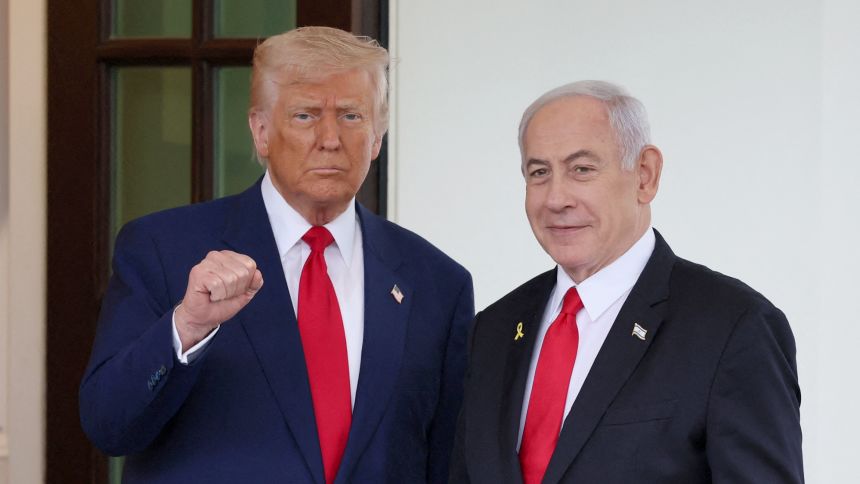
In the theatre of West Asian geopolitics, few rivalries have proved as enduring, combustible and globally consequential as that between the Islamic Republic of Iran on one side and the United States and Israel on the other. Though there has been no formally declared all-out war between Washington, Tel Aviv and Tehran, what has unfolded over decades is a sustained shadow war—punctuated by assassinations, cyberattacks, proxy confrontations, economic strangulation and calibrated military strikes. To describe it merely as standoff is to understate its strategic depth; to label it a conventional war is to misunderstand its hybrid, multi-layered character.
The roots of hostility between the United States and Iran trace back to 1979. On February 11 of that year, the Iranian Revolution led by Ayatollah Ruhollah Khomeini overthrew Shah Mohammad Reza Pahlavi, a key American ally in the Persian Gulf. The subsequent seizure of the US Embassy in Tehran on November 4, 1979, and the 444-day hostage crisis marked a definitive rupture. Diplomatic relations were severed in April 1980. Since then, relations have oscillated between cautious engagement and open confrontation, but never reconciliation.
For Israel, Iran’s transformation into an ideologically anti-Zionist state posed an existential dilemma. The Islamic Republic’s leadership has consistently refused to recognise Israel and has supported armed groups such as Hezbollah in Lebanon and Hamas in Gaza. This ideological antagonism hardened over time into strategic rivalry, especially as Iran expanded its regional footprint in Iraq, Syria and Lebanon after the 2003 US-led invasion of Iraq.
The nuclear question sharpened the conflict. In 2002, revelations about undisclosed Iranian nuclear facilities in Natanz and Arak intensified Western suspicions about Tehran’s intentions. Israel, under successive prime ministers including Ariel Sharon and later Benjamin Netanyahu, framed Iran’s nuclear programme as an existential threat. Netanyahu’s address to the United States Congress on March 3, 2015—delivered in opposition to then-President Barack Obama’s policy—underscored Israel’s resistance to any deal that, in its view, left Iran with nuclear latency.
That deal materialised on July 14, 2015, when Iran and the P5+1 (the United States, United Kingdom, France, Russia, China and Germany) signed the Joint Comprehensive Plan of Action (JCPOA). The agreement imposed strict limits on Iran’s uranium enrichment in exchange for sanctions relief. However, on May 8, 2018, President Donald Trump withdrew the United States from the accord, describing it as “the worst deal ever negotiated.” The reimposition of sweeping sanctions under the “maximum pressure” campaign plunged Iran’s economy into recession and escalated rivalries across the Gulf.
What followed was a cycle of escalation. On January 3, 2020, a US drone strike near Baghdad International Airport killed Major General Qassem Soleimani, commander of Iran’s Quds Force. The strike marked one of the most dramatic overt confrontations between the two states. Iran responded on January 8, 2020, by launching ballistic missiles at US bases in Iraq, injuring dozens of American personnel. The region teetered on the brink of open war, but both sides ultimately calibrated their actions to avoid full-scale conflict.
Parallel to the US-Iran confrontation, Israel intensified what it termed the “campaign between wars” (MABAM), targeting Iranian military infrastructure in Syria. Since 2013, Israel has conducted hundreds of airstrikes aimed at preventing Iran from entrenching itself militarily near Israeli borders. The covert dimension of this war has included cyber operations—most notably the Stuxnet virus, widely attributed to US-Israeli cooperation around 2010, which damaged Iranian centrifuges at Natanz—and assassinations of Iranian nuclear scientists, including Mohsen Fakhrizadeh, killed on November 27, 2020.
Geopolitically, the conflict is nested within broader power realignments. The Abraham Accords, signed on September 15, 2020, normalised relations between Israel and the United Arab Emirates and Bahrain, later joined by Morocco and Sudan. Though framed as peace agreements, they also represented the crystallisation of a tacit anti-Iran coalition among certain Arab states and Israel. Saudi Arabia, while not formally part of the Accords, has long viewed Iran as its principal regional rival, particularly in Yemen and the Gulf.
Iran, for its part, has relied on asymmetric warfare and proxy networks. Hezbollah in Lebanon, the Popular Mobilisation Forces in Iraq, the Houthis in Yemen and various militias in Syria form what analysts describe as Iran’s “Axis of Resistance.” This network enables Tehran to project power without inviting direct conventional confrontation with superior US and Israeli forces.
The world economy sits uncomfortably at the heart of this contest. Iran borders the Strait of Hormuz, through which roughly 20 per cent of global oil supply transits. Any significant disruption would reverberate through energy markets. During periods of heightened crisis—such as June 2019, when oil tankers were attacked near the Gulf of Oman—global crude prices spiked. The mere spectre of closure of the Strait can unsettle markets from New York to Shanghai.
Sanctions have had mixed global effects. For Iran, they have meant currency depreciation, inflation and reduced oil exports. For global markets, they have tightened supply, particularly when combined with other shocks such as Russia’s invasion of Ukraine in February 2022. Energy-importing countries, including many in sub-Saharan Africa, feel the downstream effects in fuel prices and inflationary pressures. Nigeria, despite being an oil producer, is not insulated; global price volatility influences domestic subsidy debates, fiscal planning and foreign exchange stability.
Allies of the United States are caught in a delicate balancing act. European signatories to the JCPOA—France, Germany and the United Kingdom—have consistently supported diplomatic engagement while criticising Iran’s ballistic missile programme and regional activities. The European Union has attempted to preserve the nuclear deal framework even after Washington’s withdrawal, though with limited success. NATO as an institution is not formally engaged in hostilities with Iran, but US actions inevitably affect alliance cohesion.
Israel’s allies, particularly the United States, have reaffirmed an “ironclad” commitment to its security. Military aid to Israel has averaged approximately $3.8 billion annually under a 10-year memorandum of understanding signed in 2016. In times of heightened tension, Washington has deployed carrier strike groups to the Eastern Mediterranean and Persian Gulf as a deterrent signal to Tehran.
On the other side, Iran’s strategic partnerships with Russia and China have deepened. In March 2021, Iran and China signed a 25-year cooperation agreement covering energy, infrastructure and security. Russia and Iran have also expanded military and economic ties, particularly after Western sanctions isolated Moscow in 2022. Yet neither Beijing nor Moscow appears eager to be drawn into a direct war on Iran’s behalf; their support is calibrated, not unconditional.
What of the broader Global South? Countries in Africa, Latin America and parts of Asia often view the US-Iran-Israel confrontation through the prism of non-alignment and economic pragmatism. Many rely on Gulf remittances, energy imports or trade routes vulnerable to instability. An open war would likely trigger oil price surges, shipping disruptions and currency volatility. For fragile economies already grappling with debt distress and food insecurity, such shocks could prove destabilising.
There is also the nuclear proliferation dimension. If Iran were to cross the nuclear threshold—an outcome Israeli leaders have repeatedly vowed to prevent—regional rivals such as Saudi Arabia might pursue their own nuclear capabilities. Crown Prince Mohammed bin Salman stated in a March 2018 interview with CBS that if Iran developed a nuclear weapon, “we will follow suit as soon as possible.” The prospect of a multipolar nuclear Middle East would dramatically alter global security calculations.
Yet it is important to distinguish rhetoric from reality. As of the latest publicly available assessments by the International Atomic Energy Agency, Iran has enriched uranium to high levels but has not formally declared a nuclear weapons programme. Israel, widely believed to possess nuclear weapons though it maintains a policy of ambiguity, has not signed the Nuclear Non-Proliferation Treaty. The asymmetry complicates diplomatic discourse and fuels mutual suspicion.
What, then, is expected of allies? For the United States, allies will likely provide diplomatic backing, intelligence cooperation and, in some cases, logistical support. Direct troop commitments appear improbable outside extreme scenarios. For Israel, regional partners under the Abraham Accords may quietly facilitate airspace access or intelligence sharing, though overt participation in strikes against Iran would risk domestic backlash.
For Iran’s allies and partners, the expectation would centre on economic lifelines and diplomatic shielding at the United Nations Security Council. Russia and China could veto resolutions perceived as authorising force. However, both powers must weigh their broader economic ties with Gulf states and Israel.
Ultimately, the “war” waged on Iran by the United States and Israel is less a single conflagration than a prolonged strategic contest. It is fought in airspace over Syria, in the waters of the Gulf, in cyber networks and in negotiating rooms from Vienna to New York. Its tempo fluctuates, but its structural drivers—ideology, security dilemmas, regional hegemony and nuclear anxieties—remain entrenched.
For the global world, the implications are sobering. Energy markets remain hostage to escalation. International law is strained by targeted killings and covert operations. Multilateral diplomacy oscillates between revival and collapse. In an era already defined by great power rivalry, the Iran question adds another layer of volatility.
The lesson of the past four decades is that neither maximum pressure nor calibrated strikes have resolved the underlying dispute. Nor has Iran’s strategy of resistance compelled recognition on its terms. The path forward, if there is one, lies not in rhetorical absolutism but in a recalibration of deterrence and diplomacy.
Alabidun is a media practitioner and can be reached via alabidungoldenson@gmail.com
Savannah Shield and the Security Recalibration of Kwara State
By Alabidun Shuaib AbdulRahman
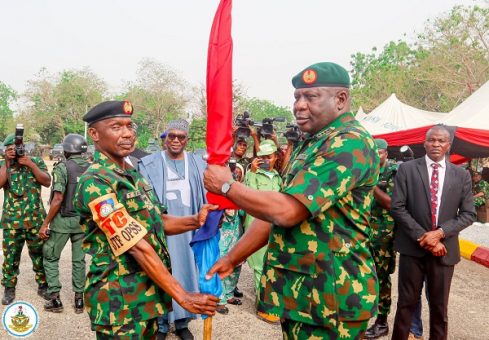
On Thursday, 19 February 2026, at the historic Sobi Barracks in Ilorin, Kwara State did more than launch a security operation. It signalled a recalibration. The formal flag-off of Operation Savannah Shield by Governor AbdulRahman AbdulRazaq alongside the Chief of Defence Staff, General Olufemi Oluyede, the Chief of Army Staff, Lieutenant General Waidi Shaibu, senior Nigerian Army commanders and heads of security agencies represented a strategic adjustment to a changing threat landscape.
Having covered Nigeria’s major military theatres for nearly a decade — from Operation Sharan Daji to Operation Accord and to Operation Sahel Sanity and now Hadarin Daji in the North-West to Operation Delta Safe in the South-South and Operation Safe Haven and Operation Whirl Stroke in the North-Central — I have come to understand that recalibration, not reaction, defines sustainable security. Savannah Shield is best understood within that framework: a preventive correction designed to interrupt an emerging trajectory before it hardens into crisis.
Kwara’s security story over the past two years has been one of gradual but undeniable pressure. Between 2024 and 2025, reported kidnapping incidents along the Ilorin–Jebba–Mokwa corridor and rural incursions in parts of Kaiama and Baruten Local Government Areas raised alarm within security circles. National crime tracking datasets and internal security briefings presented in Abuja in late 2025 reflected a broader pattern: North-Central Nigeria recorded an increase in abduction cases year-on-year, mirroring spillover effects from the North-West’s entrenched banditry networks.
Kwara was not yet a frontline theatre. But it was no longer peripheral. Geography partly explains the vulnerability. The state shares strategic boundaries with Niger State to the north and Kogi to the east, while expansive savannah woodland and forest belts — particularly near Kainji Lake — provide concealment corridors. In conflict reporting, terrain is destiny. In Zamfara, forests became staging grounds for bandits. In Kaduna, forest belts enabled mobile kidnapping cells. Kwara’s terrain, if left insufficiently policed, risked similar exploitation.
It is important to distinguish threat types accurately. Kwara is not contending with a large-scale ideological insurgency akin to Boko Haram’s campaign in Borno. The dominant security pattern has been criminal banditry — kidnapping for ransom, cattle rustling and sporadic attacks targeting vulnerable communities. Yet the distinction offers little comfort if criminal enclaves begin to entrench themselves. Across Nigeria, the line between economic criminality and violent extremism has proven porous when safe havens emerge.
Operation Savannah Shield therefore represents an anticipatory defence. Its structure reflects lessons from other theatres. Rather than a fragmented deployment, it integrates the Nigerian Army, Nigeria Police Force, Nigeria Security and Civil Defence Corps and intelligence services under coordinated planning. Area domination patrols, forest clearance missions and rapid-response operations are being conducted simultaneously with intelligence gathering and surveillance.
The February 19 launch was not ceremonial theatre. It followed months of consultation between the Kwara State Government and federal authorities. Governor AbdulRahman AbdulRazaq’s engagement with the Presidency and defence leadership secured additional military reinforcement. The visible presence of the Chief of Defence Staff at the launch conveyed federal seriousness — a signal that Kwara’s recalibration had national backing.
From a factual standpoint, the state government has not limited itself to rhetoric. In the 2025 fiscal cycle, budgetary allocations supporting security logistics were increased. Confirmed procurement of patrol vehicles and communication equipment enhanced operational mobility. Community policing initiatives were expanded, and liaison structures strengthened between security agencies and traditional institutions.
Mobility and intelligence are operational currencies. In Kaduna between 2021 and 2023, the integration of aerial surveillance and ground coordination under Operation Thunder Strike reduced high-profile highway kidnappings along key corridors. In Zamfara, initial fragmentation under Operation Hadarin Daji slowed results until unified command structures were enforced. Kwara appears to have internalised those lessons from inception.
Since the launch of Operation Savannah Shield, early field reports suggest measurable improvements in patrol visibility along previously vulnerable routes. Residents in parts of Kwara North have reported increased security presence compared with late 2025. Security officials privately confirm that sustained patrol cycles have disrupted criminal mobility patterns. While comprehensive operational statistics remain confidential for tactical reasons, the qualitative indicators point to stabilisation momentum.
But recalibration demands depth, not just deployment. The sustainability question looms large. Military offensives can suppress activity; lasting stability depends on institutional reinforcement. The Nigeria Police Force in Kwara must build intelligence capacity and data-driven crime mapping systems to assume long-term stabilisation roles once immediate military pressure reduces threat intensity.
In every theatre I have covered, gains proved fragile when civilian policing capacity lagged behind military success.
Judicial coordination is equally critical. Arrested suspects must face timely prosecution. Kaduna’s experience in strengthening prosecution processes between 2022 and 2023 offers a useful blueprint. Deterrence is anchored not merely in arrest numbers but in the certainty of consequence. Kwara’s Ministry of Justice must align operational tempo with judicial throughput.
Security recalibration also intersects with economic policy. Kwara’s northern agricultural belt contributes significantly to food production. When insecurity disrupts planting and harvesting cycles, economic ripple effects follow — affecting markets, employment and food inflation. By stabilising rural communities, Savannah Shield safeguards both livelihoods and macroeconomic resilience.
Inter-state coordination will determine whether recalibration endures. Criminal networks relocate under pressure. I observed this dynamic in the North-West, where offensives in one state displaced bandits into neighbouring territories. Kwara must institutionalise intelligence-sharing protocols with Niger, Kogi, Oyo and Osun to prevent displacement cycles. A shield is only as strong as its perimeter.
Public communication deserves commendation. Transparent advisories and engagement with community leaders have sustained trust. In conflict zones, misinformation amplifies fear and undermines operations. Kwara’s measured communication approach counters panic while reinforcing cooperation.
Of course, realism tempers optimism. Security operations demand sustained funding. Logistics, fuel, maintenance and personnel welfare cannot be episodic. If Savannah Shield is to remain effective beyond its launch phase, fiscal consistency must accompany strategic clarity.
Yet what distinguishes Savannah Shield is not perfection but intent backed by structure. The recalibration is evident in three dimensions: anticipatory deployment before escalation, integrated command rather than siloed action, and alignment between security and development policy.
From a regional lens, the significance is broader. North-Central Nigeria is a strategic hinge between insurgency-prone North-East and bandit-dominated North-West. Preventing entrenchment in relatively stable states like Kwara strengthens national security coherence. Savannah Shield contributes to that containment logic.
After nearly a decade reporting from Nigeria’s security corridors, I have learned that the most meaningful victories are incremental. They manifest in reopened schools, functioning markets and uninterrupted farming seasons. They are measured in the quiet return of routine.
Kwara’s recalibration signals an understanding that waiting invites escalation. Acting early reduces long-term cost — human and economic. The February 19 launch was therefore less about spectacle and more about strategic timing.
Savannah Shield is not a silver bullet. No operation is. But it is a structured assertion that Kwara will not surrender its harmony to creeping insecurity. It is a commitment that governance will adapt to emerging threats rather than deny them.
In a national landscape often fatigued by crisis headlines, Kwara’s approach offers a measured alternative: acknowledge vulnerability, mobilise partnership, invest in logistics, align institutions and communicate transparently.
Security recalibration is not merely about raising a shield. It is about strengthening the arm that holds it and reinforcing the society it protects. If sustained with discipline, institutional learning and inter-state cooperation, Savannah Shield can become more than an operation. It can become a model of preventive governance in North-Central Nigeria and beyond.
Alabidun is a media practitioner and can be reached via alabidungoldenson@gmail.com
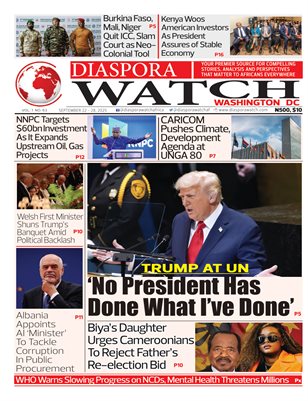


CARICOM pushes unified response to global shifts, backs Guyana’s COP35 bid

Nigeria’s Stakes in a Fractured Middle East, by Boniface Ihiasota

The United States, Israel and the Iran Question, by Alabidun Shuaib AbdulRahman

Pastor Jerry Eze Defends Miracles At UK Conference Amidst Criticism And Controversy

Diaspora Watch 20th Edition (October 14-20, 2024): Your Trusted Source for Global News and Insights


