
News
Is This the Most Pivotal NATO Summit Since the Cold War?


As tensions soar following the United States’ direct strikes on Iran’s nuclear sites, global attention is now turning to the Netherlands, where U.S. President Donald Trump is expected to attend a high-stakes NATO summit on Tuesday. This will be Trump’s first NATO gathering since winning re-election, and anticipation is high—not just for his arrival, but for what the summit might mean for the alliance’s future.
Trump has long criticized NATO allies for depending too heavily on U.S. military support. Now, with growing global instability and a revived American administration that’s more unpredictable than ever, European leaders are scrambling to reassure Washington of their commitment—and to ensure that the U.S. doesn’t scale back its presence in Europe.
“There were moments just weeks ago when we weren’t sure if he’d even show up,” one senior European diplomat admitted. “With Russia and China watching closely for signs of division, that kind of uncertainty could’ve been disastrous.”
In fact, the summit has been carefully designed to appeal to Trump. NATO Secretary General Mark Rutte has centered the agenda around a bold promise: European members will increase their defense spending to 5% of GDP by 2035—up from the longstanding 2% target.
The hope is to convince Trump that Europe is finally serious about its own security, and to avoid confrontations by keeping the discussions narrowly focused on financial contributions.
However, those plans now hang in the balance. Iran has retaliated against the U.S. strikes by launching missiles at American bases in Qatar and Iraq.
The crisis in the Middle East could keep Trump in Washington—or, if he does attend, force the summit’s focus to shift. That risks diplomatic clashes, especially as many European leaders preferred a diplomatic resolution to the Iran issue, rather than military escalation.
Trump has already been promised a symbolic victory. The new defense spending target was meant to showcase European compliance with his demands. “This summit is about credibility,” said U.S. Ambassador to NATO Matthew Whitaker.
Yet even this success is showing cracks. Spain claimed it secured an exemption from the 5% pledge, though Rutte denied that. Other countries are also pushing back, facing tight budgets and mounting political pressure at home.
Still, the underlying reality remains: Europe cannot afford to alienate the U.S.—the alliance’s nuclear and military backbone. That pressure helped Rutte bring most European leaders (except Spain) on board with the spending deal. But even then, former U.S. NATO Ambassador Julianne Smith cautions that “with Trump, nothing is guaranteed.”
There are deeper concerns, too. It’s unclear whether the U.S. will endorse a summit statement naming Russia as NATO’s primary threat. Trump’s conciliatory tone toward Moscow and his coercive approach to Ukraine have already eroded European confidence in the U.S. as a steadfast ally.
Tensions escalated further on Friday night when Trump defended the 5% spending target but insisted that the U.S. wouldn’t need to meet it: “I don’t think we should—but I think they should. We’ve been supporting NATO so long…”
While blunt, Trump’s stance isn’t unique. Past presidents, including Barack Obama, signaled a pivot away from Europe toward strategic concerns in the Indo-Pacific. What makes Trump different is his unpredictability and blunt transactional style.
The U.S. currently has about 100,000 troops stationed across Europe, including 20,000 in NATO’s eastern flank—deployments ordered after Russia’s full-scale invasion of Ukraine. But these numbers may not last. U.S. defense officials are reviewing troop levels and budgets, and many expect cuts later this year. Ukraine may also lose U.S. financial support, adding to regional uncertainty.
Despite all this, some NATO members like Poland remain optimistic. Spending 4.7% of its GDP on defense—more than any other NATO country—Poland aims to build Europe’s most formidable land force. For Warsaw, which borders Ukraine and remembers life under Soviet domination, defense is non-negotiable.
Elsewhere in Europe, the situation is more fragile. In Spain, debates over military spending have ignited political tensions and threatened the stability of the ruling coalition.
To ease the financial strain, NATO has proposed splitting the 5% pledge into two parts: 3.5% for direct military spending, and 1.5% for defense-related infrastructure, such as cyber defense or expanded seaports.
This model also aligns NATO’s targets more closely with U.S. spending levels, offering a psychological win without matching the U.S. dollar-for-dollar.
But the reality remains: funding this buildup will require painful trade-offs. Countries may need to raise taxes, increase borrowing, or cut public services. Estonia has experimented with new taxes, while Italy—burdened by debt—may face steep borrowing costs.
The UK, in its recent Strategic Defence Review, acknowledged the need for more military investment but stopped short of preparing its public for the sacrifices required.
The timing is also crucial. NATO wants the 5% target met within 7 to 10 years, but Secretary General Rutte has warned that may be too slow. With Russia’s war economy in full swing, he believes Moscow could strike a NATO member within five years.
Still, defense spending alone won’t solve the problem. European forces suffer from inefficiencies and duplication—178 different weapons systems and 17 tank models across the EU, for instance.
Pooling resources would increase efficiency, but national pride and domestic defense contracts make such cooperation politically sensitive and unlikely to be resolved at this summit.
So what can we expect?
That depends largely on whether Trump shows up—and how he decides to engage. His ambassador believes this could be a defining moment.
“A watershed,” one senior official called it—possibly the most consequential NATO summit since the Cold War. The moment Europe begins to match the U.S. on defense—and finally starts to take full responsibility for its own security.
….
Kenya Rocked by Deadly Protests Over Economic Hardship
At least eight people have been confirmed dead in Kenya following widespread protests against soaring living costs, unemployment, and alleged government corruption.
The unrest has escalated into violent clashes between demonstrators and security forces, with eyewitnesses reporting chaotic scenes as police deployed tear gas and live ammunition to disperse crowds in major cities.
The protests reflect public outrage over inflation that has rendered basic commodities unaffordable.
Demonstrators accuse the government of failing to provide relief or accountability, particularly in light of persistent allegations of corruption and mismanagement.
Hospitals in affected areas have been overwhelmed with casualties, including both protesters and security personnel.
The Kenyan government has condemned the violence and urged citizens to exercise their rights peacefully.
Authorities have promised investigations into the fatalities, but many remain skeptical about whether justice will be served. Human rights organizations have decrying what they describe as excessive force by law enforcement.
Many fear that without meaningful engagement and structural reform, the unrest may continue.
The situation continues to unfold, with many calling for transparency, accountability, and a commitment to upholding civil rights.









Melania Trump blasts ‘lies’ linking her to Epstein
US First Lady Melania Trump made a surprise statement on Thursday denying any knowledge of Jeffrey Epstein’s abuse, or that she herself was a victim of the convicted sex offender.
The 55-year-old’s rare on-camera remarks at the White House came out of the blue, in an extraordinary intervention in a scandal that has long haunted her husband President Donald Trump.
“The lies linking me with the disgraceful Jeffrey Epstein need to end today,” she said. “The individuals lying about me are devoid of ethical standards, humility and respect.”
It was not clear why the Slovenian-born former model decided to give the public statement, and she did not detail any specific allegations about her and the late, convicted sex offender.
Melania and Donald Trump had previously been photographed with Epstein, but she said that she had met her husband independently two years prior to meeting Epstein.
“I am not Epstein’s victim. Epstein did not introduce me to Donald Trump,” Melania Trump said.
She said “fake images and statements about Epstein and me” had been circulating on social media “for years now. Be cautious about what you believe: these images and stories are completely false.”
The first lady also urged Congress to hold a public hearing for survivors of Epstein’s abuse to “give these victims their opportunity to testify under oath.”
But some Epstein survivors and their families, including the brother of Epstein’s main accuser Virginia Giuffre, called the speech a “deflection of responsibility.”
“First Lady Melania Trump is now shifting the burden onto survivors under political conditions that protect those with power” including “the Trump Administration, which has still not fully complied with the Epstein Files Transparency Act,” according to a joint statement posted on social media.
Two of Epstein’s accusers, sisters Maria and Annie Farmer told US media in a separate statement: “We can’t speak for other survivors, but what we want is accountability, transparency and justice.”
The sisters called for the release of “the remaining records held by the Department of Justice including my complete FBI records from 1996.”
Epstein died in federal custody in 2019 while awaiting trial on sex trafficking charges involving minors, but the scandal has repeatedly overshadowed Trump’s second presidency.
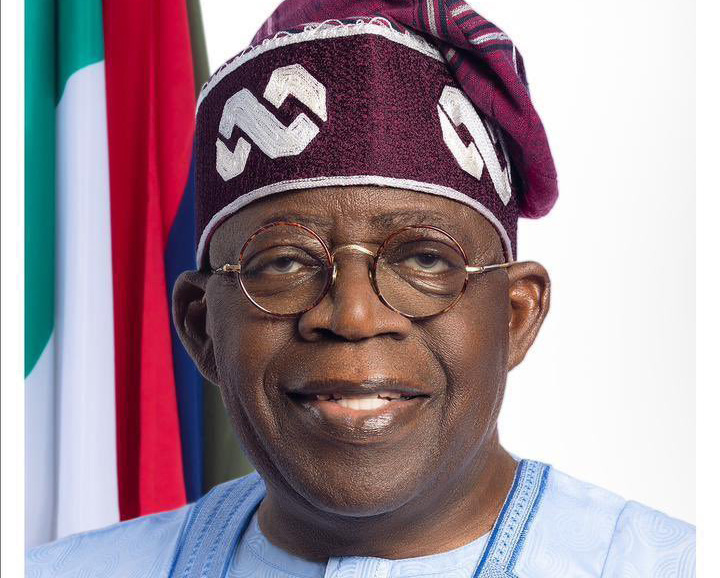
President Bola Tinubu has called on Nigerians and political actors to embrace peaceful politics and strictly adhere to the Electoral Act as the country prepares for another electoral cycle.
In his 2026 Easter message, the President reaffirmed his administration’s commitment to decisively tackle terrorism and banditry through strengthened local initiatives and international partnerships.
Tinubu acknowledged the nation’s lingering security challenges, while commending the efforts of the Armed Forces. He assured citizens that his government was deploying adequate resources and forging strategic alliances with foreign partners to address the threats.
He also referenced his recent visit to Jos, where he commiserated with victims of violence and reassured residents of improved security across the country. The President stressed the importance of unity and collective responsibility, noting that no meaningful development could take place in an atmosphere of fear and instability. He said, “No nation can thrive where fear prevails, and no progress can be sustained
without peace,” urging Nigerians to support lawful efforts and reject forces threatening the nation’s stability.
On the economy, Tinubu defended ongoing reforms, admitting their short-term impact on citizens but insisting they were necessary for long-term growth and prosperity. He expressed optimism that key economic indicators showed Nigeria was on the right path, describing the current phase as a transition
towards a more stable and prosperous future.
Tinubu further urged political stakeholders to act with maturity and responsibility, adding that democracy thrives in an environment defined by restraint, accountability, and informed participation.
The President, therefore, wished Nigerians a Happy Easter, thanked them for their continued support, and pledged his administration’s commitment to justify the confidence reposed in it.
#politics #Tinubu #reforms #terrorism #electoralact

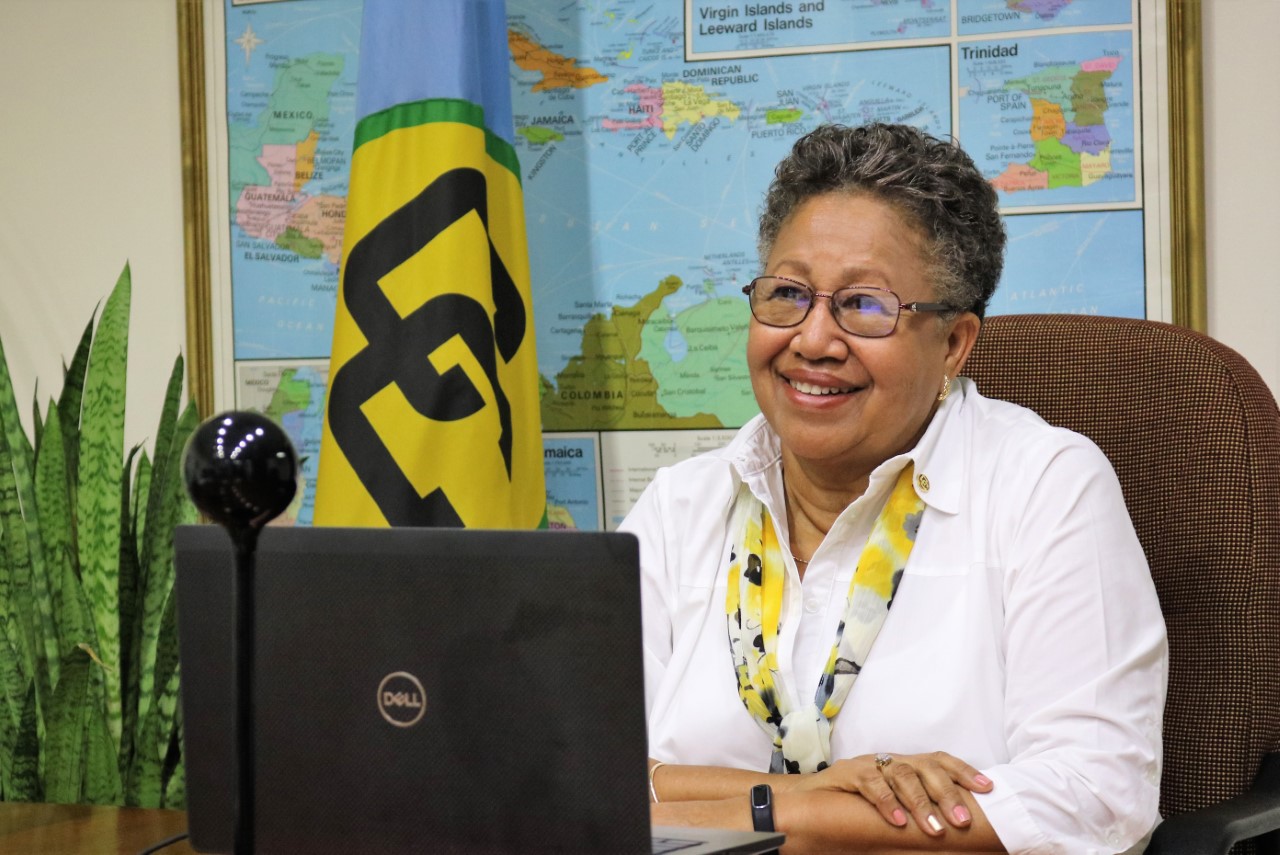
CARICOM Scribe Barnett to Speak at Caribbean Energy Week
The Secretary-General of the Caribbean Community, Carla Barnett, is set to participate in the 2026 edition of Caribbean Energy Week scheduled to hold in Paramaribo, Suriname.
Barnett is expected to join heads of government, ministers responsible for energy and environment, as well as industry leaders at the high-level forum taking place from March 30 to April 1. She will deliver remarks on the opening day of the event.
Organisers of Caribbean Energy Week 2026 said the forum would bring together stakeholders across hydrocarbons, renewable power, mining and carbon credits to showcase investment-ready projects and deepen regional collaboration.
They noted that the event would serve as a platform to forge strategic partnerships and accelerate investment flows into the Caribbean’s energy sector.
The organisers added that the multinational gathering is also designed to strengthen the region’s ongoing energy transition by harnessing synergies in logistics, technology and partnerships, including engagement with African stakeholders.
Caribbean Energy Week is spearheaded by Energy Capital Power in collaboration with other strategic partners.



Pastor Jerry Eze Defends Miracles At UK Conference Amidst Criticism And Controversy

Diaspora Watch 20th Edition (October 14-20, 2024): Your Trusted Source for Global News and Insights

Tanzanian Man Reportedly Dies And Returns To Life Six Times


-
 Trending5 days ago
Diaspora Watch – Vol. 87
-
 News1 day ago
NEWS
-

 News6 days ago
Artemis II Crew Captures Stunning Images of Earth Midway to Moon
-
 News6 days ago
Melania Trump Rallies 45 Nations on AI-powered Education
-
 News6 days ago
US, Iran Search for Missing Airman After Warplane Downed
-
 Analysis6 days ago
Understanding South Africa’s Xenophobic Violence, by Alabidun Shuaib AbdulRahman