
News
Is This the Most Pivotal NATO Summit Since the Cold War?


As tensions soar following the United States’ direct strikes on Iran’s nuclear sites, global attention is now turning to the Netherlands, where U.S. President Donald Trump is expected to attend a high-stakes NATO summit on Tuesday. This will be Trump’s first NATO gathering since winning re-election, and anticipation is high—not just for his arrival, but for what the summit might mean for the alliance’s future.
Trump has long criticized NATO allies for depending too heavily on U.S. military support. Now, with growing global instability and a revived American administration that’s more unpredictable than ever, European leaders are scrambling to reassure Washington of their commitment—and to ensure that the U.S. doesn’t scale back its presence in Europe.
“There were moments just weeks ago when we weren’t sure if he’d even show up,” one senior European diplomat admitted. “With Russia and China watching closely for signs of division, that kind of uncertainty could’ve been disastrous.”
In fact, the summit has been carefully designed to appeal to Trump. NATO Secretary General Mark Rutte has centered the agenda around a bold promise: European members will increase their defense spending to 5% of GDP by 2035—up from the longstanding 2% target.
The hope is to convince Trump that Europe is finally serious about its own security, and to avoid confrontations by keeping the discussions narrowly focused on financial contributions.
However, those plans now hang in the balance. Iran has retaliated against the U.S. strikes by launching missiles at American bases in Qatar and Iraq.
The crisis in the Middle East could keep Trump in Washington—or, if he does attend, force the summit’s focus to shift. That risks diplomatic clashes, especially as many European leaders preferred a diplomatic resolution to the Iran issue, rather than military escalation.
Trump has already been promised a symbolic victory. The new defense spending target was meant to showcase European compliance with his demands. “This summit is about credibility,” said U.S. Ambassador to NATO Matthew Whitaker.
Yet even this success is showing cracks. Spain claimed it secured an exemption from the 5% pledge, though Rutte denied that. Other countries are also pushing back, facing tight budgets and mounting political pressure at home.
Still, the underlying reality remains: Europe cannot afford to alienate the U.S.—the alliance’s nuclear and military backbone. That pressure helped Rutte bring most European leaders (except Spain) on board with the spending deal. But even then, former U.S. NATO Ambassador Julianne Smith cautions that “with Trump, nothing is guaranteed.”
There are deeper concerns, too. It’s unclear whether the U.S. will endorse a summit statement naming Russia as NATO’s primary threat. Trump’s conciliatory tone toward Moscow and his coercive approach to Ukraine have already eroded European confidence in the U.S. as a steadfast ally.
Tensions escalated further on Friday night when Trump defended the 5% spending target but insisted that the U.S. wouldn’t need to meet it: “I don’t think we should—but I think they should. We’ve been supporting NATO so long…”
While blunt, Trump’s stance isn’t unique. Past presidents, including Barack Obama, signaled a pivot away from Europe toward strategic concerns in the Indo-Pacific. What makes Trump different is his unpredictability and blunt transactional style.
The U.S. currently has about 100,000 troops stationed across Europe, including 20,000 in NATO’s eastern flank—deployments ordered after Russia’s full-scale invasion of Ukraine. But these numbers may not last. U.S. defense officials are reviewing troop levels and budgets, and many expect cuts later this year. Ukraine may also lose U.S. financial support, adding to regional uncertainty.
Despite all this, some NATO members like Poland remain optimistic. Spending 4.7% of its GDP on defense—more than any other NATO country—Poland aims to build Europe’s most formidable land force. For Warsaw, which borders Ukraine and remembers life under Soviet domination, defense is non-negotiable.
Elsewhere in Europe, the situation is more fragile. In Spain, debates over military spending have ignited political tensions and threatened the stability of the ruling coalition.
To ease the financial strain, NATO has proposed splitting the 5% pledge into two parts: 3.5% for direct military spending, and 1.5% for defense-related infrastructure, such as cyber defense or expanded seaports.
This model also aligns NATO’s targets more closely with U.S. spending levels, offering a psychological win without matching the U.S. dollar-for-dollar.
But the reality remains: funding this buildup will require painful trade-offs. Countries may need to raise taxes, increase borrowing, or cut public services. Estonia has experimented with new taxes, while Italy—burdened by debt—may face steep borrowing costs.
The UK, in its recent Strategic Defence Review, acknowledged the need for more military investment but stopped short of preparing its public for the sacrifices required.
The timing is also crucial. NATO wants the 5% target met within 7 to 10 years, but Secretary General Rutte has warned that may be too slow. With Russia’s war economy in full swing, he believes Moscow could strike a NATO member within five years.
Still, defense spending alone won’t solve the problem. European forces suffer from inefficiencies and duplication—178 different weapons systems and 17 tank models across the EU, for instance.
Pooling resources would increase efficiency, but national pride and domestic defense contracts make such cooperation politically sensitive and unlikely to be resolved at this summit.
So what can we expect?
That depends largely on whether Trump shows up—and how he decides to engage. His ambassador believes this could be a defining moment.
“A watershed,” one senior official called it—possibly the most consequential NATO summit since the Cold War. The moment Europe begins to match the U.S. on defense—and finally starts to take full responsibility for its own security.
….
Kenya Rocked by Deadly Protests Over Economic Hardship
At least eight people have been confirmed dead in Kenya following widespread protests against soaring living costs, unemployment, and alleged government corruption.
The unrest has escalated into violent clashes between demonstrators and security forces, with eyewitnesses reporting chaotic scenes as police deployed tear gas and live ammunition to disperse crowds in major cities.
The protests reflect public outrage over inflation that has rendered basic commodities unaffordable.
Demonstrators accuse the government of failing to provide relief or accountability, particularly in light of persistent allegations of corruption and mismanagement.
Hospitals in affected areas have been overwhelmed with casualties, including both protesters and security personnel.
The Kenyan government has condemned the violence and urged citizens to exercise their rights peacefully.
Authorities have promised investigations into the fatalities, but many remain skeptical about whether justice will be served. Human rights organizations have decrying what they describe as excessive force by law enforcement.
Many fear that without meaningful engagement and structural reform, the unrest may continue.
The situation continues to unfold, with many calling for transparency, accountability, and a commitment to upholding civil rights.











Irish Government Jet Takes Suspected Crime Boss Kinahan Back to Dublin
The Irish government jet conveying suspected organised crime boss, Daniel Kinahan, has departed Dubai for Dublin, where he is expected to face a charge of directing a criminal organisation.
Kinahan, 49, was arrested in the United Arab Emirates in April following an extradition request from Ireland and is being returned to the country to face prosecution.
Flight tracking data showed that the government aircraft conveying him departed Dubai at 1:19pm local time on Sunday and was expected to arrive in Dublin before 7pm.
Upon arrival, Kinahan is expected to be formally charged before being taken into custody by members of the Irish police, known as gardaí, for an appearance before the Special Criminal Court.
The non-jury court, which comprises three judges, is expected to hear the case on Sunday evening amid a major security operation surrounding his return.
Irish authorities have deployed armed gardaí, members of the Irish Defence Forces and personnel from the Irish Prison Service for the operation.
The Irish Prison Service had also acquired a bulletproof and bombproof vehicle ahead of the extradition to facilitate the movement of prisoners considered to pose a high security risk.
Kinahan is expected to arrive at Casement Aerodrome in Baldonnel, Dublin, before being transferred to custody.
Irish broadcaster RTÉ News reported that security arrangements had been intensified ahead of his arrival, while facilities at the maximum-security Portlaoise Prison in County Laois had also been upgraded in anticipation of his detention on remand.
Kinahan has spent months challenging efforts to extradite him from the UAE to Ireland, but his appeals were unsuccessful.
His extradition has been welcomed by the governments of Ireland and the UAE, which have described the development as evidence of growing judicial cooperation between the two countries.
Irish Justice Minister, Jim O’Callaghan, described the extradition as a “landmark of judicial cooperation” between Ireland and the UAE.
O’Callaghan also commended the UAE judicial authorities for what he described as their professionalism, efficiency and diligence throughout the extradition proceedings.
His UAE counterpart, Abdullah bin Sultan bin Awad Al Nuaimi, said the case demonstrated the UAE’s commitment to international efforts to combat transnational organised crime.
The extradition was made possible under an existing agreement between Ireland and the UAE.
The agreement had previously been used to extradite Sean McGovern, described by authorities as a senior lieutenant in the Kinahan organised crime group. McGovern was sentenced to 24 years in prison in June after being convicted of directing the activities of a criminal organisation.
Kinahan cartel
Irish and international law enforcement agencies have for years linked Kinahan to the Kinahan organised crime group, which authorities accuse of involvement in international drug trafficking, firearms trafficking and gangland violence.
The UK National Crime Agency has previously alleged that the group was responsible for importing tonnes of drugs and firearms across the world and had links to more than a dozen gangland murders.
Former Garda Commissioner Drew Harris estimated that the organisation had generated more than €1bn globally through its criminal activities.
The United States Treasury Department in 2022 imposed sanctions on Kinahan and other members of his family after identifying them as leaders of what it described as the Kinahan organised crime cartel.
US authorities have also compared the organisation with major international criminal groups including Italy’s Camorra, Mexico’s Los Zetas and Japan’s Yakuza.
A reward of up to $5m was subsequently offered by the US authorities for information leading to the arrest or conviction of the three senior figures associated with the organisation: Daniel Kinahan, his father, Christopher Kinahan Snr, 65, and his brother, Christopher Kinahan Jnr.
Kinahan became a target in a long-running gangland feud in Ireland and survived an assassination attempt at Dublin’s Regency Hotel in 2016.
The attack, which occurred during a boxing weigh-in, intensified a feud between rival criminal groups that authorities have linked to 18 deaths.
Kinahan subsequently left Ireland and lived in Spain before relocating to Dubai.
Meanwhile, the NCA has previously prosecuted several alleged associates of the organisation in the United Kingdom.
In 2022, Thomas Kavanagh, whom the agency described as responsible for running the group’s criminal operations in Britain, was sentenced to 21 years in prison.
Gary Vickery and Daniel Canning were sentenced to 20 years and 19-and-a-half years respectively.
The NCA said evidence presented during the case showed that the men were involved in cocaine imports estimated at up to £23.4m and cannabis imports valued at about £6.4m.
Despite the allegations against him, Kinahan has denied being a crime boss.
His lawyer previously said Kinahan had no criminal record or convictions and maintained that allegations portraying him as a senior figure in organised crime were false and unsupported by evidence.
Netanyahu Defies Trump?
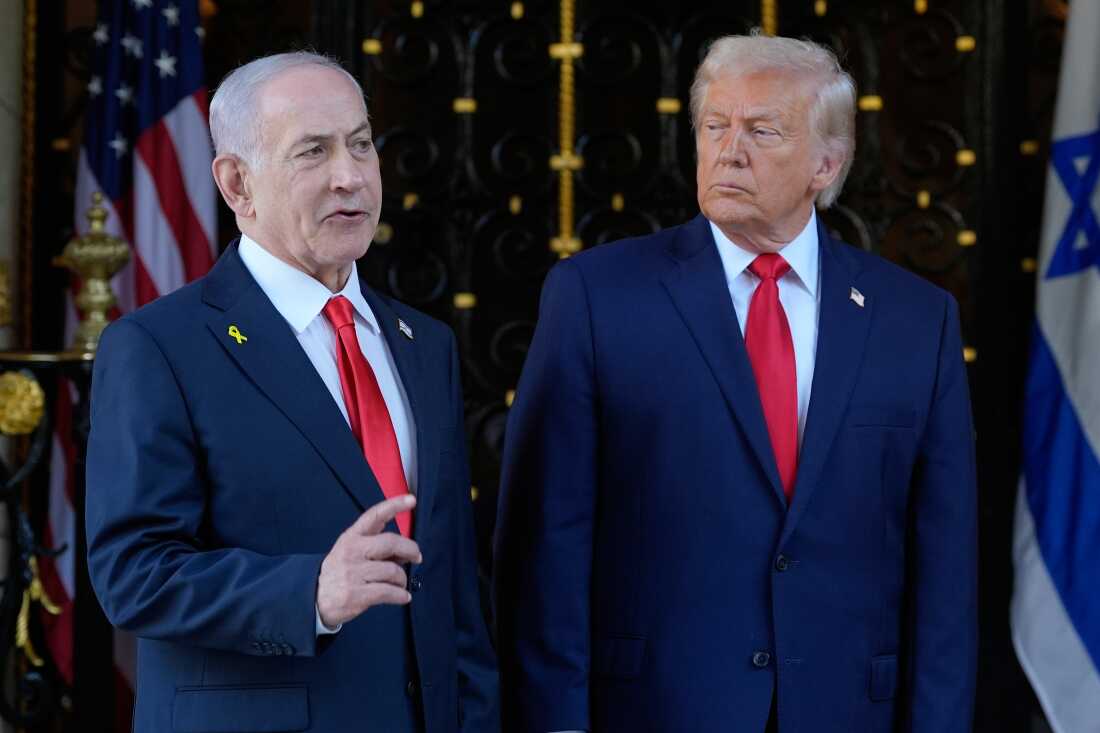
Israeli Prime Minister Benjamin Netanyahu has rejected United States President Donald Trump’s 15-point Gaza peace plan, insisting that Israeli forces will not withdraw from the territory until Hamas is “genuinely” disarmed.
Netanyahu made the position known on Sunday during an Israeli cabinet meeting, dealing another setback to Trump’s efforts to secure a lasting ceasefire and political settlement in Gaza.
“Israel rejects the 15-point document,” Netanyahu said, adding that the Israeli military “will not carry out any withdrawal until Hamas is genuinely disarmed and will continue to thwart threats against our forces and our citizens.”
The Israeli leader’s declaration puts him at odds with the framework announced by Trump, which envisages the disarmament of Hamas and other armed groups, an Israeli military withdrawal and the reconstruction of the war-ravaged Gaza Strip.
Trump’s Board of Peace said last month that an agreement had been reached for the “complete disarmament” of Hamas and other armed groups operating in Gaza.
However, Hamas has maintained that surrendering its heavy weapons must be tied to an Israeli withdrawal and an end to what it described as “all forms of aggression” against Palestinians in the territory.
Israel has continued military strikes in Gaza despite agreeing to an initial ceasefire in October last year, with the dispute over disarmament and Israeli troop withdrawals emerging as one of the biggest obstacles to the implementation of the proposed peace framework.
Netanyahu said Israel would not accept what he described as a “fictitious disarmament” of Hamas, stressing that the group must be genuinely stripped of its military capability before Israeli forces leave.
He disclosed that discussions were ongoing between his government and American officials over the way forward, but indicated that significant differences remained.
“They have ideas; some of them are acceptable to us and some are not, and we know how to stand our ground on these matters,” Netanyahu said.
The Israeli prime minister’s rejection is likely to further complicate Trump’s attempt to implement the Gaza roadmap, which was unveiled in September last year as a comprehensive framework for ending the conflict and establishing a pathway towards reconstruction and long-term security.
Under the proposal, a Board of Peace would oversee implementation of the agreement, while Hamas and other armed groups would be disarmed, Israeli forces would withdraw and Gaza would undergo extensive reconstruction.
The latest development also comes at a politically sensitive period for Netanyahu, with Israeli elections approaching and pressure mounting from members of his far-right governing coalition to abandon or renegotiate the Gaza plan.
National Security Minister Itamar Ben Gvir has been among the most vocal critics, dismissing the draft agreement as “not acceptable” and urging Netanyahu to take a harder position.
Netanyahu’s insistence that Hamas must first be disarmed before any Israeli military withdrawal therefore reflects both the security demands of his government and the political pressure within his coalition.
The disagreement could place further strain on relations between Netanyahu and Trump, who has presented the Gaza initiative as a major diplomatic achievement and a potential pathway to lasting peace in the Middle East.
Spain battles political fallout as 60,000 migrants overwhelm Ceuta border
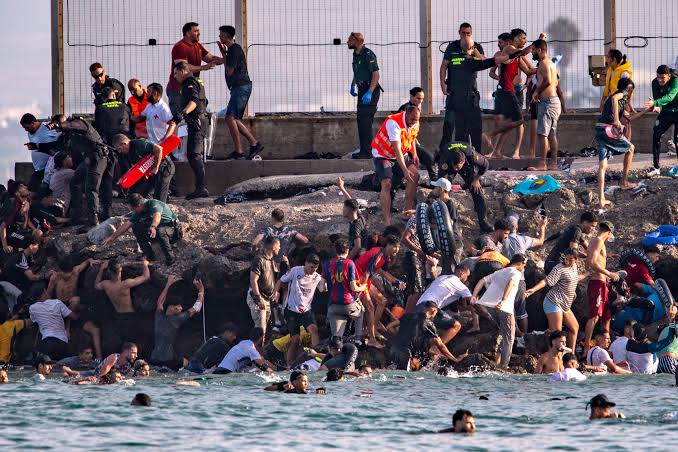
Spain is facing mounting political pressure after an estimated 60,000 migrants crossed from Morocco into the Spanish enclave of Ceuta within 24 hours, triggering one of the country’s worst border crises in recent years.
The unprecedented influx overwhelmed local infrastructure, forced businesses to shut down and disrupted daily life in the North African territory.
Spanish Prime Minister Pedro Sánchez condemned the mass crossing, describing it as “a violation of Spain’s territorial integrity,” as security forces reinforced the border.
Residents expressed frustration over the scale of the influx, saying the territory lacked the resources to cope with such a large number of arrivals.
Although thousands of migrants have reportedly returned voluntarily to Morocco, officials said shortages of food and essential supplies continued to affect the enclave.
The crisis has also reignited political debate across Europe over border security and migration policy, with some politicians calling for tougher controls along the European Union’s external frontiers.
The humanitarian toll also continued to rise, with officials confirming that at least 57 people died during the border surge.
Many of those who crossed into Ceuta said they were fleeing unemployment and economic hardship in Morocco in search of better opportunities in Europe.


Tinubu, EFCC and the Danger of Political Interference, by Alabidun Shuaib AbdulRahman

Jingir’s Words and the Challenge of Religious Tolerance, by Boniface Ihiasota

Irish Government Jet Takes Suspected Crime Boss Kinahan Back to Dublin

Pastor Jerry Eze Defends Miracles At UK Conference Amidst Criticism And Controversy

Diaspora Watch 20th Edition (October 14-20, 2024): Your Trusted Source for Global News and Insights

Tanzanian Man Reportedly Dies And Returns To Life Six Times


-

 Milestone1 week ago
Nigerian bags HVAC Engineering degree in US, lands full-time job
-
 News1 week ago
CARICOM chair renews reparations demand
-
 Analysis1 week ago
Lessons from the Catholic Bishops’ Visit to Tinubu, by Boniface Ihiasota
-

 Analysis1 week ago
Obasanjo, Atiku and the Burden of Broken Trust, by Alabidun Shuaib AbdulRahman
-
 News1 week ago
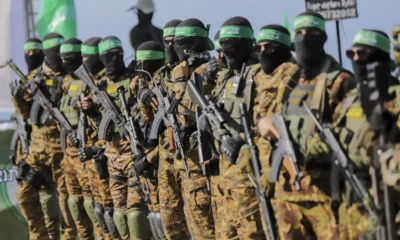
Hamas agrees to disarm as Gaza withdrawal deal gains momentum
-

 Opinion1 week ago
EDITORIAL: Tackling Poverty in Africa