
News
Russia Welcomes Trump’s New Security Strategy, Says It Aligns With Moscow’s Vision

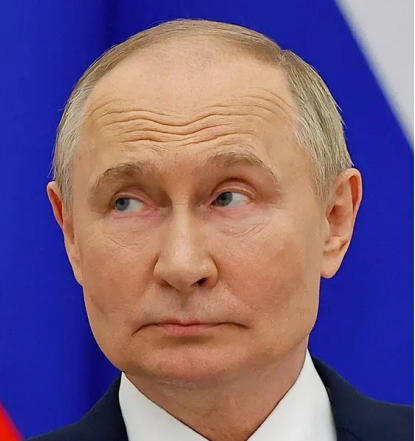
Russia Welcomes Trump’s New Security Strategy, Says It Aligns With Moscow’s Vision
Russia has hailed President Donald Trump’s newly released National Security Strategy, describing the document as “largely consistent” with Moscow’s own worldview.
Kremlin spokesperson Dmitry Peskov, speaking in an interview published by state news agency Tass on Sunday, said the adjustments in the 33-page strategy marked “a positive step,” though he noted that Russia would continue to study the document closely before making firm conclusions.
The strategy, unveiled by the US administration earlier in the week, adopts markedly softer language toward Russia and does not portray Moscow as a threat.
Instead, it frames Europe as facing what it calls “civilisational erasure,” while outlining priorities such as curbing foreign influence, restricting mass migration, and countering what it describes as censorship within the EU.
The document has drawn strong criticism across Europe, with several EU officials and analysts accusing Washington of echoing Kremlin rhetoric and undermining long-standing transatlantic positions on democracy and security.
The report argues that the US must “re-establish strategic stability to Russia” to stabilise European economies and appears to support political movements opposed to Europe’s current trajectory.
German Foreign Minister Johann Wadephul cautioned that issues of freedom of expression “do not belong” in a security strategy, while Polish Prime Minister Donald Tusk reminded Washington that “Europe is your closest ally, not your problem.”
Former Swedish Prime Minister Carl Bildt described the document as placing itself “to the right of the extreme right.”
The strategy also promotes a revived “Western identity” and praises “patriotic European parties,” raising concerns about US alignment with far-right groups, including Germany’s AfD, which domestic intelligence classifies as extreme right.
Beyond Europe, the strategy signals potential military actions against alleged drug-trafficking vessels in the Caribbean and eastern Pacific, and calls for increased defence spending from Japan, South Korea, Australia, and Taiwan.
In Washington, Democrats warned that the new posture threatens decades of US foreign policy. Representative Jason Crow labelled the strategy “catastrophic,” while Gregory Meeks said it abandons America’s traditional values-based global leadership.






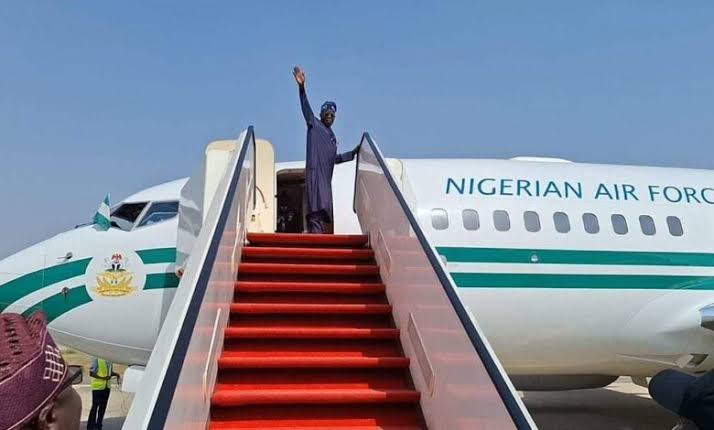
Our Tinubu Has Run Away Again?
President Bola Ahmed Tinubu’s decision to embark on a three-week vacation abroad has triggered renewed debate over his foreign travels, with opposition politicians, civil society activists and concerned Nigerians questioning the timing of his latest absence from the country.
Tinubu left Abuja on Sunday, August 30, 2026, for Europe to begin what the Presidency described as his annual leave.
According to a statement issued by his Special Adviser on Information and Strategy, Bayo Onanuga, the President’s first destination was London, United Kingdom.
The statement said Tinubu would use the period for a working vacation and return to Nigeria after the three-week break to participate in the activities leading to the 2027 general elections.
However, the announcement came at a politically sensitive period, with Nigeria facing renewed security concerns, economic pressures and an increasingly competitive political environment ahead of the 2027 elections.
The timing has consequently revived questions that have followed the President throughout his administration: How often has Tinubu travelled abroad since assuming office, how much time has he spent outside Nigeria and have the trips produced sufficient benefits to justify the criticisms surrounding them?
51 foreign trips in three years
Tinubu’s foreign travel record has become a recurring subject of public debate since he assumed office on May 29, 2023.
A Sunday PUNCH investigation published in May 2026 reported that Tinubu had embarked on 51 foreign trips during his first three years in office, spending about 261 days outside Nigeria and visiting at least 30 countries.
The investigation was based on officially announced presidential trips and available flight information.
The report also showed that Tinubu and Vice-President Kashim Shettima had collectively spent 344 days abroad during the first three years of the administration.
Earlier, another Sunday PUNCH analysis reported that the President and his deputy had spent 315 days outside the country in 69 trips across 35 countries within the first 33 months of the administration.
The figures have generated contrasting interpretations.
While critics have described the frequency of the travels as excessive, the Presidency has maintained that Tinubu’s international engagements are designed to promote Nigeria’s economic interests, attract foreign investment, strengthen bilateral relations and enhance the country’s diplomatic standing.
The administration has repeatedly argued that presidential diplomacy cannot be conducted exclusively from Abuja.
Why the latest trip is different
The controversy surrounding the latest trip, however, is largely about timing.
Tinubu’s departure came barely days after a major security crisis in Niger State, where hundreds of people were reportedly abducted in a mass kidnapping incident.
The incident renewed concerns about the worsening kidnapping epidemic across the country and the ability of security agencies to protect vulnerable communities.
A recent report by SBM Intelligence, cited by Reuters, estimated that 7,825 Nigerians were kidnapped between July 2025 and June 2026.
The report also estimated that 1,142 people were killed during the period and that kidnappers collected about $5.79m in ransom payments.
The figures underline the scale of the security challenge confronting the administration as Tinubu begins preparations for a second-term campaign.
For critics, the President’s decision to spend three weeks abroad against that backdrop sends the wrong message.
Atiku attacks President
Atiku Abubakar, the NDC presidential candidate, was among those who criticised the decision.
Atiku argued that the President’s absence was inappropriate at a time when Nigerians were contending with worsening insecurity and economic hardship.
The former Vice-President said the issue was not whether Tinubu was entitled to a holiday but whether such a lengthy foreign vacation was appropriate given the challenges facing the country.
He accused the President of abandoning a nation facing serious problems and described Nigeria as being in crisis.
The criticism was particularly significant because Atiku is one of the leading opposition politicians positioning himself for the 2027 presidential contest.
Activists join debate
Civil society activists have also questioned aspects of the administration’s leadership and the President’s foreign travels.
Human rights lawyer and activist Deji Adeyanju has been particularly vocal on issues of insecurity, governance and the welfare of Nigerians.
Adeyanju recently criticised the Federal Government over the security situation and flooding concerns in Abuja, urging the administration to demonstrate stronger leadership.
Another prominent activist, Aisha Yesufu, has previously criticised Tinubu over his foreign travels and the priorities of the administration.
Their interventions have contributed to a broader civil society argument that political leaders should remain more closely connected to the realities confronting ordinary Nigerians.
For many activists, the central issue is not the President’s constitutional right to take leave but the perception created when a President spends an extended period abroad while citizens at home confront insecurity, unemployment and rising living costs.
Presidency defends travels
The Presidency has consistently rejected the suggestion that Tinubu’s foreign trips amount to unnecessary journeys.
Government officials have repeatedly said the President’s travels are driven by national interests.
Tinubu has attended several high-level international meetings since assuming office, including engagements with global leaders, investors and international institutions.
His March 2026 state visit to the United Kingdom was particularly significant, being the first state visit by a Nigerian President to Britain since 1989.
The administration has also cited investment agreements and diplomatic engagements arising from Tinubu’s international trips as evidence that the journeys serve national objectives.
Former presidential spokesman Reuben Abati also recently defended Tinubu’s right to travel, arguing that the President was entitled to travel anywhere and that the criticism of his movement risked becoming excessive.
But Nigerians want results
Despite the official defence, the controversy has refused to disappear.
For ordinary Nigerians, the question is increasingly about the relationship between presidential travels and tangible improvements in their daily lives.
The President came into office promising to undertake bold economic reforms.
His administration removed the petrol subsidy and liberalised the foreign exchange market, arguing that the measures were necessary to address structural weaknesses in the economy.
While the government has highlighted improved macroeconomic indicators and increased investor confidence, Nigerians continue to complain about high food prices, transportation costs, electricity tariffs, housing expenses and declining purchasing power.
The World Bank and other international institutions have acknowledged some improvements in Nigeria’s macroeconomic position while also warning about the continuing impact of inflation and poverty on households.
This disconnect between macroeconomic indicators and household realities has become one of the administration’s biggest political vulnerabilities.
The cost of presidential travel
The financial cost of presidential movements has also featured prominently in the debate.
A recent report put Presidency travel-related expenditure between June 2023 and April 2026 at N37.64bn.
The figure has attracted criticism from Nigerians who argue that public resources should be deployed more aggressively towards security, healthcare, education, infrastructure and poverty reduction.
Government officials, however, have not accepted the argument that the expenditure should be viewed simply as waste.
Presidential movements require security, logistics, aircraft operations, accommodation and diplomatic arrangements, while some trips involve large official delegations.
The question therefore remains whether the expenditure produces commensurate economic and diplomatic returns.
Leave is constitutional
Legally, there is little controversy over the President proceeding on annual leave.
Section 145 of the 1999 Constitution provides for the President to transmit a written declaration to the Senate President and Speaker of the House of Representatives when proceeding on vacation or otherwise unable to discharge his functions.
The Vice-President then performs the functions of President in an acting capacity until the President resumes those functions.
Thus, Nigeria’s constitutional system does not require the President to remain physically within the country throughout his tenure.
The argument against Tinubu’s latest trip is therefore not fundamentally a constitutional one. It is political.
The 2027 factor
The timing of the vacation also has significance because Nigeria has effectively entered the 2027 political cycle.
The Independent National Electoral Commission lifted the ban on political campaigns on August 19, paving the way for open mobilisation by political parties and candidates.
Tinubu’s administration will now face increasing scrutiny over its record as opposition parties seek to turn insecurity, economic hardship and governance into major campaign issues.
The President’s supporters are expected to highlight what they describe as the administration’s economic reforms, infrastructure projects, increased revenue generation and efforts to reposition Nigeria.
The opposition, meanwhile, is likely to focus on insecurity, poverty, unemployment, inflation and the cost of governance.
Tinubu’s foreign travels could therefore become part of the opposition’s wider campaign narrative.
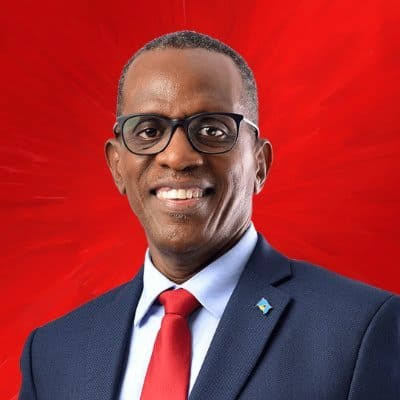
CARICOM begins consultations on regional biodiversity strategy
The Caribbean Community, CARICOM Secretariat has commenced a series of national consultations aimed at securing endorsement for the Draft CARICOM Biodiversity Strategy and its accompanying Resource Mobilisation and Implementation Strategy.
The consultations, which have brought together stakeholders from across the region, are expected to shape a common framework for biodiversity conservation, financing and implementation among CARICOM member states.
Participants include representatives from the environment, finance, economic development, tourism, agriculture, fisheries and marine sectors, as well as biodiversity focal points and other relevant stakeholders.
According to the CARICOM Secretariat, the engagements are designed to review the updated draft strategy, validate its priorities and identify practical approaches to biodiversity implementation, financing, monitoring and reporting.
The consultations will also seek to strengthen regional cooperation and ensure that the proposed framework complements existing national biodiversity programmes.
Speaking during a recent consultation in Grenada, the Permanent Secretary, Ministry of Climate Resilience, the Environment and Renewable Energy, Peron Johnson, said biodiversity conservation was critical to the country’s sustainable development and climate resilience efforts.
Johnson said, “Climate resilience cannot be separated from biodiversity conservation, and biodiversity conservation cannot be separated from sustainable development.”
She added that policies, investments and actions needed to be coordinated to ensure that climate resilience, biodiversity conservation and sustainable development reinforced one another.
Also speaking, the CARICOM Secretariat’s Senior Project Officer, Sustainable Development, Teshia JnBaptiste, said the proposed regional strategy was not intended to replace national biodiversity strategies and action plans.
She said the document would instead provide a regional framework through which member states could tackle common challenges, leverage partnerships, mobilise resources and pursue biodiversity objectives requiring collective action.
JnBaptiste said, “The Draft CARICOM Biodiversity Strategy is intended to complement, not replace, national biodiversity strategies and action plans.”
She explained that the accompanying Resource Mobilisation and Implementation Strategy was being developed to support implementation by identifying financing opportunities, improving regional coordination and strengthening technical cooperation.
The strategy is expected to guide regional biodiversity investments through 2030 and beyond.
The CARICOM Secretariat said consultations held so far had underscored the need to align regional initiatives with national priorities while creating stronger links with ongoing programmes.
The consultations are being supported by the Deutsche Gesellschaft für Internationale Zusammenarbeit through the CARIBIO Project, which promotes regionally harmonised approaches to the protection and sustainable use of biodiversity in CARICOM member states.
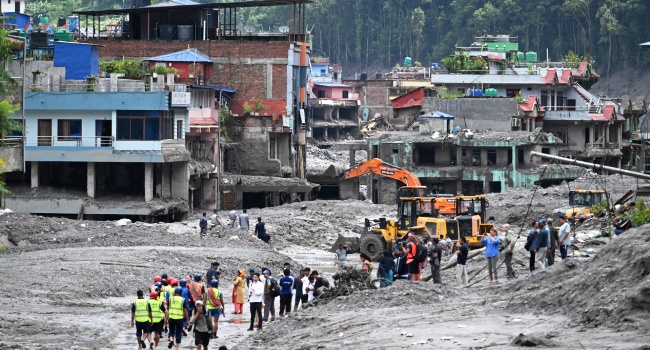
Nepal flood: Two rescued after nine days trapped in hydropower tunnel
Two workers trapped inside a hydropower tunnel in Nepal have been rescued alive nine days after devastating flash floods struck the Nepal-China border region.
The rescued workers, identified as Sanjaya Shah and Kabir Maharjan, were pulled from the Trishuli 3A Hydropower Plant after rescuers heard voices from inside the tunnel early Friday.
Dramatic scenes showed emergency workers cheering as the two men were brought out of the mud-filled tunnel and taken to safety.
Authorities said the two workers sustained injuries to their hands and legs, possibly while crawling through the tunnel.
They were airlifted to a hospital in Kathmandu for treatment.
The rescue has raised hopes that other workers feared trapped in the extensive network of hydropower tunnels could also be found alive.
At least 39 other people are expected to be rescued from the tunnel after rescuers reportedly heard more voices from underground.
More than 150 people remain feared trapped at several hydropower sites along Nepal’s Trishuli River following the disaster.
The floods have already killed more than 1,200 people, while thousands of others remain missing.
Engineers involved in the rescue operation have been pumping air into the tunnels as emergency teams search through the mud and debris for survivors.
The wife of one of the rescued workers, Hirashova, said the family had been overwhelmed with fear and had struggled to eat or drink while waiting for news.
“I saw the photos on Facebook. I was very happy. They are bringing him to the army hospital in Kathmandu. I am heading towards the hospital,” she said.
“We couldn’t properly eat or drink for 10 days. We were very scared. Now we are all happy. We are even crying.”
The flash floods struck after what was initially thought to be an earthquake triggered a massive surge of water and debris through the mountainous region, destroying buildings, roads and vehicles.


Our Tinubu Has Run Away Again?

CARICOM begins consultations on regional biodiversity strategy

On The Sharafadeen Alli Lap Controversy, by Boniface Ihiasota

Pastor Jerry Eze Defends Miracles At UK Conference Amidst Criticism And Controversy

Diaspora Watch 20th Edition (October 14-20, 2024): Your Trusted Source for Global News and Insights

Tanzanian Man Reportedly Dies And Returns To Life Six Times


-

 News1 week ago
Kidney for Cash: Inside Nigeria’s Shadowy Organ Trade
-

 Analysis1 week ago
Tobi Amusan’s Legacy After the World Record Falls, by Boniface Ihiasota
-
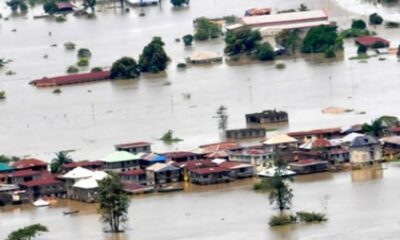
 Analysis1 week ago
Wike and the Abuja Master Plan, by Alabidun Shuaib AbdulRahman
-
 News1 week ago
Trump’s policies may cost US $700bn in clean energy investment – Report
-
 News1 week ago
Jamaica Set to Host 20th Caribbean Week of Agriculture
-
 News1 day ago
Our Tinubu Has Run Away Again?