
Features
ZION IN FOCUS: The Fire, The Faith, and The Future of a Spiritual Revolution

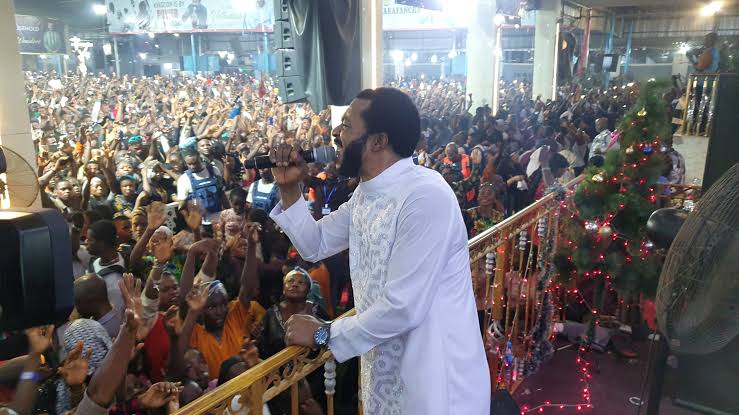
ZION IN FOCUS: The Fire, The Faith, and The Future of a Spiritual Revolution
Long before the rise of social media evangelism and televised deliverance crusades, a quiet spiritual revolution was brewing in Lagos, Nigeria. From the modest beginnings of prayer gatherings held in humble surroundings to the thunderous echoes of mass worship drawing tens of thousands weekly, Zion Ministry, officially known as Zion Prayer Movement Outreach (ZPMO), has evolved into one of Africa’s fastest-growing Christian ministries — a sanctuary of faith, miracles, and renewal under the leadership of Evangelist Chukwuebuka Anozie Obi, fondly called Ebuka Obi.
Founded on a divine mandate to “rebuild the broken altar and restore souls to God through holiness, truth, and love,” Zion Ministry’s growth has been nothing short of phenomenal. From its headquarters at Zion City in Ago, Okota, Lagos, the ministry now reaches millions globally through live broadcasts, digital channels, and crusades held across continents.
“This work is not about fame or numbers,” Evangelist Ebuka often reminds congregants. “It is about broken people finding healing, lost souls rediscovering grace, and the hopeless embracing light again.”
Inside Zion City, worshippers often describe the atmosphere as electrifying yet deeply peaceful. The scent of anointing oil mingles with the chorus of worship, and the sheer conviction of prayers fills the air with a presence many say is tangible. Week after week, testimonies abound — from physical healings to restored marriages, from deliverance from addiction to financial breakthroughs.
READ ALSO: ASUU Strikes: The Endless Loop Nigeria Must Break
The phenomenon of Zion Ministry lies not just in its size, but in its spirit — a unique blend of old-time holiness preaching with a contemporary sense of relevance. Evangelist Ebuka Obi, known for his calm yet commanding voice, blends Scripture with prophetic insight and unpretentious humour. His messages often strike a balance between deep spirituality and practical living, urging Nigerians to anchor their faith not merely in miracles, but in personal transformation and community compassion.
Beyond the Pulpit – The Humanitarian Heartbeat of Zion
While Zion Ministry is renowned for its spiritual vibrancy, its humanitarian outreach stands as one of the most remarkable aspects of its mission. The ministry operates under a simple but powerful principle: “Faith without works is dead.”
Through its Zion Humanitarian Outreach Programme, thousands of widows, orphans, and underprivileged families have received consistent support. Monthly welfare distributions at the ministry’s headquarters provide food items, clothing, and sometimes rent support for struggling families. During festive seasons such as Easter and Christmas, long queues form at the gates as volunteers distribute food packs, school materials, and health kits to the needy.
One widow, Mrs. Chinwe Nwosu, recalls tearfully,“I came to Zion broken and hungry after losing my husband. Today, my children are in school through the ministry’s scholarship programme. Evangelist Ebuka preaches love — but here, they also practice it.”
Education remains a strong focus for the ministry. Through the Zion Educational Support Initiative, scholarships have been awarded to hundreds of students in secondary schools and tertiary institutions. The ministry also supports skill acquisition programs — teaching tailoring, ICT, catering, and entrepreneurship — particularly for youths who lack formal education.
Health is another pillar of its social work. The Zion Free Medical Outreach, conducted periodically, brings together volunteer doctors, nurses, and pharmacists who offer free consultations, laboratory tests, and essential drugs to the public. In rural missions, teams travel to remote communities to deliver care to those who cannot afford hospital visits.
During the COVID-19 pandemic, Zion Ministry earned wide commendation for distributing thousands of relief packages to affected families, regardless of denomination or belief. Trucks loaded with food and hygiene items were dispatched to different states — a gesture that reaffirmed the ministry’s philosophy that charity knows no boundary of faith or tribe.
Global Expansion, Spiritual Vision, and the Promise of Tomorrow
Zion Ministry’s influence now transcends Nigeria’s borders. With satellite fellowships across Africa, Europe, and North America, it has become a spiritual home for diaspora Christians seeking an authentic Nigerian Pentecostal experience rooted in holiness and community. Weekly broadcasts of “Prayer Line with Evangelist Ebuka Obi” attract global audiences via YouTube and cable networks, where testimonies pour in from Canada to South Africa, Dubai to Dublin.
The ministry’s headquarters in Lagos has become a pilgrimage site of sorts. On Sundays and during major programs such as the Night of Open Heaven, the sprawling grounds overflow with worshippers, their hands raised in unity. The crowd is diverse — from civil servants to artisans, students to entrepreneurs — all drawn by the message of restoration.
“We live in a generation where people are spiritually hungry but socially disconnected,” Evangelist Ebuka once noted. “Zion Ministry is bridging that gap by building both faith and fellowship.”
Zion’s media department has equally played a critical role in shaping its identity. Through digital evangelism, documentaries, and live-streamed deliverance services, the ministry projects an image of sincerity and transparency that resonates with the modern believer. Its online platforms — especially Facebook, YouTube, and Zion App — have become global prayer hubs where believers share testimonies, send prayer requests, and participate in interactive Bible sessions.
In recent years, the ministry has embarked on community infrastructure projects — digging boreholes, renovating rural schools, and building small chapels in underserved communities. Plans are underway to establish a Zion University of Christian Leadership to train ministers and laypersons alike in theology, ethics, and community leadership.
Perhaps the most enduring feature of Zion Ministry is the personality of its founder. Evangelist Ebuka Obi’s humility and consistency have inspired loyalty among followers and respect among peers. Despite the rapid growth, he maintains a grounded approach, often reminding his congregation that “true ministry is not in the microphone, but in the hands that lift others.”
A Ministry for the New Generation
Zion Ministry represents a new wave of Christian revivalism — a synthesis of intense spirituality, practical compassion, and digital outreach. In a nation grappling with moral decline and economic hardship, its message of hope resonates deeply. It is not just a church; it is a movement, a family, and for many, a lifeline.
As Evangelist Ebuka aptly summarizes: “Our mission is to raise a people who love God sincerely, serve humanity faithfully, and reflect Christ daily. That is Zion — a place where fire meets compassion, and where every soul can find a home.”
The Miracle Chronicles – When Heaven Touches Earth
Every generation has its defining spiritual moment — a point where divine intervention becomes visible in ways that defy human understanding. For many worshippers at Zion Ministry, those moments happen every week. From healing of terminal illnesses to instant deliverances and emotional restorations, testimonies at Zion are not whispered rumours; they are documented stories of hope that continue to inspire millions.
The ministry’s weekly Prayer Line programme has become a theatre of divine power. The atmosphere is often charged with fervent worship before Evangelist Ebuka Obi takes the podium. With calm authority and prayerful discernment, he ministers to individuals who step forward with their cases — the sick, the oppressed, the burdened. What follows is often described as “heaven invading earth.”
Many testimony stories of cancer patients declared healed, crippled men walking unaided, and childless couples conceiving after years of delay. “What we see here is beyond performance; it is evidence of faith at work,” says Brother Uche, one of the senior ushers. “People come hopeless, and they leave with tears of joy.”
The Message That Transforms
While Zion’s miracles often capture headlines, Evangelist Ebuka insists that the true foundation of Zion Ministry lies in the Word of God. His teachings are anchored on repentance, holiness, forgiveness, and compassion — principles he says must form the character of any believer seeking lasting transformation.
At a recent Sunday service themed “Holiness, the Forgotten Key”, the Evangelist warned against a faith culture that seeks miracles without moral reformation.
“It is not enough to be delivered from sickness; one must be delivered from sin,” he declared to thunderous applause. “If you are healed but remain unholy, the sickness of the soul will still destroy you.”
This theological focus — combining deliverance with discipleship — has set Zion Ministry apart from the wave of miracle-driven movements sweeping through Africa. Evangelist Ebuka’s messages, though simple, carry profound conviction. He preaches about marital faithfulness, integrity in business, community responsibility, and national unity. His weekly television programme, “Word and Fire,” now airing across multiple African stations, has become a must-watch for believers seeking scriptural depth and practical guidance.
“Evangelist Ebuka speaks truth with grace,” notes a visiting cleric from Ghana. “He’s raising a generation that values holiness over hype. That’s a revolution in itself.”
Digital Evangelism and the Global Zion Family
If there is one area where Zion Ministry has truly redefined evangelism, it is in the realm of digital engagement. Long before many ministries embraced online church models, Zion had already built a strong digital ecosystem connecting believers worldwide.
Through Zion TV, Zion App, and its robust YouTube and Facebook channels, millions participate in live services, send testimonies, and receive counselling. The ministry’s Online Prayer Chain initiative connects people across time zones — Europe, North America, the Middle East — joining hands in scheduled intercessory sessions led by trained Zion prayer coordinators.
“Distance is no barrier to God,” Evangelist Ebuka often reminds virtual congregants. “You can be in Toronto and still encounter His presence in real time.”
This global network has birthed what members fondly call the Zion Family — a transnational fellowship bound not by geography but by shared faith and testimonies. Online members often meet physically during international crusades in London, Johannesburg, and Houston, turning digital faith into tangible community.
Zion and the Nigerian Youth: A Generation Awakened
Perhaps one of the most impressive dynamics of Zion Ministry is its appeal to young Nigerians. In an era where youth are increasingly skeptical of religious institutions, Zion has become a space of belonging, mentorship, and purpose. The ministry’s youth department, Zion Youth for Impact (ZYI), engages thousands through leadership seminars, entrepreneurship boot camps, and mentorship programmes designed to help them align spiritual growth with real-world success.
One of the participants, David Ogbonna, a final-year student at UNILAG, explained: “Zion made me understand that holiness doesn’t mean poverty. Evangelist teaches us to be spiritually grounded and socially responsible. I’m now running a small digital business through the skills I gained here.”
Zion’s annual Youth Fire Conference attracts speakers from diverse backgrounds — pastors, entrepreneurs, and technologists — to discuss innovation, leadership, and faith in the digital age. The emphasis, Evangelist Ebuka says, is to “build a balanced generation — prayerful, productive, and patriotic.”
From Lagos to the World – A Vision of Revival
Zion Ministry’s growth is now mirrored in the expansion of its global crusades. The Zion Global Revival Tour, which began in Ghana and extended to the United Kingdom and Canada, has drawn large crowds, often filling arenas beyond capacity. Wherever the crusades land, lives are transformed, communities are revived, and new fellowships spring up.
Back home, the ministry continues to invest in social infrastructure — building community centers, supporting schools, and sponsoring medical missions. The vision, according to the Evangelist, is not just to plant churches but to build communities of character that can impact nations.
The Light That Keeps Shining
In every epoch, God raises voices to rekindle the flame of faith. In Nigeria’s contemporary Christian landscape, Evangelist Ebuka Obi and the Zion Prayer Movement Outreach have become one of such voices — redefining what it means to serve God with authenticity and compassion.
For countless believers, Zion is not just a ministry; it’s a home, a hospital for the weary, and a platform for change. And as its light continues to shine beyond the borders of Nigeria, one truth remains — Zion is not slowing down; it’s only getting stronger.
The Man Behind the Movement – Evangelist Ebuka Obi
Every movement that shapes history begins with a visionary. Behind the thriving phenomenon called Zion Ministry stands Evangelist Chukwuebuka Anozie Obi, a man whose life story reads like a divine script of calling, consecration, and compassion.
Humble, soft-spoken, and deeply spiritual, Evangelist Ebuka’s journey into ministry began with a profound personal encounter with God in his youth. From a life once marked by ordinary pursuits, he was transformed by an undeniable call to lead people back to holiness and truth. Over the years, that calling matured into what is today a global ministry touching millions across continents.
Those close to him describe him as a man of discipline, simplicity, and prayer. Despite the crowds and cameras that surround him, he maintains a lifestyle of deep devotion — often spending hours in solitary prayer before major programmes. “The altar must always remain hotter than the stage,” he once said, summarising his philosophy of ministry.
His messages are devoid of theatrics but rich in revelation. Whether preaching about forgiveness, faith, or national reformation, he speaks with calm authority. Many describe his style as “the quiet thunder” — firm yet compassionate, deeply prophetic yet profoundly pastoral.
“Evangelist Ebuka’s strength is his authenticity,” notes Elder Nathaniel Eze, a long-time member of the ministry. “He practices what he preaches. His humility is his greatest sermon.”
Building the House of Zion – Structure and Governance
Behind the spiritual intensity of Zion Ministry lies a strong organisational structure that sustains its massive operations. The ministry is divided into well-coordinated departments — from Welfare and Humanitarian Services, Media and Communications, Prayer Line Operations, Youth Development, and International Missions. Each is headed by trained coordinators who ensure order, accountability, and excellence.
The Zion Media Unit is particularly strategic. With a professional production crew, digital technicians, and correspondents, it manages all broadcasting and online operations. The unit ensures that every service is captured, archived, and broadcast with clarity to a global audience.
The ministry’s Financial Department operates under strict transparency standards. Offerings and donations are documented and used primarily for outreach programmes, infrastructural development, and humanitarian work. This culture of openness has helped Zion build credibility among members and the public alike.
Zion’s Welfare Directorate remains one of its most active arms — coordinating food distribution, widow empowerment, and scholarship programs. The department also partners with local NGOs to extend its humanitarian reach, ensuring that aid gets to communities in need beyond Lagos.
A Ministry with a Vision – The Global Mandate
At the heart of Zion Ministry’s identity lies what Evangelist Ebuka calls “the global mandate” — to raise a generation of believers who are spiritually vibrant, morally upright, and socially responsible.
The ministry envisions a future where its impact transcends the boundaries of religion and touches every facet of human development. The forthcoming Zion Worship Arena, currently in development, will not only serve as a place of worship but as a centre for training, media production, and global intercession.
There are also advanced plans for the Zion Leadership and Ethics Academy, an institution dedicated to mentoring Christian leaders, entrepreneurs, and public servants in integrity-based leadership. According to the Evangelist, “Africa’s revival will not come through noise but through men and women of character who can transform systems.”
The ministry’s global chapters in the United Kingdom, United States, Canada, South Africa, and the Middle East continue to expand, guided by a unified doctrine and administrative system that preserves the ministry’s core message — holiness, compassion, and faith in action.
“We are not building branches,” the Evangelist once explained. “We are building altars of revival in every nation — places where God’s fire can meet the needs of the people.”
Community and National Impact
Zion Ministry’s role in Nigeria extends beyond the spiritual domain. The ministry has been at the forefront of promoting social peace, moral reawakening, and community development. During periods of national tension, Evangelist Ebuka has consistently used his platform to advocate for unity, inter-ethnic respect, and faith-driven patriotism.
Through its Zion Peace Initiative, the ministry has organized inter-denominational prayer rallies calling for stability, justice, and righteous governance. It has also provided relief to internally displaced persons (IDPs) in Northern Nigeria and supported small-scale traders affected by economic hardship.
“The church cannot be silent while society bleeds,” Evangelist Ebuka said during one of such outreaches. “We must reflect Christ not only on the altar but also on the street.”
The ministry’s influence in shaping youth culture is equally remarkable. Zion’s mentorship forums and leadership boot camps have produced a generation of young believers who combine excellence with ethics. Many have gone on to establish businesses, NGOs, and community projects — becoming living proofs that faith can inspire enterprise.
A Legacy in Motion – The Future of Zion
As Zion Ministry steps into its next decade, its story continues to unfold like a living testament of divine purpose. What began as a small prayer movement has grown into a global force redefining the contours of contemporary Christianity. Yet, Evangelist Ebuka insists that the best is yet to come.
“We are only in the foundation phase,” he once remarked. “God is preparing Zion to become a lighthouse to nations — a model of how faith, order, and service can coexist to glorify Him.”
The ministry’s future roadmap includes international missions to unreached territories, expanded digital platforms, and large-scale humanitarian partnerships aimed at eradicating poverty in vulnerable communities. Plans are also underway to launch Zion Community Radio and a digital publication, Zion Today, to chronicle stories of hope, transformation, and testimonies from across the world.
The Enduring Symbol – Zion as a Movement of Hope
In a time of widespread disillusionment, Zion Ministry stands as a powerful reminder that faith still has the power to rebuild lives and reshape nations. From the towering worship tents of Lagos to the quiet hearts of believers tuning in online, the same message resounds — God is still in the business of restoration.
To its members, Zion is more than an institution; it’s a home. To its beneficiaries, it’s a lifeline. And to its founder, it remains a sacred trust — a divine assignment to serve God by serving humanity.
“When all is said and done,” Evangelist Ebuka often says, “I want to be remembered not for the miracles, but for the love. That’s the true gospel.”
Conclusion – A Light That Will Not Dim
Zion Ministry’s story is one of grace, discipline, and purpose. In a world weary of pretense, it offers authenticity; in a society wounded by division, it offers unity; and in an age drowning in despair, it offers unshakable hope.
From the pulpit of Ago to the screens of millions across the globe, Zion’s flame continues to burn — a reflection that when faith is backed by love and service, it can illuminate even the darkest corners of humanity.
And as the ministry marches into its next chapter, one truth remains undimmed: Zion is not just a place; it is a people — a living movement where God’s presence meets the needs of men.

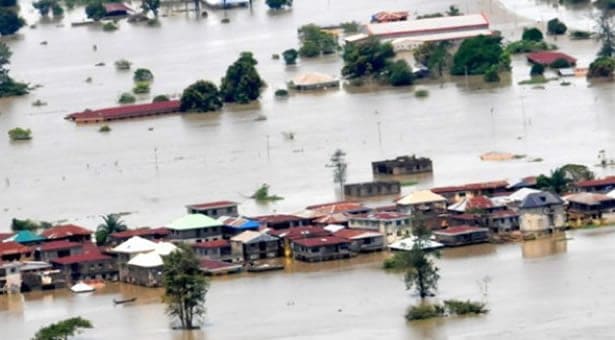
Before Wike Turns Abuja City to Jakarta, by Alabidun Shuaib AbdulRahman
There is something deeply unsettling about watching Abuja, a city conceived as one of Africa’s most ambitious experiments in planned urban development, repeatedly surrender parts of itself to floodwater.
The latest flooding in parts of the Federal Capital Territory is not merely another rainy-season inconvenience. It is a warning. And the warning is bigger than the immediate political argument over whether Minister of the Federal Capital Territory, Nyesom Wike, should be blamed for what happened.
The more important question is whether Abuja is gradually developing the same urban pathologies that have made Jakarta a global symbol of uncontrolled urban expansion, disappearing waterways, inadequate drainage, environmental degradation and the expensive consequences of allowing development to outrun planning.
That comparison should not be misunderstood. Abuja is not Jakarta. Abuja is inland, while Jakarta is a coastal megacity battling sea-level rise and severe land subsidence. Parts of North Jakarta, for instance, have recorded subsidence of between 15 and 25 centimetres annually, dramatically worsening its exposure to flooding. But cities do not have to share the same geography to share the same mistakes. That is where Wike must be careful.
The former Rivers State governor has unquestionably changed the physical appearance of Abuja since President Bola Tinubu appointed him FCT minister in August 2023. Roads have been reconstructed, bridges completed, neglected infrastructure revived and several long-abandoned projects pushed towards completion.
By July this year, Wike said the FCT had inaugurated its 50th project since the Tinubu administration came into office. The projects include roads, water infrastructure and other public works across the territory. To be fair to him, that record deserves commendation. However, roads alone do not make a city.
A city is a living system. Its roads, drainage channels, wetlands, parks, residential districts or areas, commercial centres, waterways and population must function together. When one element is aggressively developed while another is ignored, the consequences eventually become visible.
The flooding witnessed in Abuja this August should therefore force a more uncomfortable conversation about the direction of the capital. On August 18, Wike visited flood-affected areas in Maitama and reportedly discovered a structure sitting on a drainage area whose allocation had been revoked in 2011 in the public interest. That discovery is important for a reason that goes beyond the particular building because if a plot officially designated as a drainage area could be allocated, revoked and subsequently developed despite the restriction, then Abuja’s problem is not simply rainfall. It is governance.
And governance is precisely where the Jakarta analogy becomes relevant. Jakarta’s flooding crisis was not created overnight. Years of rapid urbanisation, excessive groundwater extraction, loss of natural absorption areas, pressure on drainage systems and development along waterways combined to produce a crisis that became progressively more difficult and expensive to reverse. The World Resources Institute has noted that Jakarta’s land subsidence averages about 12 centimetres annually, with parts of the northern coast experiencing rates as high as 25 centimetres.
As it stands, Abuja does not face Jakarta’s sinking-land problem. But Abuja faces a related urban danger: the gradual destruction of the spaces through which water is supposed to move. A drainage channel is not an empty piece of land waiting for a developer. A wetland is not idle property. A green area is not necessarily undeveloped land begging for a building. They are components of the city’s natural infrastructure. And once politicians, civil servants, developers and influential residents begin treating them as disposable, the city starts paying the price.
This is why Wike’s decision to order the demolition of structures obstructing designated waterways is both necessary and politically dangerous. To some extent, that is the right principle. But principles become meaningful only when they are applied consistently. If Wike demolishes the house of an ordinary resident while a politically connected developer is allowed to retain an equally illegal structure, then the exercise will become another chapter in Nigeria’s familiar story of selective enforcement.
The minister should therefore resist the temptation to turn the demolition campaign into a spectacle. What Abuja needs is not demolition theatre. It needs urban discipline. There must be a comprehensive audit of drainage corridors, floodplains, wetlands and waterways across the Federal Capital City and the satellite towns. Every questionable allocation should be investigated. Every revoked plot should be reconciled with the physical structures standing on it. And where demolition becomes unavoidable, compensation and relocation questions must be handled according to law and due process.
The Abuja Master Plan was conceived precisely to prevent the kind of urban disorder now threatening the capital. The original plan was formulated in 1979, while the detailed plan for the central district was developed in the early 1980s under the direction of Japanese architect Kenzo Tange. That is one of the ironies of modern Abuja. A city designed with extraordinary attention to order is increasingly being tested by disorder.
The original planners could not have predicted Abuja’s current population pressures, real estate boom, traffic density, climate pressures and sprawling satellite settlements. The city has changed dramatically since the 1970s. Yet the answer cannot be to abandon planning. The answer is to update it. Indeed, an urban planning review has noted that Abuja’s 1979 master plan has remained largely unchanged despite more than four decades of rapid urbanisation. This is where Wike’s legacy will ultimately be judged. Will he merely construct more roads within an old urban framework, or will he help create a modern Abuja capable of surviving the pressures of the next 50 years?
Abuja needs an integrated storm-water management strategy, not sporadic intervention after every major rainfall. Drainage channels must be mapped, cleared and maintained before the rains. Construction permits must be linked to proper hydrological assessments. Developers should be required to demonstrate how their projects will manage storm-water runoff. The administration must also look beyond Maitama, Wuse, Garki and the other affluent districts.
The real test of Abuja’s planning system lies in its rapidly expanding outskirts. Kuje, Gwagwalada, Bwari, Kubwa, Lugbe, Karu and other growth corridors are experiencing enormous development pressures. Wike has invested heavily in connecting these communities with roads and other infrastructure. That is commendable. But every new road creates development pressure. Every new interchange increases land value. Every improved corridor attracts houses, shopping centres, estates, filling stations and commercial activity. Infrastructure therefore creates both opportunity and responsibility.
If roads arrive without drainage, planning enforcement, waste management and environmental protection, today’s infrastructure investment can become tomorrow’s flooding problem. This is how cities drift into crisis. Not because one administration deliberately sets out to destroy them, but because thousands of individual decisions accumulate until the city itself begins to malfunction.
Jakarta offers that warning. Its experience demonstrates that once urban environmental damage reaches a certain point, governments spend enormous sums trying to repair problems that could have been prevented much more cheaply through planning and enforcement. Jakarta has consequently had to undertake massive flood-control interventions while simultaneously confronting the consequences of decades of groundwater extraction and uncontrolled urban expansion.
Abuja still has the advantage Jakarta wishes it had, which is time. Wike should therefore see the August flooding as more than an opportunity to order demolitions. It should be the beginning of a comprehensive Abuja Resilience Strategy. That strategy should combine the enforcement of the master plan with a modern review of the master plan itself. It should protect wetlands, restore drainage corridors, expand green infrastructure, improve waste management and establish a transparent digital register of land allocations and planning approvals.
Most importantly, it must end the culture in which political influence can bend urban planning rules. The Maitama discovery is a warning in this regard. A drainage area revoked more than a decade ago should not later become a building site.
Abuja does not need another powerful minister who can demolish structures. It needs institutions powerful enough to prevent illegal structures from being approved in the first place.
Wike has shown that he understands the politics of physical development. He has demonstrated urgency in pushing contractors and completing projects. His administration has been particularly aggressive about roads and other visible infrastructure, with dozens of projects commissioned. Now he must demonstrate that he understands the politics of urban sustainability.
Wike still has an opportunity to change the trajectory of anyhowness building of structures in the city. He can leave Abuja with hundreds of kilometres of roads and dozens of commissioned projects. Or he can leave something more enduring: a capital whose development respects the ecological systems that make urban life possible.
Alabidun is a media practitioner and can be reached via alabidungoldenson@gmail.com
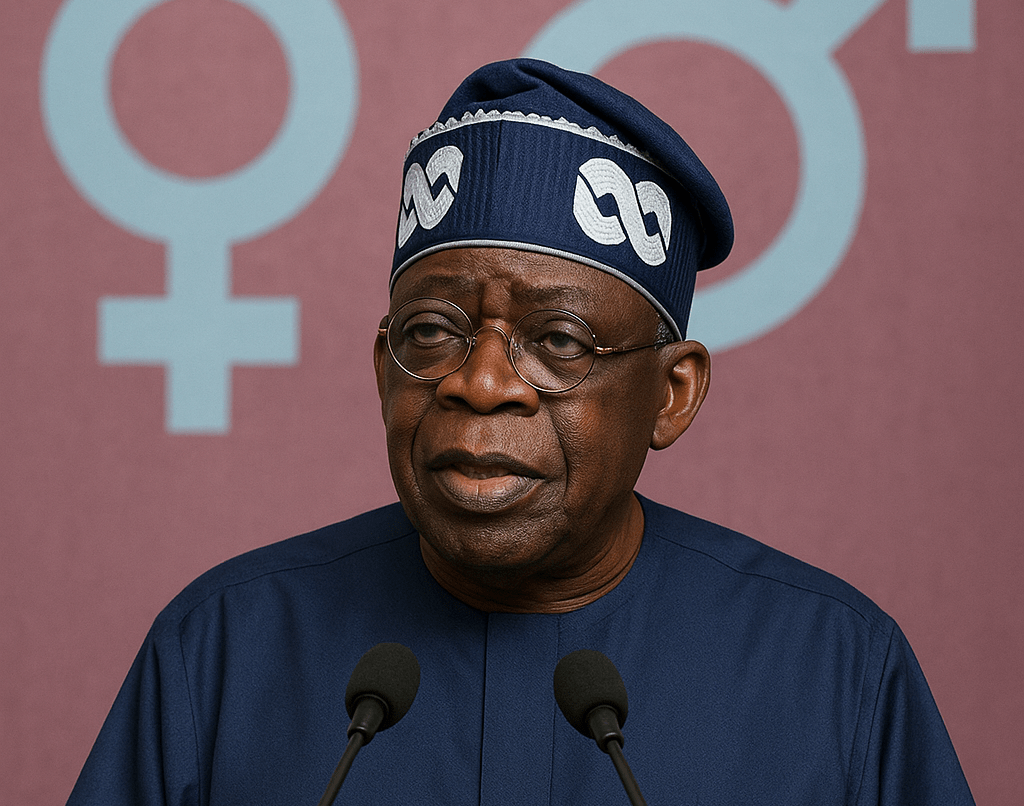
Tinubu, EFCC and the Danger of Political Interference, by Alabidun Shuaib AbdulRahman
There are moments when the intention behind an official decision may be defensible, yet the decision itself opens a door that ought to concern every citizen. President Bola Ahmed Tinubu’s intervention in the Economic and Financial Crimes Commission’s freezing of an Osun State Government account is one of those moments.
On August 6, 2026, with the Osun governorship election only nine days away, Tinubu directed the EFCC to return to court, vacate the order freezing an account belonging to the Osun State Government and discontinue the action it had instituted. The President said he was “deeply embarrassed” not by the EFCC’s exercise of its mandate, which he acknowledged was backed by a court order, but by its timing.
His explanation was understandable. Tinubu said actions taken by federal institutions were ordinarily attributed to him as President, whether or not he had prior knowledge of them. Since the election was approaching, he argued, nothing should be done that could create the impression that the EFCC or another Federal Government agency was being used to influence the election.
The argument is “morally” correct. But it also creates a difficult constitutional and institutional question: where does legitimate presidential concern about an election end and operational interference in an anti-corruption agency begin?
The EFCC did not arbitrarily descend on Osun. The commission said it had observed “huge transfers of funds into different corporate entities” from the state account and had acted to halt what it considered suspicious movement of public money. It argued that the approaching election could not become an excuse for an anti-corruption agency to ignore suspected movement of public funds.
Governor Ademola Adeleke, however, said the account was used for workers’ salaries and had been placed on a “Post No Debit” status. He demanded an explanation from EFCC Chairman Ola Olukoyede and described the action as another assault on Osun’s democracy.
The political atmosphere surrounding the matter had also been poisoned long before the account was frozen. In June, the Diaspora Committee of the All Progressives Congress Governorship Campaign Council in Osun asked the EFCC to freeze accounts allegedly connected with a reported N13.7bn annual ghost-workers payroll scandal. The committee claimed the money could be diverted to finance vote-buying ahead of the August 15 election. That background makes the EFCC’s action politically sensitive. But sensitivity is precisely why institutional independence matters.
The EFCC is a creation of statute. Under the EFCC (Establishment) Act, its chairman and members are appointed by the President, subject to Senate confirmation, while the law also provides for the chairman’s tenure and removal. The Presidency therefore has substantial influence over the commission’s leadership. That, however, does not make the President the operational head of every EFCC investigation.
There is an important distinction between constitutional authority over an institution and operational control of its investigations. A President may appoint the EFCC chairman, exercise statutory powers concerning the office, formulate broad government policy and demand accountability from federal agencies. But an anti-corruption agency must retain sufficient operational independence to determine whom to investigate, what evidence to pursue and what enforcement action to take.
Curiously, Tinubu himself made this case in the same statement. He said that since assuming office in May 2023, he had consistently maintained that anti-corruption and law-enforcement agencies should perform their statutory responsibilities independently and professionally, “without fear or favour, or political interference.” He added that he had deliberately refrained from directing or interfering in EFCC operations. That is why the Osun intervention becomes more concerning.
If a President can intervene in an operational decision because its timing might create an appearance of political interference, then the President has necessarily exercised influence over an operational decision. That does not automatically make the intervention unlawful. But it creates a precedent that future administrations may exploit.
Tinubu may genuinely believe the EFCC action could have been interpreted as an attempt to influence the Osun election. Another President could make the same argument about an investigation involving a governor, a minister, a major campaign financier or a politically influential contractor. If the principle becomes that the Presidency can intervene whenever enforcement action creates political controversy, the exception could eventually swallow the rule.
Nigeria’s history with the EFCC offers enough warnings. The commission was established in 2002 and began operations under President Olusegun Obasanjo, with Nuhu Ribadu becoming its pioneer chairman in 2003. Ribadu’s aggressive pursuit of governors, ministers, bankers and other powerful Nigerians gave the EFCC international prominence. But his controversial removal in 2007 also generated questions about the vulnerability of the commission to presidential and political interests.
Farida Waziri’s tenure produced another controversy. Appointed by President Umaru Musa Yar’Adua in 2008, she was removed by President Goodluck Jonathan on November 23, 2011. Years later, Waziri alleged that Jonathan’s administration had interfered with investigations and that her refusal to back down from a probe contributed to her removal. Though Jonathan rejected the allegation and challenged her to identify whom he had allegedly ordered her not to investigate.
The significance of those disputes is not simply who was right. It is that Nigerians repeatedly witnessed a situation in which the political leadership had enormous influence over the institution expected to investigate politically powerful people.
The Muhammadu Buhari administration provided another example. Buhari appointed Ibrahim Magu as acting EFCC chairman in 2015, despite the controversy that followed the Senate’s rejection of his nomination for substantive confirmation. On July 10, 2020, Buhari approved Magu’s suspension to allow a presidential panel to investigate allegations against him.
Again, the larger issue was institutional. The leadership of the EFCC remained heavily dependent on the Presidency, even though the commission’s work could directly affect members and allies of the governing political establishment. That is the weakness Nigeria has failed to resolve.
The President appoints the EFCC chairman. The commission investigates people who may have enormous political connections. The chairman therefore operates within an institutional structure in which the most powerful political office in the country has significant influence over the leadership of the agency.
This is why the Osun matter cannot be reduced to whether Tinubu had the right to be concerned about the election. Of course, he did. Elections must be protected from intimidation, manipulation and the misuse of state institutions. The harder question is whether that legitimate concern should be exercised through a presidential direction concerning a live EFCC enforcement matter.
There is also an important constitutional distinction regarding Adeleke. Section 308 of the 1999 Constitution grants a sitting governor immunity from civil or criminal proceedings in specified circumstances. But immunity is not exoneration. It does not mean a governor cannot be investigated, that evidence cannot be gathered or that public funds associated with a state government are beyond investigation.
If the EFCC had credible evidence of suspicious transfers, Adeleke’s candidacy should not automatically extinguish the commission’s investigative responsibility. Conversely, the approaching election should not give the EFCC licence to turn an investigation into a political weapon. The law must be stronger than both impulses.
That is why the better solution should have been procedural rather than presidential. If the EFCC had obtained a freezing order from a court and concerns subsequently arose about its timing or effect on essential state services, those concerns could have been presented before the court. If salaries needed to be paid, the government could have sought appropriate judicial relief.
Adeleke, too, must allow due process to take its course. If the EFCC acted unlawfully, the courts provide the remedy. If the allegations are false, evidence and due process should establish that fact.
For Olukoyede, the lesson is equally clear. The EFCC’s greatest asset is not proximity to the President but distance from political instruction. The commission must be prepared to investigate opposition politicians and members of the ruling party, governors and former governors, ministers and political financiers according to the same evidentiary standard.
Tinubu’s intervention, even if motivated by a legitimate desire to protect the integrity of the Osun election, should concern Nigerians. Institutions survive governments. Presidents come and go. Political parties win and lose elections.
If Tinubu truly wants Nigerians to believe that the EFCC is independent, the next step is obvious. He should help build an institutional framework in which no future President will need to intervene to prove that the EFCC is not being used politically. That is the real test of leadership. And that is the difference between fighting corruption under a President and building a country where the fight against corruption does not depend on the President.
Alabidun is a media practitioner and can be reached via alabidungoldenson@gmail.com
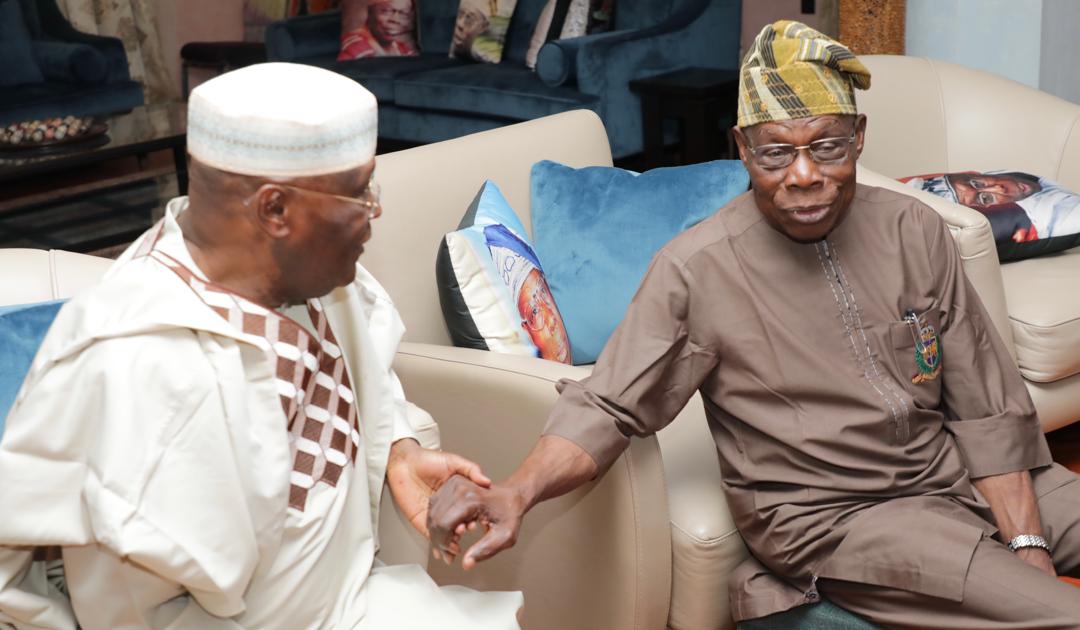
Obasanjo, Atiku and the Burden of Broken Trust, by Alabidun Shuaib AbdulRahman
In politics, alliances are often built on interests, sustained by necessity and destroyed by distrust. Few relationships illustrate this reality more profoundly than that of former President Olusegun Obasanjo and former Vice-President Atiku Abubakar. What began as one of the strongest political partnerships in Nigeria’s Fourth Republic gradually degenerated into one of its most bitter rivalries, leaving enduring consequences not only for the two principal actors but also for the country’s democratic evolution.
Their story is not merely about two ambitious politicians. It is a study of trust, betrayal, power, succession and the burdens of political ambition. More importantly, it explains why Atiku Abubakar, despite his enormous political network, financial resources and national appeal, has remained one of Nigeria’s greatest political nearly-men.
Politically, the relationship predates the return to democracy in 1999. During the military era, Atiku had become a leading figure in the Shehu Musa Yar’Adua-led Peoples Democratic Movement (PDM), arguably Nigeria’s most organised political structure at the time. Following General Sani Abacha’s death on June 8, 1998, General Abdulsalami Abubakar initiated a transition programme that opened the way for democratic elections.
As political parties emerged, the newly formed Peoples Democratic Party became the dominant platform. Within the PDP, Atiku was among the strongest presidential aspirants. He had built an extensive grassroots network through the PDM and enjoyed significant support among party delegates.
However, circumstances changed dramatically when former military Head of State, General Olusegun Obasanjo, who had recently been released from prison by General Abdulsalami Abubakar, entered the presidential race. Many influential political leaders believed Nigeria required a Yoruba president to heal the wounds created by the annulment of the June 12, 1993 presidential election won by late Chief Moshood Kashimawo Olawale Abiola.
At the PDP presidential convention held in Jos in December 1998, Obasanjo defeated Alex Ekwueme to secure the party’s ticket. Atiku, recognising the prevailing political mood, aligned with Obasanjo and reportedly mobilised substantial support from the PDM machinery for the former military ruler.
To reward both political loyalty and strategic value, Obasanjo selected Atiku as his running mate ahead of the 1999 presidential election. Together they defeated the Alliance for Democracy-All People’s Party ticket of Chief Olu Falae and Dr Umaru Shinkafi.
Initially, on what appeared a perfect political marriage, Obasanjo concentrated on governance and Nigeria’s re-engagement with the international community, while Atiku chaired the National Economic Council and the National Council on Privatisation. The vice-president became one of the principal architects of Nigeria’s economic reform programme, overseeing privatisation policies that fundamentally reshaped sectors such as telecommunications, banking and manufacturing.
Obasanjo’s military background inclined him towards centralised authority, discipline and firm control of government. Atiku, by contrast, was a consummate coalition builder whose strength lay in negotiation, consultation and political networking.
Interestingly, the first visible cracks appeared shortly after their inauguration. Several influential figures accused Atiku of maintaining an independent political structure outside Aso Rock. Rather than functioning merely as the vice, he continued nurturing relationships with governors, legislators and party leaders across the federation. For Obasanjo, this increasingly looked like preparation for succession rather than loyalty and by 2002, mutual suspicion had become impossible to conceal.
As the 2003 election approached, rumours circulated that Obasanjo considered replacing Atiku with another running mate. It was further rumoured that Atiku’s political associates equally questioned whether the President intended to honour what they believed was an understanding that power would eventually pass to the vice-president. Neither man publicly admitted the existence of such an agreement. The crisis intensified after the 2003 elections, which returned both men to office. The second term proved far more turbulent than the first.
Cabinet meetings reportedly became battlegrounds of competing interests. PDP leaders increasingly aligned themselves with either Obasanjo or Atiku. Government gradually transformed into two competing political camps operating under one administration.
Then came the defining episode. The proposed constitutional amendment that would have allowed a third presidential term for Obasanjo became the turning point. Although Obasanjo repeatedly denied personally sponsoring the amendment, many political actors believed forces loyal to him actively supported it. On the other side, Atiku vehemently opposed the proposal.
Going forward, on May 16, 2006, the National Assembly rejected the constitutional amendment, effectively ending any possibility of a third term. That single event irreversibly destroyed whatever trust remained between President and Vice-President. The aftermath was brutal.
Obasanjo publicly accused Atiku of disloyalty and corruption. The Federal Executive Council recommended investigations into allegations arising from the United States-based Jefferson bribery scandal involving former Congressman William Jefferson and Vice-President Atiku’s former wife, Jennifer Douglas. Atiku consistently denied wrongdoing and was never convicted of corruption either in Nigeria or the United States.
The administration also attempted to exclude Atiku from contesting the 2007 presidential election through the Independent National Electoral Commission, INEC, after the Economic and Financial Crimes Commission, EFCC listed him among politicians allegedly indicted for corruption.
However, in a landmark judgment delivered on April 16, 2007, the Supreme Court ruled that INEC lacked constitutional powers to disqualify candidates without a court conviction. That judgment remains one of Nigeria’s most significant electoral precedents. By then, however, political damage had already been done. Atiku had left the PDP for the Action Congress, contested the presidency against the late Umaru Musa Yar’Adua and finished third.
Since then, Atiku has contested the presidency repeatedly—in 1993 (Social Democratic Party primaries), 2007 (Action Congress), 2011 (PDP), 2019 (PDP) and 2023 (PDP)—without success.
Many factors explain these defeats, but the collapse of his relationship with Obasanjo remains among the most consequential. Since Obasanjo described Atiku as unreliable and overly ambitious, many Nigerians began viewing the former vice-president through that lens.
Perhaps the most quoted criticism came from Obasanjo’s 2019 public letter in which he wrote that “Atiku is not the person to entrust the future of Nigeria with.” Ironically, only weeks earlier, the same Obasanjo had publicly endorsed Atiku’s presidential ambition after reconciling with him under the Coalition for Nigeria Movement.
For Atiku, the consequences have been profound. The very networking ability that made Atiku indispensable to Obasanjo’s emergence in 1999 later became one of the reasons their partnership collapsed. Obasanjo reportedly interpreted Atiku’s independent political influence as a direct threat rather than an institutional asset. Trust, once broken, rarely returns unchanged, they say.
Although both men occasionally reconciled for political expediency, notably, before the 2019 elections, the warmth of their earlier partnership never fully returned. Ahead of the 2023 presidential election, Obasanjo endorsed Labour Party candidate Peter Obi instead of Atiku, reinforcing public perception that the former President had permanently lost confidence in his erstwhile deputy.
Even though to some extent, Obasanjo restored Nigeria’s global standing after years of military dictatorship and implemented significant economic reforms. Atiku played a pivotal role in driving those reforms and expanding Nigeria’s private-sector economy through privatisation and investment promotion. Together, they achieved more than either is often willing to acknowledge.
However, their fractured relationship offers broader lessons for Nigeria’s political class. Institutions suffer when personal distrust supersedes constitutional responsibility. Democracy weakens when political partnerships collapse under the weight of suspicion rather than being managed through dialogue and internal party mechanisms.
For Atiku personally, the Obasanjo years permanently shaped his political identity. He emerged as a formidable coalition builder, an indefatigable presidential contender and one of Nigeria’s most recognisable democratic figures. Yet he also carried the enduring burden of questions about loyalty, consistency and political trust—questions amplified by his multiple party defections between the PDP, Action Congress and the All Progressives Congress before returning to the PDP and now ADC.
Whether those perceptions are entirely fair remains debatable. What is beyond dispute is that the Obasanjo-Atiku rupture altered the trajectory of Nigeria’s Fourth Republic and influenced every presidential election in which Atiku subsequently participated.
As the ancient Roman philosopher Cicero observed, “Nothing is more noble, nothing more venerable than fidelity.” In politics, as in life, trust is difficult to build, easy to lose and almost impossible to restore. The Obasanjo-Atiku story remains Nigeria’s most compelling reminder that political alliances may win elections, but only trust can sustain leadership.
Alabidun is a media practitioner and can be reached via alabidungoldenson@gmail.com


Rubio Reveals Late-Night Calls, Says No ‘Typical Day’ as US Security Chief

Chiemela Nathan: The ‘Girl With an Agenda’ Who Turned Excellence Into Leadership

CARICOM Urges Youths to Build Skills, Embrace Entrepreneurship

Pastor Jerry Eze Defends Miracles At UK Conference Amidst Criticism And Controversy

Diaspora Watch 20th Edition (October 14-20, 2024): Your Trusted Source for Global News and Insights

Tanzanian Man Reportedly Dies And Returns To Life Six Times


-
 Analysis4 days ago
Adeleke’s Osun Victory: What It Means for Nigeria’s 2027 Elections
-
 News4 days ago
Five Years on the Throne: Reflecting on the Reign of the Olu of Warri, by Boniface Ihiasota
-
 Milestone4 days ago
Chiemela Nathan: The ‘Girl With an Agenda’ Who Turned Excellence Into Leadership
-
 Analysis4 days ago
Before Wike Turns Abuja City to Jakarta, by Alabidun Shuaib AbdulRahman
-
 News4 days ago
Rubio Reveals Late-Night Calls, Says No ‘Typical Day’ as US Security Chief
-

 News4 days ago
Harry, Meghan to return to Britain with children six years after royal exit