
Business
Taxation and the Nigerian Diaspora


Taxation and the Nigerian Diaspora
For Nigerians in the diaspora, taxation has recently taken on a renewed urgency, shaped by Nigeria’s evolving fiscal reforms and global policy shifts that increasingly touch lives beyond the country’s borders. From London to Atlanta, Toronto to Berlin, conversations among Nigerians abroad are no longer just about exchange rates or remittance channels, but about what the newly introduced tax reforms at home truly mean for them.
Nigeria’s latest tax reforms, scheduled to take effect from January 2026, are among the most ambitious fiscal overhauls in decades. Driven by the need to boost non-oil revenue, the Federal Government has made clear its intention to widen the tax base and improve compliance rather than raise blanket tax rates. According to official data, Nigeria’s tax-to-GDP ratio remains below 11 per cent, far lower than the African average of about 16 per cent. This gap has pushed policymakers to rethink how revenue is generated, especially in an economy grappling with subsidy removal, currency reforms and rising public debt.
For Nigerians living abroad, the immediate concern was whether these reforms would extend Nigeria’s tax reach to foreign-earned income or remittances. That fear was amplified by online speculation and misinformation. However, the government has repeatedly clarified that foreign income earned by non-resident Nigerians remains exempt from Nigerian taxation. Residency remains the key determinant. Under the revised framework, an individual becomes tax-resident only if they spend 183 days or more in Nigeria within a 12-month period. For the vast majority of Nigerians in the diaspora, this condition does not apply.
Equally important is the clarification on remittances. Nigeria received approximately 20.5 billion dollars in diaspora remittances in 2023, according to World Bank estimates, making it one of the largest recipients globally. These inflows support millions of households and often serve as informal social security. The government has stated unequivocally that personal remittances sent to families are not subject to taxation. This reassurance, publicly restated by the Presidential Committee on Fiscal Policy and Tax Reforms, was crucial in calming fears of an erosion of diaspora support for families and communities back home.
That said, the reforms do affect Nigerians abroad who maintain economic ties with Nigeria. Rental income from properties, dividends from Nigerian companies, business profits and capital gains derived within Nigeria remain taxable. What has changed is the effort to streamline rates and enforcement. Under the new structure, individuals earning up to ₦800,000 annually in Nigeria are exempt from personal income tax, while higher income brackets attract progressive rates of up to 25 per cent. For diaspora investors, this clarity offers both reassurance and responsibility.
Yet taxation for Nigerians abroad is not shaped by Nigeria alone. Developments in host countries also matter. In the United States, for example, proposed legislation to impose an excise tax on outbound remittances has raised concerns among immigrant communities, including Nigerians. While still under debate, such proposals highlight how diaspora Nigerians can face additional financial pressure even when Nigeria itself does not tax remittances. These external policies complicate the already delicate balance between supporting home and meeting obligations abroad.
Beyond the figures and laws lies a deeper emotional dimension. Many Nigerians in the diaspora already shoulder what feels like an unspoken tax through remittances, school fees for relatives, medical bills and community obligations. When new fiscal policies are announced, the question is rarely about refusal to contribute but about trust. Diaspora Nigerians want assurance that taxation is tied to accountability, improved infrastructure and governance reforms that justify continued engagement.
Tax policy also influences long-term decisions. Uncertainty or perceived hostility can discourage diaspora investment, while transparent and predictable systems can attract it. Nigeria’s diaspora population is estimated at over 15 million people, with significant skills, capital and global networks. How taxation is framed and implemented will shape whether this community feels like partners in national development or distant revenue targets.
For second-generation Nigerians born abroad, the issue is even more symbolic. Their connection to Nigeria is often cultural rather than administrative. If engagement with the country is defined largely by obligations without visible benefits, the risk is gradual disengagement. Taxation, therefore, becomes a measure of how Nigeria defines citizenship in a globalised world.
In the end, the newly introduced tax reforms present both reassurance and reflection for Nigerians in the diaspora. They confirm that foreign-earned income and personal remittances remain protected, while reinforcing the principle that income generated in Nigeria carries responsibility. More importantly, they reopen a broader conversation about trust, inclusion and mutual benefit. For Nigerians abroad, tax is no longer just a line in a policy document; it is a mirror of how connected they remain to the country they still call home.

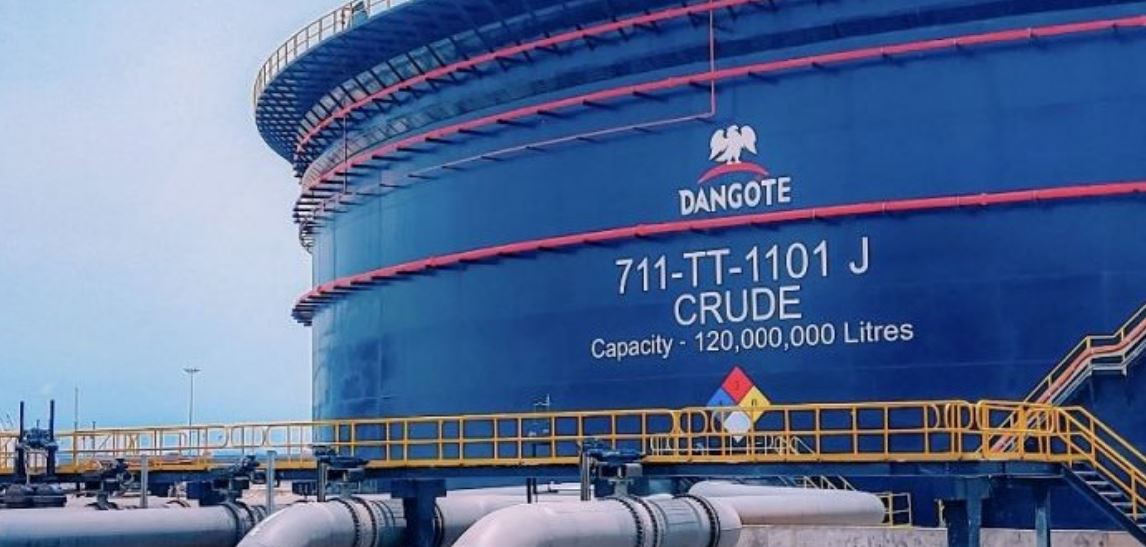
Marketers Import Dangote-Refined Fuel Through Togo Hub
Nigerian fuel marketers are increasingly importing refined petroleum products produced by the Dangote Petroleum Refinery through an offshore trading hub in Lomé, Togo, in a development that underscores the refinery’s growing influence on fuel supply across West Africa.
The disclosure was made by Matthew Tracey-Cook of S&P Global during a webinar organised by the Major Energies Marketers Association of Nigeria.
The webinar, themed “West Africa Pricing and Flows in the Context of the War,” examined evolving fuel supply chains and pricing trends within the region.
Speaking during the session, Tracey-Cook said refined products from the Dangote Refinery are being exported on a coastal basis to Lomé before being re-imported into Nigeria by fuel marketers.
According to him, the trend reflects the increasingly interconnected relationship between the Lagos-based refinery and the offshore ship-to-ship trading hub in Togo.
He noted that despite Dangote’s growing capacity to supply the domestic market directly, some marketers continue to source products through Lomé, a development that may be linked to pricing differences between local and international markets.
Tracey-Cook, however, stressed that the Togolese hub remains a strategic logistics centre for fuel distribution across West Africa.
According to him, the facility continues to handle significant fuel volumes and remains slightly larger than it was in 2024.
He added that volumes transacted through Lomé surged in certain periods, particularly in November and December 2025, surpassing volumes recorded on several other regional supply routes.
The S&P Global official explained that the hub plays a vital role in regional fuel distribution by receiving large medium-range tankers and transferring cargoes to smaller vessels capable of accessing ports with limited infrastructure.

Ghana eyes local takeover of Gold Fields’ Tarkwa mine
Ghana may transfer control of the Tarkwa gold mine, currently operated by Gold Fields, to local mining firms when the mine’s leases expire in April 2027, as the West African nation seeks to deepen local participation in its lucrative gold industry and maximise benefits from rising global gold prices.
According to a Bloomberg report, Ghanaian authorities are considering inviting local companies to bid for the operation of the Tarkwa mine, although discussions remain at a preliminary stage.
The government is also weighing the option of renewing the leases held by Gold Fields.
The move forms part of Ghana’s broader strategy to increase its share of mining revenues and strengthen indigenous ownership within the sector.
The country, Africa’s largest gold producer, has in recent years introduced measures aimed at boosting state earnings from mining activities, including increasing gold royalties from five per cent to as much as 12 per cent.
Should the government proceed with the plan, interested Ghanaian firms would be required to submit bids for evaluation.
Officials are expected to assess proposals based on commitments to environmental restoration, job creation, and infrastructure development in mining communities.
The potential loss of the Tarkwa mine would represent a significant setback for Gold Fields, as the operation contributed about 20 per cent of the company’s total gold production in 2025. The mine produced approximately 475,000 ounces of gold during the year.
Responding to the development, Gold Fields said it had already submitted an application for the renewal of the Tarkwa mining leases and remains engaged with the Ghanaian government.
“We have submitted an early application for the renewal of the Tarkwa mining leases. These constructive engagements are continuing,” the company stated.
Authorities believe local ownership of the mine could create more opportunities for Ghanaian engineers, contractors, suppliers and entrepreneurs, while ensuring that a greater share of mining wealth remains within the country.
Gold Fields Chief Executive Officer, Michael Fraser, had earlier disclosed that the company was developing a 20-year operational and investment plan for the Tarkwa mine.
The latest development follows the transfer of Gold Fields’ other Ghanaian asset, the Damang mine, to the state after its lease expired earlier this year.
Following a competitive tender process, the mine was awarded to Engineers and Planners Co. Ltd., a Ghanaian firm with existing mining contracts at both Tarkwa and Damang.
US Threatens New Tariffs on UK, EU, China, 57 Others
The United States has announced plans to impose fresh tariffs of between 10 and 12.5 per cent on imports from dozens of countries over concerns that they have failed to do enough to curb the trade in goods produced through forced labour.
The move marks the second major tariff initiative by the administration of President Donald Trump since the US Supreme Court struck down a significant portion of his earlier import duties in February.
According to the US Trade Department, the proposed tariffs would affect 60 trading partners that collectively account for almost all goods imported into the United States.
The department said the measures were aimed at countries that have either failed to prohibit the importation of goods made with forced labour or have not effectively enforced existing restrictions.
Announcing the proposal, US Trade Representative Jamieson Greer said the continued trade in goods linked to forced labour created unfair competition for American workers.
“It creates a dynamic where American workers are forced to compete globally on an unlevel playing field,” Greer stated.
The proposed tariffs have yet to take effect, as the Trump administration is expected to complete the necessary legal and regulatory processes before implementation.
The action follows an investigation launched in March by Greer into whether major US trading partners had taken adequate measures to prevent the importation of products made wholly or partly through forced labour.
Findings from the investigation indicated that 54 countries had “failed to impose a legal prohibition on the importation of goods produced wholly or in part with forced labour and to effectively enforce such a prohibition.”
The report further stated that six trading partners — the European Union, Canada, Ecuador, Indonesia, Mexico and Pakistan — had failed to effectively enforce existing bans on imports linked to forced labour.
Under the proposal, a 10 per cent tariff would be imposed on imports from countries and blocs including the European Union, United Kingdom, Canada, Mexico, Pakistan, Argentina, Bangladesh, Cambodia, Guatemala, Malaysia and Taiwan.
The remaining 45 countries, including China and India, would face higher duties of 12.5 per cent.
Reacting to the announcement, the British government maintained that it was taking steps to address forced labour concerns within supply chains, while China rejected allegations that goods produced through forced labour were entering global markets.
The European Union, however, described the proposed tariffs as unjustified.
An Indian trade analyst characterised the move as a pressure tactic aimed at strengthening Washington’s position in ongoing trade negotiations with New Delhi.


CARICOM must impact citizens’ lives, says incoming Chair Pierre

Marketers Import Dangote-Refined Fuel Through Togo Hub

Ghana eyes local takeover of Gold Fields’ Tarkwa mine

Pastor Jerry Eze Defends Miracles At UK Conference Amidst Criticism And Controversy

Diaspora Watch 20th Edition (October 14-20, 2024): Your Trusted Source for Global News and Insights

Tanzanian Man Reportedly Dies And Returns To Life Six Times


-

 Milestone3 days ago
Godchildren Honour Emmanuel and Joy Ojiribe at 40th Anniversary Celebration in US
-

 Analysis3 days ago
Donald Trump at 80: Assessing His Impact on Africa and Africans, by Boniface Ihiasota
-
 Business3 days ago
Ghana eyes local takeover of Gold Fields’ Tarkwa mine
-

 Analysis3 days ago
As Ilorin Sets the Pace Again, by Alabidun Shuaib AbdulRahman
-

 Features4 days ago
Diaspora Watch Vol. 97
-

 Tech3 days ago
Trump Announces Intel-Apple Chip Deal