
News
Mugabe’s Son Pleads Guilty to Firearm, Immigration Charges in South Africa

Mugabe’s Son Pleads Guilty to Firearm, Immigration Charges in South Africa
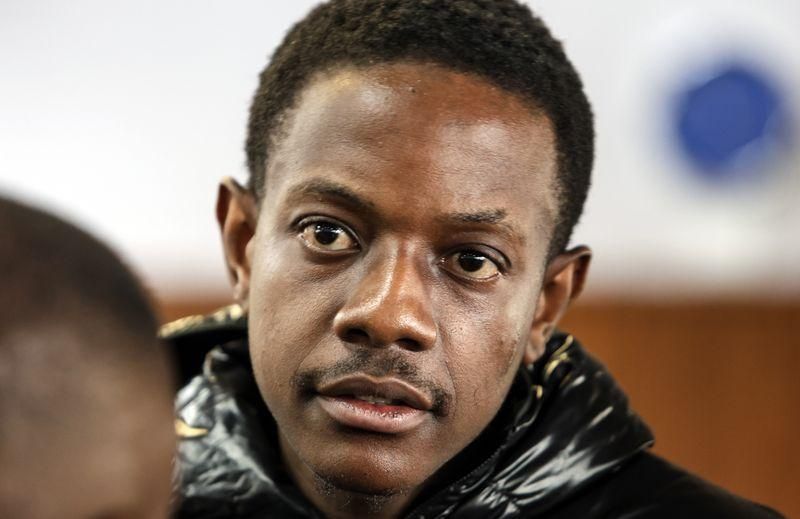
Bellarmine, the youngest son of Zimbabwe’s late former leader, Robert Mugabe, has pleaded guilty to charges of pointing a firearm and illegal stay in South Africa.
The 28-year-old, Bellarmine Mugabe, entered his plea before a court in Alexandra, Johannesburg, on Friday, following his arrest in February over the shooting of a 23-year-old man at his residence.
Bellarmine was arraigned alongside his co-accused, Tobias Matonhodze, 33, who pleaded guilty to attempted murder, defeating the ends of justice, illegal immigration and unlawful possession of ammunition.
Counsel to the defendants told the court that both men were willing to return to Zimbabwe at their own expense if the court opts against imposing custodial sentences.
The court heard that Bellarmine Mugabe, who was initially charged with attempted murder, spoke only to confirm his understanding of the charges and to enter his plea.
However, the attempted murder charge against him was later withdrawn after Matonhodze admitted responsibility for the shooting.
According to the National Prosecuting Authority, the charge of pointing a firearm against Mugabe relates to a separate incident, which was consolidated with the main case.
The duo were arrested on February 19 after police responded to a distress call at Mugabe’s residence in Hyde Park, an affluent suburb of Johannesburg.
A 23-year-old man, believed to be a security guard, was found with gunshot wounds and rushed to hospital in critical condition.
Prosecutors told the court that the shooting followed an altercation inside the residence, with the victim allegedly shot twice in the back while attempting to flee the premises.
Authorities who searched the property are yet to recover the firearm used in the incident.
The case has suffered multiple delays since the arrest, with Mugabe’s bail hearing postponed on two occasions.
The court has now adjourned sentencing proceedings to April 24.
Bellarmine Mugabe’s legal troubles are not new. In 2024, he was arrested in Beitbridge, a border town in Zimbabwe, for allegedly assaulting a police officer.
Although he was granted bail, a warrant was later issued for his arrest after he failed to appear in court.
In June 2025, he was again arrested for allegedly assaulting a security guard at a mining site in Mazowe, near the capital, Harare. That case is still pending.
Bellarmine is one of two sons from the marriage between the late Zimbabwean leader and his widow, Grace Mugabe.
His father, Robert Mugabe, ruled Zimbabwe for 37 years before he was ousted in a military intervention in 2017 and died in 2019.








CARICOM assesses regional capacity to produce four key products
The Caribbean Community (CARICOM) has set up four assessment teams to determine whether member states can meet regional demand for paints, hydraulic cement, glass bottles and bitumen.
The teams will meet between October 12 and 27 to examine production capacity, market demand and the competitiveness of regional products against imports from outside the Caribbean.
Their findings are expected to guide regional trade ministers in determining future tariff policies for the four products.
The teams were established by the Council for Trade and Economic Development (COTED) at its 62nd regular meeting in June 2026.
The Assistant Secretary-General of CARICOM Single Market and Trade, Ambassador Wayne McCook, said the teams had been directed to conduct thorough assessments while considering the interests of manufacturers, consumers and other stakeholders.
“The Council has directed the assessment teams to be rigorous in examining the regional supply and demand for products and give careful consideration to the sensitivities of all stakeholders and consumers who rely on a stable and predictable supply of the products being assessed,” McCook said.
The assessments will examine the competitiveness of trade among CARICOM member states compared with imports from other regions, including the impact of the Common External Tariff, non-tariff barriers and logistics costs.
The teams will also review the application of CARICOM’s Rules of Origin criteria to the products and seek contributions from public and private sector stakeholders, consumers and civil society groups.
The petroleum bitumen assessment team comprises representatives from Barbados, Grenada, Guyana, Jamaica, Suriname and Trinidad and Tobago.
The team examining other hydraulic cement comprises Antigua and Barbuda, Barbados, Guyana, Jamaica and Trinidad and Tobago.
The glass bottles team includes Barbados, Grenada, Guyana, Jamaica, Suriname and Trinidad and Tobago.
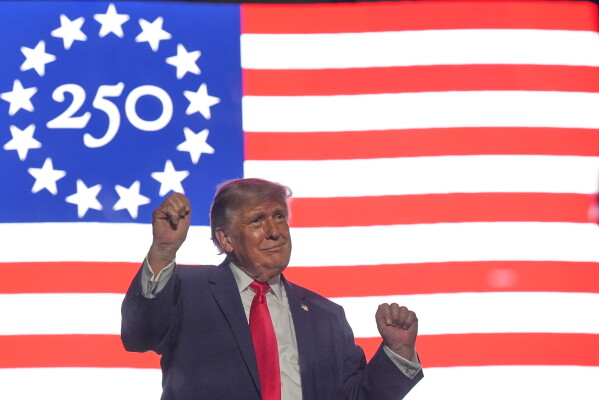
Trump Rules Out Iran Deal as US Weighs Fresh Military Strikes
United States President Donald Trump has said he no longer wants a deal with Iran amid reports that the US military is preparing for possible fresh strikes against the country in the coming weeks.
Trump made the statement during a campaign rally with Republican candidates in San Antonio, Texas, suggesting that Tehran was willing to make major concessions to end the conflict.
“I think the deal isn’t really something that I want to do, but they’re willing to offer us anything to stop,” Trump said.
He, however, commended his special envoy to the Middle East, Steve Witkoff, for his role in the ongoing diplomatic efforts, saying the envoy was “doing very well.”
The development came as NBC News reported that Trump and his national security team had discussed the possibility of resuming large-scale military operations against Iran in the coming weeks.
The report, citing a US official and another person familiar with the discussions, indicated that Washington was considering further military action despite ongoing efforts to end the conflict.
Similarly, Axios reported that a possible resumption of hostilities could involve extensive bombing of Iranian energy facilities, infrastructure and nuclear targets.
The reports also raised concerns about the potential political implications of renewed military operations ahead of the US midterm elections.
Trump’s approval ratings have reportedly declined amid mounting public concerns over the rising cost of living, particularly soaring petrol and diesel prices.
Earlier in the week, the president blamed uncertainty over Iran’s leadership for difficulties in the negotiations, arguing that Washington did not know who was making decisions on behalf of Tehran.
Iranian officials rejected the claim, with Foreign Ministry spokesman Esmail Baghaei accusing US officials of sending contradictory signals.
Baghaei argued that the problem stemmed from what he described as Washington’s inconsistent positions and mixed messages during the negotiations.
Meanwhile, crude oil prices have remained elevated despite a recovery in oil exports from the Middle East towards levels recorded before the conflict.
According to commodity intelligence firm Kpler, combined crude oil shipments from the Gulf, excluding Iran, alongside volumes from Saudi Arabia and the United Arab Emirates, had recovered to approximately 18.5 million barrels per day.
Kpler’s lead freight analyst, Matt Wright, said the normalisation of oil shipments no longer depended entirely on a diplomatic agreement.
“Normalisation no longer needs to wait for a deal,” Wright said.
He, however, forecast a slower and uneven recovery if the conflict continued, suggesting that shipping operations would increasingly adapt to prevailing conditions rather than wait for a diplomatic breakthrough.
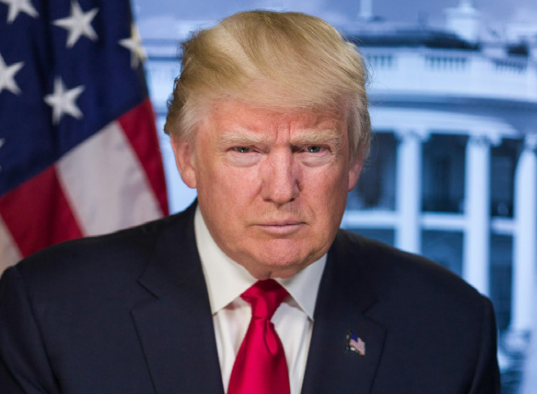
Trump’s fuel price cuts face hurdles ahead of midterm elections
United States President Donald Trump is facing mounting pressure to reduce petrol and diesel prices ahead of the November midterm elections, as rising energy costs continue to weigh on households and businesses.
Trump has announced several measures aimed at easing the burden on consumers, including temporary tax relief on red-dyed diesel used for off-road purposes and efforts to encourage the release of oil reserves.
However, analysts say the measures may offer only limited relief, with the disruption of global energy supplies caused by the conflict involving the United States, Israel and Iran continuing to drive up prices.
The rising cost of fuel has become a major political concern for the Trump administration, with voters increasingly worried about the cost of transportation, food and other essential goods.
Polls indicate widespread dissatisfaction with Trump’s handling of the economy and the war in Iran, putting Republican candidates under pressure ahead of the November elections.
Global oil supplies have been disrupted by the conflict, which has severely affected the movement of crude oil and refined petroleum products through the Strait of Hormuz.
Although crude oil flows have approached pre-war levels, prices remain above $100 per barrel, contributing to higher petrol and diesel costs.
David Ruisard, pricing manager at commodities intelligence firm Argus, attributed the increase in diesel prices to the Middle East conflict and Russia’s ongoing war with Ukraine.
He estimated that about 60 per cent of the increase in diesel prices from approximately $3 to $6 per gallon was connected to disruptions around the Strait of Hormuz, while the Russia-Ukraine conflict accounted for the remaining 40 per cent.
Oxford Economics’ chief US economist, Michael Pearce, said higher energy costs had contributed significantly to inflation this year, putting additional pressure on households and businesses.
He explained that rising energy prices and interest rates were squeezing household budgets while increasing operating costs for businesses.
However, Patrick De Haan, head of petroleum analysis at fuel price tracking website GasBuddy, said petrol and diesel prices had recorded modest declines in recent days, partly due to measures introduced by the Trump administration.
One of the measures announced by Trump allows red-dyed diesel, which is normally reserved for off-road use and is exempt from federal highway fuel taxes, to be used on public roads without the usual federal levies during the temporary relief period.
Ruisard, however, warned that the measure could create complications for trucking companies once the relief expires.
He explained that the red dye was difficult to remove from fuel tanks and that businesses found using the dyed fuel after the exemption ended could face substantial penalties for tax evasion.
He also warned that increased consumption could deplete supplies normally reserved for agricultural machinery, rail operators and other off-road users.


CARICOM assesses regional capacity to produce four key products

Trump Rules Out Iran Deal as US Weighs Fresh Military Strikes

Trump’s fuel price cuts face hurdles ahead of midterm elections

Pastor Jerry Eze Defends Miracles At UK Conference Amidst Criticism And Controversy

Diaspora Watch 20th Edition (October 14-20, 2024): Your Trusted Source for Global News and Insights

Tanzanian Man Reportedly Dies And Returns To Life Six Times


-

 Analysis4 days ago
Africa’s Resources Must Build Africa, by Alabidun Shuaib AbdulRahman
-
 Diplomacy3 days ago
UK, Germany ratify defence treaty amid Russian threat
-
 News3 days ago
Trump’s fuel price cuts face hurdles ahead of midterm elections
-
 News3 days ago
CARICOM assesses regional capacity to produce four key products
-
 News3 days ago
Trump Rules Out Iran Deal as US Weighs Fresh Military Strikes
-

 News4 days ago
Riyadh Airport Attacks Threaten Oil, Global Trade