
News
Pope Warns Against Renewed Scramble for Africa’s Resources

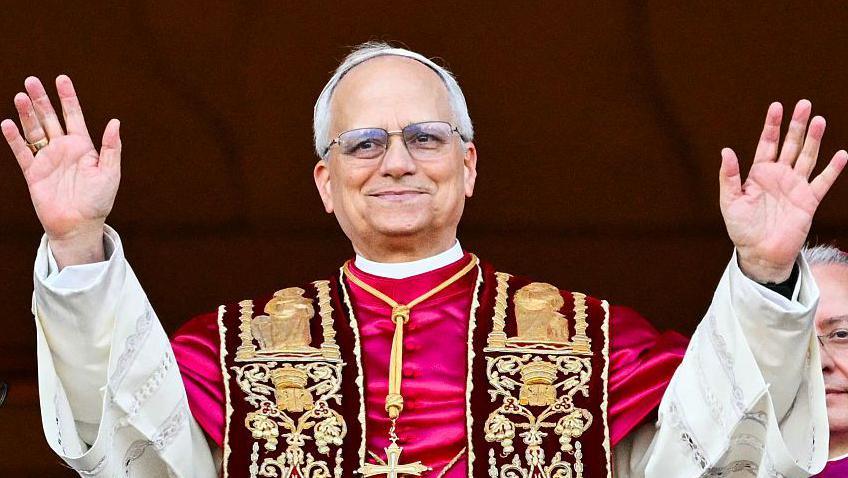
Pope Warns Against Renewed Scramble for Africa’s Resources
Pope Leo XIV has condemned what he described as the continued exploitation of Africa’s vast natural resources by global powers, warning that the rush for critical minerals powering the artificial intelligence (AI) revolution risks deepening inequality and conflict across the continent.
The pontiff, speaking during an open-air Mass in Cameroon attended by more than 120,000 worshippers, said Africa’s rich deposits of rare earth minerals and strategic resources were being aggressively pursued without corresponding benefits to local communities.
He cautioned against what he called the “relentless pursuit of raw material and rare earths,” noting that the same resources underpinning modern technologies such as AI are largely extracted from African soil.
The Mass, held at the Japoma Stadium in Douala, marked the largest turnout so far in his 11-day Africa tour, with thousands of faithful camping overnight to secure seats and braving intense heat to witness the event.
As crowds waved and cheered his arrival in the Popemobile, the Pope used the platform to draw attention to what he framed as a structural imbalance in global development, where resource-rich African nations remain economically disadvantaged despite their central role in the global supply chain.
Countries across Africa, including Cameroon, are known to possess significant deposits of cobalt, lithium, and other rare earth elements essential for manufacturing smartphones, electric vehicles, and AI-driven systems.
However, much of the extraction is controlled by foreign companies, with limited industrial processing taking place locally.
Pope Leo XIV warned that such patterns of resource extraction, if left unchecked, could further entrench dependency and social instability on the continent.
Beyond the economic concerns, the pontiff also addressed the social and technological consequences of the AI era, cautioning that unchecked digital transformation could distort human interaction and deepen global divisions.
He said societies risked becoming trapped in “bubbles impermeable to one another,” where fear of difference replaces dialogue and understanding, leading to increased polarisation and violence.
“When simulation becomes normal, we lose touch with reality,” he said, adding that young people must resist systems that offer “easy gains” but ultimately erode moral and social values.
The Pope also delivered a message of peace amid Cameroon’s ongoing Anglophone crisis, urging reconciliation in a region that has experienced years of separatist violence and displacement.
His visit to Douala followed earlier engagements in conflict-affected areas and a stop at a Catholic hospital, where he met patients and medical workers.
At the Catholic University of Central Africa in Yaounde, he expanded on his concerns about AI, warning that the technology, while transformative, must not be allowed to intensify inequality or disconnect humanity from truth and reality.
The 11-day tour, which began in Algeria, has been marked by a recurring theme of Africa’s place in global systems of power, faith, and economics.
The Pope is expected to proceed to Angola before concluding his visit in Equatorial Guinea.




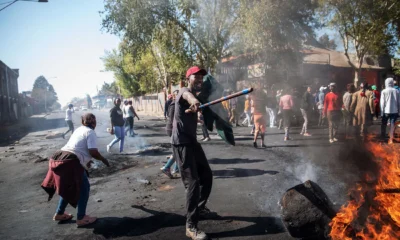



Spain battles political fallout as 60,000 migrants overwhelm Ceuta border
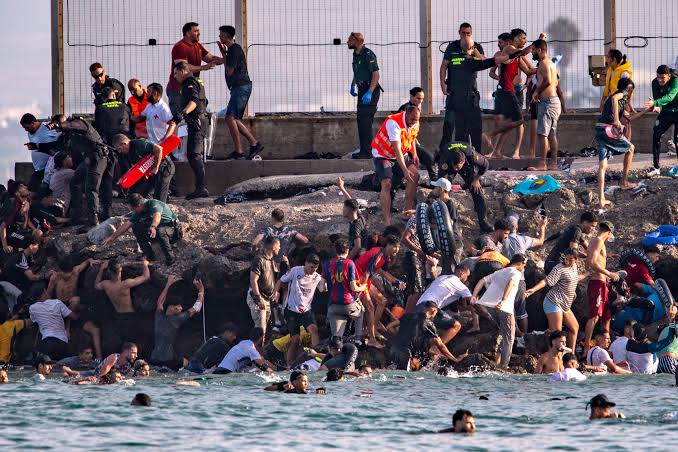
Spain is facing mounting political pressure after an estimated 60,000 migrants crossed from Morocco into the Spanish enclave of Ceuta within 24 hours, triggering one of the country’s worst border crises in recent years.
The unprecedented influx overwhelmed local infrastructure, forced businesses to shut down and disrupted daily life in the North African territory.
Spanish Prime Minister Pedro Sánchez condemned the mass crossing, describing it as “a violation of Spain’s territorial integrity,” as security forces reinforced the border.
Residents expressed frustration over the scale of the influx, saying the territory lacked the resources to cope with such a large number of arrivals.
Although thousands of migrants have reportedly returned voluntarily to Morocco, officials said shortages of food and essential supplies continued to affect the enclave.
The crisis has also reignited political debate across Europe over border security and migration policy, with some politicians calling for tougher controls along the European Union’s external frontiers.
The humanitarian toll also continued to rise, with officials confirming that at least 57 people died during the border surge.
Many of those who crossed into Ceuta said they were fleeing unemployment and economic hardship in Morocco in search of better opportunities in Europe.
Hamas agrees to disarm as Gaza withdrawal deal gains momentum
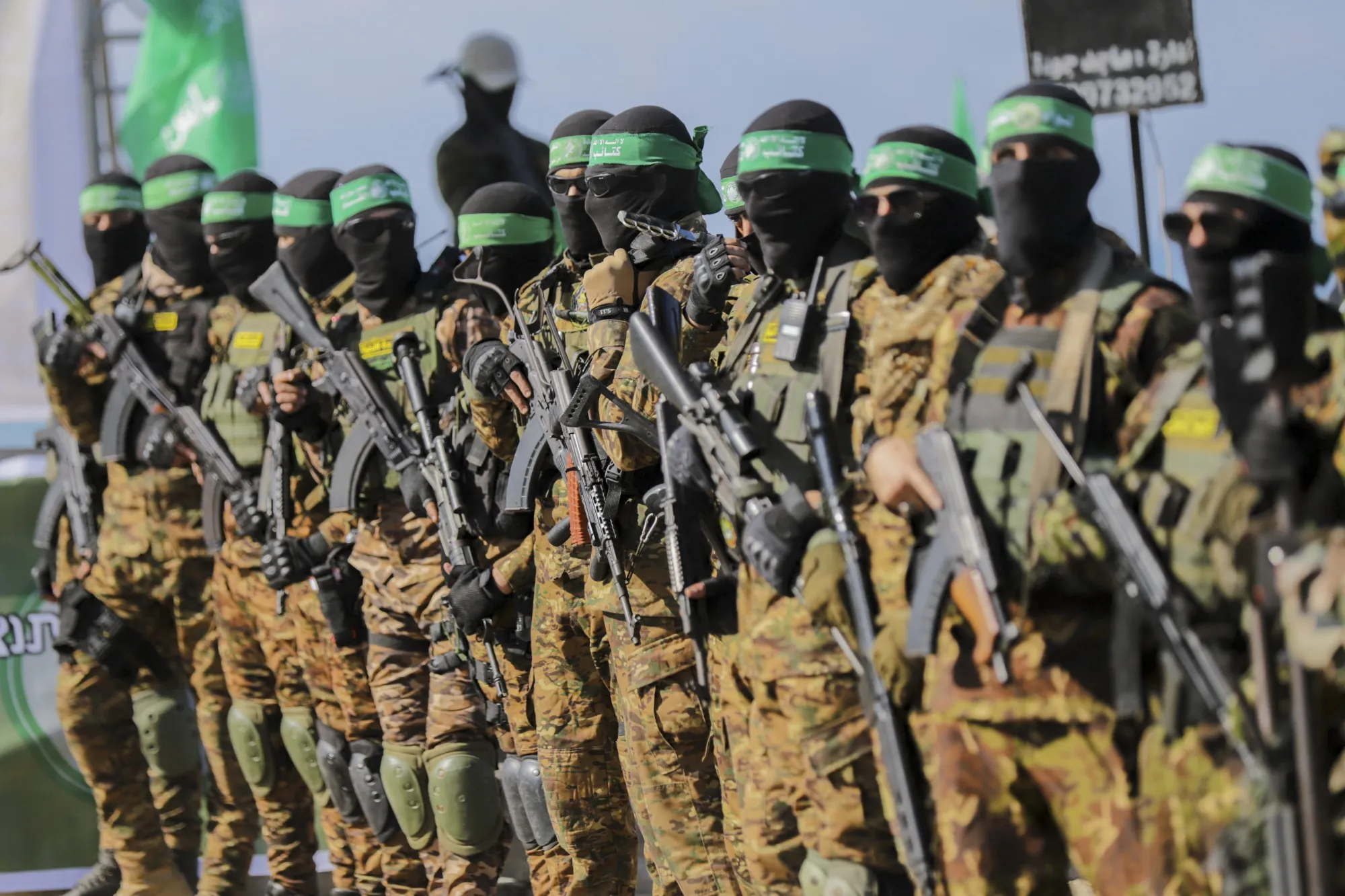
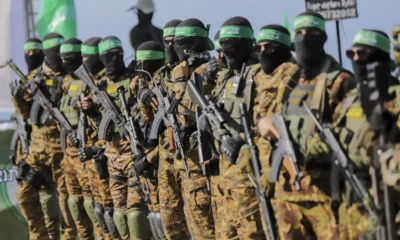
Hamas has agreed to surrender its weapons under a new internationally backed roadmap aimed at ending the war in Gaza, paving the way for a phased withdrawal of Israeli troops and reviving stalled ceasefire negotiations.
The proposed agreement, announced on Friday, marks a major political breakthrough after months of negotiations over Hamas’ future military role and Israel’s insistence on the group’s complete disarmament before any troop withdrawal.
United States President Donald Trump welcomed the development, describing it as a “major milestone” and saying the agreement provides for Hamas’ “complete disarmament.”
According to the roadmap, Hamas will hand over its weapons to the National Committee for Administration of Gaza, a new governing body expected to oversee civil administration and internal security in the territory.
The agreement also provides for a gradual Israeli military withdrawal, with both processes to be implemented simultaneously under international verification.
A member of Hamas’ negotiating team, Ghazi Hamad, said the movement accepted the arrangement “for the sake of our people in the Gaza Strip,” adding that the new governing committee—not Israel—would supervise the disarmament process.
The Board of Peace, which facilitated the negotiations, confirmed that Hamas had accepted a detailed implementation roadmap and said the governing committee would soon begin assuming authority in Gaza.
However, the deal has already exposed political divisions in Israel.
Far-right National Security Minister Itamar Ben Gvir rejected the proposal, describing it as “unacceptable” and warning that it could allow Hamas to regroup.
Although Israeli officials have yet to formally endorse the agreement, political sources maintained that Israel would only proceed with troop withdrawal if Hamas undergoes genuine and verifiable disarmament.
European Union foreign policy chief Kaja Kallas welcomed the agreement but cautioned that significant work remained before lasting peace could be achieved.
United Nations Secretary-General António Guterres also described the announcement as one of the few positive developments in the Middle East conflict in recent weeks.
Egypt is expected to host another round of talks involving the United States, Qatar and Turkey to finalise implementation of the ceasefire roadmap.
Despite the diplomatic breakthrough, violence has continued in Gaza, with local health officials reporting that fresh Israeli airstrikes killed at least four people, including two children, highlighting the fragile security situation.
CARICOM chair renews reparations demand
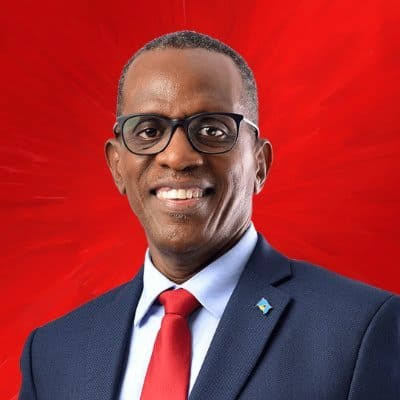
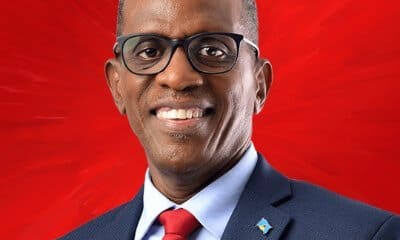
Chairman of the Caribbean Community, CARICOM and Prime Minister of Saint Lucia, Philip J. Pierre, has renewed the region’s call for reparatory justice, insisting that emancipation remains incomplete without economic freedom, opportunity and social justice.
In his Emancipation Day 2026 message, Pierre said freedom was won through the courage and sacrifice of enslaved Africans whose struggle laid the foundation for today’s Caribbean societies.
He noted, however, that the abolition of slavery did not end injustice, as formerly enslaved people entered freedom without land, wealth or compensation, while those who benefited from slavery prospered.
Pierre maintained that the Caribbean’s pursuit of reparations was not driven by revenge but by the search for truth and justice, describing it as part of the region’s unfinished journey towards genuine emancipation.
He urged Caribbean governments to create stronger economies by supporting entrepreneurship, agriculture, food security, clean energy and youth development, saying political independence must be matched with economic empowerment.
The CARICOM chairman also called on citizens across the region to honour their ancestors by building more united, prosperous and inclusive societies capable of securing lasting freedom for future generations.


EDITORIAL: Tackling Poverty in Africa

Spain battles political fallout as 60,000 migrants overwhelm Ceuta border

Hamas agrees to disarm as Gaza withdrawal deal gains momentum

Pastor Jerry Eze Defends Miracles At UK Conference Amidst Criticism And Controversy

Diaspora Watch 20th Edition (October 14-20, 2024): Your Trusted Source for Global News and Insights

Tanzanian Man Reportedly Dies And Returns To Life Six Times


-
 Milestone6 days ago
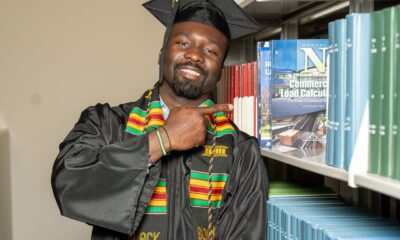
Nigerian bags HVAC Engineering degree in US, lands full-time job
-
 News6 days ago
CARICOM chair renews reparations demand
-
 Analysis6 days ago
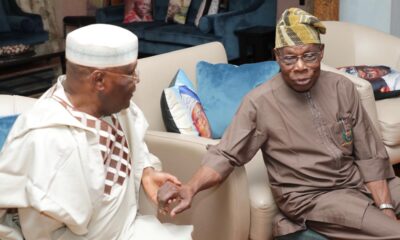
Obasanjo, Atiku and the Burden of Broken Trust, by Alabidun Shuaib AbdulRahman
-
 Analysis6 days ago
Lessons from the Catholic Bishops’ Visit to Tinubu, by Boniface Ihiasota
-
 News6 days ago
Hamas agrees to disarm as Gaza withdrawal deal gains momentum
-
 Opinion6 days ago
EDITORIAL: Tackling Poverty in Africa