
Environment
Namibia: Africa’s Emptiest Country, Full Of Natural Wonders

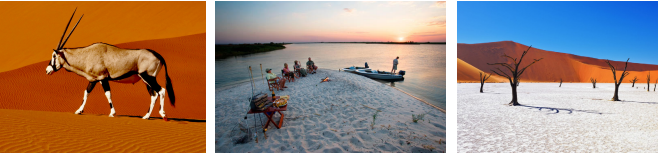
Namibia, a country located in southern Africa, is a land of vast expanses and breathtaking beauty. Despite its large land mass, Namibia has a relatively small population of just 2.6 million people, making it Africa’s emptiest country. To put its size into perspective, Namibia is 3.37 times larger than the United Kingdom, 2.5 times bigger than Germany, three times bigger than France, and two times bigger than Spain. One of the most striking aspects of Namibia is its sparse population. With an average of just two people per square kilometer, it’s not uncommon to drive for hours without seeing another soul. In fact, on Sundays, you can drive for an hour without seeing anyone. This emptiness is a stark contrast to the crowded streets of European cities, and it’s a refreshing change of pace for those looking to escape the hustle and bustle of city life.
Despite its small population, Namibia has a lot to offer. The country is home to some of the most stunning natural landscapes in the world, including the Namib Desert, the Skeleton Coast, and Etosha National Park. The Namib Desert, which covers much of the country, is the oldest desert in the world and is home to some of the highest sand dunes on the planet. The Skeleton Coast, a stretch of coastline along the Atlantic Ocean, is known for its rugged beauty and shipwrecks. Etosha National Park, one of Africa’s largest game reserves, is home to an abundance of wildlife, including elephants, lions, and giraffes.
Namibia is also home to a unique culture, shaped by its history and geography. The country has a mix of African, German, and British influences, which is reflected in its language, cuisine, and architecture. The capital city, Windhoek, is a blend of modern and colonial architecture, with a mix of German-style buildings and modern skyscrapers.
Another interesting fact about Namibia is that there are more cows than people. The country has a large livestock industry, and cattle farming is a significant contributor to the economy. In fact, Namibia is one of the largest exporters of beef in Africa.
The beaches in Namibia are also worth mentioning. The country has a long coastline along the Atlantic Ocean, and its beaches are some of the most beautiful and empty in the world. The lack of crowds and peaceful atmosphere make Namibia’s beaches a perfect destination for those looking to relax and unwind.
Namibia is a country like no other. Its vast expanses, stunning natural beauty, and unique culture make it a destination that is not to be missed. Whether you are looking for adventure, relaxation, or just a chance to experience something new, Namibia has something for everyone.

Environment
Appalachian Trail records 17 million visits as conservancy expands climate protection efforts


Appalachian Trail records 17 million visits as conservancy expands climate protection efforts
By Boniface Ihiasota, Washington DC
The Appalachian Trail Conservancy has said the iconic U.S. hiking route attracted about 17 million recreational visits in 2025, as it unveiled plans to strengthen conservation efforts amid growing concerns over climate change and biodiversity loss.
Chairman of the conservancy’s board, Jim LaTorre, disclosed this during a briefing organised by the U.S. Foreign Press Center on Wednesday, describing the 2,200-mile Appalachian Trail as one of America’s most significant public-private conservation successes.
According to him, the trail ranked as the ninth most visited destination among the 433 sites managed by the U.S. National Park Service last year.
LaTorre said the organisation was shifting beyond trail maintenance to protecting the wider Appalachian landscape, warning that climate change was rapidly altering wildlife migration patterns across North America.
He explained that scientific projections indicated mammals, reptiles and amphibians would increasingly move towards higher elevations as temperatures rise, making the Appalachian mountain range a critical ecological corridor.
“The Appalachian Trail is becoming a virtual superhighway for biodiversity survival,” he said, adding that preserving connected landscapes would be essential to protecting wildlife habitats in the coming decades.
The conservancy said the trail, which stretches from Georgia to Maine, is now protected by about 370,000 acres of conserved land following decades of federal and community-led preservation efforts.
LaTorre described the trail as a model of cooperative management involving the National Park Service, state agencies, local authorities and thousands of volunteers.
He said about 30 volunteer trail clubs contribute more than 150,000 hours of maintenance work annually, representing an estimated value of over $5m each year.
Providing insights into trail usage, LaTorre said between 3,000 and 4,000 people attempt to hike the entire trail annually, but only about one-third complete the journey, which typically takes between four and six months.
He added that international hikers account for between six and eight per cent of annual through-hikers, with visitors from Canada, the United Kingdom, Germany and the Netherlands making up the largest foreign contingents.
The conservancy also hinted its growing international partnerships, saying it had shared expertise on long-distance trail management with organisations in Japan, Scotland, Iceland, Ireland, New Zealand, South Africa and several other countries.
Responding to questions, LaTorre dismissed suggestions of a major expansion of the Appalachian Trail, saying there were no active plans to extend the route despite occasional discussions about linking it with other hiking trails.
He also urged visitors to embrace responsible recreation, stressing that the trail should remain a place of solitude and environmental appreciation rather than entertainment.
“We prefer that the trail not be viewed as a big party place. It’s a place of solitude, a place to experience nature and escape the pressures of everyday life,” he said.
Hurricane Melissa: CARICOM Reaffirms Support for Jamaica, Haiti
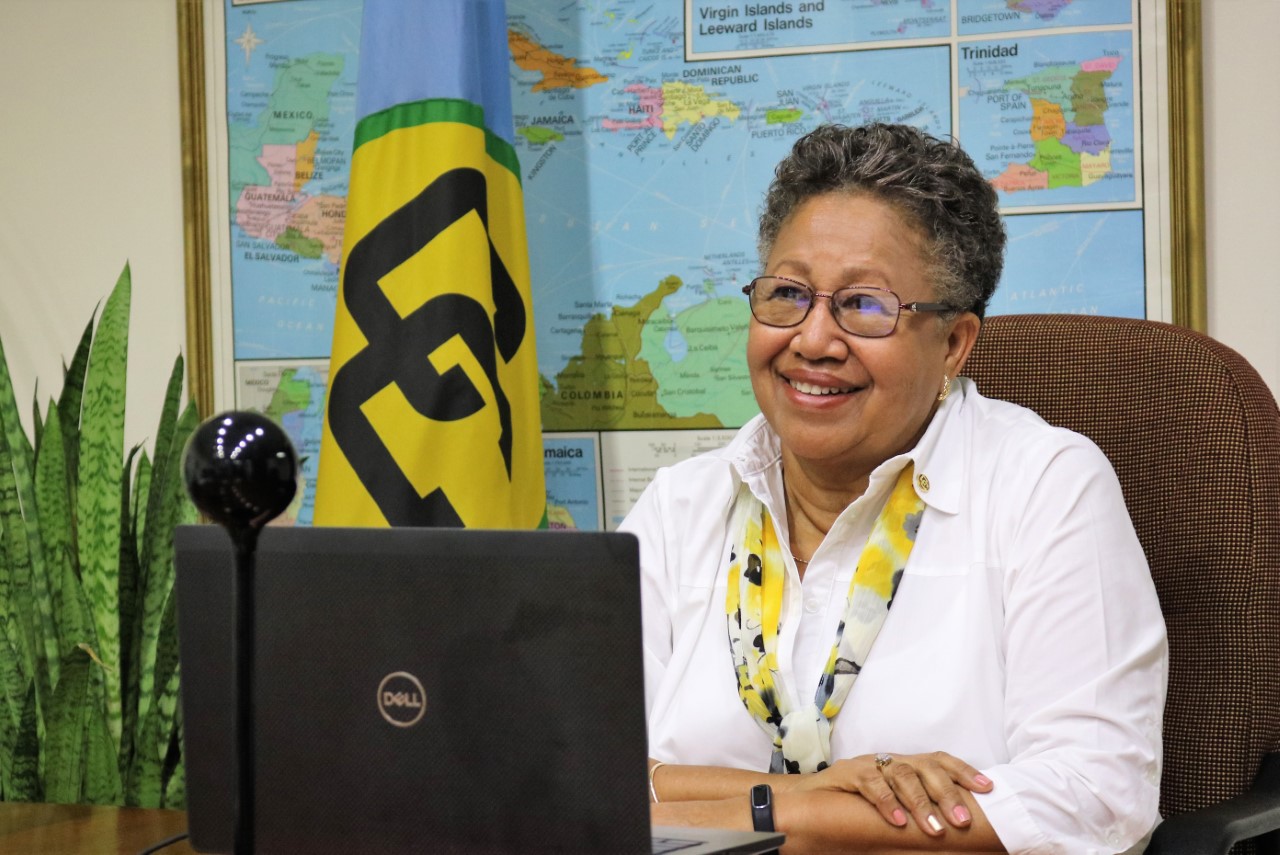
CARICOM Secretary-General, Dr Carla Barnett, has restated the Community’s solidarity with Jamaica and Haiti following the devastation caused by Hurricane Melissa, saying the disaster reinforces the urgent need to strengthen regional resilience against climate change.
Dr Barnett made the remarks at the opening of the 61st Regular Meeting of the Council for Trade and Economic Development (COTED), where she also highlighted the importance of the CARICOM Single Market and Economy (CSME) in supporting sustainable growth amid recurring climate shocks.
She expressed sympathy to the Governments and people of Jamaica and Haiti over the loss of lives and widespread damage caused by the storm.
She commended the response of regional bodies, including the Caribbean Disaster Emergency Management Agency (CDEMA), the Caribbean Public Health Agency (CARPHA), private sector groups and other regional partners.
The Secretary-General also referenced the recent visit of four CARICOM Heads of Government to Jamaica as a strong demonstration of regional unity and a signal of continued support.
“The experience leaves us in no doubt about the urgency of addressing the existential threats posed by climate change and the need to redouble our efforts to build resilience and foster sustainable development across our Region,” she said.
“Strengthening our trade and economic performance is a critical part of this, and COTED must continue to play its important role in this regard.”
Chairing the meeting, Belize’s Minister of State for Foreign Trade, Hon. Marconi Leal, noted that the Region was dealing with complex global and domestic challenges that continue to test the resilience of individual Member States.
He said Hurricane Melissa further exposed the Caribbean’s vulnerability to climate threats, stressing the need for deeper cooperation and coordinated recovery efforts.
Minister Leal said COTED would deliberate on critical issues, including advancing the free movement of CARICOM nationals, implementing the Community’s Industrial Policy and Strategy 2035, and support measures under Article 164 of the Revised Treaty of Chaguaramas.
The 61st Regular Meeting of COTED reaffirmed CARICOM’s commitment to strengthening regional trade, deepening economic integration and advancing sustainable development across the Community.

Spain Introduces Disaster Preparedness Lessons for Children
In a bold move to strengthen climate resilience, Spain has announced compulsory disaster preparedness lessons for schoolchildren across the country.
The initiative, unveiled on Thursday by the Spanish government, is designed to equip children with knowledge and survival skills in the face of floods, wildfires, earthquakes and volcanic eruptions, which experts say are becoming more frequent due to the worsening climate emergency.
The development comes after a summer of devastating forest fires claimed four lives, and less than a year after catastrophic floods left more than 220 people dead in eastern Spain.
According to the Ministry of Education, the new programme will cover not only natural disasters but also industrial, nuclear and chemical accidents, as well as emergencies involving the transportation of hazardous materials.
Over 8 million pupils in 25,000 schools will benefit from the compulsory training, which will begin this academic year.
Lessons will be delivered through videos, infographics and other teaching tools, with children in infant and primary schools receiving a minimum of two hours, while older students will undergo at least four hours.
“Infant school children aged three, four and five will learn to recognise alarms and spot early signs of danger, as well as basic safety principles,” the ministry said in a statement.
“Older children will be taught how to seek higher ground during floods and to take cover under desks during earthquakes.”
The ministry added that students would also be educated on identifying disinformation during emergencies, a growing concern in the digital age.
Speaking at the launch in Cuenca, Prime Minister Pedro Sánchez stressed the importance of preparing young people to face disasters worsened by climate change.
“If we don’t want to bequeath our children a Spain that’s grey from fire and flames, or a Spain that’s brown from floods, then we need a Spain that’s greener,” Sánchez declared on September 1, calling for a “great state pact” to tackle the climate crisis.
The lessons form part of a 10-point government plan to safeguard Spain, which experts say lies on the frontline of Europe’s climate challenges.



Our Tinubu Has Run Away Again?

CARICOM begins consultations on regional biodiversity strategy

On The Sharafadeen Alli Lap Controversy, by Boniface Ihiasota

Pastor Jerry Eze Defends Miracles At UK Conference Amidst Criticism And Controversy

Diaspora Watch 20th Edition (October 14-20, 2024): Your Trusted Source for Global News and Insights

Tanzanian Man Reportedly Dies And Returns To Life Six Times


-

 News7 days ago
Kidney for Cash: Inside Nigeria’s Shadowy Organ Trade
-

 Analysis7 days ago
Tobi Amusan’s Legacy After the World Record Falls, by Boniface Ihiasota
-
 Analysis7 days ago
Wike and the Abuja Master Plan, by Alabidun Shuaib AbdulRahman
-

 News7 days ago
Trump’s policies may cost US $700bn in clean energy investment – Report
-
 News7 days ago
Jamaica Set to Host 20th Caribbean Week of Agriculture
-

 Health7 days ago
DRC gets 70,000 Ebola vaccine doses as trial targets Bundibugyo virus